
 SCIENTIFIC VALIDATION
Laure Fourchaud – 24.11.2021
PhD in nutritional physiology
BENEFITS OF GINSENG
✓ Anti-fatigue and improves tone
✓ Strengthens the immune system
✓ Boosts libido
✓ Antioxidant and anti-inflammatory
What is ginseng?
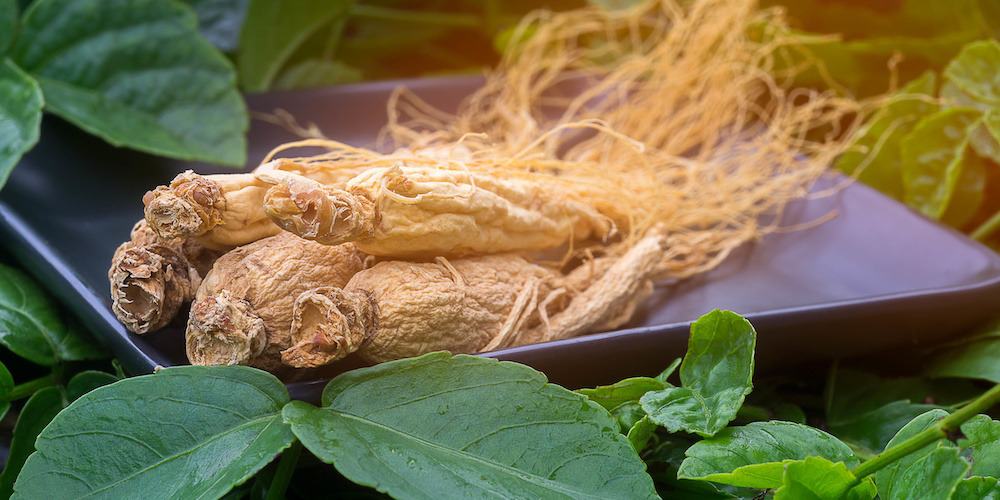
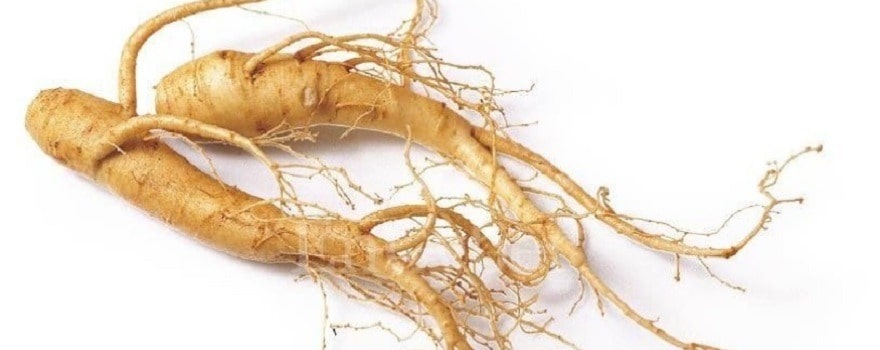
Not to be confused with ginger, which it closely resembles, ginseng (or Panax ginseng) is a medicinal plant native to northeastern Asia. It belongs to the Araliaceae family, like ivy. More specifically, it is the root of this perennial plant that is used for therapeutic purposes, notably as tonic and as a natural aphrodisiac, and this has been the case for at least 2,000 years in Korea and China.
Its growth is very slow: it takes about 6 to 7 years for the ginseng rhizome, its very fleshy underground stem, to optimally develop its properties. In fact, it is often the plant’s age that determines its price.
It was originally cultivated on the rich soils of Northeast Asia, particularly in China, Korea, and Japan. It is an understory plant; it needs shade to grow, either from other shrubs in the wild or from shade structures in agriculture.
Ginseng is one of the adaptogenic plants. This means it increases our body’s ability to adapt to various stresses. It helps improve our overall health, strengthen our metabolism, and regulate our hormones…
In traditional Chinese and Korean medicine, ginseng acts as a tonic for the Qi, the vital energy. It is said to increase the strength of the blood as well as the wisdom of the person who consumes it.
It can be “white”, when the rhizome has only been dried, or “red”, when it has been steamed.
The etymology of ginseng reveals a lot about its virtues. In Greek Panax means universal remedy (Pan = all and Ax comes from Akos, remedy). Koreans call it “Insam”, the human-shaped root. The word ginseng itself comes from the Chinese “rénshēn” which means the root man. There it is nicknamed “root of long life” and “root of heaven”.
Its main active compounds are the ginsenosides, a type of saponin. They are responsible for its main benefits and make it a superfood praised for centuries. Today, numerous studies have scientifically demonstrated its properties.
There is also an American ginseng (Panax quinquefolius) that grows in the temperate forests of eastern Canada and the United States, from Louisiana to Quebec. Its discovery dates back to the early 17th century. It is believed to have roughly the same effects as the Asian variety, but to be more soothing.
Ginseng can be consumed raw, dried as a tea or powder, in capsules or ampoules. In Asia, it is incorporated into cooking as a food in its own right.
Also read | What you need to know before buying ginseng
Nutritional composition
- Vitamins : B, C, E
- Minerals and trace elements : zinc, iron, magnesium, copper, potassium, phosphorus, calcium, silica, manganese, cobalt
- Saponins : ginsenosides
- Polysaccharides
- Fatty acids
Buy organic ginseng: my selection
I recommend the organic red ginseng from Natura Force.
Why? Because it is standardized to over 10% ginsenosides, and because it comes from Mount Paektu, a region located between China and Korea renowned for producing the best ginseng in the world.
The roots used are over 6 years old, which is a mark of quality.
Natura Force is a small French brand created by Thierry Sestrieres in 2015, following a trip to South America rich in superfood discoveries.
As we are partners, remember to use our promo code “DARWIN” when placing your order to get an immediate 10% discount (this code is valid on all products).
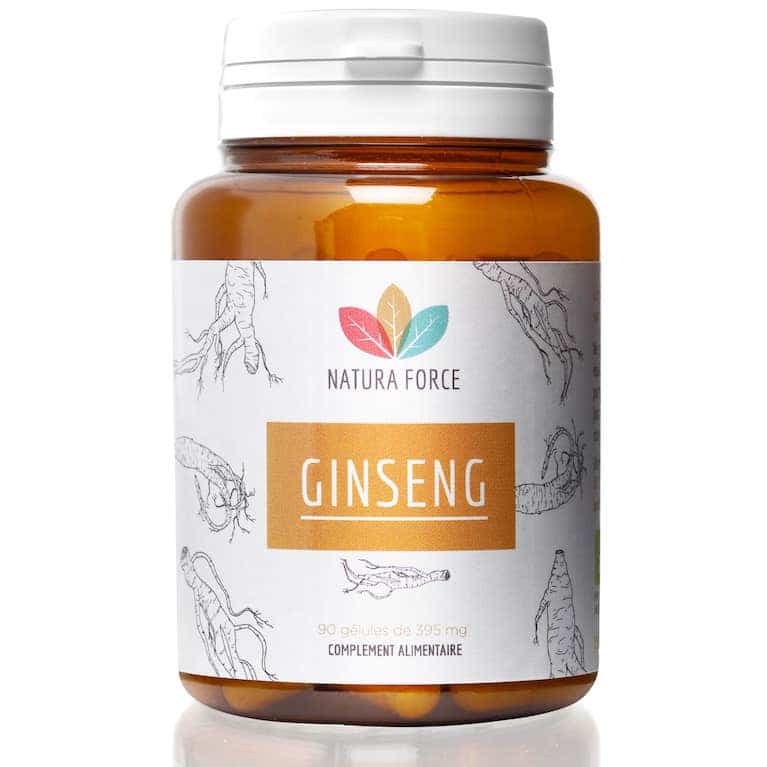
❤ I like : Organic certification, the value for money and the certified origin of the ginseng.
★ Customer reviews : 4.7/5
☞ Quantity : 90 capsules / 1 month supply
✔ Discount code -10% : DARWIN
The benefits of ginseng
⚡️ Anti-fatigue and improves tone
Certain components of ginseng such as the polysaccharides help fight oxidative stress and increase our body’s energy.
It also helps increase physical performance, extend the duration of effort by reducing fatigue, and reduce muscle pain and recovery time.
It acts over the long term, without the harmful effects that caffeine or other stimulants can have. Besides, the WHO recommends consuming it in the morning because of its stimulating effects.
This study by Daejeon University in Korea, conducted on 90 patients suffering from chronic fatigue, showed that taking one gram of ginseng helps reduce physical and mental fatigue and oxidative stress.
🛡 Strengthens the immune system
Ginseng strengthens the immune system and may increase the effectiveness of treatments and vaccines. It also helps reduce the symptoms of certain diseases.
It increases our resistance to infections and helps to effectively fight the common cold and flu-like illnesses, and to recover more quickly.
Studies say it best! This one, conducted by the Department of Medicine of Seoul National University, showed that its consumption in 39 patients operated on for stomach cancer led to a clear improvement in their immune system and a reduction in relapses.
Several clinical studies, including this one conducted by the University of Milan, conclude that ginseng enhances the effectiveness of certain vaccines.
🔥 Boosts libido
Ginseng is a natural aphrodisiac, used for millennia in traditional Chinese medicine to awaken sexual desire. Its active compounds work to increase libido in both men and women.
It can help fight erectile dysfunction in men by promoting the production of nitric oxide. The latter contributes to the relaxation of the penile muscles, acts as a vasodilator and improves blood flow, on which erection depends.
This study conducted by the Kyung Hee University School of Medicine in Seoul showed that consuming ginseng for 8 weeks significantly improved erectile dysfunction in 86 men.
This one, conducted by the urology clinic of the University of Sao Paulo, showed that a course of ginseng was an effective alternative to conventional treatments for erectile dysfunction.
In women, another trial conducted in Korea reports an improvement in sexual function in menopausal women.
👩🏫 Improves concentration and memory
Ginseng improves certain cognitive functions such as concentration and memory. Its components, particularly the ginsenosides, contribute to the protection of brain cells against free radicals.
It gives a feeling of calm to people who consume it, the impression “of having a clearer mind”.
It also has beneficial effects on the cognitive functions and the behavior of people with Alzheimer’s disease. These properties are similar to those of ginkgo biloba.
This study conducted by the Veterinary Medical University of Vienna suggests that ginseng has strong neuroprotective properties.
This one, conducted by the Seoul Medical Center, showed that long-term treatment with red ginseng could improve the cognitive functions of patients with Alzheimer’s disease.
🥝 Antioxidant and anti-inflammatory
Ginseng acts as a powerful antioxidant and has notable anti-inflammatory properties thanks to the ginsenosides it contains.
This study from Kyungpook National University in Korea showed that consuming red ginseng significantly reduced athletes’ muscle inflammation after exercise.
This study, conducted by the Institute of Women’s Life Medical Science in Seoul, showed that it significantly increased antioxidant enzyme activity in the bodies of postmenopausal women.
🍬 Reduces blood sugar
Ginseng helps to reduce blood glucose levels by increasing insulin production, the hormone that regulates our blood glucose. Its active compounds directly act on the pancreatic cells: the pancreas is the organ that produces insulin, a hypoglycemic hormone, and glucagon, a hyperglycemic hormone.
In this respect, it could help people with type 2 diabetes. Fermented red ginseng is particularly recommended for them.
This study from Kyung Hee University in Seoul showed that consuming fermented red ginseng is particularly beneficial for reducing blood glucose levels, thanks to the action of bacteria involved in its fermentation.
Furthermore, Boston University conducted this study, showing that ginseng consumption provides antioxidant protection, reducing free radicals in the cells of people with diabetes.
A scientific review published in 2006 reports a positive effect of ginseng on blood sugar, but the results need to be repeated to establish an effective dosage.
🔬 May potentially reduce the risk of cancer
Ginseng may be useful in preventing certain cancers, thanks to the ginsenosides.
These, along with the many antioxidants it contains, help keep cells healthy and reduce the appearance and proliferation of abnormal cells.
This study from the Korea Cancer Center Hospital in Seoul reports that people who consume ginseng have a lower risk of developing certain types of cancer, such as those of the mouth, the esophagus, the stomach, the colon, the liver and the lungs.

How to take ginseng?
Age of the root
It is recommended to consume ginseng from the age of 6 years, because younger roots do not offer the same health benefits. The longer it has been underground, the higher its ginsenoside content, accumulated over the seasons.
Most of the time, Korean red ginseng will be at least 6 years old and white ginseng between 4 and 6 years old.
Ginsenoside content
This is really the information to keep in mind when choosing your ginseng, because it will determine its quality. A ginsenoside content between 10 mg and 15 mg per gram is recommended.
In what form should you consume ginseng?
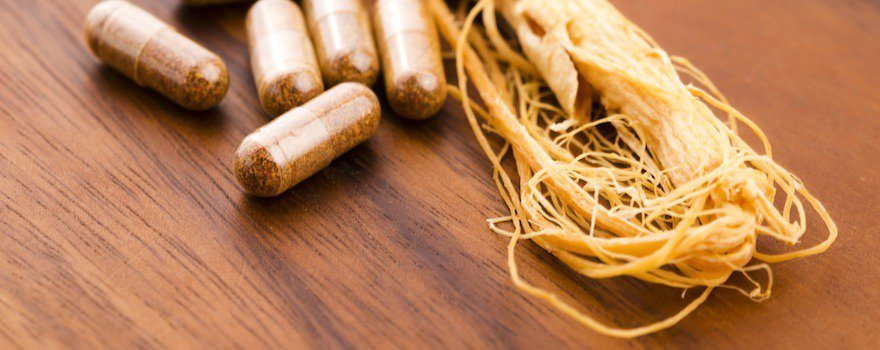
There are numerous ways to consume ginseng. It is highly prized in Chinese cuisine; it is often a food in its own right rather than a dietary supplement.
Consuming ginseng as a powder or a paste extract is the best way to harness all its properties. Be aware, it has a rather acrid taste!
You can also find raw roots, which can be prepared in cooking, brewed as an infusion, or eaten in slices. There are also capsules, vials, teas…
Also read the American ginseng and Siberian ginseng
Red ginseng
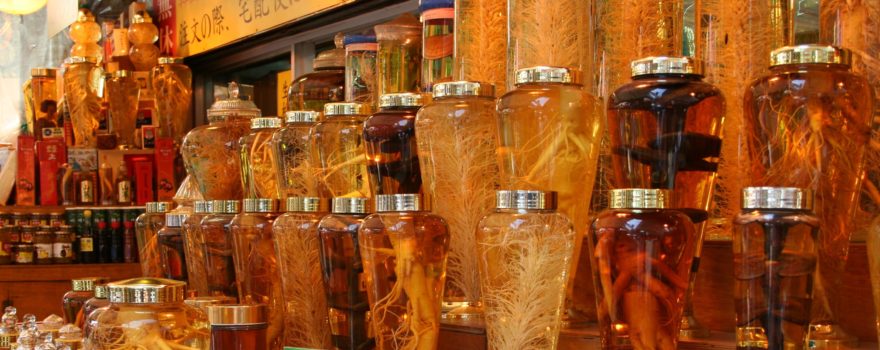
Red ginseng is the “variety” most recommended; it has the most powerful properties. The best product is said to come from Geumsan in South Korea, the ginseng capital, which accounts for 70% of national production.
What is red ginseng? It’s a classic Panax ginseng, steamed at 120°C to 130°C and then dried, with the aim of amplifying its bioactive compounds and accelerating their effect on our body.
Thus the red variety will develop a higher level of certain ginsenosides, including Rb3 and Rg3. It can also later be fermented, greatly enhancing their anti-inflammatory, immune, and antioxidant effects.
This process also helps to “seal” its components, which degrade more when it is only dried (white ginseng). That’s why it has a higher price than white ginseng.
Also read the Red ginseng, the best of ginsengs
Health authorities’ views on ginseng

WHO opinion
For the World Health Organization, the use of ginseng is “clinically established” to “improve physical and mental abilities in cases of fatigue, exhaustion, concentration problems, and among convalescent people”.
Its use in the treatment of “erectile disorders, gastric ulcers, type 2 diabetes, and to protect the liver” is considered “traditional”.
Commission E opinion
Commission E, the German scientific advisory board dedicated to medicinal plants, recognizes ginseng as “a tonic during periods of fatigue, weakness, difficulty working and concentrating, and during convalescence”.
ESCOP opinion
ESCOP (European Scientific Cooperative on Phytotherapy) grants ginseng a use for “decreased physical and mental capacities (fatigue, exhaustion, concentration disorders, convalescence)”.
NIH opinion
The National Institutes of Health in the United States recognize the use of ginseng “based on good scientific evidence” in “the control of blood glucose in type 2 diabetes, stimulation of the immune system in respiratory infections, and in the prevention of cardiovascular diseases”.
Consume sustainably: favor organic ginseng that is traditionally cultivated and locally produced
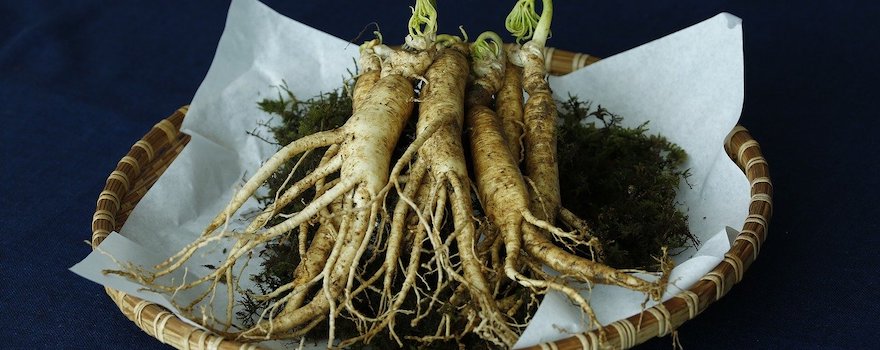
✓ Because it is a rhizome, ginseng tends to absorb more pollutants contained in the soil. Ginseng from organic farming, without added pesticides or chemical fertilizers, is therefore more suitable for consumption. This type of farming is also better for the soils and the people who harvest it.
✓ It is better to pay attention to its origin, and favor Korean organic ginseng, where it has been traditionally cultivated for centuries.
✓ You can also find local ginseng, made in France! A former Stade Toulousain rugby player, a root enthusiast, had the good idea to cultivate it in Occitania and notably offers it as fresh roots.
Dosage
⏳ The duration of ginseng treatments varies by culture. In traditional Chinese medicine, for example, its consumption is not limited in time. But Commission E, the German scientific advisory council on the use of herbal medicinal products, recommends a 3-month course.
⚖️ The recommended dose varies between 800 mg and 2 g per day for powdered ginseng or a dried root, and about 600 mg for extracts standardized in ginsenosides. For stimulating the immune system, it is advised to start with small doses, whereas for treating fatigue higher doses are recommended.
Contraindications and side effects
Ginseng does not present notable side effects at the recommended doses. It is nonetheless contraindicated in the following cases, which should seek medical advice before using it:
- high blood pressure
- pregnancy and breastfeeding
- diabetes
- cardiovascular diseases
It is not recommended for people with personal or family histories of hormone-dependent cancer, as it may affect hormones.
History, market and current cultivation
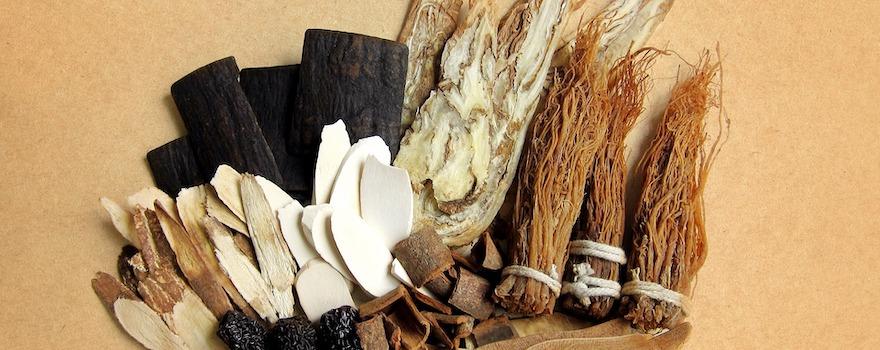
Ginseng is mentioned in very ancient treatises of traditional Chinese medicine. Its first recorded use as a therapeutic herb in China dates back to the end of the 2nd century, in the book Shen-Nung Pharmacopoeia. Later, in 1596, the physician and therapist Li Shizhen mentioned it in a work as a \”superior tonic\”.
It is now exported all over the world, but China remains its main consumer. In 2013, sales related to ginseng exceeded 2 billion dollars. At the beginning of the 21st century, 80,000 tons were produced worldwide, 99% of which were in China, South Korea, Canada and the United States.
Sources and scientific studies
Scaglione F, Cattaneo G, Alessandria M, Cogo R.1996. Efficacy and safety of the standardised Ginseng extract G115 for potentiating vaccination against the influenza syndrome and protection against the common cold [corrected].
Kim JP , Yoo HY , Yu HJ , Yang HK, 1998. The Effect of Ginseng on the Nutritional Status and the Immune Functions after Curative Operations on Gastric Carcinoma Patients.
Kim HG, Cho JH, Yoo SR, Lee JS, Han JM, Lee NH, Ahn YC, Son CG, 2013. Antifatigue effects of Panax ginseng C.A. Meyer : a randomised, double-blind, placebo-controlled trial.
Rausch WD, Liu S, Gille G, Radad K, 2006. Neuroprotective effects of ginsenosides.
Heo JH, Lee ST, Oh MJ, Park HJ, Shim JY, Chu K, Kim M, 2011. Improvement of cognitive deficit in Alzheimer’s disease patients by long term treatment with korean red ginseng.
Jung HL, Kwak HE, Kim SS, Kim YC, Lee CD, Byurn HK, Kang HY, 2011. Effects of Panax
Trinh HT, Han SJ, Kim SW, Lee YC, Kim DH, 2007. Bifidus fermentation increases hypolipidemic and hypoglycemic effects of red ginseng.
Luo JZ, Luo L, 2009. Ginseng on hyperglycemia: effects and mechanisms.
Yun TK, Choi SY, 1995. Preventive effect of ginseng intake against various human cancers: a case-control study on 1987 pairs.