

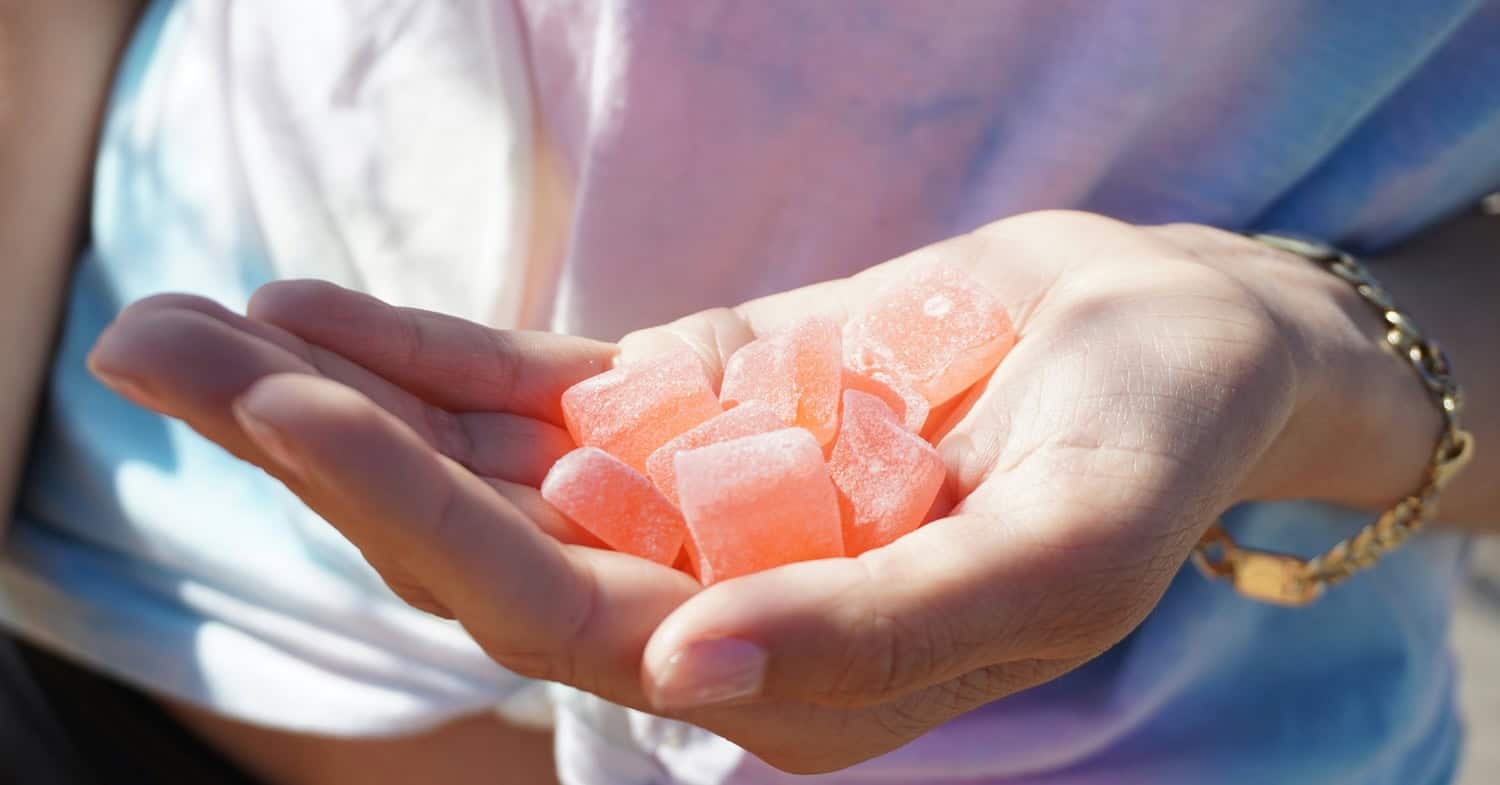
It’s official: since Friday, May 15, 2026, food products containing CBD can no longer be marketed in France. The decision made by the Directorate General for Food (DGAL) comes as a surprise to many, when you consider that these oils, herbal teas, and cannabidiol confections that could be found even on the shelves of specialty shops have been allowed for sale since 2022.
In reality, this is not a new law that has just been passed, but a strict application of the existing European regulation.
But in that case: why is this tightening happening now?
The answer largely lies in a scientific opinion published a few months earlier by the European Food Safety Authority.
I suggest we take stock of what is changing in practical terms, the data that prompted this decision, and what remains possible if you were a consumer of CBD food products.
📚 Read also | The best CBD sites according to an expert
What does the new regulation on the sale of CBD for food use actually say?
The European Novel Food regulation is far from new. Since 1997, it has stated that a food ingredient not consumed to a significant degree in the European Union before that date must obtain prior authorization before being placed on the market.
However, CBD falls into this category: no food product containing cannabidiol has obtained this authorization at the European level.
Until now, the DGAL had nevertheless tolerated the sale of these products, before ending it in mid-April.
What changes in practice on May 15, 2026
As of May 15, 2026, the following products are subject to withdrawals, with no deadline to clear stock, and a ban on sale:
- sublingual oils sold as dietary supplements,
- gummies,
- capsules,
- chocolates,
- drinks
- and infusions made from hemp flower tops.
What remains authorized
Nevertheless, if you are a consumer, rest assured: not everything is affected by this regulation. Here is what remains authorized today:
- CBD flowers and resins,
- CBD cosmetics for topical use (creams, balms, massage oils),
- CBD e-liquids for e-cigarettes.
CBD itself is therefore not banned in France.
Why now? What the EFSA opinion reveals
The European Food Safety Authority (EFSA) published a toxicological assessment of CBD on February 9, 2026. In conclusion, the agency set a provisional safety dose at 0.0275 mg per kg of body weight per day, or about 2 mg of CBD per day for a 70 kg adult.
However, this is a very low threshold compared with the amounts usually found in products available on the market, often 5 to 25 times higher.
If the threshold set by EFSA is so low, it is because the agency deliberately adopted a very cautious stance, with a safety margin four times larger than what it usually applies to other substances. This choice therefore reflects the lack of solid data on the long-term effects of CBD, rather than any proven toxicity.
Beyond this study, several nutrivigilance reports have been submitted by ANSES in recent years. Nevertheless, it is important to remember that this mainly concerned fraudulent products, containing synthetic neo-cannabinoids or THC levels above the permitted limits, rather than pure CBD itself.
A decision that puts an entire industry under pressure
As expected, this ban has not gone unnoticed by professionals. “We think it’s completely absurd”, Paul Maclean, a representative of the Union of CBD Professionals (UPCBD), told AFP.
He believes this position by the DGAL threatens both the agricultural sector and more than 2,000 specialty shops located in city centers. He also disputes the legal interpretation adopted by France, noting that this European regulation is not mandatory and that each Member State remains free not to apply it so strictly.
He also points to an inconsistency that often comes up in debates on CBD: why allow this molecule in smoked form or in e-liquid, and ban it in food form?
On the agricultural side, the Confédération paysanne also denounces a direct threat to the French hemp sector, which has been booming in recent years. An economic issue that is far from trivial: food products account for around 40% of the revenue of specialty shops.
Appeals have already been filed before the Council of State by the UPCBD and the Professional Hemp Union (SPC) to challenge this strict application.
What should you do if you were consuming food-grade CBD?
Do you use CBD oils or gummies regularly? Here’s what you need to know: the ban applies to sales, not to personal possession. So you can continue using products already in your possession.
Going forward, there are still legal alternatives, such as CBD flowers and resins (not to be ingested directly), as well as cosmetics for topical use.
I would also like to remind you that even outside this regulatory context, there is significant variability in CBD content from one product to another, along with the lack of systematic quality control. I therefore encourage you to be cautious when purchasing this type of product.
If you use CBD for therapeutic purposes, I recommend first discussing it with a healthcare professional.
Sources and scientific studies
- EFSA Journal (February 9, 2026) – Opinion on the provisional safety dose of CBD, DOI: 10.2903/j.efsa.2026.9862
- Regulation (EU) 2015/2283 on novel foods (“Novel Food”)
