

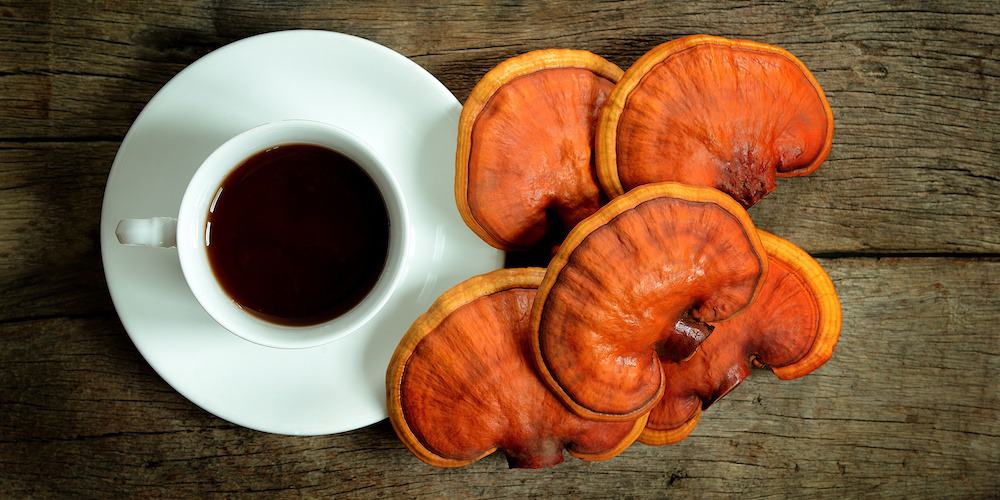
BENEFITS OF REISHI
✓ Regulates the immune system
✓ Calms the mind
✓ Lowers cholesterol levels and blood pressure
✓ Potentially anti-cancer
✓ Improves the body’s resilience
What is reishi?
Reishi, also called Ganoderma, has the scientific name Ganoderma lucidum. This name is derived from the Latin lucidus , meaning “shining”, and refers to the varnished appearance of the mushroom. Reishi, the Japanese name for the mushroom, is sometimes called differently depending on the country. In China, for example, it is known as “Lingzhi” or “Mannentake”.
Over the centuries, the medicinal properties of reishi have also earned it many nicknames. Throughout Asia, it is considered the “king of herbs”, the “herb of immortality” or the “herb of the spirit”. Nicknames that speak volumes about its benefits and virtues…
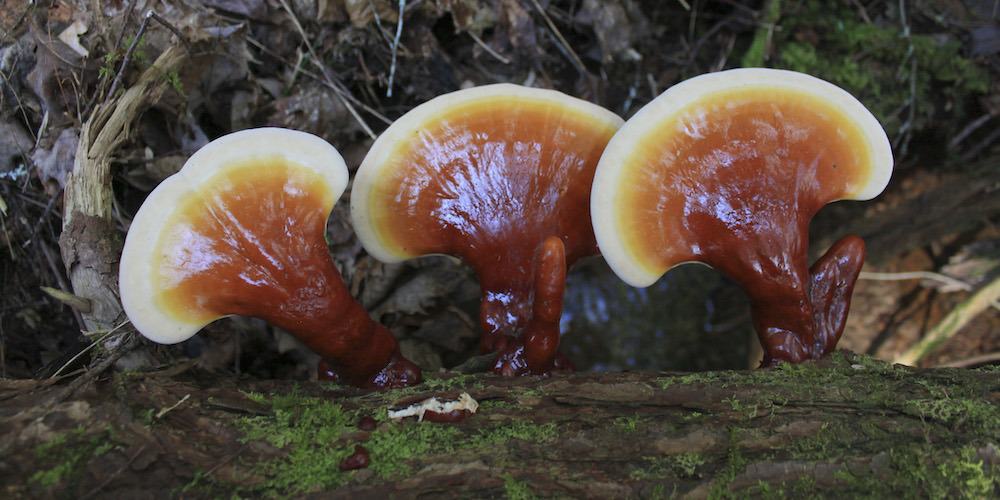
The Ganoderma lucidum belongs to the family Ganodermataceae, of which it is the main representative. It is a wood-inhabiting fungus that grows only on wood, dead tree trunks, or on roots protruding at the soil surface. It particularly favors oaks, plum trees, and wild cherry trees, from which it absorbs nutrients to feed and grow.
In the forest, reishi is easily recognizable by its lacquered appearance, similar to that of varnished wood. Its cap measures up to 20 cm in diameter and can come in different colors. In all, there are 6 types of reishi found in nature: blue, red, yellow, white, black, and purple reishi.
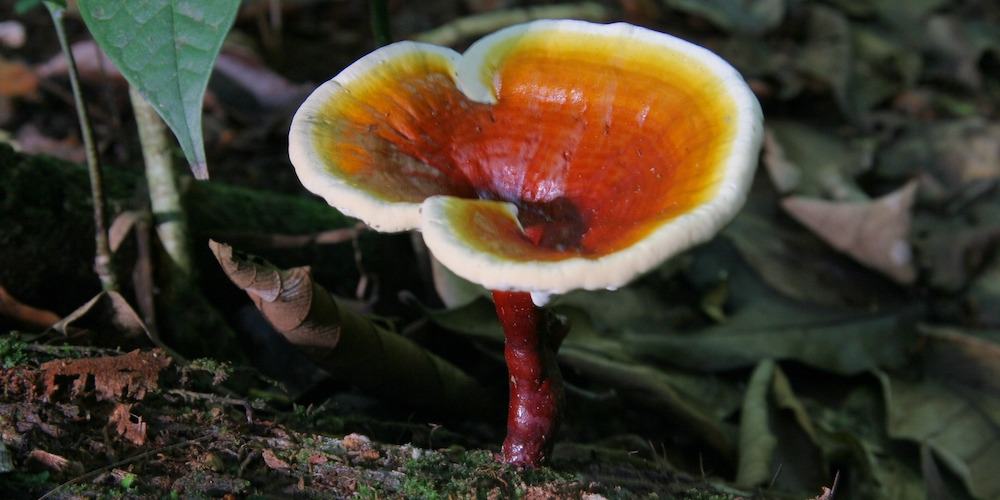
In the wild, reishi grows mainly in China, in Korea and in Japan. It thrives in high-altitude forests but also favors warm, humid conditions. That’s why it is also found in subtropical regions (Vietnam, Laos…) and in some temperate regions of Europe.
Even today, it remains a staple fungus of traditional Chinese medicine. According to this review, it has been known for its properties for more than 2,000 years. Numerous ancient accounts recount its use, including the famous ‘Bencao gangmu’, a compendium of Chinese medicine written by Li Shizhen during the Ming dynasty.
The artificial cultivation of Ganoderma lucidum and scientific research, which intensified starting in the 1970s, have helped reishi become known worldwide. Since then, this mushroom has enjoyed great renown in herbal medicine.
It is one of the functional mushrooms, meaning that beyond its nutritional properties it offers therapeutic benefits. It is recommended for improving the body’s resilience, regulating the immune system, calming the mind, and lowering cholesterol levels and blood pressure. Some studies have also highlighted potential anti-cancer properties.
Nutritional composition
- 17 amino acids including 9 essential ones
- Vitamins : B5, B9, C, D
- Minerals and trace elements : potassium, calcium, phosphorus, magnesium, selenium, iron, zinc, copper, germanium
- Triterpenes : lanostanes, ganoderic acids, lucidenic acids, ganolucidic acids…
- Steroids
- Phenols
- Flavonoids
- Sterols : ergosterol
- Nucleosides : adenosine, guanosine
- Polysaccharides : beta-glucans, glycoproteins, b-D-glucans, heteroglycans…
- Proteins
- Carbohydrates
- Fiber
- Lectins
- Fats
The benefits of reishi
🛡 Regulates the immune system
Reishi is a powerful regulator of the immune system. On the one hand, it can stimulate immunity by increasing the production of T lymphocytes (white blood cells) and macrophages. It also induces the release of cytokines, chemical mediators that enable communication between cells and that are involved in regulating immune responses.
Additionally, it modulates immunity in cases of an excessive reaction of our immune defenses or autoimmune diseases. This action is due to the polysaccharides and triterpenes present in large quantities in the mushroom.
This study from Peking University (China), conducted on animals, demonstrates the immunomodulatory effect of Reishi.
This other study from Academia Sinica (Taiwan), conducted on mice, shows how Reishi activates cytokines of the immune system.
🙏 Calms the mind
Numerous studies have highlighted the benefits of Reishi for mental health. Its composition makes it particularly interesting for relieving anxiety, mood disorders, restlessness, fatigue… In addition to its adaptogenic effect, it promotes relaxation of the nervous system by exerting an anxiolytic action.
The phenols and flavonoids it contains are the substances responsible for this property. The mushroom’s anti-anxiety activity has been shown to be comparable to that of diazepam, a medication used for its anxiolytic and sedative properties.
Also read | The best natural anti-stress remedies
Reishi also contributes to mental well-being thanks to the vitamin B5, nicknamed the ‘anti-stress vitamin’ , as well as the zinc and magnesium it contains. Finally, the mushroom is an excellent source of essential amino acids. It is particularly rich in lysine, which plays an important role in fatigue and helps reduce anxiety.
This study from Punjabi University (India), conducted on mice, shows the anti-anxiety potential of 4 species of Reishi.
❤️ Reduces cholesterol levels and blood pressure
Reishi acts directly on the absorption of lipids, which include cholesterol. Indeed, the soluble fibers it contains capture cholesterol and eliminate it via the stool. Beta-glucans, for their part, reduce LDL cholesterol or “bad cholesterol” while improving HDL cholesterol or “good cholesterol”.
It also exerts a hypotensive effect. This action is due to triterpenes and, more specifically, to ganoderic acids that lower blood pressure and blood triglyceride levels. In this way, the mushroom contributes to good cardiovascular health and helps prevent many diseases.
This study from the University of Malaya (Malaysia), conducted on rats, shows the ability of reishi to reduce levels of bad cholesterol.
This other study from the Russian Academy of Sciences, conducted on rats, evaluated the hypotensive effect of reishi. The results show that it is comparable to that of losartan, a medication prescribed for high blood pressure.
🔬 Potentially anti-cancer
Reishi appears to show anti-cancer activity that is promising thanks to the triterpenes (ganoderic acids) and polysaccharides it contains. On the one hand, it stimulates the production of macrophages and activates natural killer cells (NK cells), which are capable of killing tumor cells.
Furthermore, it limits the proliferation of diseased cells, induces apoptosis (programmed cell death), reduces metastases and angiogenesis. It thus inhibits the development and spread of cancer cells.
Numerous studies have already shown the potential of reishi in cases of breast, prostate, uterine, colon, or bladder cancer.
This study from Hacettepe University (Turkey), conducted on cancer patients, shows the beneficial effects of Reishi polysaccharides.
This other study from Peking University (China), based on clinical studies, explains the anti-tumor effect and mechanism of action of Reishi.
🧘🏻♀️ Improves the body’s resilience
Like the cordyceps (Ophiocordyceps sinensis), rhodiola (Rhodiola rosea), le ginseng (Panax ginseng) or maca (Lepidium Meyenii), reishi has adaptogenic properties. Thus, it is capable of improving the body’s resistance to stress. In traditional Chinese medicine, this mushroom is one of the ” superior tonics ” that regulate the body’s functions while exerting a stimulating action.
Reishi can be consumed occasionally when facing significant stress or overcoming difficult situations: an exam, a sports competition, a plane trip… But the mushroom is also interesting in the long term, in cases of deeper disorders (anxiety, panic, burnout, chronic stress…).
If it is so effective at improving the body’s resilience, it’s because it acts on the adrenal glands. Located above the kidneys, they are responsible for producing hormones including cortisol, the stress hormone. By supporting their proper functioning, the mushroom contributes to better management of stressful situations.
Further studies are still needed to evaluate reishi’s adaptogenic action.

How to consume reishi?
Reishi tablets
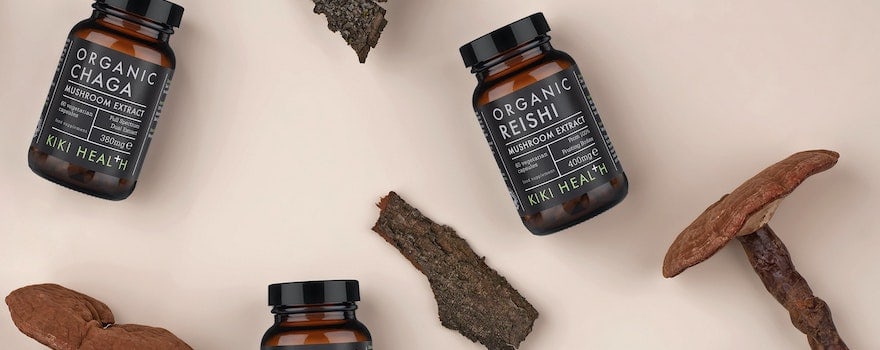
Reishi is most often offered in capsules or tablets containing the mushroom ground into powder. It’s an easy-to-find format and has the advantage of having no taste, reishi having a very pronounced and bitter flavor.
However, to fully benefit from its effects, the capsules must be sufficiently standardized for polysaccharides (30 % minimum). Preferably choose capsules certified organic, non-GMO, without additives, without preservatives and non-irradiated.
Reishi powder
The powder is obtained after harvesting, drying and grinding the mushroom. It generally contains a good amount of active ingredients. Here too, organic reishi is preferred.
Also read the You can now eat mushrooms for breakfast
If the mushroom flavor doesn’t bother you, you can easily mix the powder into water, milk, fruit juice, or a smoothie. Reishi powder can also be incorporated into soups, broths, and desserts made with cocoa. For example, you can make a hot chocolate with reishi. There are now blends for breakfast or in the evening.
Reishi mother tincture
The reishi mother tincture is harder to find than capsules or powder. It is obtained by cold percolation of the mushrooms to extract all the active compounds.
Although it dissolves easily in water or fruit juice, it has the drawback of containing a lot of alcohol. It is therefore not recommended for pregnant women, children, or people with certain health conditions.
Dried reishi
You can find dried reishi sliced into strips in stores or online. Sold in bulk or in bags, it’s a format well suited for making infusions or decoctions.
Simply let a few slices simmer in boiling water for at least 1 hour. To mellow the taste of reishi, you can add a few goji berries.
Reishi and Chinese medicinal mushrooms
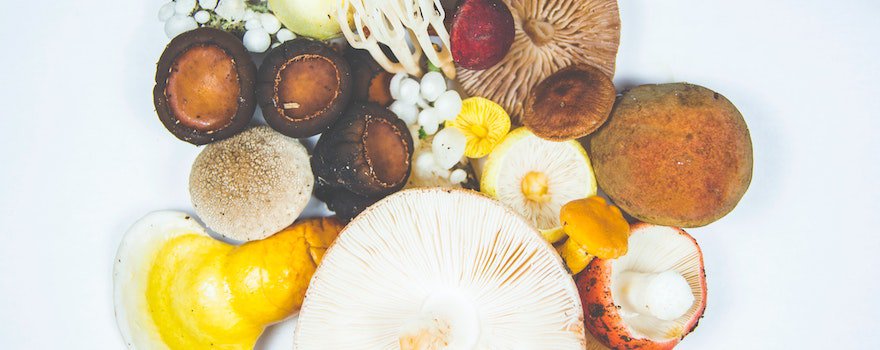
Reishi is even more effective when combined with other functional mushrooms such as the shiitake or maitake. In Chinese medicine, it is traditionally part of the famous « Imperial Trio » pairing reishi with cordyceps and ginseng. An ideal combo to regain energy and vitality in cases of fatigue.
To fight stress and calm the mind, you can take rhodiola or ashwagandha (Withania somnifera) alongside.
Reishi dosage
⚖️ The recommended dosage varies between 1 and 10 g of reishi per day. It is advised to start with small doses before gradually increasing according to how your body reacts.
⏳ Reishi should be consumed long-term to obtain results. However, to avoid getting the body too accustomed, it is important to take a one-week break every 3 weeks.
💊 In tablets : up to 5 per day for 250 mg capsules.
🥄In powder : up to 10 g per day.
🧪 Mother tincture : 20 drops, 3 times per day.
☕️ As an infusion : 1/2 cup, twice a day (morning and evening).
Contraindications and side effects
Reishi has certain contraindications and its use is not recommended for the following people :
- As a precaution, young children, pregnant or breastfeeding women should avoid consuming it.
- It may interact with the action of blood pressure medications, anticoagulants, and is not recommended before surgery.
- Because of its blood-pressure-lowering effect, its consumption is not recommended for people suffering from low blood pressure.
Taking reishi may cause the following side effects :
- Dry mouth.
- Itching.
- Nosebleeds.
- Abdominal disorders.
- Diarrhea.
If you experience side effects, stop taking it and consult a doctor.
History, cultivation, and market of reishi
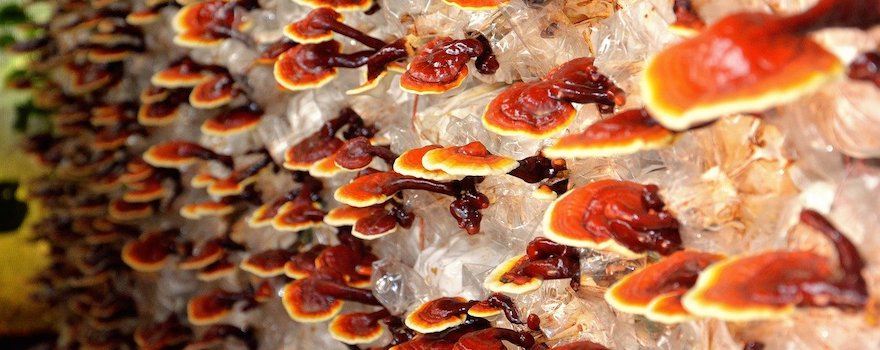
In the wild, reishi is a rare mushroom that is not easy to find. Those who wish to harvest it must go to high-altitude forests and plateaus. The perception of reishi in Chinese and Western culture is interesting: it was believed that this mushroom only grew in a very specific region of China, reserved for immortals and the blessed.
Reishi was so precious that its consumption was reserved for the Emperor, the nobility and privileged people. The mushroom then represented spiritual power, divinity and immortality.
Today, it is in Japan that reishi is most cultivated. Having become the the world27s leading producer, it is grown there on straw substrate, wood shavings, logs or stumps. But in China too, the so-called “medicinal” mushrooms occupy a very important place in society.
Report by Julia Perez and Charlotte Jean
Sources and scientific studies
Sissi Wachtel-Galor, John Yuen, John A. Buswell, and Iris F. F. Benzie. 2011. Herbal Medicine: Biomolecular and Clinical Aspects.
Wang X, Lin Z, 2019. Immunomodulating Effect of Ganoderma (Lingzhi) and Possible Mechanism.
Chen HS, Tsai YF, Lin S, Lin CC, Khoo KH, Lin CH, Wong CH, 2004. Studies on the immuno-modulating and anti-tumor activities of Ganoderma lucidum (Reishi) polysaccharides.
Singh R, Dhingra GS, Shri R, 2016. Evaluation of Antianxiety Potential of Four Ganoderma (Agaricomycetes) Species from India in Mice.
Rahman MA, Abdullah N, Aminudin, 2018. Evaluation of the Antioxidative and Hypo-cholesterolemic Effects of Lingzhi or Reishi Medicinal Mushroom, Ganoderma lucidum (Agaricomycetes), in Ameliorating Cardiovascular Disease.
Shevelev OB, Seryapina AA, Zavjalov EL, Gerlinskaya LA, Goryachkovskaya TN, Slynko NM, Kuibida LV, Peltek SE, Markel AL, Moshkin MP, 2018. Hypotensive and neurometabolic effects of intragastric Reishi (Ganoderma lucidum) administration in hypertensive ISIAH rat strain.
Sohretoglu D, Huang S, 2018. Ganoderma lucidum Polysaccharides as An Anti-cancer Agent.
Lin Z, Sun L, 2019. Antitumor Effect of Ganoderma (Lingzhi) Mediated by Immunological Mechanism and Its Clinical Application.
Dorothy McMeekin, 2007. The perception of Ganoderma lucidum in Chinese and Western culture.
