

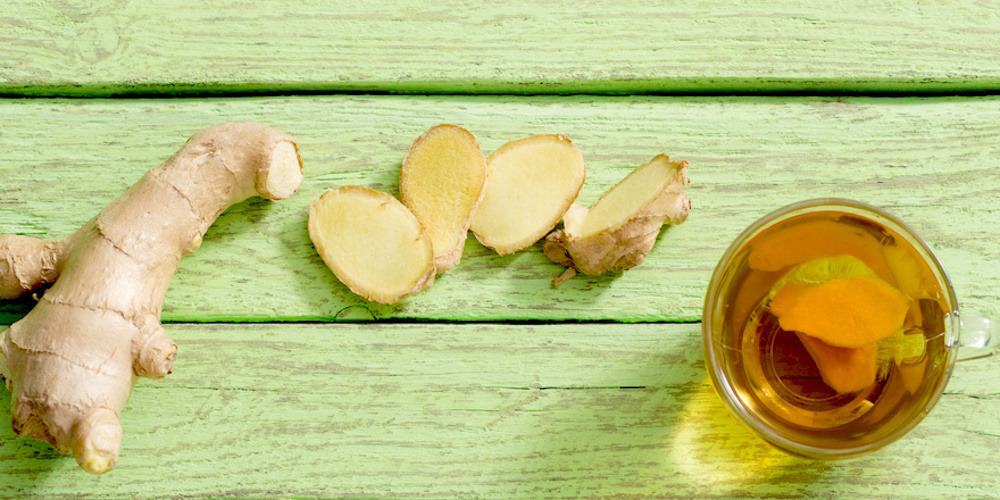
BENEFITS OF GINGER
✓ Anti-inflammatory
✓ Strengthens the immune system
✓ Antioxidant
✓ Anti-nausea and anti-vomiting
✓ Improves digestion
What is ginger?
Ginger (Zingiber officinale) is a tropical flowering plant from the family Zingiberaceae, native to India, where its fleshy rhizome has been used in cooking and consumed for therapeutic purposes for 4,000 years. This spice, a cousin of turmeric and cardamom, is now produced in other countries of the Asian continent, China, Indonesia, in Africa (notably in Nigeria) but also in Australia and Peru.
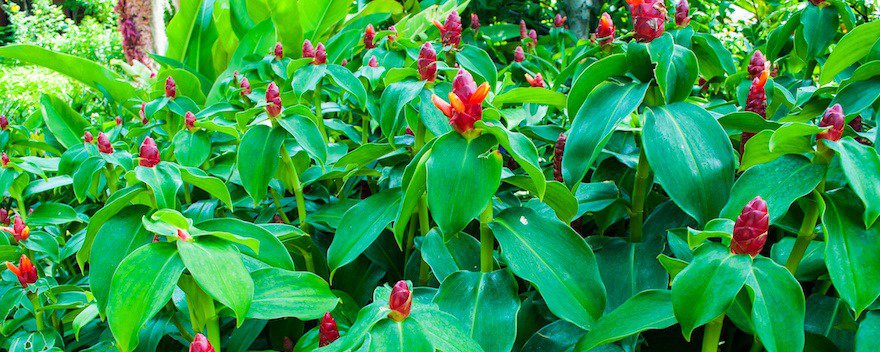
In Ayurvedic medicine, the traditional Indian medicine, ginger is regarded as a pillar — a universal remedy. It is mainly credited with anti-inflammatory, antioxidant, anti-nausea and anti-infective benefits. One of its bioactive compounds, gingerol, is responsible for its pungent flavor, the warming sensation it produces and its many virtues.
Indeed, its main phenolic compound is gingerol, also called [6]-gingerol. When the rhizome is cooked or dried, gingerol becomes zingerone and shogaol, which have similar properties.
It is the very high concentration of gingerol in ginger that makes it an ultra-healthy food and beneficial for the body in every respect.
Furthermore, it is often thought that ginger is an aphrodisiac… A reputation that goes back a long way: in antiquity, Pliny the Elder, author of the famous Naturalis Historia, already spoke of this virtue. This aspect is also mentioned in the Kama Sutra. As for the Comtesse du Barry, she incorporated it into her love potions. Its vasodilatory effect would facilitate increased blood flow for an erection, and its taste would stimulate sexual appetite.
Also read the Is ginger really an aphrodisiac?
To date, no scientific study has proven that it is indeed an aphrodisiac, but it is entrenched in our collective imagination as such.
The etymology of ginger takes us on a bit of a journey: the word comes from the Latin zingiber, derived from the Greek zingiberis, itself from the Arabic zangabil, borrowed from the Sanskrit srngaveram, which denotes its outline, as it literally means horn-shaped.
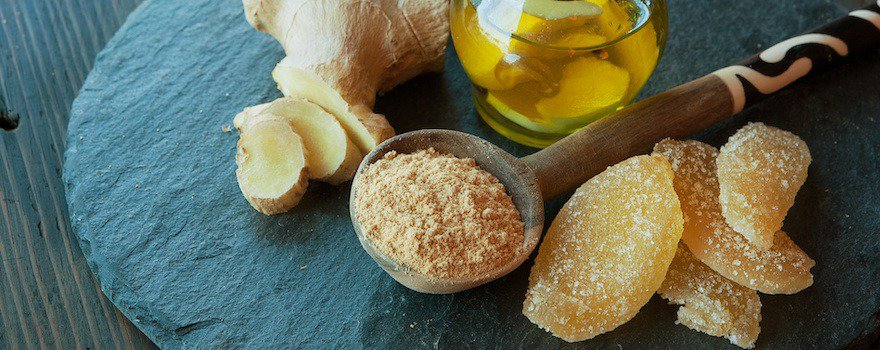
It is characterized by its pungent, lemony flavor, a spice used in many Asian cuisines (Indian, Indonesian, Japanese, Chinese…) and nowadays Western ones. It is also found as candies, candied, gingerbreads and beers (ginger beers), but in that form it’s difficult to take advantage of its therapeutic virtues! Ideally it should be eaten fresh, dried and powdered or as an infusion.
Nutritional composition
- Proteins
- Vitamins: B, C, E
- Minerals and trace elements: magnesium, manganese, phosphorus, potassium, iron, zinc, sodium
- Active compounds: gingerol, shogaol, paradol, zingerone
Benefits of ginger
🌵 Anti-inflammatory
Ginger has always been used in Ayurvedic medicine and traditional Chinese medicine for its anti-inflammatory properties, notably in cases of arthritis and inflammatory rheumatism.
Its anti-inflammatory action is attributed mainly to the gingerols, shogaols and paradols it contains. It helps reduce different types of inflammation-related pain (muscular, joint, menstrual…).
This study from the Miami Veterans Affairs Medical Center and the University of Miami demonstrated that consuming concentrated extracts helps reduce the symptoms of knee osteoarthritis.
🛡 Strengthens the immune system
Ginger is anti-infective, it has antimicrobial and antiviral properties and will stimulate the immune system. That is why it is recommended in cases of colds, sore throats and flu-like illnesses.
This study from K.S. Rangasamy College of Arts and Science in India demonstrated its antibacterial properties.
🥝 Antioxidant
Ginger is among the most antioxidant-rich foods. It contains around forty antioxidant agents, notably gingerol, which helps fight cellular aging.
Some antioxidants present in the rhizome are released during its cooking, so it can also be eaten cooked for this purpose.
This study conducted by various universities in Thailand demonstrated its strong antioxidant activity.
🙊 Anti-nausea and anti-vomiting
Ginger is antiemetic: it is particularly effective at combating nausea and vomiting, regardless of the cause (pregnancy, motion sickness, post-surgery, post-chemotherapy…). To benefit from this property, it is recommended to consume it in powdered form.
The gingerols and shogaols it contains are responsible for this property, as they may reduce stomach movements.
Since 1999, the WHO has recognized ginger as an effective preventive agent against nausea and vomiting in pregnant women.
This review of 12 studies conducted on 1,278 pregnant women showed that its consumption effectively reduces their nausea.
♻️ Improves digestion
Ginger can be used to aid digestion. It helps stimulate the activity of digestive enzymes and speed up the digestion process, emptying the stomach more quickly and thus limiting indigestion problems.
This study from the Kaohsiung Medical Center in Taiwan showed that it speeds up stomach emptying and stimulates digestion.
🍳 Anti-cholesterol
Ginger can help lower LDL cholesterol levels (the bad cholesterol) in the blood.
This study from the Babol University of Medical Sciences in Iran, conducted on 85 individuals, showed that consuming 3 g of powdered ginger helps significantly lower cholesterol levels.
🔬 Potentially anti-cancer
Ginger may play a role in the prevention of certain cancers thanks to gingerol. More research is needed to establish the mechanisms at work and its effectiveness in cancer prevention and treatment.
This study from the Michigan Medical School in the United States, conducted on 30 people, showed that consuming 2 g of ginger extract helps reduce the risks of inflammation and colon cancer.

Expert opinion
Ginger is probably one of the most accessible superfoods: very easily available in all grocery stores, this spice—even organic—remains inexpensive, and its positive effects are numerous.
💡Effects on nausea: several studies have shown that ginger is effective at relieving nausea. Whether caused by pregnancy, a chemotherapy treatment, or motion sickness, a ginger infusion can help if you enjoy the taste. Always remember to consult your doctor if you are taking other medications, as interactions can occur, notably with anticoagulants.
💡Digestive comfort: through its action on gastric emptying, it helps soothe digestive discomfort after an overly large meal. However, be careful not to overuse it, because in large quantities it can cause heartburn in some people.
💡Fighting the common cold: although there is unfortunately no cure for the common cold, it is quite possible to alleviate its symptoms. For this, ginger is one of the good allies: as a tea, combined with lemon and honey, it soothes coughs and eases flu-like symptoms.
Perrine Bellanger – dietitian nutritionist
How to consume ginger?
Fresh ginger
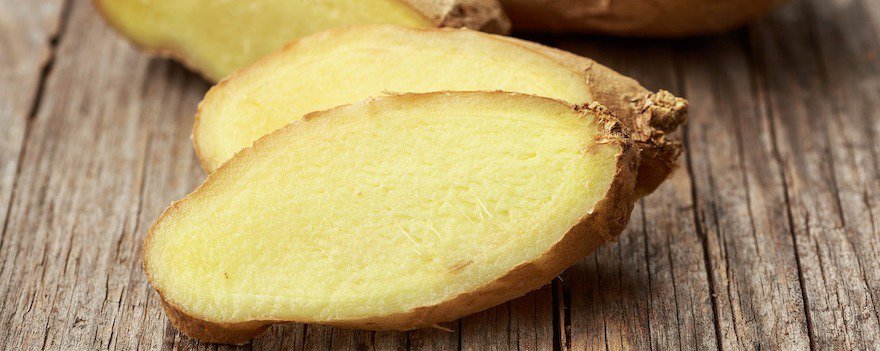
Unlike other foods, ginger retains or even develops additional properties when it is cooked or dried into powder. Consuming it fresh is therefore not the only way to benefit from its properties, but it is a good way to enjoy its zesty juice.
To choose it well, select a firm rhizome without mold and make sure that its flesh is light-colored, juicy, and fragrant. Fresh and unpeeled, it can be stored for up to 3 weeks in the refrigerator.
Ginger powder
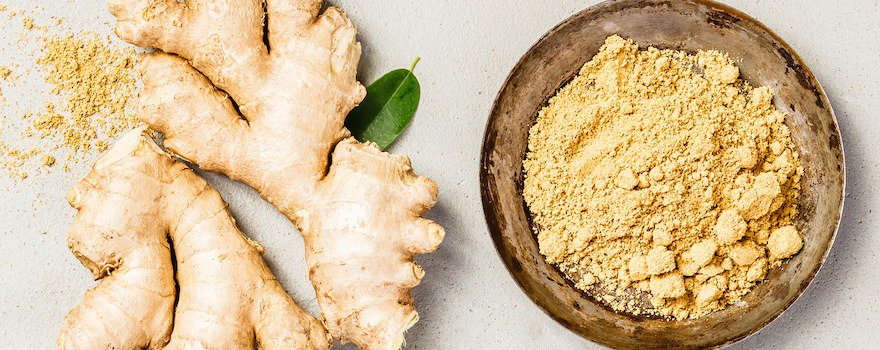
The powdered, or ground, ginger is obtained from mature rhizomes (harvested more than 7 months after planting), whose flavor is more pronounced than that of rhizomes intended to be consumed fresh. They are dried and then ground to obtain the powder.
The powder can be used to season savory and sweet dishes (carrot cakes, gingerbread…), as well as hot beverages.
Ginger infusion
A pleasant and easy way to consume it daily is to drink ginger as an infusion. These infusions can be recommended in cases of winter illnesses, nausea, and digestive problems. They can also be consumed without any particular issue to treat, as they contribute to overall well-being.
Also read the Ginger infusion: benefits and preparation tips
An infusion (steep a tablespoon of chopped ginger or a teaspoon of powdered ginger in hot water for 20 minutes) or a decoction (infuse the same quantities/type in water while it heats) let you benefit from all of its remarkable properties.
Ginger juice
The ginger juice is another way to enjoy its benefits while savoring its spiciness. In Senegal, it is called Gnamakoudji, “spicy water”. Drinking ginger as a juice can be a great pick-me-up to start the day.
Also read the Ginger juice: benefits and recipes
You can easily make it at home: blend a peeled piece of rhizome with a little water, add lemon and brown sugar then more water, strain and keep refrigerated.
Ginger and lemon
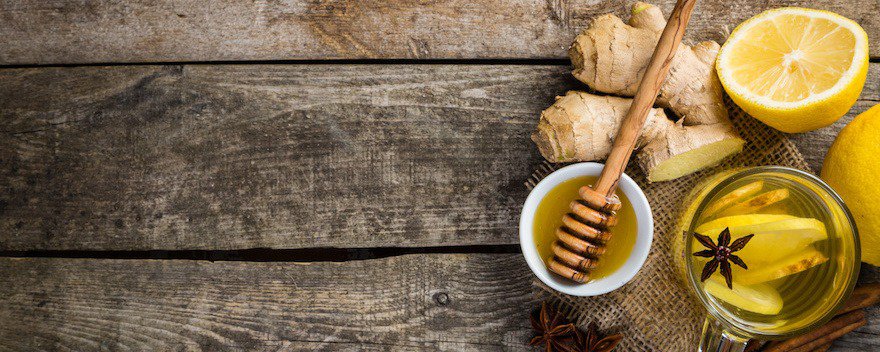
Ginger and lemon, these are two foods that combine particularly well! Not only in taste but also therapeutically. Given their individual benefits, their synergy is even more powerful.
On the one hand, this combination, thanks to its antiseptic and anti-inflammatory effects, helps to effectively fight the colds, coughs, and flu-like symptoms…. On the other hand, combining these two foods is a good way to detoxify the body.
It is therefore recommended to combine them as much as possible, for example in an infusion, by mixing into hot water a teaspoon of ground ginger or a tablespoon if it is fresh and grated, and half a squeezed lemon.
Don’t hesitate to add honey to sweeten the drink, and to consume it on an empty stomach for a better detox.
Ginger and turmeric
Ginger and its spice cousin the turmeric pair very well in flavor and also form a good health combo! They can, for example, be consumed as a soup.
Dosage
⏳ Good news: ginger can be consumed daily without any particular restrictions.
⚖️ Just keep in mind that 10 g of fresh ginger is equivalent to 1 to 2 g dried.
⚖️ Pregnancy nausea: 2 g dried/day
🍵 Infusion: 1 g dried or 5 g fresh grated per infusion, several times a day
Contraindications and side effects
At the recommended doses, there are no known contraindications or adverse effects. However, its anticoagulant properties mean ginger should be consumed with caution if one is prone to coagulation problems or is already taking anticoagulant medications.
Additionally, pregnant women are advised to seek medical advice before beginning a ginger regimen.
Detailed nutritional values
This data has been synthesized and verified for Darwin Nutrition by Laure Fourchaud, Doctor in nutritional physiology.
| Ginger (powder) | /100g | %RI* | /5g (1cc) | %RI |
| Energy (kcal) | 336 | 16,8 | 16,8 | 0,84 |
| Fiber (g) | 14,1 | 47 | 0,71 | 2,35 |
| Water (g) | 9,66 | — | 0,48 | — |
| Macronutrients | ||||
| Protein (g) | 9,05 | 18,1 | 0,45 | 0,91 |
| Carbohydrates (g) | 58,3 | 22,42 | 2,92 | 1,12 |
| Sugars (g) | 3,39 | 3,77 | 0,17 | 0,19 |
| Fat (g) | 4,24 | 6,06 | 0,21 | 0,3 |
| Minerals | ||||
| Calcium (mg) | 114 | 14,25 | 5,7 | 0,71 |
| Iron (mg) | 19,8 | 141,43 | 0,99 | 7,07 |
| Copper (mg) | 0,48 | 48 | 0,02 | 2,4 |
| Magnesium (mg) | 214 | 57,07 | 10,7 | 2,85 |
| Manganese (mg) | 33,3 | 1665 | 1,67 | 83,25 |
| Phosphorus (mg) | 168 | 24 | 8,4 | 1,2 |
| Potassium (mg) | 1320 | 66 | 66 | 3,3 |
| Sodium (mg) | 27 | 1,08 | 1,35 | 0,05 |
| Salt (g) | 0,068 | 1,13 | 0 | 0,06 |
| Zinc (mg) | 3,64 | 36,4 | 0,18 | 1,82 |
| Vitamins | ||||
| Vitamin A (mg) | 18 | 2,25 | 0,9 | 0,11 |
| Vitamin C (mg) | 0,7 | 0,88 | 0,04 | 0,04 |
| Vitamin D (µg) | — | — | — | — |
| Vitamin E (mg) | — | — | — | — |
| Vitamin B1 (mg) | 0,046 | 4,18 | 0,002 | 0,21 |
| Vitamin B2 (mg) | 0,17 | 12,14 | 0,01 | 0,61 |
| Vitamin B3 (mg) | 9,62 | 60,13 | 0,48 | 3,01 |
| Vitamin B5 (mg) | 0,48 | 8 | 0,02 | 0,4 |
| Vitamin B6 (mg) | 0.63 | 45 | 0.03 | 2.25 |
| Vitamin B9 or folate (µg) | 13 | 6.5 | 0.65 | 0.33 |
| Vitamin B12 (µg) | — | — | — | — |
| Vitamin K (μg) | 0.8 | 1.07 | 0.04 | 0.05 |
*%AR : % Reference intake for an adult
Antioxidants: (6)-gingerol, (10)-gingerol, shogaols
Sources and scientific studies
Altman RD, Marcussen KC, 2001. Effects of a ginger extract on knee pain in patients with osteoarthritis.
Ponmurugan Karuppiah, and Shyamkumar Rajaram, 2012. Antibacterial effect of Allium sativum cloves and Zingiber officinale rhizomes against multiple-drug resistant clinical pathogens.
Kwanjit Danwilai, Jitprapa Konmun, Bung-orn Sripanidkulchai, and Suphat Subongkot, 2017. Antioxidant activity of ginger extract as a daily supplement in cancer patients receiving adjuvant chemotherapy: a pilot study.
Estelle Viljoen, Janicke Visser, Nelene Koen, and Alfred Musekiwa, 2014. A systematic review and meta-analysis of the effect and safety of ginger in the treatment of pregnancy-associated nausea and vomiting.
Wu KL, Rayner CK, Chuah SK, Changchien CS, Lu SN, Chiu YC, Chiu KW, Lee CM, 2008. Effects of ginger on gastric emptying and motility in healthy humans.
Alizadeh-Navaei R, Roozbeh F, Saravi M, Pouramir M, Jalali F, Moghadamnia AA, 2008. Investigation of the effect of ginger on lipid levels. A double blind controlled clinical trial.
Suzanna M. Zick, D. Kim Turgeon, Shaiju K Vareed, Mack T. Ruffin, Amie J. Litzinger, Benjamin D Wright, Sara Alrawi, Daniel P. Normolle, Zora Djuric, and Dean E. Brenner, 2011. Phase II study of the Effects of Ginger Root Extract on Eicosanoids in Colon Mucosa in People at Normal Risk for Colorectal Cancer.
U.S. Department of Agriculture, Agricultural Research Service (2014). USDA National Nutrient Database for Standard Reference, Release 27. Nutrient Data Laboratory Home Page, http://www.ars.usda.gov/ba/bhnrc/ndl
Monograph Zingiber officinal (Ginger). Altern Med Rev 2003;8(3):331-5. Desaulniers Marguerite, Dubost Mireille. Food composition table, volume 1. Department of Nutrition, University of Montreal, Canada, 2003.
Encyclopedia Britannica. Ginger. Britannica.com
