

 SCIENTIFIC VALIDATION
Laure Fourchaud – 25.06.2021
PhD in nutritional physiology
BENEFITS
✓ Energizing
✓ Improves athletic performance
✓ Boosts libido
✓ Stimulates fertility
✓ Boosts concentration and memory
✓ Relieves menopause symptoms
What is maca?
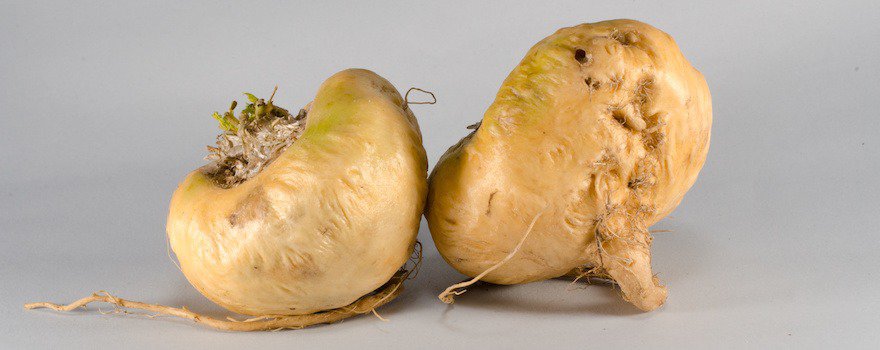
Maca (Lepidium Meyenii) is a yellow or purple tuber, similar to a turnip, from the Brassicaceae family (cabbage, radish, rapeseed, mustard…).
Although it’s been found here for about twenty years, it has been consumed in the Peruvian Andes for millennia.
The Incas, a people of great warriors and farmers who dominated South America from the 13th to the 16th century, already praised the energizing and medicinal properties of this food, considered a natural aphrodisiac.
In Quechua, “MA” means “cultivated at altitude”, and “CA” means “food that strengthens”.
This is one of the few edible plants able to grow at such high altitudes as those of the Andean high plateaus.
Resistant to high daytime temperatures, to frost at night, to strong winds, to intense climatic changes and to semi-desert conditions, it grows at an altitude between 3,800 and 4,500 meters.
Maca therefore deserves the superfood label twice over!

It is part of adaptogenic plants, like ginseng. These are remarkable because they increase our ability to adapt to different stresses.
In Peru, and especially in the Andes, maca is consumed daily; it helps communities combat difficult living conditions (altitude, nutritional deficiencies…).
It stimulates metabolism, supports hormonal balance, and promotes vitality. But it’s mainly the research on its ability to boost libido and fertility that has made it famous.
The list of benefits, proven or claimed, of this plant is very, very long. A simple Google search quickly overwhelms you with the number of virtues attributed to it.
Experts consider that all these beneficial effects are due to the mechanisms the plant developed while growing in a hostile environment.
You can mainly buy and consume three types of maca: yellow maca, red maca and black maca.
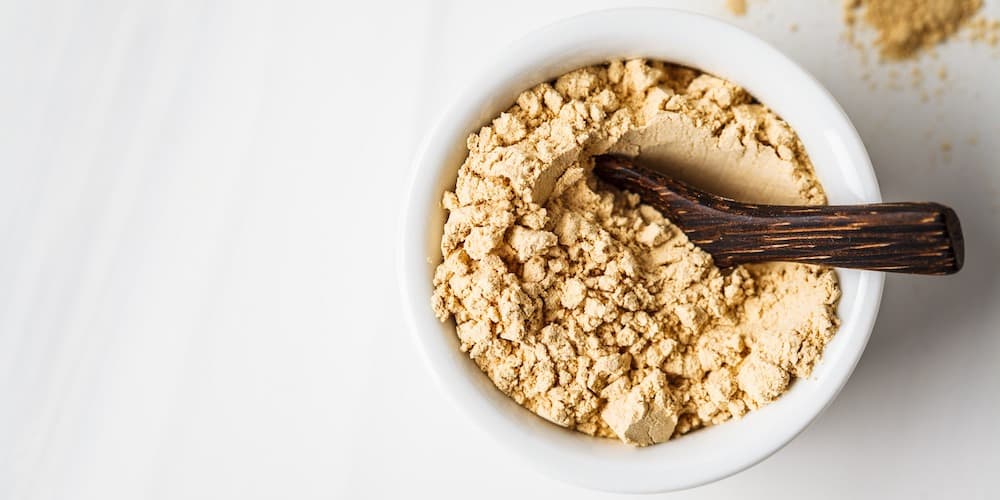
Most of the time it is eaten as powder, preferably organic, and its slight caramelized hazelnut flavor makes it rather pleasant to consume. For those who don’t like it, it is also available in capsules.
Also read the Where to find the best maca?
Nutritional composition
- Protéines : 19 Acides aminés (dont 7 essentiels)
- Vitamines : B1, B2, B3, C
- Minéraux et oligo-éléments : fer, magnésium, zinc, cuivre, calcium, phosphore, potassium
- Fibres
- Antioxydants : Flavonoïdes, Isothiocyanates
Benefits
⚡️ Energizing, improves athletic performance
Maca boosts our energy and gives us vigor because it is a concentrate of proteins, vitamins, and minerals. From its origins, it was consumed in large quantities to increase strength and speed up recovery after exertion among the great pre-Columbian warriors and farmers.
It improves athletic performance thanks to its high amino acid content. It helps prolong exercise duration by reducing fatigue, and reduces muscle soreness and recovery time.
It acts positively and over the long term, without the harmful effects that caffeine or other stimulants can have.
Scientific studies:
- Cette étude de la Northumbria University à Newcastle a démontré que la consommation de maca a amélioré les performances sportives de cyclistes, parcourant 40km plus rapidement et plus facilement.
- Celle-ci, menée par Korean Food Research Institute, a montré que la maca augmentait l’endurance à la nage des rats. Celle-ci a montré des résultats similaires mais a été menée sur des souris.
🔥 Boosts libido
Maca contains two active compounds, macaenes and macamides, present only in this plant and believed to play a key role in boosting sexual energy.
It can increase sexual desire in men and women. More specifically, it increases erectile function in men and may help combat impotence.
It is commonly used as an aphrodisiac, hence its nickname ‘Peruvian Viagra’.
Scientific studies:
- Cette étude de l’Université Cayetano Heredia de Lima, menée sur des hommes âgés de 21 à 56 ans pendant 12 semaines, démontre que la maca augmente le désir sexuel au bout de 8 semaines.
🌳 Stimulates fertility
Andean peoples observed that maca enabled livestock to reproduce more easily and have healthier litters. This led them to consume it for the same purposes and thus combat infertility problems.
In men: it would increase the volume, quality, and motility of sperm.
In women: it may help raise levels of the luteinizing hormone, which stimulates ovulation. It also helps regulate cycles, which can also lead to less painful periods.
Also read Maca to boost your fertility
It’s an excellent dietary supplement aimed at combating infertility.
Scientific studies:
- Cette étude de l’Univeristé Cayetano Heredia de Lima menée pendant 4 mois auprès de neuf hommes âgés de 24 à 44 ans a démontré une nette augmentation de la production du sperme et de la motilité des spermatozoïdes.
- Celle-ci, menée par l’Université de Nakamura Gakuen de Fukuoka au Japon, a démontré la hausse du niveau de l’hormone lutéinisante (hormone qui déclenche l’ovulation) chez des rates a qui on avait administré de la maca pendant 7 semaines.
🌺 Relieves symptoms of menopause
Maca does not contain hormones but nutrients that support our hormonal balance and could thus act on the discomforts caused by menopause.
It relieves hot flashes, insomnia, and irritability. It naturally helps make this transition healthier and more comfortable for women.
Scientific studies:
- L’Université de Victoria en Australie a démontré les effets bénéfiques de la maca sur les symptômes de la ménopause, lors de cette étude menée pendant 12 semaines chez 14 femmes.
👩🏫 Boosts concentration and memory
Thanks to the phosphorus it contains, it helps develop memory and better information processing by our brain. It’s also an ally for learning, so it is particularly recommended during exam periods for students!
Maca also helps improve concentration. In addition, its nutritional qualities and energizing properties are beneficial for brain function.
Scientific studies:
- Cette étude de l’Université Cayetano Heredia de Lima démontre l’amélioration de la mémoire chez des souris.
🔬 Potentially anti-cancer
Thanks to glucosinolates, powerful antioxidants that it contains, maca may help prevent the development of cancers.
These active compounds give it its slightly peppery taste. They are found in other foods of the Brassicaceae family such as mustard and cabbages. Many studies associate them with the prevention of lung and colorectal cancer.
Scientific studies:
- Le Kunming Insitute of Botany en Chine a mené cette étude sur les composés bioactifs de la maca, notamment les glucosinolates.
- Cette étude brésilienne de 2020 a étudié notamment le potentiel anti-cancer de la maca.
🎈 Helps reduce prostate size
Maca improves prostate health by helping to combat prostate hyperplasia.
Scientific studies:
- Cette étude de l’Université Cayetano Heredia à Lima montre les effets de la maca sur l’hyperplasie de la prostate de rats.
👩🦰 Strengthens and promotes hair regrowth
Maca is traditionally used in hair treatment to stimulate hair growth and strength in men and women.
It is an effective natural treatment for hair loss.
🍑 Skin care
Maca helps improve the appearance of the skin, its complexion, and promotes its hydration.
It makes the skin less sensitive to temperature changes and may help with hormonal acne.

Expert opinion
“Originally from Peru, maca is a particularly hardy plant that grows at high altitude. It is best known for its effects on fertility and hormonal balance.
💡Hormonal balance and fertility: traditional use, as well as recent studies, have shown a positive effect of maca consumption on fertility in both men and women. Maca also contributes to female hormonal balance: menstrual cycles become more regular, and unpleasant menopause symptoms are alleviated.
💡Nutritional richness: whether consumed as a dietary supplement (the most common form outside South America) or as a whole food, maca is rich in a variety of nutrients. Its copper and selenium content is particularly noteworthy.
💡How to consume it: for speed and convenience, capsules are perfect. For people who already cook or use superfoods, maca powder fits very well into smoothies, porridges, and other composed bowls.
💡Possible risks: ancestral consumption of maca in its native regions does not show negative effects. However, because we most often use it differently, with production methods that can alter its effects, it is always safer to seek the advice of a healthcare professional before starting a course. This is particularly the case for people with metabolic syndrome.”
Perrine Bellanger – dietitian-nutritionist
How to take maca?
Powder
The maca powder is the most common form on the market. Once harvested and cleaned, it is sun-dried and then ground into powder.
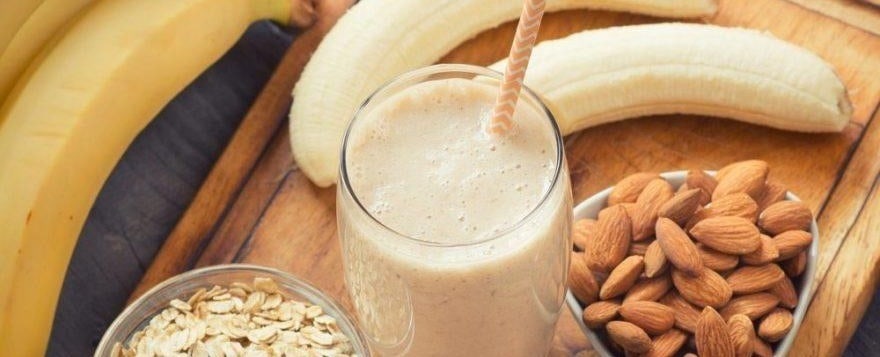
Maca powder is easy to store and consume; it can enhance dishes and beverages, and can replace part of the flour in pastries or bread.
Capsule
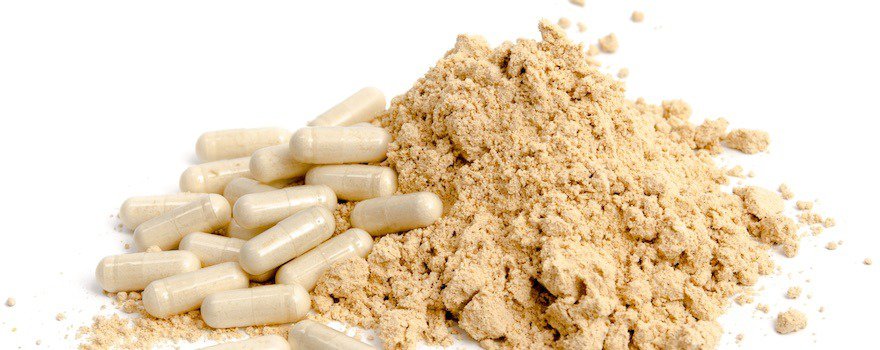
If you don’t like the taste of the powder, opt for capsules. In that case, choose capsules or tablets concentrated in active compounds to maximize the plant’s benefits. Ideal for a treatment course and to enjoy rapid effects!
Liquid extract
You can also find liquid maca extract, which is recommended if the powdered form is poorly digested. It can be incorporated into beverages, particularly smoothies.
The Maca Vital is an extract intended for cosmetic use, dedicated to hair care.
Taste of maca
Raw maca has a bitter and pungent taste. Unless you go to Peru, you are unlikely to find the tubers in their raw form, as their export is prohibited because of a case of biopiracy with the United States.
The powder has a nutty, slightly malty flavor that leans toward caramel and cocoa. This makes it very indulgent and allows it to be easily incorporated into sweet or savory recipes. On Instagram you can see tempting photos of maca pancakes, Macacchino, Maca Smoothies, etc. The powder has a very comfort food vibe, which will make it easy to integrate into your daily diet !
Sustainable consumption: organic maca and maca from Peru
✓ We would say that the most important thing when choosing maca is first to make sure it is certified organic, in order to avoid any pesticide residues and heavy metals. Organic farming is also more respectful of the environment, ecosystems, and the growers.
✓ On the other hand, make sure it comes from Peru and not China, because Chinese maca is not native and is genetically modified (GMO). This also carries increased risks of pollution and toxicity.
✓ Buying organic maca from Peru is a responsible investment. This helps small-scale maca farms that respect traditional plant-extraction techniques. Take a look at the association Apromacae, which brings together more than 30 Peruvian maca-producing families in the Junin province. Finally, fair-trade certification will help ensure a fairer income for producers.
Dosage
⚖️ We generally recommend consuming between 1 g and 1.5 g per day depending on the benefits sought.
⏳ It is recommended to start with small doses and then increase them gradually. Note that the waiting time before seeing results varies between individuals and can range from a few days to several months. A first course of 3 months followed by a two-month break is recommended to assess the effects.
💊 In tablets, capsules: refer to the manufacturer’s instructions
Contraindications and side effects
With all these benefits, you might think there must be a downside! Rest assured, there are no contraindications. Maca is naturally good for health and no side effects have been reported.
However, pregnant women and people with cardiovascular risk factors, thyroid problems, or high blood pressure are advised to consult a healthcare professional before starting a course.
Keep in mind that it is not uncommon for Andean inhabitants to eat 40 to 50g of the raw tuber per day, and no toxic effects have been observed from this consumption.
History, cultivation and market
From the Andean high plateaus to the global market
Maca is mainly cultivated in the Junin and Pasco departments, in the heart of the Peruvian Andes. Archaeological remains from this region have shown that it has been consumed for 4,000 years, and the Spanish conquistadors provide information on its cultivation from the 16th century.
But over the centuries and changes in lifestyles, its cultivation was neglected and came to concern only certain Andean communities. In 1979, the Peruvian state counted only 70 hectares of maca fields, so it implemented a program to revive its production.
Since the late 1990s, the benefits of the superfood have spread beyond Peruvian borders, and the plant began to attract interest. On one hand, an American company filed a patent for the exclusive commercialization of an extract; on the other hand, China began to exploit its own genetically modified maca.
Today, maca consumption worldwide is exploding: its exports increased by 109% between 2013 and 2014. In 2017, Peru exported 50,000 tons to the countries with the highest demand: the United States, Hong Kong, China and Japan.
Yellow, red or black maca: what’s the difference?
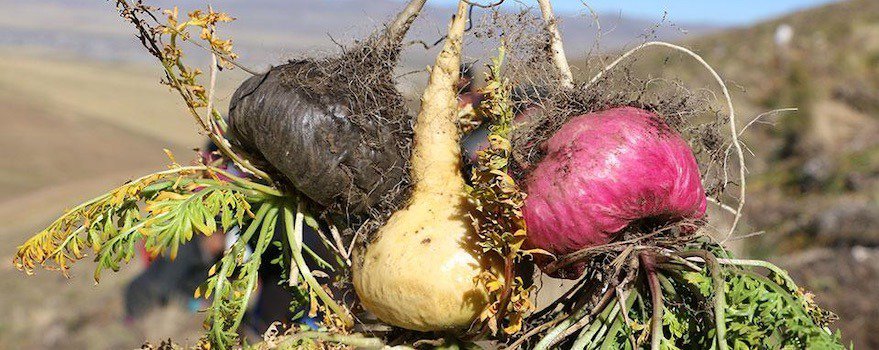
How to choose? There is no fundamental difference between these three types. All three possess the same properties to varying degrees. The red one is more effective for those who want to treat their prostate, for example.
Also read the What are the differences between red maca, black maca and yellow maca?
Here are the specific characteristics recognized in the three types of maca:
- Maca jaune : c’est le type le plus classique, il permet essentiellement de booster notre énergie et notre libido.
- Maca rouge : accroît davantage la fertilité féminine, développe l’endurance, lutte contre les symptômes de la ménopause et les problèmes de peau tels que l’acné hormonale, et lutte contre les problèmes de prostate.
- Maca noire : plus adaptée à l’augmentation de la fertilité masculine et féminine, du volume et de la qualité du sperme, et des capacités intellectuelles notamment la mémoire et la concentration.
Detailed nutritional values
These data were synthesized and verified for Darwin Nutrition by Laure Fourchaud, PhD in nutritional physiology.
| Maca powder | /100g | %AR* | 5g (1 tsp) | %AR |
| Energy (kcal) | 380 | 19 | 19 | 0.95 |
| Fiber (g) | 8.5 | 34 | 0.42 | 1.7 |
| Macronutrients | ||||
| Protein (g) | 10 | 8.3 | 0,5 | 0.41 |
| Carbohydrates (g) | 80 | 60 | 4 | 3 |
| Fat (g) | 1 | 1 | 0.05 | 0.05 |
| Minerals | ||||
| Calcium (mg) | 316 | 40 | 15.8 | 2 |
| Iron (mg) | 2.2 | 24 | 0.11 | 1.2 |
| Copper (mg) | 5 | 500 | 0.25 | 25 |
| Magnesium (mg) | 104 | 24 | 5.2 | 1.2 |
| Manganese (µg) | 80 | 4 | 4 | 0,2 |
| Phosphorus (mg) | 386 | 55 | 19.3 | 2.75 |
| Potassium (mg) | 2050 | 102.5 | ||
| Sodium (mg) | 18.7 | 0.74 | 0.93 | 0.03 |
| Selenium (mg) | 0.02 | 0.04 | 0 | 0 |
| Zinc (mg) | 4.4 | 44 | 0.22 | 2.2 |
| Vitamins | ||||
| Vitamin A (mg) | 0.07 | 11 | 0 | 0.55 |
| Vitamin C (mg) | 3 | 2.7 | 0.15 | 0.13 |
| Vitamin E (mg) | 0.87 | 7.2 | 0.04 | 0.36 |
| Vitamin B1 (mg) | 0.25 | 23 | 0.01 | 1.15 |
| Vitamin B2 (mg) | 0.25 | 18 | 0.01 | 0.9 |
| Vitamin B3 (mg) | — | — | — | — |
| Vitamin B5 (mg) | — | — | — | — |
| Vitamin B6 (mg) | 0.36 | 26 | 0.02 | 1.3 |
| Vitamin B9 or folates (µg) | — | — | — | — |
*%AR : % Reference intake for an adult
Antioxidant compounds: flavonoids, isothiocyanates
Sources and scientific studies
Stone M, Ibarra A, Roller M, Zangara A, Stevenson E, 2009. A pilot investigation into the effect of maca supplementation on physical activity and sexual desire in sportsmen.
Gonzales GF, Córdova A, Vega K, Chung A, Villena A, Gónez C, Castillo S, 2002. Effect of Lepidium meyenii (MACA) on sexual desire and its absent relationship with serum testosterone levels in adult healthy men.
Gonzales GF, Cordova A, Gonzales C, Chung A, Vega K, Villena A, 2001. Lepidium meyenii (Maca) improved semen parameters in adult men.
Uchiyama F, Jikyo T, Takeda R, Ogata M, 2014. Lepidium meyenii (Maca) enhances the serum levels of luteinising hormone in female rats.
Brooks NA, Wilcox G, Walker KZ, Ashton JF, Cox MB, Stojanovska L, 2008. Beneficial effects of Lepidium meyenii (Maca) on psychological symptoms and measures of sexual dysfunction in postmenopausal women are not related to estrogen or androgen content.
Rubio J, Dang H, Gong M, Liu X, Chen SL, Gonzales GF, 2007. Aqueous and hydroalcoholic extracts of Black Maca (Lepidium meyenii) improve scopolamine-induced memory impairment in mice.
Gasco M, Villegas L, Yucra S, Rubio J, Gonzales GF, 2007. Dose-response effect of Red Maca (Lepidium meyenii) on benign prostatic hyperplasia induced by testosterone enanthate.
The hexane extract of Maca improves sexual performance in rats more effectively than methanolic and chloroformic Maca extracts. Andrologia. 2002 Jun; 34: 177-9
Sonia Piacente, Virginia Carbone, Alberto Plaza, Aurelia Zampelli, Cosimo Pizza. Investigation of the Tuber Constituents of Maca (Lepidium meyenii Walp.). J. Agric. Food Chem., 2002, 50 (20), pp 5621–5625 DOI: 10.1021/jf020280x
Yali Wang, Yuchun Wang, Brian McNeil, Linda M. Harvey. Maca: An Andean crop with multi-pharmacological functions. Food Research International, Volume 40, Issue 7, August 2007, Pages 783–792
Herbal Secrets of the Rainforest, Taylor L, 2002
CIQUAL
