

BENEFITS OF ASTRAGALUS
✓ Stimulating and energizing
✓ Strengthens the immune system
✓ Supports and improves heart function
✓ Protects the liver and kidneys
✓ Helps treat respiratory conditions
What is astragalus?
Astragalus (Astragalus membranaceus) is one of the flagship plants of the Chinese pharmacopoeia. In China, the country where it is native, it is called “Huang Qi”. Before being known for its medicinal properties, it is first and foremost an herbaceous plant in the Fabaceae family, alongside 2,500 other species.
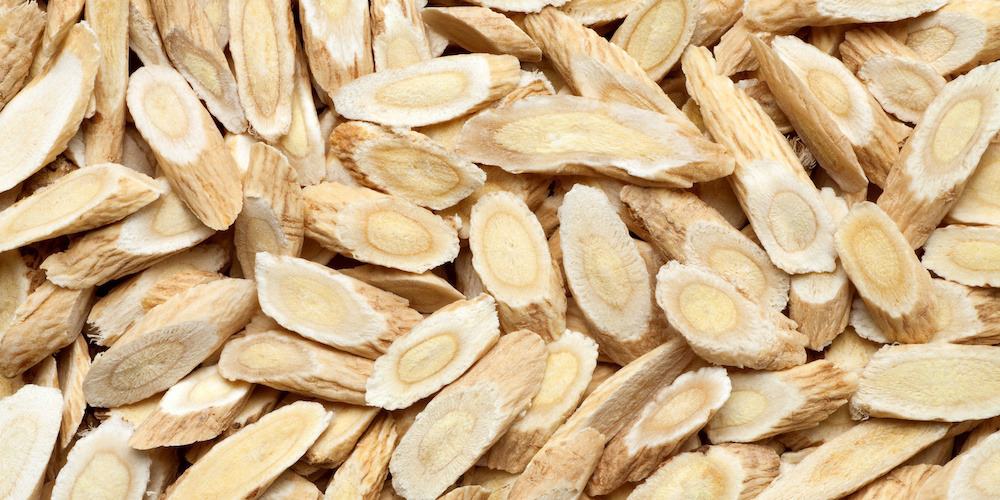
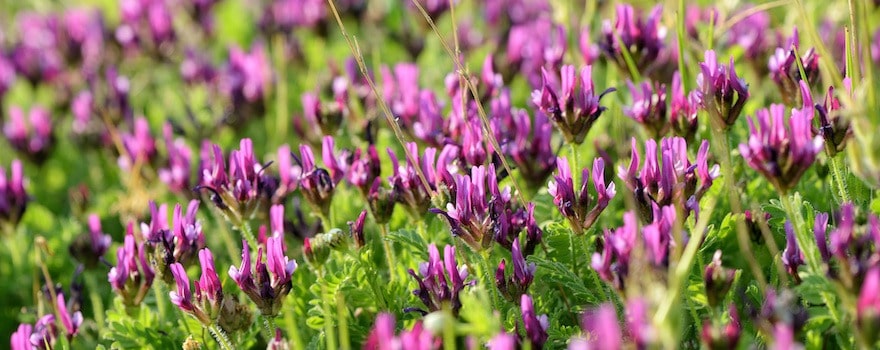
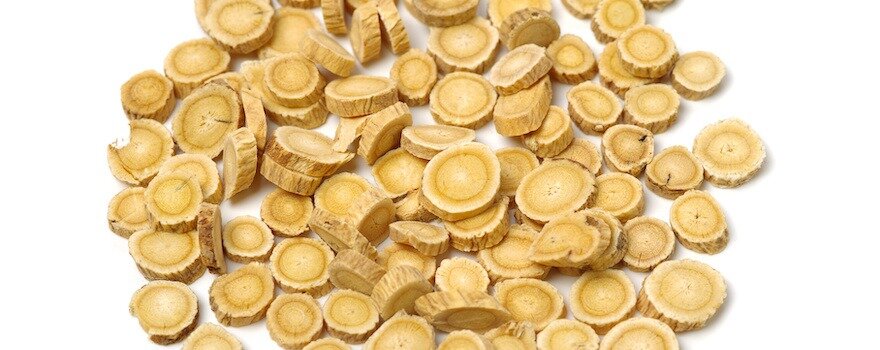
It is a deciduous plant with a creeping or bushy habit and flowers grouped in spikes or clusters. But the most interesting part of astragalus is its root : it is where the active compounds are concentrated.
In China, astragalus has been used in various ways for more than 2,000 years. As a medicinal plant on the one hand, to strengthen the body and act on the Qi (that is, vital energy). On the other hand, astragalus is used as a forage plant to feed animals and enrich the soil with nitrogen. Finally, its root is highly appreciated in cooking. It is used in the same way as the ginger or the turmeric: added to a soup, sliced or grated.
Although astragalus has been known for centuries in Asia, it was not until the 1980s that it appeared in the West . Researchers are increasingly interested in the virtues of astragalus, particularly its effects on the immune system.
Scientists then discovered a root with multiple components (polysaccharides, vitamins, minerals and trace elements…) that is very rich in antioxidant flavonoids.
Quickly, astragalus consumption spread in Europe and worldwide. It became particularly popular in the United States and Canada. Research continues today to shed light on other potential properties of astragalus. But the majority of studies so far have been conducted in animals rather than in humans.
Nutritional composition
- Polysaccharides
- Triterpenoid saponins : astragalosides I to VII
- Flavonoids : flavones and isoflavones
- Phytosterols
- Lectins
- Lignans : syringaresinol, lariciresinol
- Vitamins : A, E, C
- Amino acids
- Minerals and trace elements : iron, zinc, magnesium, selenium, potassium, calcium, manganese
Benefits of astragalus
⚡️ Stimulating and energizing
The tonifying and energizing action of astragalus is certainly one of its best-known properties. In traditional Chinese medicine, astragalus is a tonic of Spleen Qi, an organ directly linked to the body’s energy and emotional states. In Ayurvedic medicine (traditional Indian medicine), it is considered a rasayana plant because it supports vital energy.
Because of its polysaccharide content and, in part, its adaptogenic nature, astragalus can increase the body’s resistance and deeply revitalize. This includes the most exhausted organisms: chronic fatigue syndrome sufferers, elderly people, the sick or convalescent, athletes…
Astragalus notably affects the adrenal glands. As sources of energy for the body, they are also responsible for producing certain hormones. When exhausted, the adrenal glands can cause great fatigue and metabolic weakness. It is at this stage that astragalus intervenes, revitalizing them.
This study from the College of High Altitude Military Medicine in China, conducted on mice subjected to physical exercise, showed that astragalus has a clear anti-fatigue effect and promotes recovery.
🛡 Strengthens the immune system
Astragalus is a powerful immune-stimulating plant. Its root contains everything needed to rebalance and strengthen the immune system.
The polysaccharides and lectins it contains are macromolecules that play an important role in immunity. They stimulate the production of leukocytes (white blood cells) and have antioxidant activity that protects the cells.
But that’s not all ! Astragalus polysaccharides also improve the activity of natural killer cells : LAK lymphocytes.
This study from the College of Animal Science in China examined the action of astragalus polysaccharides on immune enhancement in chickens. It found that astragalus improved the immune response and promoted the production of lymphocytes.
❤️ Supports and improves heart function
Astragalus also has benefits for the heart. At the level of the cardiovascular system, it improves cardiac function by facilitating blood circulation and regulating heartbeats. In this way, it prevents the formation of clots in the arteries and cardiac arrhythmia.
It also halts lipid peroxidation in the myocardium, which leads to the formation of free radicals and damages cardiac cells. Finally, the sterols it contains reduce levels of bad cholesterol, a risk factor for heart disease.
This study from Jinzhou Medical University in China, conducted on 92 patients, demonstrated the effectiveness of astragalus in the treatment of ischemic heart disease (coronary artery disease related to insufficient oxygenation of the heart).
💛 Protects the liver and kidneys
In the liver and kidneys, astragalus plays a protective role and improves their function. It is particularly useful for combating hepatitis B, a viral infection that causes inflammation of the liver.
Its flavonoid content allows astragalus to protect the liver and kidneys by limiting damage caused by alcohol, tobacco, medications and chemicals. Even better : it regenerates damaged tissues.
This study from the School of Medicine at Xi’an Jiaotong University in China, conducted on mice, showed that astragalus polysaccharides exert a promising antiviral effect in the treatment of hepatitis B.
🔬 Potentially anti-cancer
Polysaccharides and triterpenoid saponins are largely responsible for astragalus’s anticancer effects. As seen above, astragalus stimulates the production of interferons. In addition to fighting viruses, these molecules also combat the proliferation of certain cancer cells.
Astragalus also has the ability to limit the development of diseased cells by acting on the mTOR enzyme responsible for regulating cell proliferation.
In this study from the Department of Integrated Traditional Chinese Medicine and Western Medicine in China, researchers studied the anti-cancer activity of astragalus in patients with lung cancer. The results show that astragalus has a significant antitumor activity against cancer cells.
😷 Helps treat respiratory conditions
Because of its benefits for immune defenses, astragalus is a valuable aid for treating respiratory conditions : colds, bronchitis, coughs, tonsillitis… Taken as a course before winter, it even helps prevent them because it strengthens the immune system thanks to polysaccharides and lectins.
It acts on the production of interferons, small protein molecules that fight viral infections. Finally, its content of vitamin C, vitamin A and vitamin E helps support and strengthen the body.

How to consume astragalus ?
Astragalus in tablets
Astragalus in tablets or capsules is the easiest form to find on the market. It is useful if one doesn’t like the taste of powdered astragalus. Be sure to check the content of active ingredients (polysaccharides, saponins and flavonoids).
Astragalus powder
Astragalus powder is used diluted in a glass of water, a fruit juice or a smoothie. In cooking, you can add it to a broth or a chicken soup with ginseng and astragalus roots, for example. Astragalus is mild, very digestible and warming.
Astragalus powder can also be used to make herbal teas or decoctions. Simply boil the desired amount in water (use 10 g of powder per 1 L of water) for 20-30 minutes. You can consume up to 3 cups per day.
Astragalus in mother tincture
The mother tincture of astragalus is obtained by hydroalcoholic maceration of the roots. It is a concentrated form and rich in active compounds, to be diluted in water. However, due to its alcohol content, it is not recommended for pregnant or breastfeeding women and young children.
Prefer organic astragalus
When choosing your astragalus, take the time to check the origin and production method of the plant. Favor plants grown in areas far from any pollution (difficult to determine, admittedly) or, ideally, certified organic to avoid pesticide residues and other chemicals.
Astragalus and ginseng
To regain vitality and fight fatigue, you can combine astragalus with the ginseng or Szechuan lovage (Ligusticum levisticum). The astragalus/ginseng combination notably improves the assimilation of creatine, an amino acid derivative found in muscles and the brain.
Also read the Ginseng supplement: our buying guide
Astragalus dosage
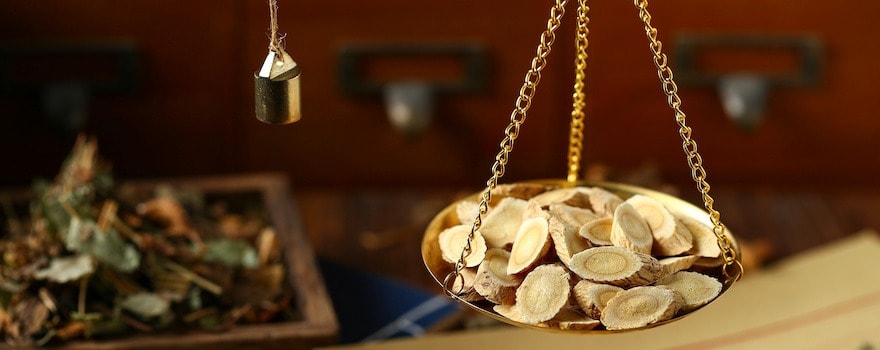
⚖️ In general, it is recommended to consume between 1.5 g and 5 g of astragalus per day.
⏳ It is preferably taken 5 to 10 minutes before meals with a large glass of water. Courses of 2 to 3 months are particularly useful to enjoy the benefits of astragalus. Be sure to space each course by at least one week.
💊 In tablets : up to 3 per day for 500 mg tablets or capsules
🥄 In powder : 4 to 7 g per day
🧪 In mother tincture : between 6 and 12 ml
Contraindications and side effects
Consumption of astragalus has few contraindications. However, it is not recommended for the following people :
- As a precaution, pregnant or breastfeeding women should refrain from consuming astragalus.
- Because of its immune-stimulating properties, people with autoimmune diseases should avoid consuming it.
- People with low blood pressure should not take astragalus root because it lowers blood pressure.
- Because it can impair blood clotting and increases the risk of bleeding, it is not recommended for people on anticoagulant therapy.
Some side effects may occur after consuming astragalus. The following have been reported in some users:
- Gastrointestinal disorders (bloating, gas…).
- Abdominal pain.
- Nausea.
- Mild allergic reactions (hives, itching…).
If symptoms persist, it is advised to stop consuming astragalus and consult a doctor.
History, cultivation, and market of astragalus
Spotlight on cultivation
In its natural habitat, astragalus mainly grows at the edges of forests and in sandy soils. It is a very hardy and resilient plant that can reach up to 1.20 m in height. In summer, it is covered with pretty yellow flowers.
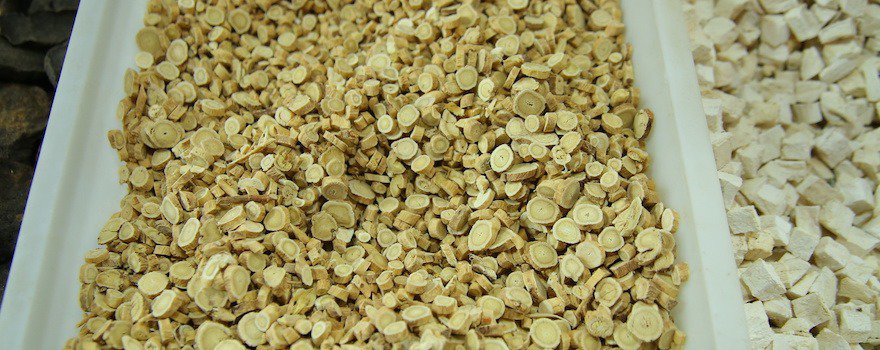
Its root, meanwhile, is yellow, fibrous, and sweet and can extend 1 m into the soil. It can be harvested after four years of cultivation, in spring or autumn. The rhizomes are then washed, used in cooking, prepared as an infusion, or dried and ground into powder. Roots from “wild” astragalus plants are the most sought after because of their high concentration of active compounds.
Today, astragalus is mainly cultivated in the north of China but also in the provinces of Sichuan and Yunnan. However, it can be grown in most temperate regions, including Europe. So you can have it in your garden !
A staple plant of Asian pharmacopoeias
In China, Korea, Japan and India, astragalus has been used as a medicinal plant for a very long time. The earliest record of its use is found in the Shennong bencao jing, written by Emperor Shennong. It is none other than the oldest Chinese work on plants.
Astragalus is also mentioned in the Chinese Herbal Medicine materia medica that lists the main plants of traditional Chinese medicine (TCM).
Species you should not confuse with astragalus
The genus Astragalus includes more than 2,000 different species. The astragalus used for its medicinal properties is Astragalus membranaceus.
It should not be confused with other species such as Astragalus gummifer (which produces tragacanth gum), Astragalus alopecurus (or foxtail astragalus) or Astragalus americanus, its American cousin.
Report compiled by Julia Perez and Charlotte Jean
Sources and scientific studies
Gang Zhang, Si-Min Zhou, Shan-Jun Zheng, Fu-Yu Liu, and Yu-Qi Gao, 2015. Astragalus on the anti-fatigue effect in hypoxic mice.
Sanpha Kallon, Xiaorong Li, Jun Ji, Cuiying Chen, Qianyun Xi, Shuang Chang, Chunyi Xue, Jingyun Ma, Qingmei Xie, and Youngliang Zhang (corresponding), 2013. Astragalus polysaccharide enhances immunity and inhibits H9N2 avian influenza virus in vitro and in vivo.
Li SQ, Yuan RX, Gao H, 1995. Clinical observation on the treatment of ischemic heart disease with Astragalus membranaceus.
Chao-Yan Wu, Yuan Ke, Yi-Fei Zeng, Ying-Wen Zhang, and Hai-Jun Yu (corresponding), 2017. Anticancer activity of Astragalus polysaccharide in human non-small cell lung cancer cells.
Shuang-Suo Dang, Xiao-Li Jia, Ping Song, Yan-An Cheng, Xin Zhang, Ming-Zhu Sun, and En-Qi Liu, 2009. Inhibitory effect of emodin and Astragalus polysaccharide on the replication of HBV.
