



Best Vitamin C 🥇
> Liposomal Vitamin C Quali-C – Novoma
Best natural vitamin C
> Organic Acerola Pure 34% Natural Vitamin C – Dynveo
Best Vitamin C
Our selection criteria
- Form: the form in which vitamin C is presented.
- Dosage: amount of vitamin C contained in a recommended daily dose.
- Usage: instructions for use.
- Price / day: the cost for 1 day of supplementation, with the daily dose recommended by the manufacturer.
- Customer reviews: this average of customer reviews comes from the manufacturer’s website, review platforms, or marketplaces such as Amazon.
- Our opinion of the brand: based on the supplement brand tests we carry out each month and analysis of 6 quality criteria.
All the supplements selected below are made in France, are vegan, and contain no additives or excipients.
BEST VITAMIN C 🥇
★★★★★
Darwin Nutrition®
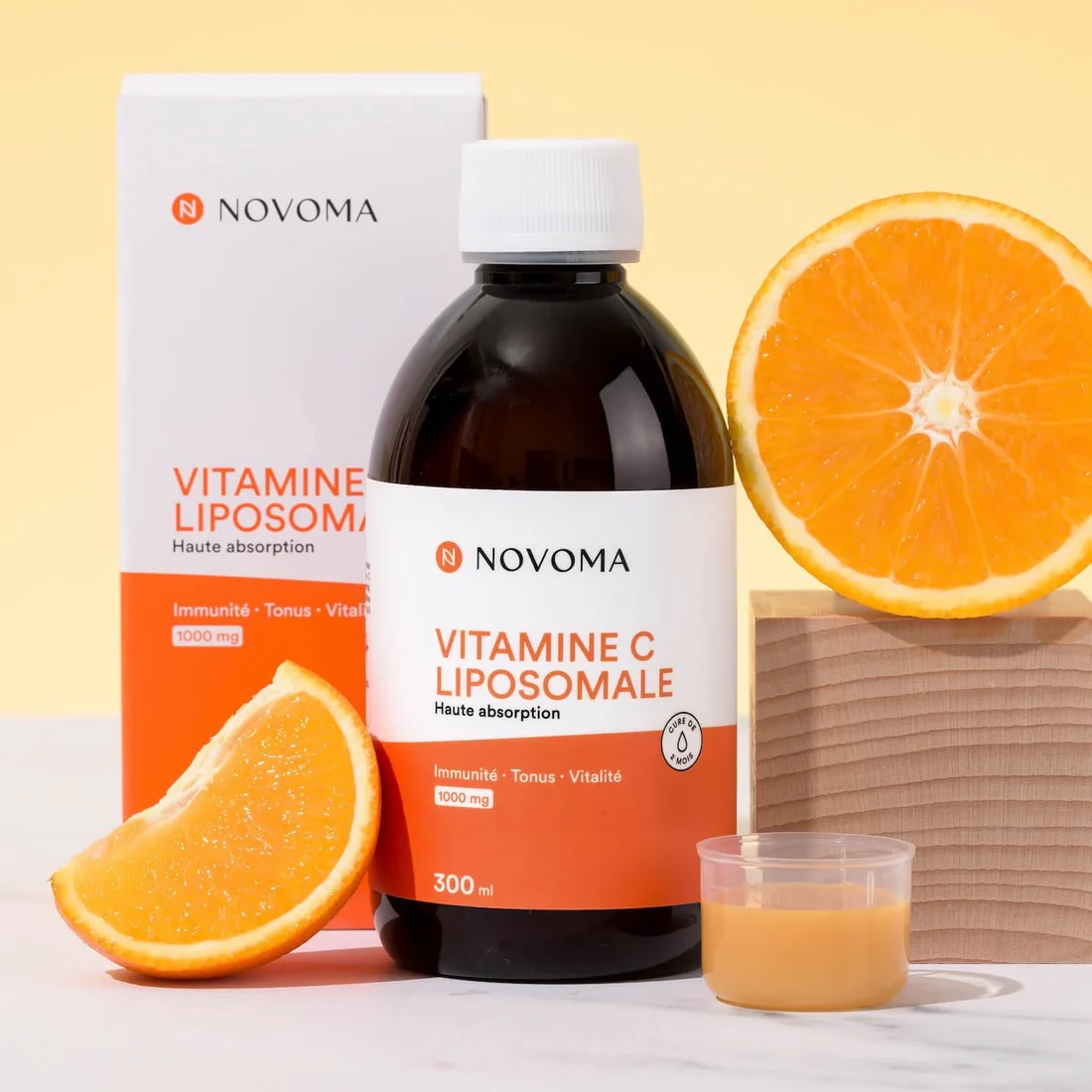
Brand : Novoma
Form : liposomal
Dosage : 1000 mg
Use : 5 mL per day
Price / day : $1.67
Customer reviews : 4.5/5 (truspilot.com)
Novoma liquid liposomal vitamin C is, in our opinion, the best option.
The liposomal process consists of encapsulating vitamin C in liposomes (fat bodies) that protect it and make it soluble in fats. This innovative form of vitamin C has 3 benefits: better absorption, excellent intestinal tolerance, and gradual release in the body.
The daily dose of 1000 mg of vitamin C is optimal, and higher than that of many other similar supplements.
This supplement contains Quali-C vitamin C, which is the highest grade of pharmaceutical purity to date, and is certified European. The supplement itself is manufactured in Brittany.
Each 300 mL bottle provides 2 months of use, and is made of 100% recycled and recyclable R-PET.
Novoma is a French brand founded in 2012 that offers supplements focused on active ingredients at controlled prices (read our full review here).
BEST NATURAL VITAMIN C
★★★★★
Darwin Nutrition®
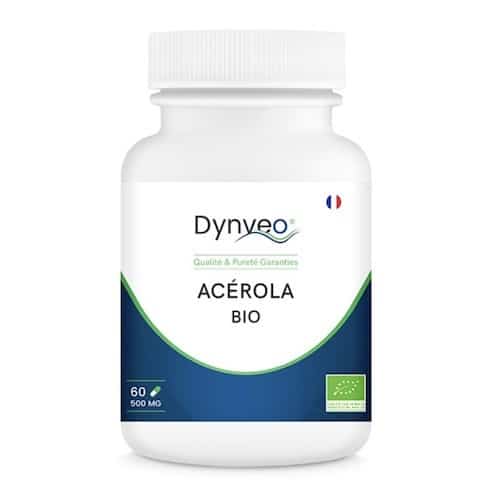
Brand : Dynveo
Form : natural (organic acerola)
Dosage : 340 mg
Use : 2 capsules per day
Price / day : €0.7
Customer reviews : 4.8/5 (avis-verifies.com)
We selected the brand Dynveo’s natural vitamin C.
It is a standardized acerola extract with 34% vitamin C – an exceptional concentration compared to other small fruits sold in pharmacies or online. The acerola used comes from the Amazon, its region of origin, and is harvested when its vitamin C content is at its highest.
The extraction is organic and eco-friendly, using water and no solvents, from fruits sourced through a very strict program that ensures ethical and sustainable resource management.
Dynveo is a dietary supplement laboratory recognized for its expertise and the dosage of its products. We tested and approved its customer service, which is responsive and helpful (read our full review here to learn more).
What is vitamin C?
Vitamin C is also known as ascorbic acid. It gets its name from the disease it helps prevent, scurvy, caused by a vitamin C deficiency. It plays a major role in the body and contributes to many biological functions.
It strengthens and energizes the immune system. That is why it is considered the vitamin of energy and vitality.
It also protects against free radicals thanks to its antioxidant action. It contributes to the synthesis of collagen, improves iron absorption, and helps prevent hypertension and cardiovascular disease.
What are the dietary sources of vitamin C?
Our body does not synthesize this water-soluble vitamin. It must therefore be obtained through the diet, focusing on foods rich in vitamin C.
Some fruits, such as camu camu and rosehip, for example, contain an exceptional amount. It is also found in blackcurrants, kiwi, guava, goji berries, and red fruits in general.
Vegetables are also important sources of vitamin C, especially bell peppers, broccoli, Brussels sprouts, spinach, and cherry tomatoes.
Finally, herbs like fresh parsley also contain it.
Taking dietary supplements can also help meet the necessary daily intake or make up for a deficiency. This is common among immunocompromised people, pregnant women, smokers, and athletes.

What are its benefits?
It strengthens the immune system
This vitamin contributes to the normal functioning of the immune system. It strengthens the body’s natural defenses and promotes the production of white blood cells.
As shown in this study, it increases the number of lymphocytes and neutrophils, among other things.
It accumulates in white blood cells to boost their effectiveness against microbes. Thus, it helps the body fight colds, infections, and other winter ailments.
Regular supplementation with vitamin C reduces the duration of colds, at sufficiently high doses, as indicated in this review.
That is why it is often recommended to increase vitamin C intake during the winter period.
Protects against free radicals
Thanks to its antioxidant effects, it is able to fight free radicals. These speed up cellular aging and increase the risk of disease.
On the one hand, it prevents their establishment in the body, thus preventing their damage.
On the other hand, it traps excess free radicals and promotes their elimination. To do this, it works in synergy with vitamin E and provitamin A, which are also antioxidants.
This study shows the effectiveness of vitamin C in neutralizing free radicals.
Supports the cardiovascular system
Vitamin C plays a central role in the development of cardiovascular diseases.
A review of trials concludes that supplementation with 500 mg of vitamin C for 6 weeks helps reduce overall blood pressure in hypertensive patients.
In addition, the risk of heart disease would be reduced with sufficient vitamin C intake. Thus, a study of a population aged 39 to 79 shows that a high level of vitamin C (from dietary sources) in the body could reduce the risk of heart failure.
Promotes collagen production
It also plays a role in collagen biosynthesis. This structural protein is found notably in the skin, bones, and muscles. It ensures the maintenance and cohesion of tissues.
To produce collagen fibers, the body must modify certain amino acids, such as proline and lysine, through an hydroxylation reaction. This process is only possible in the presence of vitamin C.
It indirectly contributes to tissue production, skin beauty, and even wound healing.
This study shows the action of vitamin C on collagen production.
Prevents skin aging
Vitamin C stimulates collagen synthesis and combats oxidants that promote the premature aging of skin tissues.
In addition, vitamin C also helps to reduce melanin synthesis, the “colorant” of our skin, which leads to the appearance of unsightly brown spots, called “age spots” or “liver spots”.
Improves mood
Vitamin C, or ascorbic acid, influences the effect of certain catecholamines, neurotransmitters particularly linked to mood.
A daily intake of 3 grams of vitamin C (a dose exceeding the maximum recommended doses) over 14 days in 42 adults reported a reduction in depressive symptoms, as well as an increase in sexual activity, according to this clinical trial.
Reduces fatigue
Vitamin C is essential for the production of hormones and neurotransmitters, thus influencing the overall state of vitality and alertness.
A vitamin C deficiency has been demonstrated in various acute infections, including in cases of long COVID.
In a scientific study, administering high-dose vitamin C to patients with cancer or infections showed a reduction in fatigue and associated symptoms (sleep disorders, cognitive disorders, depressive symptoms).
Where can you buy vitamin C?
- Pharmacies and drugstores
- Health food stores
- Specialty stores (sports nutrition, dietary supplements…)
- Specialized e-commerce
In what form?
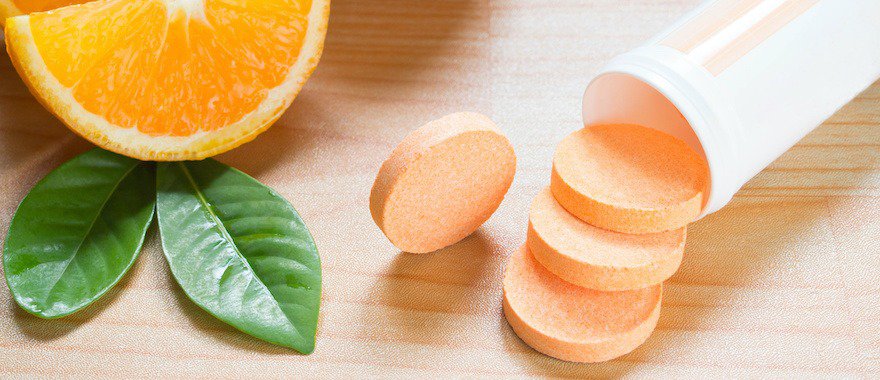
In capsules and tablets
Capsules and tablets have the advantage of being convenient and easy to find. However, this format generally has limited bioavailability.
In addition, they are often either underdosed or overdosed in vitamin C. Overdoses are common.
Finally, they may contain synthetic additives. Effervescent tablets, for example, may contain sweeteners, flavorings, and artificial colorings.
In drops
Liquid form generally offers a higher concentration of vitamin C. In addition, it is quickly absorbed by the body. This format is appealing for those who have trouble swallowing tablets or capsules.
In powder form
The powder format allows for a more balanced and precise dosage than capsules or tablets. This therefore reduces the risk of overconsumption.
Powder is also less processed, purer and more natural. It is often more affordable.
In gummies
Gummies are chewing gums. They contain vitamin C combined with other vitamins, minerals, and/or plant extracts.
It is a convenient format, easy to take and fun. However, the risk of overdosing remains significant if they are snacked on throughout the day.
They are generally low in active ingredients and contain sugar.
What is liposomal vitamin C?
Vitamin C is water-soluble, meaning it only dissolves in water. The liposomal process involves encapsulating it in tiny fatty spheres called “liposomes”.
In this way, it is protected and becomes fat-soluble.
Liposomal vitamin C offers better absorption through the intestinal lining and cell walls. It also has excellent stability: it does not break down once in the body.
Finally, it is distributed more gradually throughout the body.
Note that the effectiveness of liposomal forms depends on the quality of the product.
Precautions to take
Excessive consumption of vitamin C (more than 2 g per day for an adult) can lead to digestive issues.
The role of vitamin C in cancer has not been established and taking a vitamin C or antioxidant supplement should be done after medical advice.
Other studies suggest that taking vitamin C combined with other antioxidants (selenium and beta-carotene) could interact with antiarrhythmic and cholesterol-lowering medications, to be confirmed.
Consult a healthcare professional before any self-medication.
What criteria should be taken into account?
1. Form of Vitamin C
- Natural Vitamin C
When it is naturally derived, vitamin C comes from a food source and is made from fruit extracts such as acerola, rose hip, or camu camu.
This form has the advantage of containing bioflavonoids that promote the absorption of vitamin C. Natural vitamin C can be acidic if taken in large amounts.
Some manufacturers add synthetic forms among the natural extracts, so be careful and read the label carefully!
This form is suitable for people looking for a natural product and who do not suffer from stomach acidity.
- Bioidentical Vitamin C
This is a synthetic form of vitamin C that synthetically mimics the natural form of vitamin C. It is obtained by fermentation of grains (corn or wheat).
It has a bioavailability comparable to natural vitamin C, as shown by this study.
It is a vitamin C identical to the one found in foods: L-ascorbic acid. Its production involves various chemical transformations, and as a result, this form is not considered natural. Quality can vary greatly between manufacturers.
The advantage is its good absorption, the price, and the vitamin C concentration, often higher than in natural vitamin C supplements.
Choose a solvent-free, 100% pure product, in the form of dextrogyre L-ascorbic acid, the only active form.
- Calcium Ascorbate
Here, vitamin C is chemically bound to calcium, making it non-acidic and limiting digestive issues. It is available in a patented form called ester-C.
This form is not natural because its synthesis requires adding calcium at high temperature, thereby oxidizing the vitamin C.
This form can be interesting for people deficient in calcium and vitamin C.
- Liposomal Vitamin C
Encapsulating vitamin C allows very good absorption of the supplement and reduces digestive discomfort. This form is suitable for high intakes.
The technology used to produce it makes it the most expensive form on the market.
Be careful, quality varies a lot depending on the manufacturer. Pay attention to the origin of the products, the absence of controversial preservatives, the dosage, and the form of vitamin C used.
Check that lecithin (a fat used as an additive for optimal absorption of vitamin C) appears as the second ingredient in the formula, confirming the liposomal nature of the product.
Indeed, some laboratories add it in small doses and do not exhibit the properties of liposomal vitamins.
2. Vitamin C Content
The ANSES (French Agency for Food, Environmental and Occupational Health & Safety) recommends 110 mg/day for men and women.
It is therefore unnecessary to choose a very high-dose supplement or even an overdose.
We recommend choosing a product containing between 500 and 1000 mg. It is suitable for short-term use, in a treatment course.
For prevention, 500 mg per day is sufficient. In case of infections, a daily intake of 1000 mg will be more appropriate.
Watch out for the trap! On boxes of natural vitamin C derived from fruits, the concentrations may indicate a dosage in fruit rather than in vitamin C. For an acerola-based dietary supplement, for example, “1000” may mean that the product contains 1000 mg of acerola, corresponding to 170 mg of vitamin C.
3. Manufacturing Method
If it is of natural origin, check the origin of the fruits used. They must be grown without chemicals or pesticides.
If you opt for synthetic vitamin C, it must be obtained by fermentation of non-GMO grains, and must not be irradiated or ionized.
4. Composition
The product should be as natural as possible, without preservatives, flavors, or artificial colors. Prefer capsules with a plant-based shell.
Since ascorbic acid is a molecule, it does not have organic certification.
5. Price
Expect to pay between €15 and €30 for 120 capsules.
Liposomal vitamin C is generally more expensive: about €30 for 60 capsules.
It is available for about €25 for 500 g of powder and €40 for 300 ml of liquid.
Finally, you can find vitamin C gummies for about €15 for 120 chewable gummies.
In summary
To ensure you choose a quality vitamin C, check the following points:
- Form: choose a natural or liposomal form
- Vitamin C content: choose a supplement providing 500 to 1000 mg per day
- Manufacturing process: without chemicals, solvents, pesticides, or GMOs
- Composition: the product must be free of preservatives, flavors, and synthetic colorants. Prefer liposomal vitamin C
- Price: it ranges between €20 and €30 for 120 capsules. That is about €25 for 500 g of powder or €40 for 300 ml. Expect €15 for 120 gummies.
BEST VITAMIN C 🥇
★★★★★
Darwin Nutrition®
Brand: Novoma
Form: liposomal
Dosage: 1000 mg
Use: 3 capsules per day
Price / Day: €0.93
Customer Reviews: 4.8/5 (ekomi.fr)
BEST NATURAL VITAMIN C
★★★★★
Darwin Nutrition®
Brand: Dynveo
Form: natural (organic acerola)
Dosage: 340 mg
Use : 2 capsules per day
Price / Day: €0.7
Customer Reviews: 4.8/5 (verified-reviews.com)
