

My summary review
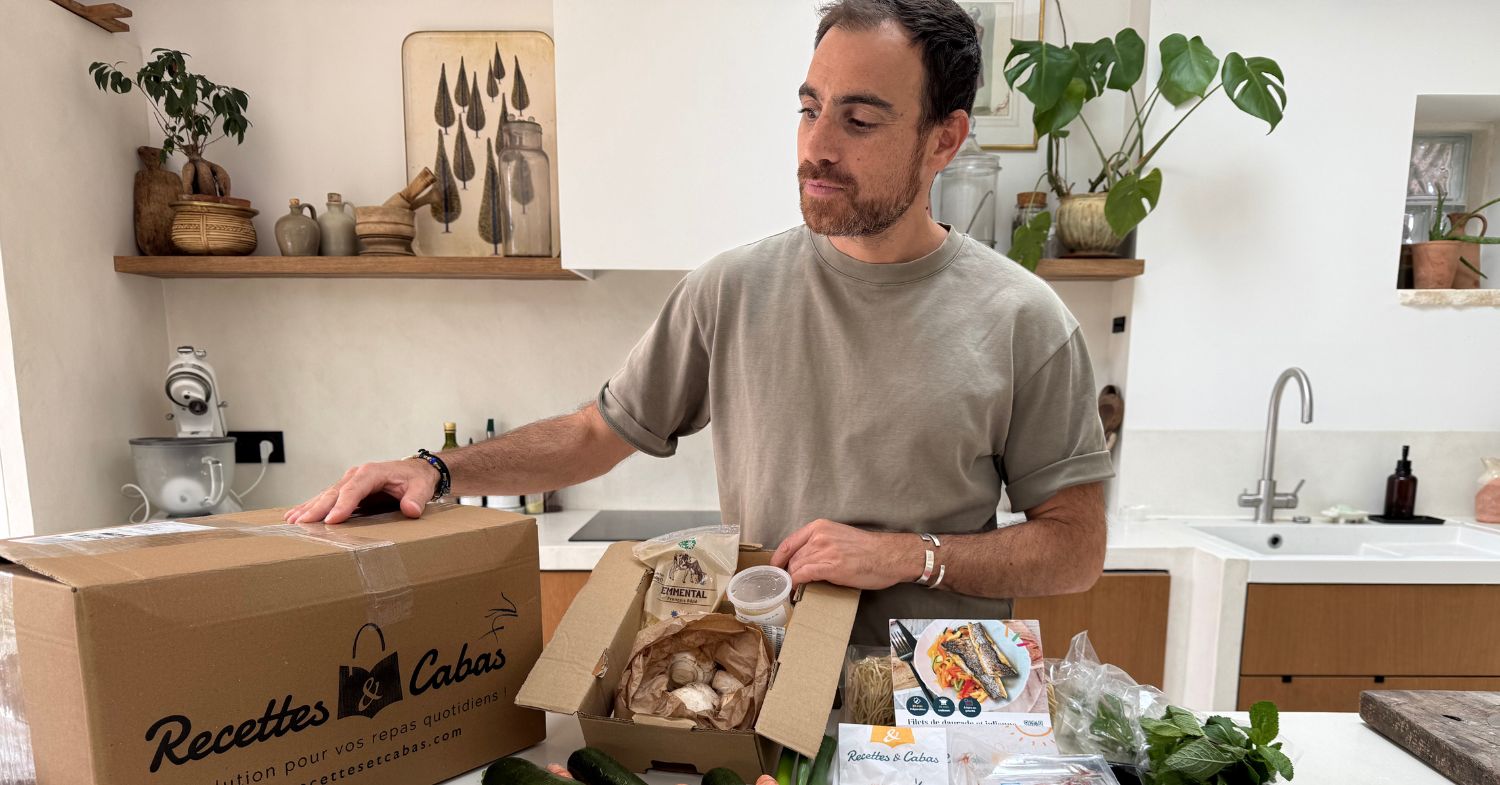
I found that Recettes & Cabas stood out for the quality and freshness of its ingredients, as well as its commitment to local and seasonal products. I appreciated the nutritional balance of the recipes, the generous portions of some dishes, and the simplicity of the cooking offered.
On the other hand, the recipe selection remains more limited than with some competitors, and the delivery fees add to the price.
This box will suit people looking for fresh, well-sourced ingredients and high-quality family-style cooking.
Recettes & Cabas: 3.75/5
Nutrition: ★★★★★ 4.5
Ingredients: ★★★★☆ 3.5
Price: ★★★☆☆ 3.25
Experience: ★★★★☆ 3.5
Environment: ★★★★☆ 4.25
Customer service: ★★★★☆ 4
Pros
- Fresh products of good quality
- Strong emphasis on local producers
- Recipes made with seasonal ingredients
- Very low level of ultra-processed foods
- Notable portions of vegetables
- Home-style cooking, simple and delicious
- Good taste quality in the recipes
- Great flexibility in orders with no binding subscription
- Good customer service
- Carbon footprint indicated for the recipes
Cons
- Limited recipe selection each week
- High delivery fees
- Few official labels (Organic, Label Rouge, MSC…)
- Some recipe cards lack precision
- No mobile app
- Recipe visuals sometimes differ from the result obtained
- Packaging management could be improved
Recettes & Cabas
Created in Lyon in 2011, Recettes & Cabas is one of the French pioneers of meal kits to cook at home.
The brand stands out for a positioning very focused on short supply chains, local products, and seasonal cooking. Where some competitors focus on a very wide choice of recipes or particularly original dishes, Recettes & Cabas favors a simpler, more family-oriented cuisine that is more centered on ingredient quality.
The brand especially highlights:
- mostly French products;
- seasonal fruits and vegetables;
- partnerships with local producers;
- home-cooking-inspired cuisine.
After several meal kit tests, I found that Recettes & Cabas had a rather different identity from HelloFresh, Quitoque, or Les Commis. The emphasis is clearly on product freshness, seasonality, and local sourcing rather than on multiplying recipes or following culinary trends.
This approach will be especially appealing to people who care about where products come from and prefer food that is closer to traditional home cooking.
Methodology
To get a concrete idea, I tested Recettes & Cabas for a week with a box for 2 people that included 4 different recipes:
- a mushroom ravioli gratin served with grated carrots;
- a grilled turkey fillet with zucchini and mint pesto;
- a sea bream fillet served with a pan-seared julienne of vegetables;
- Dandan noodles with pork and tahini sauce.
The goal was to discover a variety of recipes in order to assess both the nutritional quality, the quality of the ingredients, the ease of preparation, the taste of the dishes, and the overall experience offered by the brand.
To evaluate the brand, I first looked at the nutritional quality of the recipes. As a dietitian-nutritionist, I wanted to see whether the dishes were truly balanced on a daily basis, with enough protein, vegetables, and a good overall balance of carbohydrates, fats, and fiber. I also noted the possible presence of processed products and additives.
I also looked at the quality of the ingredients and sourcing. I checked the freshness of the products upon delivery, the condition of the vegetables, the origin of the meats, as well as the brand’s level of transparency regarding the origin of the ingredients.
Price was also one of the important criteria in the test. I evaluated the actual cost of the service by taking into account the price of the meals, any delivery fees, and the flexibility offered. The higher the price, the lower the score for this aspect.
I also evaluated the culinary experience and the practicality of the recipes: clarity of the recipe cards, actual preparation time, simplicity of the steps, enjoyment of cooking, and the final taste of the dishes.
Environmental impact was another key factor. The pre-portioned servings clearly help reduce food waste, but they also generate a lot of packaging. I therefore looked at the amount of packaging used, the seasonality of the products, as well as the environmental commitments highlighted by the brand.
Finally, I took into account the overall user experience: app quality, order management, delivery tracking, ease of pausing the subscription, and customer service responsiveness. Because in the end, a meal box is not just about the recipes, but about the entire experience that goes with it.
Each dimension received a score out of 10.
I calculated a weighted average across the 6 dimensions and then converted the result to a score out of 5. Since not all criteria have the same importance, nutritional quality and price were given greater weight.
Weighting used:
- Nutritional quality: 25%
- Sourcing and ingredient quality: 20%
- Price: 25%
- Culinary experience: 20%
- Environmental impact: 5%
- Customer service: 5%
1. Nutritional quality: 4.4/5
I was pleasantly surprised by the nutritional quality of the recipes offered by Recettes & Cabas. The brand also offers several vegetarian recipes as well as gluten-free options, making it possible to meet different dietary needs and preferences.
Unlike some meal kit boxes that sometimes focus on very rich or indulgent recipes, I found here an approach closer to everyday balanced eating. The recipes are based mainly on whole, minimally processed ingredients, with an important place given to seasonal vegetables.
The portions of vegetables seemed particularly generous to me across all the recipes I tested. The dishes generally combine a source of protein, vegetables, and a quality fat, which helps create meals that are overall well balanced.
The low presence of ultra-processed products is also a positive point. The ingredients are simple, recognizable, and contain very few additives or industrial ingredients.
Another interesting point: most recipes display a Nutri-Score between A and B, which remains consistent with the goal of offering balanced meals suitable for everyday life.
The energy content remains relatively variable depending on the recipe. For the dishes I analyzed, it generally ranges between 350 and 700 kcal per serving. This range seems consistent to me with the needs of most people for a main meal, while still allowing some flexibility depending on each person’s level of physical activity.
The main area for improvement concerns certain recipes that do not include a starchy food source. This was notably the case with the sea bream fillet and the grilled turkey fillet that I tested. Although these dishes are rich in vegetables and nutritionally well balanced, the absence of starchy foods may be a bit lacking for the most physically active people or those with higher energy needs.
Ultimately, I found the recipes well structured nutritionally, with a good overall balance and a genuine effort to highlight simple, high-quality ingredients.
2. Ingredient quality and sourcing: 3.5/5
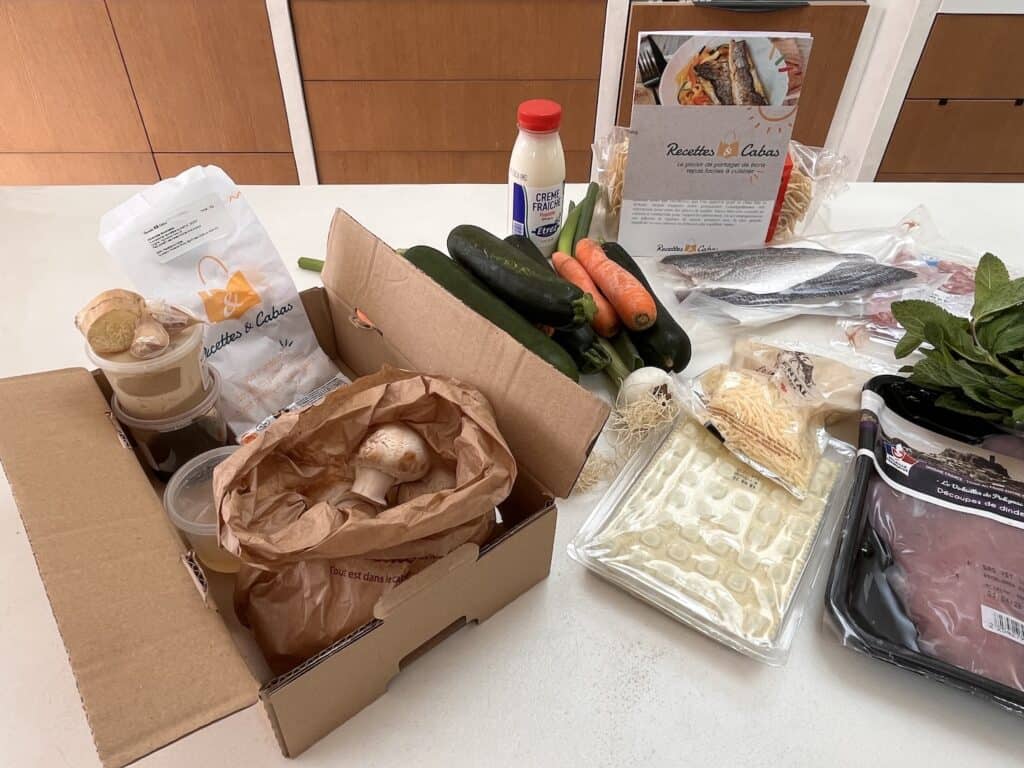
As soon as the box arrived, the products were especially fresh and visually appealing. The vegetables were of good quality, and this first impression was confirmed while preparing the various recipes.
The brand strongly highlights short supply chains and local producers, mainly based in the Auvergne-Rhône-Alpes region. This approach is reflected throughout its communications and helps give the offering a genuine identity. I also found the emphasis on seasonal products interesting. The recipes seem to be developed according to what is available at the time.
However, a few limitations are worth mentioning. Some recipes require ingredients whose origin is not clearly indicated. This was notably the case with the ginger or pak choi used in certain preparations. Similarly, several pantry products provided in bulk, such as tahini or soy sauce, sometimes lack traceability, since it is not always possible to know precisely where they were made or where they came from.
The recipe cards regularly highlight partner producers and indicate the origin of many ingredients, which adds a more authentic dimension than some more industrialized meal kits.
By contrast, the presence of official labels (Organic, Label Rouge, MSC, etc.) remains relatively limited. Even if the perceived quality is good, more certifications would further strengthen the credibility of the approach.
In the end, Recettes & Cabas offers fresh, quality ingredients, with a genuine commitment to prioritizing short supply chains and seasonal products. However, a few additional efforts in terms of traceability and certifications would further improve the experience.
3. Culinary experience: 3.5/5
Recettes & Cabas offers a culinary experience that differs from that of many competitors.
While some meal boxes focus on quantity with several dozen recipes available each week, Recettes & Cabas has chosen a more limited selection. During my test, only about ten recipes were offered. This limited choice may be seen as a drawback for people who like to vary their meals very regularly.
On the other hand, I found the recipes coherent and well thought out. The cuisine offered is simple and family-friendly. It is more of an everyday cooking approach than a search for originality.
The announced preparation times are close to reality. Some recipes took a little longer than expected, but the differences remained reasonable.
As for the recipe sheets, my opinion is more nuanced. They remain easy to follow and indicate the origin of many ingredients. However, I sometimes found that some steps lacked precision. The sheets also do not indicate the necessary equipment, and nutritional values are not directly available. Finally, the photos do not always perfectly reflect the final result obtained.
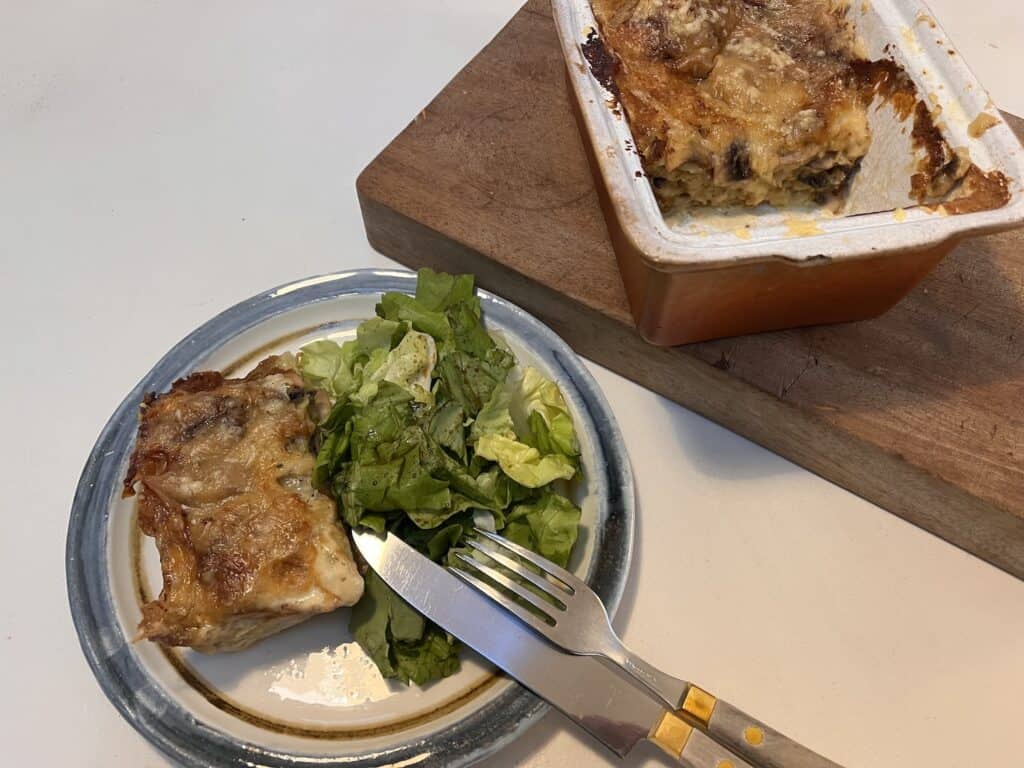
In terms of taste, I really liked the recipes I tried. The mushroom ravioli gratin was especially comforting, while the turkey fillet with mint pesto and the sea bream served with seasonal vegetables offered simple but very effective meals. The Dandan noodles with pork and tahini sauce were also successful, with original and indulgent flavors.
I also found the portions satisfying. Some recipes, notably the Dandan noodles or the ravioli gratin, were even more generous than necessary.
In the end, Recettes & Cabas offers simple, home-style, high-quality cooking, made possible by good ingredients. However, the limited recipe selection and a few imperfections in the recipe cards keep the brand from earning a higher rating.
4. Packaging and environmental impact: 4.25/5
Environmental commitment is one of Recettes & Cabas’s strengths.
From the moment the box is received, the approach stands out from that of some competitors. Overall, it gives more the impression of receiving a market basket than a meal kit box.
Most of the packaging is recyclable cardboard, and the products are minimally packaged. Although plastic is still present for some ingredients, notably sauces or liquid products.
However, I noted one small area for improvement: the fresh products are grouped in a separate plastic bag from the rest of the ingredients. This separation likely makes logistics and storage easier, but it creates an extra piece of waste that could probably be avoided or replaced with a more sustainable solution.
The brand also highlights short supply chains, local products, and seasonal recipes. This approach helps reduce the overall environmental footprint of the meals offered.
I also appreciated the fact that the carbon footprint is calculated for each recipe, which reflects a genuine effort to raise awareness that is rarely seen with other meal kits.
Food waste remains limited thanks to the pre-portioned ingredients. Some portions can be slightly generous, but the quantities remain well balanced.
Finally, for residents of the Lyon area, Recettes & Cabas goes even further by delivering in reusable bags collected on subsequent orders. A particularly relevant initiative that helps significantly reduce packaging waste.
In the end, even though some plastic packaging remains, Recettes & Cabas has a positive environmental impact, thanks to its concrete initiatives in support of the circular economy.
Recettes & Cabas therefore receives a score of 8.5/10 for its environmental impact.
5. Customer service and user experience: 4/5
I found the customer experience offered by Recettes & Cabas satisfactory.
During my test, one key ingredient was missing from the Dandan noodles recipe: bok choy. I therefore contacted customer service to report the issue.
The response was relatively quick and clear. I was offered a credit to make up for the missing ingredient. Although I would personally have preferred a refund, I appreciated the team’s responsiveness and the way they took the issue into account.
The brand can be reached through several channels: phone, email, WhatsApp, social media, and FAQ. This variety makes communication easier when needed.
The website interface is simple and functional. Navigation is intuitive and makes it easy to manage orders. However, unlike some competitors, Recettes & Cabas does not have a dedicated mobile app, which can be a slight inconvenience for some users.
Regarding delivery, tracking is provided by Chronofresh and went smoothly during my test. The products arrived fresh and well packaged.
In the end, despite a few areas for improvement, especially regarding incident handling or the lack of a mobile app, the customer experience remains very satisfying.
Recettes & Cabas therefore gets a score of 8/10 for customer service and user experience.
6. Price: 3.25/5
This is probably the criterion where Recettes & Cabas is the least appealing.
On one hand, the quality of the ingredients is undeniable. The products are fresh, mostly French, seasonal, and sourced through relatively short supply chains. This commitment inevitably comes at a cost and partly explains the brand’s pricing position.
On the other hand, the final price is relatively high given the offer provided.
During my test, the cost was around €8.35 per person per meal, to which delivery fees between €11 and €16 were added depending on the situation. These fees represent a significant extra cost and clearly lower the final score.
However, a €20 discount is offered on the first order. This offer helps offset delivery fees and discover the service in good conditions.
Flexibility also remains a real strength. Unlike many meal kits, there is no need to sign up for a restrictive subscription. It is possible to order occasionally, pause, or stop at any time without additional fees.
In the end, even though the quality is there, the overall price remains fairly high, especially because of delivery fees. Recettes & Cabas will mainly appeal to consumers who prioritize product quality, ingredient origin, and convenience over finding the lowest price.
