


My summary review
I found that Les Commis stood out for the originality of its recipes, the quality of its ingredients, and the transparency of its sourcing. I particularly appreciated the gourmet aspect of some recipes.
On the other hand, some dishes would benefit from being richer in protein and vegetables.
Les Commis will suit people looking for a premium box, pricier than other boxes on the market.

Les Commis: 3.93/5
Nutrition: ★★★★☆ 3,75
Ingredients: ★★★★★ 4,5
Price: ★★★★☆ 3,75
Experience: ★★★★★★★★☆ 3,5
Environment: ★★★★☆ 4,75
Customer service: ★★★★☆ 4,25
Advantages
- Good-quality ingredients
- Mostly French and seasonal products
- Good transparency about the origin of the products
- Original and gourmet recipes
- Few ultra-processed products
- Clear and easy-to-follow recipe cards
- Responsive customer service
- Simple pause and cancellation management
- Interesting environmental approach
Disadvantages
- Higher prices, especially for Premium recipes
- Some recipes not very filling
- Sometimes uneven nutritional balance
- Limited amount of vegetables at times
- Preparation times often longer than advertised
- Lots of individual packaging
- A few vegetables slightly damaged during the test
Quitoque
Founded in 2012, Les Commis is a French home meal kit brand. The concept remains similar to other players in the market: receive fresh pre-portioned ingredients every week, along with detailed recipe cards, so you can easily cook at home.
I found that Les Commis had a slightly different positioning from other players in the market. The brand is more oriented toward a more “bistronomic” cuisine, with recipes that are often more elaborate, original flavor combinations, and a real emphasis on French and seasonal products.
There is in particular a strong focus on:
- French sourcing;
- short supply chains;
- seasonality;
- organic products;
I also found that Les Commis tried more to highlight ingredient quality than some boxes that are more focused on speed or a very indulgent aspect.
📚 Read also | Our comparison of the best meal kits
Methodology
To get a concrete opinion, I tested Les Commis for a week with a box for 2 people containing 4 different recipes.
The recipes tested were:
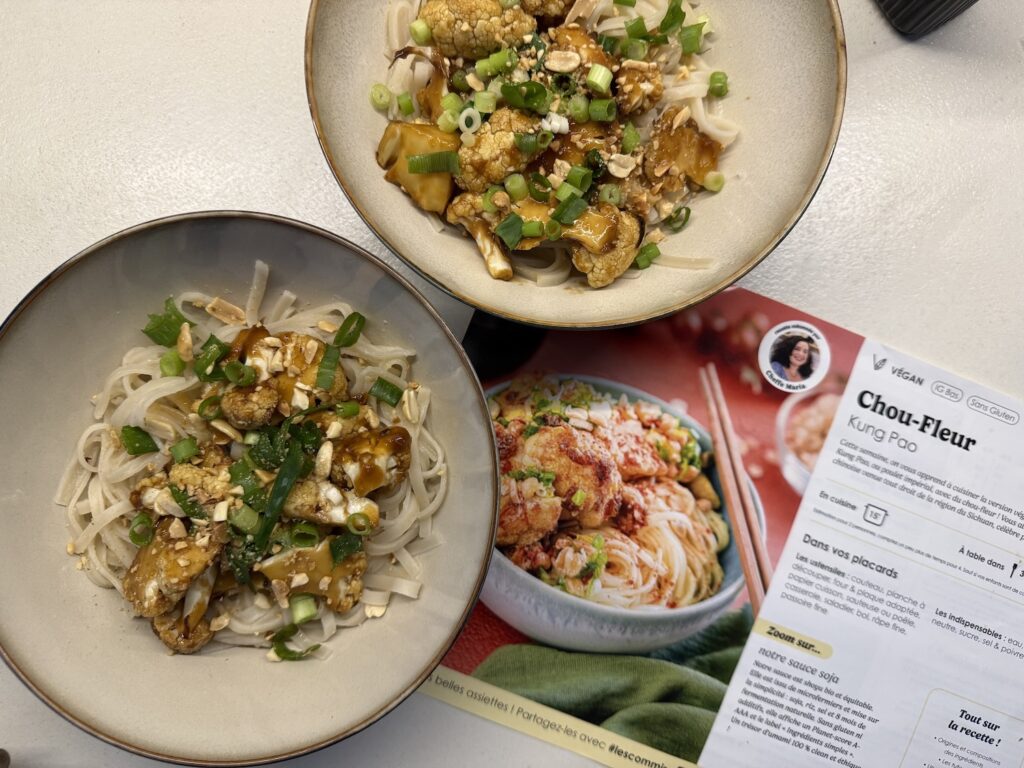
- a vegetarian recipe: Kung Pao cauliflower;
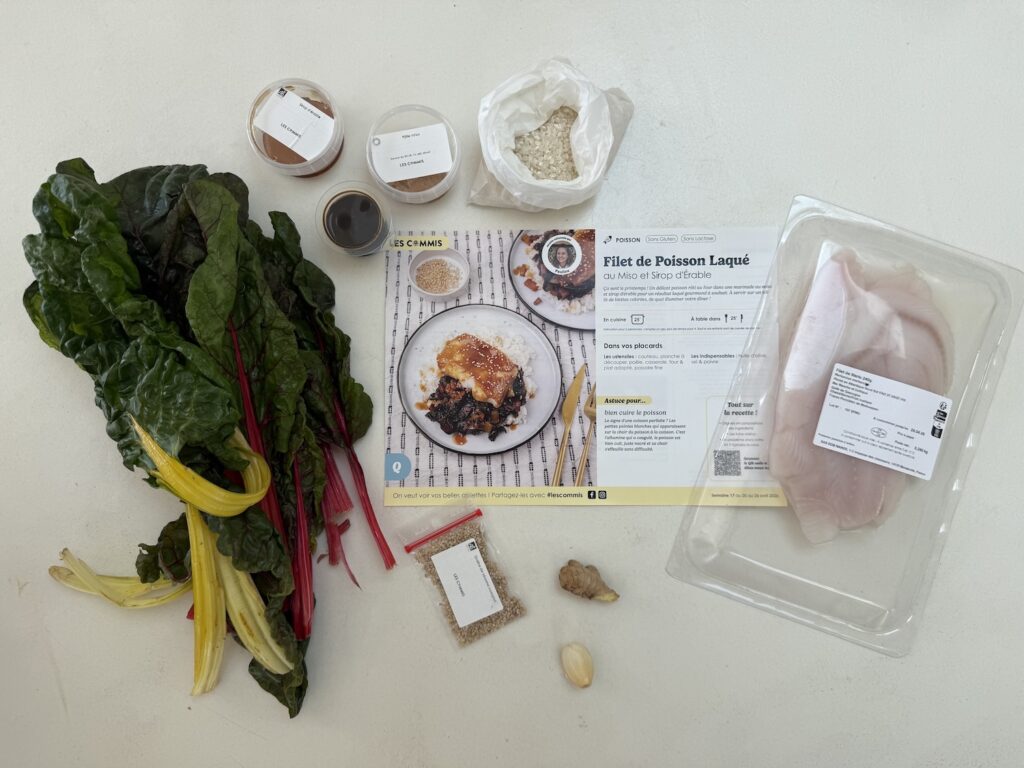
- a fish-based recipe: miso and maple syrup glazed fish fillet;
- a chicken-based recipe: chicken karaage and fried rice;
- a pork-based recipe: Thai pork meatballs and basmati rice.
The goal was to test Les Commis in “real life,” with ordinary days, lack of time, evening fatigue… in short, under conditions close to those of most people who use this type of service.
To evaluate the brand, I first focused on the nutritional quality of the recipes. As a dietitian-nutritionist, I wanted to see whether the dishes were truly balanced on a daily basis, with enough protein, vegetables, and a good overall balance between carbohydrates, fats, and fiber. I also looked at the possible presence of processed products and additives.
I also looked at the quality of the ingredients and sourcing. I checked the freshness of the products upon delivery, the condition of the vegetables, the origin of the meats, as well as the brand’s level of transparency regarding where the ingredients came from.
The price was also one of the important criteria in the test. I evaluated the actual cost of the service by taking into account the price of the meals, any delivery fees, and the flexibility offered. The higher the price, the lower the score for this dimension.
I also evaluated the dining experience and the practicality of the recipes: clarity of the recipe cards, actual preparation time, simplicity of the steps, enjoyment of cooking, and the final taste of the dishes.
The environmental impact was another key point. The pre-portioned servings clearly help reduce food waste, but they also generate a lot of packaging. I therefore looked at the amount of packaging used, the seasonality of the products, as well as the environmental commitments highlighted by the brand.
Finally, I took into account the overall user experience: app quality, order management, delivery tracking, ease of pausing the subscription, and customer service responsiveness. Because in the end, a meal box is not just about the recipes, but about the whole experience that goes with it.
Each dimension received a score out of 10.
I calculated a weighted average of the 6 dimensions and then converted the result to a score out of 5. Since not all criteria carried the same importance, nutritional quality and price were given greater weight.
Weighting used:
- Nutritional quality: 25 %
- Sourcing and ingredient quality: 20 %
- Price: 25 %
- Culinary experience: 20 %
- Environmental impact: 5 %
- Customer service: 5 %

1. Nutritional quality: 3.75/5
I found the recipes offered by Les Commis to be fairly varied. The brand offers around 24 recipes per week, nearly half of them vegetarian. There are also low-GI recipes, dishes adapted for Thermomix, as well as a few gluten-free or lactose-free options, which makes it possible to meet different dietary profiles.
From a nutritional standpoint, however, my opinion remains fairly mixed. While vegetables are almost always included, the portions are often a bit limited. In general, some recipes are relatively high in starches, sometimes at the expense of protein intake, fiber, or the overall satiety of the meals.
This is especially the case with the vegetarian cauliflower-based recipe I tried. I found it not very filling and too low in protein (only 13 g per serving), with an amount of vegetables that was also insufficient. This type of recipe may suit people who are not very active or who have a small appetite, but it may be a bit lacking for athletic or very active people.
By contrast, the fish- or chicken-based recipes seemed much better put together to me: good protein content, decent portions of meat or fish, and a fairly satisfactory amount of vegetables. The only exception is the pork meatball recipe, which I found to be too low in vegetables.
The energy intake remains interesting for a large part of the population in the context of everyday meals, since most recipes are between 400 and 700 kcal per serving.Finally, my opinion of the nutritional quality of the recipes offered by Les Commis remains positive, even if some recipes would benefit from being better balanced in protein and vegetables.
2. Ingredient quality and sourcing: 4.5/5
Les Commis offers good-quality ingredients, with a real effort in terms of transparency and product sourcing. In my view, this is clearly one of the brand’s main strengths.
I particularly appreciated the transparency regarding the origin of the ingredients. When selecting recipes, the country of origin is indicated for each ingredient, including products from outside the European Union, and any labels or certifications are also specified. This traceability is reassuring and relatively rare in the meal kit market.
According to the brand:
- more than 80% of the fruit and vegetables are French;
- the meats are 100% French;
- some recipes are made with 100% organic products;
- at least 50% of the products offered are from organic farming.
I also appreciated the fact that several producers are directly highlighted on the site, notably for beef, potatoes, and even onions. Les Commis also works with several well-known players in the organic sector, such as Cook, Prosain, and Biocoop.
The grocery products are of good quality. I found several organic or certified references, notably for flour, lentils, and pasta. The origin is also specified for simple products like soy sauce, which shows a real commitment to transparency.
As for animal proteins, the level of quality seemed satisfactory to me. During my test, the pork used was organic and the fish mainly came from French auctions located on the Atlantic coast. However, I would have preferred there to be more certified products, especially for chicken, in order to provide more guarantees on farming conditions.
Not all vegetables are systematically organic, but they very often are and mostly come from France. Some imported products remain consistent with the proposed recipes, notably ginger or certain spices. This results in a mix of organic and conventional products depending on the week and the dishes selected.
I was still a little disappointed by the freshness of some of the vegetables upon delivery. The Swiss chard leaves and the half cauliflower we received were slightly lacking in firmness and seemed to have lost some freshness. This may have been due to the high temperatures during delivery, but it was something I found regrettable given the brand’s premium positioning.
Despite these few reservations, the level of transparency, ingredient traceability, and quality of sourcing remain, in my opinion, among the best in the industry. I therefore found that Les Commis offered ingredient quality above the average of the other meal boxes tested.
3. Culinary experience and convenience: 3.5/5
Each week, Les Commis offers around 24 recipes split across the Classic, Signature, and Premium ranges. The selection is varied enough to avoid boredom, even if it is still a little more limited than some competitors.
I really liked the recipes tested. The flavors are original, sometimes quite sophisticated, and make it possible to move beyond everyday meals. The glazed fish fillet was notably one of my favorite recipes, even if I found it slightly too salty.
The recipe cards are clear, well illustrated, and pleasant to follow. The A4 format makes it easy to find the ingredients, the necessary utensils, and the different steps. Nutritional information is accessible via a QR code, as are videos explaining certain technical steps, which is a real plus for beginners. However, the paper used is relatively thin. While this choice is in line with a waste-reduction approach, it gives a less premium result.
My main reservation concerns the prep times. The stated durations often seemed a bit optimistic to me. Several recipes, such as chicken karaage, Kung Pao cauliflower, or Thai pork meatballs, require more chopping, involve more steps, and use more utensils than I expected, which stretched out the actual time spent in the kitchen.
By contrast, the miso and maple syrup glazed fish fillet turned out to be particularly easy to make and very close to the stated time.
It is also worth keeping in mind that the times listed do not include tidying up and cleaning after the meal.
I also found that some portions were a little on the small side, especially for people with a good appetite or regular physical activity.
In the end, the experience is positive thanks to the flavorful recipes and the clarity of the recipe cards. Some improvements regarding portion sizes and the actual prep time would, however, make it even better.
4. Environmental impact: 4.5/5
Les Commis seems to be making real efforts to reduce its environmental impact, even if some areas still need improvement, especially packaging.
I found the work done to reduce waste interesting. Many ingredients are sent in bulk or in paper bags, especially pantry items. Fruits and vegetables are generally not overpackaged. Each recipe is also grouped in a kraft paper bag, which makes organization easier while limiting the use of plastic.
Ingredients that require special packaging, such as soy sauce or maple syrup, are packed in small airtight plastic cups. I found them practical to use, but they remain relatively thick and therefore not very eco-friendly. As is often the case with meal boxes, the plastic packaging remains in my view one of the main weaknesses of the concept..
I also appreciated the fact that the recipes are mainly based on seasonal products. The menus change regularly throughout the year, which brings greater environmental consistency and helps limit certain unnecessary transport.
The brand also highlights its commitment to promoting a more flexitarian diet in order to reduce the carbon footprint of meals. This is reflected in particular by an offering that includes nearly 50% vegetarian recipes each week.
Regarding delivery, the boxes are transported by refrigerated truck in most French regions. However, in Paris and the surrounding suburbs, deliveries are made by electric bike, which is a particularly interesting initiative.
As part of a broader approach, Les Commis published a CSR report in 2023 in which the brand states that it wants to further develop low-impact deliveries and pickup points in order to limit the environmental impact of transportation. This document reflects genuine consideration of the environmental and social issues related to food.
In the end, even though plastic is still widely used on some products, Les Commis is among the sector’s most committed players when it comes to sourcing, seasonality, and waste reduction.
5. Customer service and user experience: 4.25/5
I found that Les Commis offered a good user experience.
The customer service is particularly responsive and easy to reach. It is possible to contact the team via:
- the website chat;
- the phone;
- email;
- or even via a QR code included directly in the box.
During my exchanges with customer service, especially when I wanted to know how a possible error or a missing ingredient in an order would be handled, the responses were quick with no waiting time.
I received a WhatsApp message clearly explaining how the service works, the subscription system, the order change deadlines, and delivery tracking. This guidance makes getting started simple and reassuring for new users.
The website interface is also well designed. Even though Les Commis does not have a dedicated mobile app, the site remains smooth, pleasant to use, and intuitive enough to manage orders, modify recipes, or pause the subscription in just a few clicks.
I especially appreciated the service’s flexibility. Having forgotten to suspend my subscription before a delivery, customer service agreed to quickly cancel the order and issue a refund without any difficulty. It’s the kind of attention that makes a difference.
Overall, customer service seemed reliable, responsive, and accommodating, both by phone and by email. The FAQ is also well structured and answers most common questions.
Regarding delivery, the boxes can be received at home or at a refrigerated pickup point. Deliveries take place on Wednesday and Saturday. Tracking is provided by Chronofresh, with a delivery window of about two hours communicated on the same day.
Overall, Les Commis offers a very convincing user experience. The interface is easy to get the hang of, order management is smooth, and customer service is particularly responsive and efficient.
6. Price: 3.75/5
For a box of 4 recipes for 2 people, the price generally ranges between €8.13 and €10.13 per serving depending on the recipes chosen.
Classic recipes are the most affordable, while Signature and Premium recipes come at an additional cost. However, it is possible to freely mix the different ranges within the same order.
The customer area makes it easy to change the number of servings, the number of meals, or pause your subscription. As with most competitors, however, you need to make these changes before the deadline, otherwise you will automatically receive a new box.
As for pricing, Les Commis remains more expensive than home cooking and sits slightly above several competitors in the sector. Delivery fees, ranging from €3.90 to €6.90, also add to the bill.
Welcome offers nevertheless make it possible to try the service at a lower cost. During my test, I benefited from a €20 discount on my first order, as part of a promotional offer that can total up to €90 spread across the first four boxes.
The price asked by Les Commis does not seem entirely unjustified to me. The quality of the ingredients, the emphasis placed on French and seasonal products, as well as the efforts made in sourcing and traceability, provide real added value. Despite these positive points,the offer remains relatively expensive compared with some competitors
