

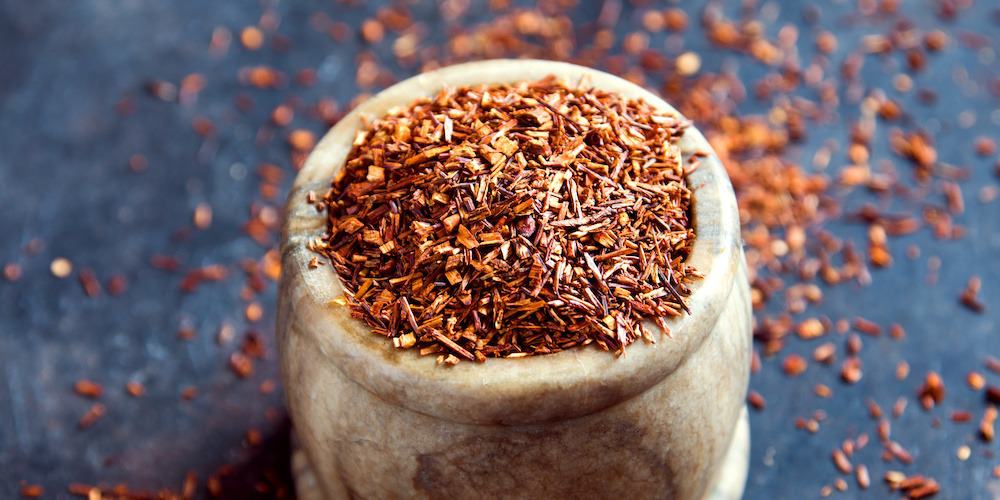
BENEFITS OF ROOIBOS
✓ Has a cardioprotective effect
✓ Protects the liver
✓ Reduces blood sugar
✓ Relieves allergies
✓ Potentially anti-cancer
What is rooibos (or red tea)?
Rooibos (Aspalathus linearis), also called “red tea”, is a shrub of the Fabaceae family such as beans, broad beans, the mucuna, the fenugreek or even the griffonia. It therefore has nothing in common with the tea plant (Camellia sinensis) and the teas we know. That’s also why it doesn’t contain caffeine. In that sense, it should not be confused with Chinese red tea or Pu-erh tea.
It grows in South Africa, in the Cederberg region. Located in the Western Cape province, it features many red, rugged mountains. It is here, in this remote and still wild place, that it originally grows.
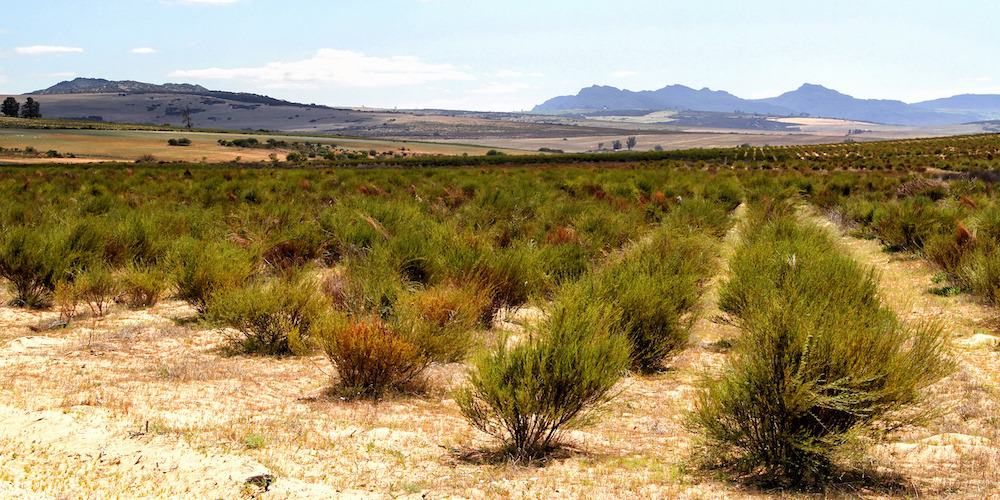
There it favors a hot, dry climate, sandy soil and poor, acidic earth. More rarely, rooibos can also be found on the semi-desert high plateaus of the Bokkeveld, in South Africa.
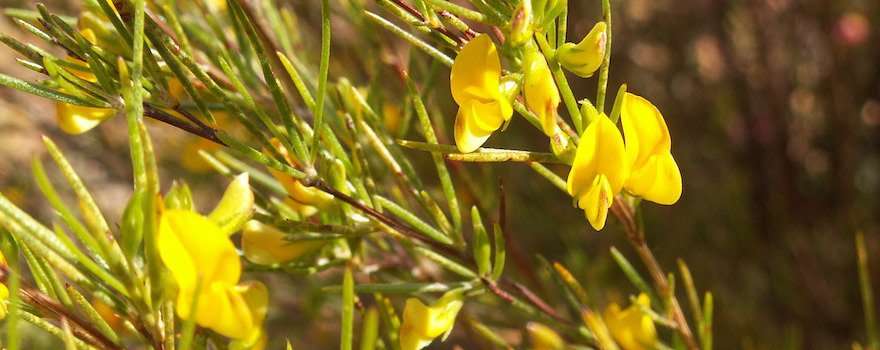
The Aspalathus linearis can reach up to 2 m in height. Thanks to its root, which can draw water from up to 3 m deep, it is able to withstand long periods of drought. From spring until the end of summer, the shrub is adorned with small yellow flowers.
It has thin, needle-shaped leaves that, before the plant dies, turn red. A characteristic that gave red tea the name ‘Rooibos’ meaning ‘red bush’ in Afrikaans.
The aerial parts (leaves and stems) have been used by local populations for centuries. Traditionally, red tea is consumed as an infusion, with milk and/or spices. Marketed since 1930, it was in the 1990s that red tea consumption developed worldwide.
Rooibos is appreciated as a refreshing beverage but also for its health benefits. In addition to being an antioxidant, it has anti-allergic properties, protects the liver and the heart, helps relieve intestinal and digestive disorders, and reduces blood sugar. Some studies have also highlighted its anticancer potential.
Nutritional composition
- 15 amino acids including 2 essential ones
- Minerals and trace elements: magnesium, calcium, manganese, zinc, potassium, sodium…
- Polyphenols : aspalathin, nothofagin
- Flavonoids : catechins, quercetin, isoquercitrin, rutoside, luteolin
- Phenolic acids : caffeic acid, protocatechuic acid, ferulic acid
- Polysaccharides
- Essential oils
The benefits of rooibos
❤️ Has a cardio-protective effect
Red tea protects the heart indirectly by fighting free radicals, oxidative stress, high blood pressure, and bad cholesterol. All of these are factors responsible for heart diseases such as atherosclerosis.
This action is due to the many antioxidants present in rooibos. Flavonoids, including quercetin and luteolin, are particularly beneficial for heart health. They inhibit angiotensin-converting enzyme (ACE), which, by contracting blood vessels, increases blood pressure in the arteries. Hypertension therefore increases the risk of cardiovascular disease. That is why, in conventional medicine, ACE inhibitor medications are indicated for the prevention and treatment of coronary disease.
Aspalathin and nothofagin from red tea also act on TNF-α (tumor necrosis factor) involved in heart failure. Finally, rooibos improves the lipid profile by significantly lowering LDL cholesterol (or \”bad cholesterol\”) and triglycerides while increasing HDL cholesterol (or \” good cholesterol \”). Thus, red tea prevents the accumulation of cholesterol in the arteries that leads to atherosclerosis.
This study from the Cape Peninsula University of Technology (South Africa), conducted on patients at risk of cardiovascular disease, shows the beneficial effects of red tea on the lipid profile.
This other study from various South African universities, conducted on diabetic rats, examined the cardioprotective potential of rooibos.
💎 Protects the liver
Red tea is also of interest not only for prevention but also as a treatment for liver diseases (viral hepatitis, fatty liver disease, cirrhosis…).
Indeed, like matcha tea or guarana, rooibos contains a large amount of catechin. This flavonoid, an antioxidant and heart-healthy compound, is also detoxifying and hepatoprotective. Thus, catechin contributes to proper liver function, protects it, and improves the elimination of toxins.
Also read the 20 foods to protect and cleanse your liver
Meanwhile, red tea modulates oxidative stress, responsible for liver damage, and suppresses the formation of pro-inflammatory cytokines involved in liver inflammation (acute or chronic hepatitis, hepatomegaly…).
This study by the Cape Peninsula University of Technology (South Africa), conducted on rats, shows how red tea reduces liver damage.
This other study from Comenius University in Bratislava (Slovakia), conducted on rats, shows that Rooibos promotes liver regeneration after poisoning.
🍭 Lowers blood sugar
For several years, red tea has been studied for its effects on diabetes and notably on blood sugar. Indeed, its leaves contain aspalathin, an antioxidant flavonoid that is also hypoglycemic. It thus helps reduce the amount of sugar in the blood.
Moreover, like berberine, the aspalathin in red tea activates the AMPK enzyme (AMP-activated protein kinase) involved in the regulation of energy metabolism. Finally, it improves insulin sensitivity.
This study by the Tokyo University of Agriculture and Technology (Japan), conducted on mice, shows the anti-diabetic potential of aspalathin.
This other study by Sagami Women’s University (Japan), conducted on diabetic rodents, demonstrates that red tea reduces blood glucose levels.
🤧 Relieves allergies
Red tea exerts an antiallergic action. Thus, it is particularly beneficial for relieving skin allergies but also eczema and asthma.
This property is due to the presence of quercetin, a flavonoid also found in nettle leaves, in ginkgo biloba or in moringa. Quercetin is a natural antihistamine: it can block the action of histamine and reduce allergic symptoms.
This study by Tomas Bata University in Zlín (Czech Republic), conducted on rats, demonstrates the anti-allergic properties of quercetin.
🔬 Potentially anti-cancer
Red tea is currently the subject of research due to its anticancer potential and its chemopreventive activity. Its content of quercetin and luteolin makes it promising for inhibiting growth and inducing apoptosis (or programmed cell death) in tumor cells.
This study by several South African universities, conducted on mice, demonstrated the chemopreventive properties of rooibos.
This other study from Seoul National University (South Korea), conducted on mice, investigated the effects of certain African plants, including red tea, in the treatment of malignant tumors.
♻️ Relieves digestive and intestinal disorders
Red tea contains anti-inflammatory flavonoids such as quercetin. Thus, it is useful for relieving inflammatory bowel diseases such as ulcerative colitis and Crohn’s disease.
According to this review from the University of Mauritius (Mauritius) on African medicinal plants, rooibos is traditionally consumed to relieve babies’ colic and stomach cramps.
Further studies are still needed to evaluate the effectiveness of red tea in improving digestive and intestinal disorders.
How to consume rooibos?
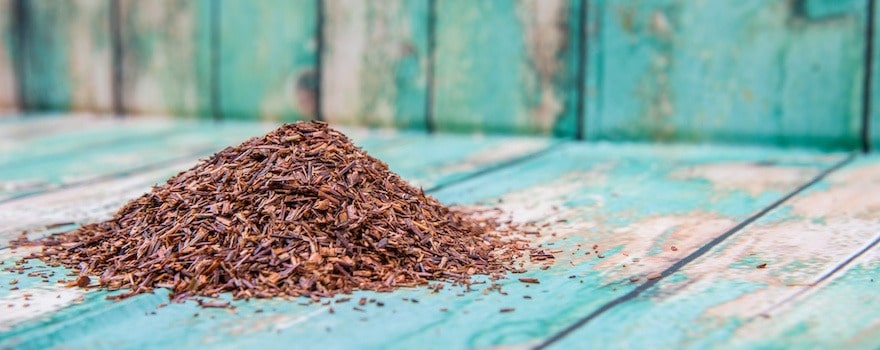
Dried red tea leaves
Dried red tea leaves are generally sold in tea bags or loose. They are readily available in organic and specialty stores or online.
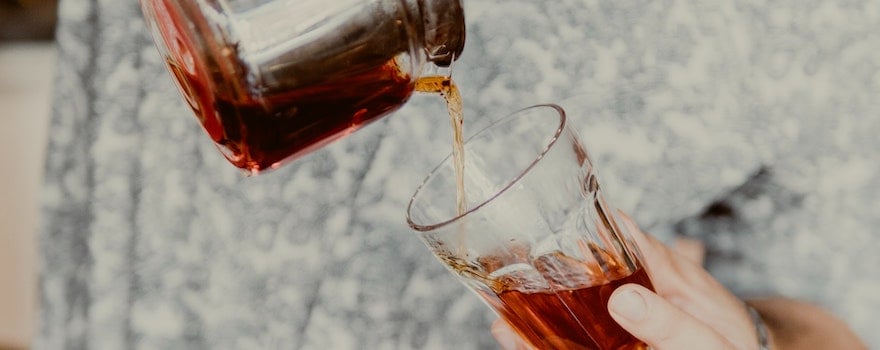
Rooibos is consumed as an infusion. Simply steep 1 teaspoon of dried leaves in 150 ml of water heated to 100°C for 5 to 10 minutes. In South Africa, red tea is usually served with a splash of milk. The rooibos infusion can also be drunk cold or iced, with or without honey.
Red tea leaves can be incorporated into various recipes to flavor them. Rooibos offers a unique flavor, slightly sweet, between hazelnut and chestnut.
Red rooibos or green rooibos?
There are 2 varieties of rooibos: red and green. To prepare traditional red tea, the leaves and stems are crushed to remove the sap and break the fibers, then subjected to an open-air fermentation phase. They are then dried in the sun for several hours.
Unlike red tea, the aerial parts of green Rooibos are not fermented but are dried directly in the sun after harvest. Antioxidant content is generally higher in unfermented rooibos. It has a more vegetal flavor and is less fruity. In addition, it does not have the characteristic color of red tea because it is fermentation that allows the leaves to turn from green to red.
Red tea and spices
Red tea pairs very well with certain spices such as ginger and cinnamon. Besides enjoying a delicious drink, you’ll also benefit from their combined effects on the body.
Even better, you can accompany your red tea tasting with a few goji berries or açai berries.
Consume sustainably: favor organic, fair-trade rooibos
✓ We recommend choosing a red tea or rooibos certified organic, grown without chemicals. This is especially important because the leaves will be prepared as an infusion. This will prevent pesticide residues from ending up in your drink ! You will also benefit from superior quality and support farming that respects the environment.
✓ True rooibos must come from South Africa. Even though other countries have often shown interest in cultivating red tea (Australia, the United States, China…), all attempts to grow it outside Africa have failed. Please note that rooibos now has Geographical Indication (GI) status.
✓ Finally, favor red tea from fair-trade sources. The cultivation of red tea is essential for many local producers in South Africa. Support their work by choosing fair-trade Rooibos.
Dosage
⚖️It is recommended not to consume more than 3 cups of rooibos per day.
⏳Because it does not contain caffeine, it can be enjoyed at any time of day, including in the evening.
Red tea leaves should be stored in a dry place, away from light (ideally in a tea tin).
🍵For infusion : 1 teaspoon of dried leaves in 150 ml of water.
Contraindications and side effects
Consumption of red tea presents some contraindications:
- People with liver or kidney problems should avoid drinking red tea.
- Because rooibos can reduce iron absorption, people with an iron deficiency should consult their doctor before consuming it.
- Because red tea can interfere with chemotherapy treatments, cancer patients should also consult their doctor.
Excessive consumption of red tea can cause the following side effects :
- Liver disorder.
- Increase in estrogen production.
If you experience side effects, stop consuming it and consult a doctor.
History, cultivation, and market of rooibos
A traditional and well-preserved cultivation
Rooibos grows in largely unspoiled regions of South Africa. If its leaves are harvested from the second year, the shrub produces abundantly when it is 4-5 years old. From January to May, producers can collect between 125 and 250 g of leaves and stems per plant per harvest.
The production and development of a red tea plant then gradually decline. When cultivated, it generally lives between 7 and 10 years. But, in the wild, rooibos has a much longer lifespan that can reach up to 20 years !
South Africa produces approximately 14,000 tonnes of rooibos per year. According to this review by the Agricultural Research Council of South Africa, red tea is currently sold in more than 37 countries around the world. The United States alone already accounted for 86% of the export market in 2010.
Today, global warming, hotter summers and drier winters threaten the cultivation of rooibos in South Africa.
Report compiled by Julia Perez and Charlotte Jean
Sources and scientific studies
Marnewick JL, Rautenbach F, Venter I, Neethling H, Blackhurst DM, Wolmarans P, Macharia M, 2011. Effects of rooibos (Aspalathus linearis) on oxidative stress and biochemical parameters in adults at risk for cardiovascular disease.
Phiwayinkosi V. Dludla, Elizabeth Joubert, Christo J.F. Muller, Johan Louw, and Rabia Johnson, 2017. Hyperglycemia-induced oxidative stress and heart disease-cardioprotective effects of rooibos flavonoids and phenylpyruvic acid-2-O-β-D-glucoside
Olawale Razaq Ajuwon, Oluwafemi Omoniyi Oguntibeju, and Jeanine Lucasta Marnewick, 2014. Amelioration of lipopolysaccharide-induced liver injury by aqueous rooibos (Aspalathus linearis) extract via inhibition of pro-inflammatory cytokines and oxidative stress.
Ulicná O, Vancová O, Waczulíková I, Bozek P, Janega P, Babál P, Lísková S, Greksák M, 2008. Does rooibos tea (Aspalathus linearis) support regeneration of rat liver after intoxication by carbon tetrachloride?
Son MJ, Minakawa M, Miura Y, Yagasaki K, 2013. Aspalathin improves hyperglycemia and glucose intolerance in obese diabetic ob/ob mice.
Moe Sasaki, Nami Nishida, and Masako Shimada, 2018. A Beneficial Role of Rooibos in Diabetes Mellitus: A Systematic Review and Meta-Analysis.
Jiri Mlcek, Tunde Jurikova, Sona Skrovankova, and Jiri Sochor, 2016. Quercetin and Its Anti-Allergic Immune Response.
Magcwebeba TU, Swart P, Swanevelder S, Joubert E, Gelderblom WC, 2016. In Vitro Chemopreventive Properties of Green Tea, Rooibos and Honeybush Extracts in Skin Cells.
Na HK, Mossanda KS, Lee JY, Surh YJ, 2004. Inhibition of phorbol ester-induced COX-2 expression by some edible African plants.
M. Fawzi Mahomoodally, 2013. Traditional Medicines in Africa: An Appraisal of Ten Potent African Medicinal Plants.
