


Collagen is riding high. This protein, the most abundant in our bodies, forms the structure of the skin, tendons, bones, and connective tissue in general. It is also a dietary supplement with many touted benefits: firmer skin, more supple joints, shinier hair… and now: stronger nails.
However, one detail catches my attention: the nail is not made of collagen. It’s a structure composed mainly of hard keratin, another protein. So what is the connection between collagen and nail health?
I suggest we take stock: let’s dive into the scientific studies to see what they really say about this promise and separate real benefits from marketing claims.
📚 Read also | We analyzed 14 collagen brands, here is our opinion
Is there a link between collagen and nails?
90% keratin but no collagen
The nail plate, called the ungual plate, the part we cut and file, contains 80 to 90% keratin, a fibrous protein. It therefore does not contain collagen.
So why do people talk about collagen for nails? Because the nail does not grow in a vacuum.
Its growth depends on the nail matrix and nail bed, which are living, vascularized tissues located beneath and around the nail plate. And these tissues rely largely on the underlying dermis and surrounding connective tissues, which help create an environment conducive to nail health and provide the necessary nutrients.
However, collagen is a major component of these tissues.
It is therefore assumed that when collagen synthesis declines with age, nail health suffers. Conversely, if specific amino acids are supplied, supplementation could indirectly support the environment in which the nail forms and promote its growth, strength, and appearance.
What collagen becomes once digested
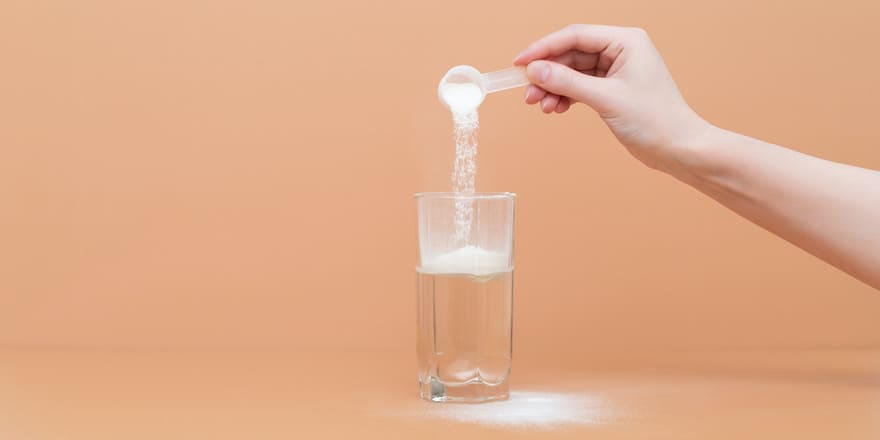
When a collagen supplement in the form of hydrolyzed peptides is consumed, it is digested like any other dietary protein.
It is broken down into free amino acids, releasing in particular glycine, proline, and hydroxyproline, which in theory could support these supporting tissues around the nail. But does this logic hold up in practice?
What the clinical studies really show
The Hexsel study (2017): encouraging results for brittle nails
This hypothesis is not without basis. Several clinical studies have already shown a potential effect of collagen on the appearance of the skin, its firmness, and its hydration.
However, there are only a few studies that have specifically looked at nails.
Although the data on the subject remain limited, I did still find a German study published in 2017 by Hexsel that looked into the question.
Twenty-five women suffering from “brittle nail syndrome” (fragility, splitting, peeling) took 2.5 g per day of specific collagen peptides for 24 weeks, followed by 4 weeks without supplementation.
The results? They are rather encouraging:
- the nail growth rate increased by about 12%
- the frequency of broken or split nails decreased by 42%
- 64% of participants observed an overall clinical improvement, and 88% of them still had a visible improvement even four weeks after stopping the supplementation
Some other studies, including this one published in 2024, also showed an improvement in the color and uniformity of the nail plate when collagen supplementation had been used.
The limitations of this study
These results are interesting, but they remain insufficient. In the reference study, several flaws should be noted:
- the sample was small (25 women)
- there was no placebo control group
- the participants knew they were taking the supplement
In addition, there are no proven benefits for people with normal nails. At present, the evidence is still too limited to speak of proven effectiveness in the strict sense of the term.
My verdict on collagen for nails
So, is collagen effective for nails? I’ll be honest: it depends on what you mean by “effective,” and especially on who you’re talking about.
For people who truly suffer from brittle or fragile nails, regular supplementation with specific collagen peptides may potentially provide a measurable benefit to nail growth and strength, as shown by the Hexsel study.
But in someone with normal nails and a sufficient diet, there is no evidence to support a positive effect of collagen supplements.
If you still want to try supplementation, I recommend paying attention to:
- the dose: studies indicate a minimum intake between 2.5 and 10 g per day
- theduration of your regimen: according to the research, taking it over several months would be necessary
- the quality of the supplement.
In parallel, a balanced diet tailored to your needs as well as good hand hygiene remain your first tools for healthy nails.
Sources and scientific studies
- Hexsel D et Al. (2017) Oral supplementation with specific bioactive collagen peptides improves nail growth and reduces symptoms of brittle nails.
- Vleminckx S (2024) Influence of collagen peptide supplementation on visible signs of skin and nail health and -aging in an East Asian population: A double blind, randomized, placebo-controlled trial.
