

BENEFITS OF GUAR GUM
✓ Helps with weight loss
✓ Supports digestive health
✓ Reduces cholesterol levels
✓ Helps improve diabetes
✓ Regulates blood pressure
What is guar?
Guar is an annual herbaceous plant whose scientific name is Cyamopsis tetragonoloba. Also called “four-winged cyamopsis”, “guar bean” or “Indian bean”, it belongs to the large legume family (Fabaceae) like griffonia or astragalus, or lentils. Native to India and Pakistan, guar is now present in other countries with hot and dry or even semi-arid climates: Africa, the United States, Australia…
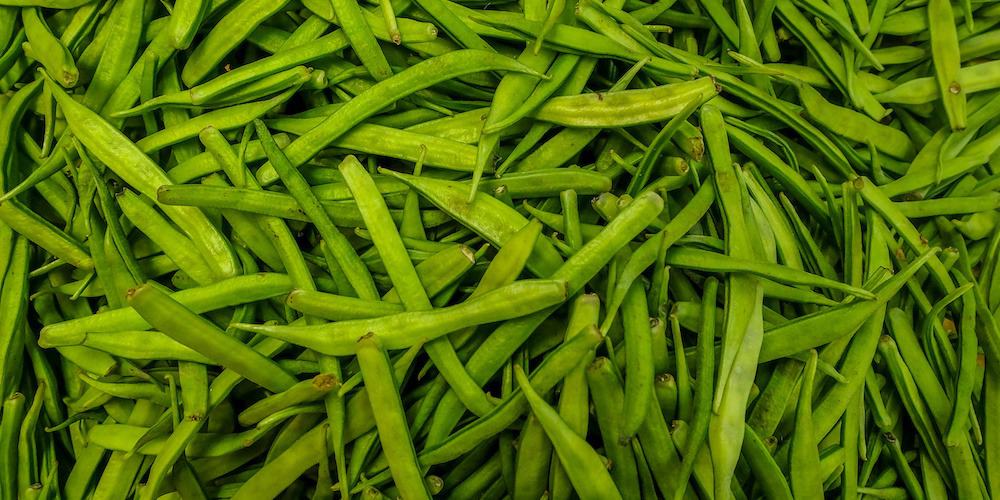
Reaching up to 2 m in height, this plant has hairy leaves and small pink flowers. After flowering, it produces bean-shaped pods or broad beans, each containing several brown seeds.
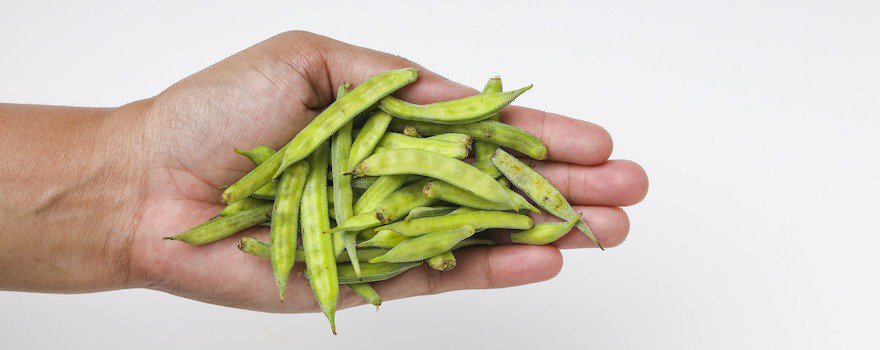
Once harvested, the seeds are ground to make the famous “guar gum”. It takes the form of an off-white, odorless powder with a neutral taste.
Guar gum is a polysaccharide, a macromolecule from the carbohydrate family. It is mainly composed of galactomannan, a soluble plant fiber also present in carob gum or the fenugreek gum. In the seed, this substance plays a role in storing water and sugars and is essential for germination.
The food industry uses guar gum as a stabilizer, emulsifier and plant-based thickener (under the additive name E412). But it also offers many health benefits. Thus, several studies have highlighted its effectiveness for weight loss, supporting digestive health, reducing cholesterol levels, and even improving diabetes. Guar gum may also help regulate blood pressure.
📚 Also read | Best appetite-suppressing supplement: a pharmacist’s opinion
Nutritional composition
- Sugars : galactose and mannose
- Soluble and insoluble fibers : galactomannan
- Proteins
- Fats
- Water
Benefits of guar gum
🏃♂️ Helps with weight loss
Guar gum can contain up to 75 % soluble fiber. These promote a feeling of fullness, limit snacking, and slow gastric emptying (the passage of food from the stomach to the intestine).
On the one hand, guar acts as a natural appetite suppressant. Like chia seeds or psyllium, its soluble fibers swell and turn into a viscous gel once in the stomach, thereby exerting a satiating effect. They also slow digestion to further prolong the feeling of fullness. Guar therefore helps limit appetite and reduce snacking during the day.
In addition, soluble fibers slow the absorption of fats (lipids) and carbohydrates (sugars) into the blood. When these enter too quickly, they are stored in the body as fat. That is why this food can be a valuable aid for losing weight.
This study from the University of Gothenburg (Sweden), conducted on obese patients, shows how guar gum significantly reduced hunger and regulated carbohydrate and lipid metabolism.
♻️ Supports digestive health
Consuming guar gum is also beneficial for optimizing bowel transit, nourishing the microbiota and alleviating gastrointestinal disorders.
The fibers it contains can help relieve constipation, diarrhea, flatulence, as well as bloating and abdominal pain. Guar has also been shown to be effective in reducing symptoms associated with irritable bowel syndrome (IBS) or in cases of SIBO (Small Intestinal Bacterial Overgrowth).
Guar gum notably improves the consistency and frequency of stools. It also beneficially alters the composition of the gut microbiota (previously called “intestinal flora”). As a result, it reduces the amount of pathogenic bacteria of the Clostridium genus, which are responsible for severe diarrhea.
This study from the Federico II University of Naples (Italy), conducted on patients suffering from irritable bowel syndrome, shows how guar gum relieved their symptoms.
This another study from the University of São Paulo (Brazil), conducted on women, demonstrates the effectiveness of guar gum in relieving constipation and improving intestinal function.
🍳 Reduces cholesterol levels
Guar gum shows positive effects in lowering LDL cholesterol or “bad cholesterol”. It can therefore be very useful for people suffering from hypercholesterolemia.
It acts within the body through different mechanisms: on the one hand, it reduces the absorption of cholesterol into the blood. On the other hand, it increases bile production by liver cells, which is involved in the elimination of cholesterol. Finally, guar gum increases HDL cholesterol, or “good cholesterol”.
This study by the Alcohol Drug Information Service (ADIS) of New Zealand, conducted on patients with hypercholesterolemia, shows how guar gum reduces total cholesterol levels.
This other study from the University of Eastern Finland, also conducted on patients with hypercholesterolemia, demonstrates its lipid-lowering effects.
🍭 Helps improve diabetes
Numerous studies have highlighted the potential of guar gum to reduce blood sugar and insulin levels.
The soluble fibers in guar improve glycemic control and insulin sensitivity in people with type 2 diabetes. By slowing glucose absorption, they prevent blood sugar spikes after meals. They also help prevent certain diabetes-related complications, such as cardiovascular diseases.
This study from the University of Helsinki (Finland), conducted on patients with diabetes, shows the benefits of guar gum on glycemic control and lipid concentrations.
This other study from the University of Gothenburg (Sweden), conducted on healthy men, confirms the potential of guar in the treatment of diabetes.
❤️ Regulates blood pressure
Guar gum also has beneficial effects on blood pressure. It can notably help relieve postprandial hypotension (PPH) and reduce systolic blood pressure in people with hypertension and/or overweight.
This property is largely due to the plant proteins contained in the gum. They play an important role in blood pressure. Thus, consuming guar may be of interest in the treatment of mild hypertension.
This study from the University of Gothenburg (Sweden), conducted on patients with hypertension, demonstrates that guar gum exerts a lowering effect on blood pressure.

How to consume guar?
Guar tablets
The capsules or tablets contain guar gum powder obtained by grinding the seeds of Cyamopsis tetragonoloba. It is an easy-to-find, convenient, and tasteless dietary supplement.
To obtain good results, the capsules must be adequately dosed with guar gum powder (minimum 300 mg per capsule). Preferably choose capsules without additives and vegetarian.
Guar powder
Guar powder is a natural, minimally processed form with a neutral taste. It simply dissolves in a glass of cold or hot water. The resulting paste is not swallowed directly but must be chewed thoroughly.
In cooking, it can advantageously replace starch, sugar, or fats. Naturally gluten-free, it is used as a thickening and binding agent for savory or sweet recipes, in sauces, soups, creams… Finally, it helps lighten doughs and bakery preparations (breads, brioches…).
Guar gum powder can also be used to give body to your homemade cosmetic recipes : creams, masks, massage gels…
Guar and medicinal plants
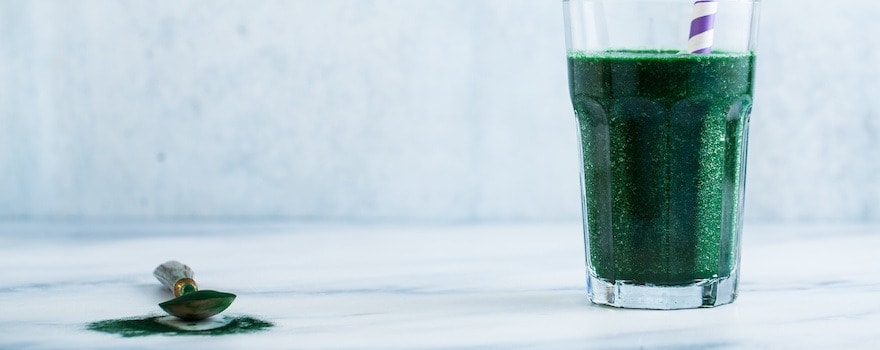
To improve digestive health, guar is even more effective when combined with natural probiotics like kefir or spirulina.
To support weight loss, guar is paired with fat-burning foods like matcha tea or guarana.
To reduce levels of bad cholesterol, complement your intake of guar with Brazil nuts or basil seeds.
Consume sustainably: choose organic, fair-trade guar
✓ Today, it’s India that produces most of the guar, and exports 600,000 tons per year worldwide. It alone accounts for 80% of global production. Prefer guar gum from organic farming to avoid pesticide residues in the final product.
✓ In the state of Rajasthan, in northwest India, guar cultivation is an important source of income for local producers. So don’t hesitate to choose guar from fair and solidarity-based supply chains to support their work and contribute to the development of the poorest regions.
Dosage
It is recommended not to consume more than 10 g of guar gum per day.
Guar capsules are simply taken with a large glass of water. 15 minutes before meals and possibly accompanied by a snack (fruit, slice of bread…).
A 10-day course can be helpful for weight loss as part of a healthy, balanced diet.
- Guar in tablets : 3 to 6 capsules per day for 300 mg capsules
- Guar powder : 1 level teaspoon per day
Contraindications and side effects
The consumption of guar has certain contraindications :
- As a precaution, guar is not recommended for pregnant and breastfeeding women and for young children.
- Because of its effect on insulin spikes, people with insulin-dependent diabetes should avoid consuming it.
- People allergic or intolerant to soy-based products should consume guar with caution because it may contain traces of soy proteins
- Guar may interact with certain antidiabetic medications and antihyperglycemic agents (metformin)
Excessive consumption of guar can cause the following undesirable effects :
- Flatulence
- Abdominal cramps
- Bloating
- Intestinal obstructions
- Diarrhea
If you experience side effects, stop taking it and consult a doctor.
History, cultivation and market of guar
Today, guar is mainly cultivated for the food, cosmetic, and pharmaceutical industries. But, more surprisingly, it is also used for oil and gas extraction. For 20 years, guar production has been driven by demand from multinationals and shale gas operators.
During drilling, the water injected at high pressure is mixed with guar gum. Guar gum has the ability to thicken it to better penetrate the porous rock. It could also revive certain gas wells and depleted oil wells. The price of guar gum continued to rise, reaching $1,000 per ton in 2012.
While this growing demand provides a livelihood for many farmers, it unfortunately promotes highly polluting processes.
Report compiled by Julia Perez and Charlotte Jean
Sources and scientific studies
M Krotkiewski, 1984. Effect of guar gum on body-weight, hunger ratings and metabolism in obese subjects.
Luigi Russo, Paolo Andreozzi, Francesco P Zito, Letizia Vozzella, Ivana G Savino, Giovanni Sarnelli, Rosario Cuomo, 2015. Partially hydrolyzed guar gum in the treatment of irritable bowel syndrome with constipation: effects of gender, age, and body mass index.
Dan Linetzky Waitzberg, C C Alves Pereira, L Logullo, T Manzoni Jacintho, 2012. Microbiota benefits after inulin and partially hydrolized guar gum supplementation: a randomized clinical trial in constipated women.
P A Todd, P Benfield, K L Goa, 1990. Guar gum. A review of its pharmacological properties, and use as a dietary adjunct in hypercholesterolaemia.
A Aro, Matti I J Uusitupa, E Voutilainen, T Korhonen, 1984. Effect of guar gum in male subjects with hypochlesterolaemia.
P H Groop, A Aro, S Stenman, L Groop, 1993. Long-term effects of guar gum in subjects with non-insulin-dependent diabetes mellitus.
K Landin, G Holm, L Tengborn, U Smith, 1992. Guar gum improves insulin sensitivity, blood lipids, blood pressure, and fibrinolysis in healthy men.
M Krotkiewski, 1987, Effect of guar gum on the arterial blood pressure.
