


Popularized in the 2000s by French general practitioner Pierre Dukan, the method first became known through a book, I Don’t Know How to Lose Weight,.
The idea is to deprive the body of carbohydrates and reduce fats in order to lose weight. Its promise: lose weight quickly, without feeling hungry.
Indeed, Dukan appeals with this list of foods you can eat freely at each stage of weight loss, the duration of which depends on the goal. This diet, high in protein and low in carbohydrates, shook up the field of nutrition and generated abundant scientific literature because it raises so many questions.
Note that because of its (overly) strict framework and its commercial empire, the National Council of the Order of Physicians decided on a suspension of Dr. Dukan’s license in 2014.
Yet it continues to fascinate! Dukan cookies, konjac, oat bran, Dukanauts, proteinauts… It remains a major trend in the weight-loss market.
Can it really be recommended for losing weight? As a dietitian, I share with you the key principles of this high-protein diet, as well as my analysis and my opinion on the Dukan diet.
📚 Also read | The best weight-loss programs under the microscope
The four phases of the Dukan diet
The attack phase to boost the loss of the first pounds
Let’s first summarize the steps of the Dukan diet. Also called the “starter,” the 1st Dukan phase lasts between 3 and 7 days maximum, depending on how much weight you want to lose.
In practical terms, the following are allowed:
- 72 protein-rich foods to eat freely (lean proteins)
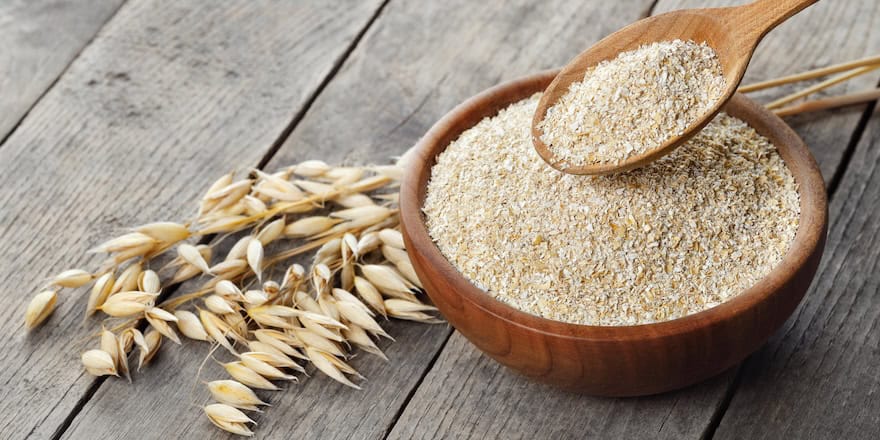
- 1 and a half tablespoons of oat bran per day
It is also recommended to walk 20 minutes per day and drink at least 6 glasses of water per day.
2nd stage of the Dukan diet: the cruise phase
It alternates days of pure protein (PP) and days of protein + vegetables (PL). A total of only 28 vegetables are allowed.
This second phase, to be followed until the desired weight is reached, changes very little overall (although the amount of oat bran increases slightly).
The consolidation phase to avoid the yo-yo effect
This third stage is designed to prevent the rebound effect, which Pierre Dukan presents as a physiological inevitability.
It is divided into two parts and reintroduces:
- 1 fruit per day (except banana, grapes, cherries), then two in the 2nd part of the phase
- 2 slices of whole-grain bread per day
- 40 g of cheese per day
- 1 serving of starchy foods per week (220 g cooked), then 2 times per week
- 1 gala meal per week, then 2
- 2 and a half tablespoons of oat bran per day
One day of pure protein (PP) per week must be maintained.
The consolidation phase is to be followed for 10 days x the number of kilos lost. If you have lost 8 kilos, you will need to follow it for 80 days. The first and second parts will therefore last 40 days each.
Lifetime stabilization: 3 rules to follow
Unlike most other diets, the Dukan diet includes a final phase that is supposed to last a lifetime.
The three rules to keep:
- PP day every Thursday (pure protein)
- 20 minutes of walking per day
- 3 tablespoons of oat bran per day
At first glance, there are no food prohibitions. In reality, this nutritional freedom remains very strictly regulated.
Flexibility is more about the quality of foods, with for example the reintroduction of fatty meats that were not allowed until then.
These recommendations for maintaining the right weight, an expression taken from the Dukan book, continue to impose restrictions without truly teaching followers how to eat well.
My analysis of the Dukan method: scientific data but many limitations
High-protein diet and weight loss
From a metabolic point of view, yes, proteins have several health benefits. First, protein contributes to greater satiety. An important point when trying to lose weight.
This phenomenon is explained by the extra work proteins require to be metabolized. In fact, they are the most thermogenic nutrient: their digestion uses more energy than that of sugars or fats.
Second, eating enough protein helps maintain lean mass (muscle mass). During a calorie restriction, the often unavoidable loss of muscle should be limited, both for the cardiovascular system and to avoid regaining weight afterward.
So in my view, protein intake is crucial in a weight-loss strategy, but that does not mean it should be limited to that single nutrient at the expense of fats and carbohydrates.
What this lifelong diet does not fix
The possible yo-yo effect
Like most restrictive diets, the Dukan method runs up against reality: weight regain after stopping the protocol.
The cause is the lack of deep dietary retraining and the difficulty of sticking to the stabilization rules. Even if adhering to these PP days may initially seem simple.
In consultations, former Dukan followers express a certain weariness and say they can no longer eat chicken breast or surimi, for example, because of disgust.
By contrast, the Mediterranean diet stands out as an exception.
Compared with a low-fat diet and then a low-carbohydrate diet, the latter shows better results for glycemic control and long-term weight maintenance.
There are therefore other non-restrictive solutions, without strict bans, for lasting weight loss.
Eating behavior and psychosocial impact over the long term
What seems most important to point out to me: the Dukan diet imposes rigid rules that can weaken one’s relationship with food over the long term.
Food separation, guilt related to lapses and the social dimension of eating, such as sharing a good meal or eating out, quickly become obstacles.
For some people, this mechanism of restriction can worsen existing eating disorders.
Possible deficiencies and other side effects
From the very first days in the attack phase, certain symptoms may appear: headaches, fatigue, bad breath, dry mouth.
Although not very pleasant, they indicate the onset of ketosis and the massive elimination of water linked to the depletion of the body’s glycogen stores.
Over time, it is especially the lack of fiber that causes problems. The amount of oat bran is absolutely not enough to meet needs: 25 g per day minimum.
The absence of fruit and the severe restriction of vegetables, then their only partial introduction during the cruising phase, promote constipation, one of the side effects most frequently reported by its followers.
Nothing very encouraging either on the micronutrient side: fat-soluble vitamins A, D, E and K, antioxidants and minerals remain insufficient. Fats (vegetable oils) and essential fatty acids as well as plant foods (nuts, seeds, vegetables, fruit, etc.) are considerably lacking.
Supplementation may prove necessary, which Pierre Dukan himself acknowledges in his book.
The contraindications of the Dukan diet
This high-protein program is strongly discouraged for people suffering from kidney or liver failure, gout, or cardiovascular problems.
It is also contraindicated for pregnant and breastfeeding women, adolescents and children, as well as older adults.
Outside a particular medical context, I advise you to first consult a health professional such as a dietitian-nutritionist before starting this type of diet.
Although many report convincing weight-loss results, I would like to point out that proteins should account for an average of 15-20% of our total daily energy intake, not 90-95%.
The Dukan diet is therefore based on a long-term nutritional imbalance that cannot be without consequences for weight, the body, and morale.
Finally, the excess of animal protein raises questions in light of the various current ecological challenges.
From my point of view, these limitations are sufficient reasons to invite you to place greater emphasis on a flexible and individualized approach if you wish to rebalance your diet.
Sources and scientific studies
Johnston CS, Day CS, Swan PD, Postprandial thermogenesis is increased 100% on a high-protein, low-fat diet versus a high-carbohydrate, low-fat diet in healthy, young women. J Am Coll Nutr. 2002
Leidy et al., The role of protein in weight loss and maintenance, The American Journal of Clinical Nutrition, 2015
Shai et al., Weight loss with a low-carbohydrate, Mediterranean, or low-fat diet, New England Journal of Medicine, 2008
