

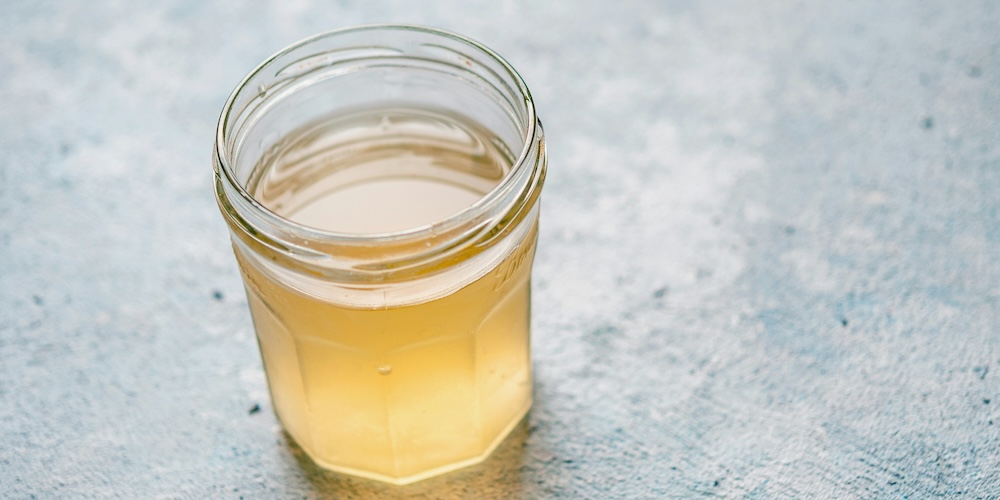
Rich in nutrients, this ancestral beverage is making a comeback in our kitchens. As its name suggests, bone broth or bouillon d’os in French, is a soup simmered for hours made from bones and aromatics.
You may have consumed it as a child, like me, without even knowing it. The bone broth recipe, more than just a soup, can indeed serve as a base for various dishes.
The bone broth trend is reemerging today in the wake of the Paleolithic diet, a lifestyle that gives a prominent place to animal-based foods. Its various remineralizing and digestive benefits, for example, are what make it so popular among natural health enthusiasts.
However, I draw your attention to the fact that few studies are available on the subject. Here I offer an overview of the benefits, recipes, and tips for consuming bone broth daily.
The potential benefits of bone broth
A hydrating recipe
Rich in water and electrolytes, it may contribute to the body’s proper fluid balance.
Sodium, potassium and magnesium are the main minerals that the broth provides. In variable amounts, depending on the method of preparation and the seasoning you choose, of course.
I recommend favoring high-quality bones, a very long cooking time, and the addition of an acidic liquid like vinegar or lemon to improve the mineral concentration in the broth.
A satisfying broth
Although low in calories, bone broth has the ability to ‘fill you up’ without weighing you down: about 40 kcal per 100 ml.
Its gelatinous liquid texture, combined with its warmth and umami flavor, fills the stomach, stimulates taste receptors, and sends satiety signals to the brain.
This satiating effect also relies on the presence of certain amino acids, such as glycine, which may help slow gastric emptying and stabilize blood sugar after a meal.
I invite you to try the experiment: enjoy a cup of broth as a starter or as a savory afternoon snack. I sometimes share this tip to help regulate evening hunger and snacking.
Digestive and immune support
Bone broth can help strengthen natural defenses, particularly through its beneficial effects on gut health.
Thanks to its gelatin and glutamine content, bone broth forms a texture that coats and protects the intestinal mucosa.
In cases of impaired intestinal permeability or chronic bloating, this same study demonstrates the benefit of bone broth in easing these disorders.
A source of collagen
A protein naturally present in bones, collagen transforms into a gelatinous substance during cooking.
This gelatin is composed of other amino acids such as glycine and proline that will support our endogenous production of collagen.
Although the exact amount of collagen is very variable and difficult to assess in broth, it is nevertheless one of the foods I recommend to care for joint flexibility, skin elasticity and muscle mass.
📚 Read also | A doctor tested 15 collagen brands, here is his ranking
A natural anti-inflammatory effect
Bone broth contains specific amino acids such as glycine, glutamine and arginine, which contribute to the modulation of inflammation through different mechanisms.
For example, glycine contributes to the proper synthesis of glutathione, a powerful antioxidant for our cells. Glutamine, in turn, supports intestinal health and arginine, for blood circulation and immune processes.
Recipe for making bone broth
Making your own bone broth at home allows you to better control the ingredients used, avoid additives, and obtain a concentrated broth rich in flavor and nutrients compared to industrial versions. Here’s how to prepare it easily:
Bone broth ingredients
- 1.5 kg of beef, veal, chicken, or turkey bones (with marrow, cartilage, or joint bones)
- 2 tablespoons of apple cider vinegar
- 1 tablespoon of organic lemon juice
- 2 carrots, roughly chopped
- 2 stalks of celery
- 1 onion (red or yellow)
- 2 whole garlic cloves
- 1 bouquet garni (bay leaf, thyme, parsley)
- 1.5 liters of filtered water
Optional: clove, fresh ginger, turmeric
Preparation steps
- Blanch the bones: bring the bones to a boil for a few minutes, then discard the water and rinse them.
- Put all the ingredients in a large pot, in a slow cooker, in a pressure cooker, or in a Dutch oven, then cover with cold water.
- Add the apple cider vinegar and the tablespoon of lemon juice, and let sit for 30 minutes before heating; this helps release the nutrients.
- Bring to a boil, then carefully skim off any foam if needed.
- Reduce to low heat, partially cover, and let simmer: 8-12 hours for poultry, 12-24 hours for beef or veal bones
- Strain the broth, discard the solids, and keep refrigerated.
Homemade bone broth can be stored for up to 5 days in the refrigerator or 3 months in the freezer, in airtight containers. I recommend varying broth recipes with fish bones, for example, and using different vegetables and spices to avoid getting bored of it.
Bone broth can be taken as a short multi-day course in a row, at dinner, during seasonal changes or as occasional digestive support. It also works very well as a comforting soup in winter, especially after physical exertion, for its remineralizing effects.
Finally, consider using it as a culinary base to easily enrich your homemade dishes with nutrients: sauces, risottos, or other simmered dishes.
Sources and scientific studies
Mary C Gannon, Jennifer A Nuttall, Frank Q Nuttall, The metabolic response to ingested glycine, Am J Clin Nutr, 2002
Ayah Matar, Nada Abdelnaem, Michael Camilleri, Bone Broth Benefits: How Its Nutrients Fortify Gut Barrier in Health and Disease, Dig Dis Sci, 2025
