

BENEFITS OF VALERIAN
✓ Relieves stress and behavioral disorders
✓ Fights depression
✓ Improves sleep quality
✓ Relieves pain
✓ Supports the cardiovascular system
What is valerian?
Valerian’s scientific name is Valeriana officinalis, derived from the Latin “valere” which means “to be well”. Over the centuries, it has been called St. George’s herb, bruise herb, cure-all, or cat herb because of its attractiveness to cats.
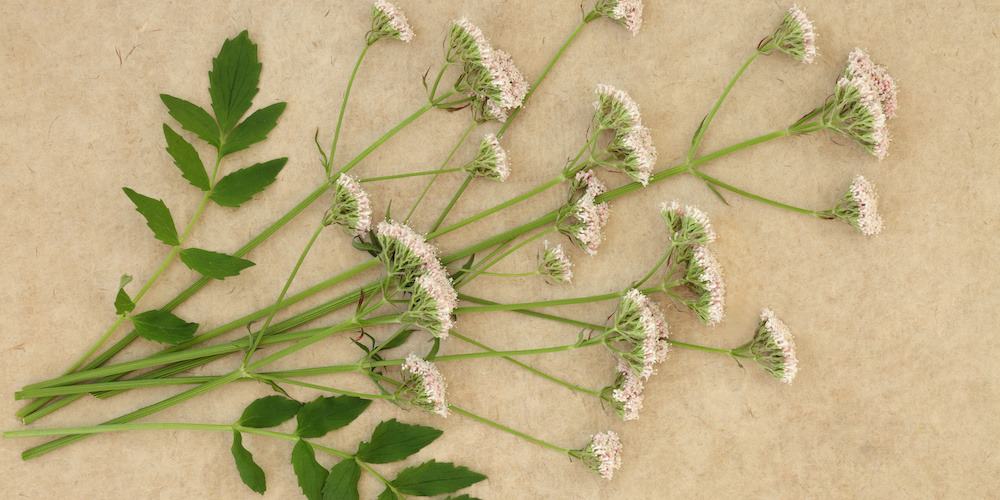
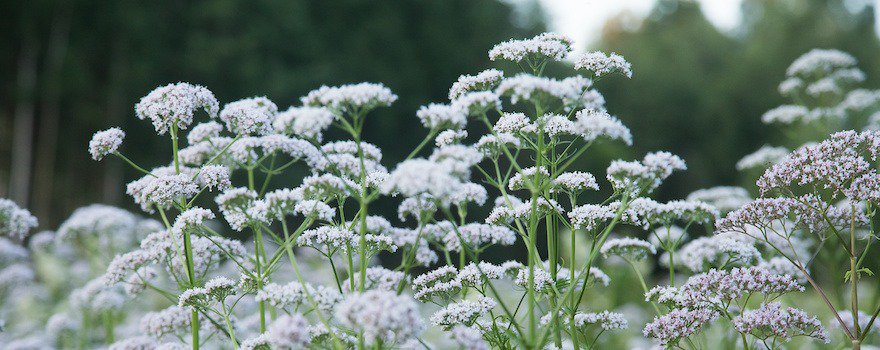
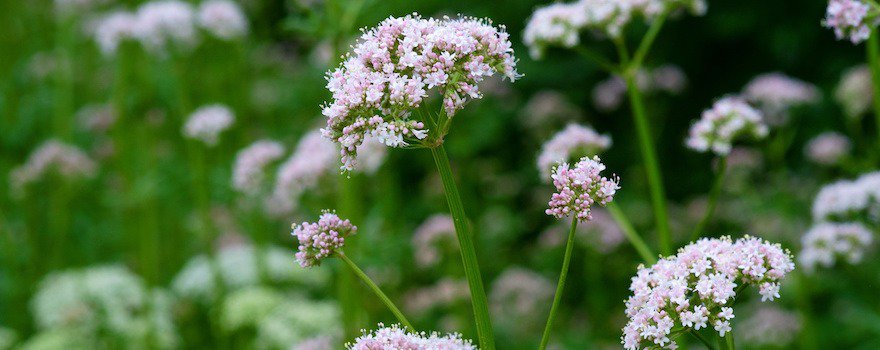
Valerian belongs to the family of Caprifoliaceae and is native to Europe and Asia. It grows in temperate climates, in cool, moist clay-siliceous soils. The plant can reach 1.5 m in height and has toothed leaves. From May to August, valerian produces pale pink flowers, favored by pollinating insects. It then produces fruits called achenes, equipped with small tufts.
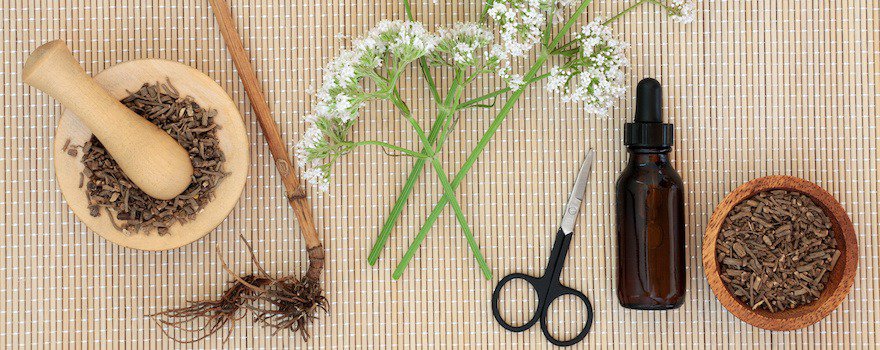
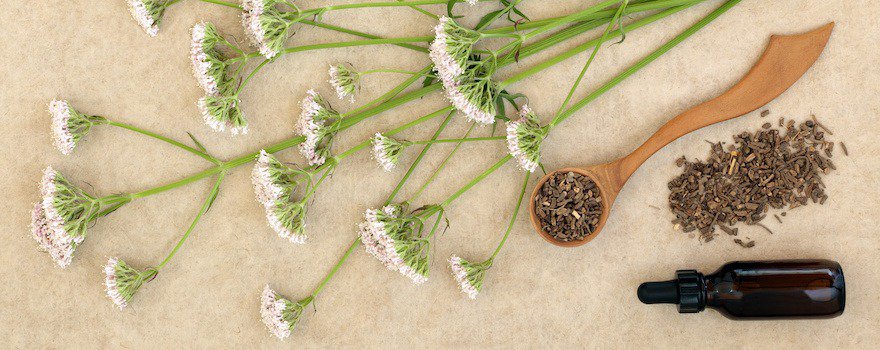
However, in herbal medicine, it is primarily the rhizomatous roots of valerian that are of interest. It is in this part that the plant’s active compounds are found.
A multitude of roots develop and coil around the main rhizome. They are then harvested in September-October, after flowering, the period when active compound levels are highest.
Valerian has been known and used since Antiquity. It was recommended to treat insomnia, combat heart palpitations, and relieve depression and fears. Despite its bitter taste, it was most often consumed as a decoction or as an herbal tea. In 1942, valerian was used during World War II to make up for the shortage of medicines. Eserine was then replaced by medicinal plants, including the one we’re interested in here.
It was starting in the 20th century that research on valerian increased. Scientists have identified numerous active compounds and have highlighted the plant’s sedative, relaxing, and calming effects.
Today, it is mainly consumed as a dietary supplement, in the form of tablets, capsules, powder, or mother tincture. Valerian root most often comes from Europe, which produces 1,200 tonnes of dried roots per year.
Read also | How to choose the best natural anti-stress dietary supplement
Nutritional composition
- Amino acids : tyrosine, glutamine
- Alkaloids : valerine, chatinine
- Terpenic acids: valerenic acid, isovalerenic acid, hydroxyvalerenic acid
- Valepotriates: iridoids
- GABA (gamma-aminobutyric acid)
- Flavonoids
- Tannins
- Essential oils : bomyl acetate, beta-caryophyllene
Benefits
🙏 Relieves stress and behavioral disorders
In herbal medicine, valerian is recommended for its calming effect on the nervous system. It is useful for combating stress (temporary or chronic), anxiety, fears, and panic.
Generally, it reduces behavioral disorders such as nervous agitation, paranoia, or Obsessive-Compulsive Disorder (OCD).
The calming action of valerian comes from the terpenic acids and gamma-aminobutyric acid (or GABA) found in its root. Both exert an anti-stress effect, and are sedative and relaxing. GABA is an inhibitory neurotransmitter whose role is to calm brain activity and maintain the balance of the nervous system.
This study from the University of Zurich, conducted on mice, shows how the valerenic acid in valerian acts on GABA receptors. In this other study from the Jundishapur University of Medical Sciences, conducted on adults with OCD, the valerian extract significantly improved symptoms compared to placebo.
🧘🏻♀️ Fights depression
Valerian helps restore mental balance and zest for life, and relieves feelings of sadness and melancholy. This antidepressant property is, once again, due to the valerenic acid and GABA present in the roots.
The active compounds in valerian notably increase the level of 5-hydroxytryptamine (5-HT), better known as serotonin or ” happiness hormone “. Serotonin, derived from the amino acid tryptophan, acts on mood and has a major influence on depression. In this regard, the effects of valerian are similar to those of raw cacao, rhodiola or griffonia.
Moreover, it preserves neurons in the hippocampus, a region of the brain affected by chronic depression. Indeed, repeated depressive episodes can damage the brain by causing hippocampal shrinkage and neuronal loss. The hippocampus plays an important role in emotional balance.
This study from Sun Yat-sen University in Guangzhou, China, conducted on rats, shows how valerian affects 5-hydroxytryptamine levels and preserves hippocampal neurons.
😴 Improves sleep quality
Along with passionflower, hawthorn and lemon balm, valerian is one of the essential plants for improving sleep quality. By reducing stress, relieving nervous agitation and calming racing thoughts, it promotes falling asleep. It shortens the time needed to fall asleep thanks to its sedative effect and its action on GABA.
But the plant also affects sleep quality. It promotes deep, restorative sleep and restores the balance of sleep cycles. Finally, valerian fights sleep disorders : insomnia, nighttime awakenings… Like another Indian plant, ashwagandha!
This study from the University of California, conducted on patients suffering from insomnia, shows that valerian induced an improvement in sleep compared with placebo.
💆♂️ Relieves pain
Valerian has an analgesic and antispasmodic action. It relieves pain and discomfort associated with muscle contractions, menstrual cramps, and gastrointestinal spasms of nervous origin…
Thus, it is an analgesic plant, like boswellia.
This study from Shiraz University of Medical Sciences in Iran, conducted on rats, found that valerian root extract, combined with turnip extract, produced analgesic effects in the acute and chronic phases of pain.
❤️ Supports the cardiovascular system
Valerian is a plant that supports the cardiovascular system. It protects the heart and helps prevent heart disease by improving blood circulation and lowering blood pressure. Hypertension is one of the main risk factors for heart disease.
Moreover, its active compounds support heart function by regulating heart rate. Thus, they help fight palpitations and tachycardia.
In this study by the Chinese Academy of Medical Sciences in Beijing, conducted on rats, researchers examined the components and cardiovascular activity of valerian.
How to take valerian ?
In tablets
Tablets or capsules contain valerian root powder, previously dried and ground (preferably cold-processed). It is the easiest form to find in pharmacies, in health food and specialty stores, or online.
To avoid pesticide residues, it is preferable to choose organic valerian.
Powder form
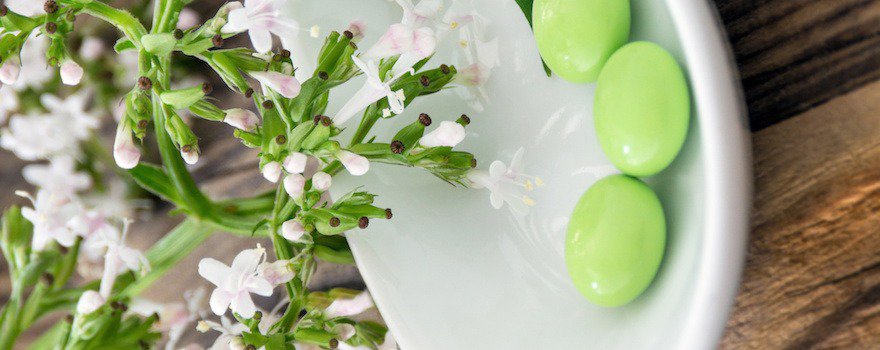
It is also possible to find it as a powder, obtained from the dried root then reduced to powder. Valerian powder simply dissolves in a glass of water or is prepared as an infusion.
But valerian tea is quite bitter. To soften the taste, you can add a spoonful of honey.
As a mother tincture
Valerian also exists as a mother tincture or hydroalcoholic extract. Derived from fresh roots, the mother tincture is rich in active compounds. But this form contains a lot of alcohol. The mother tincture is therefore not recommended for young children, pregnant and breastfeeding women.
Valerian and medicinal plants
Valerian is a plant that pairs well with other medicinal plants. To fight depression and improve sleep quality, the valerian/griffonia combination is interesting. The Griffonia is a plant that contributes to mental well-being. It reduces stress, relieves depression and its symptoms, and restores and improves sleep.
Valerian consumption can also be supplemented by taking rhodiola, an anti-depressant and fortifying herb, or ashwagandha, one of the most powerful natural anti-stress remedies.
Dosage
⚖️The recommended dosage of valerian varies between 500 and 600 mg per day.
⌛️Doses should be divided into 3 times throughout the day with one dose 2 hours before bedtime. Initial results are felt after 2 weeks or more.
⌛️To have a deeper effect on sleep and depression, it is possible to follow a 1- to 3-month course, taking a one-week break every two weeks. Ask your doctor before starting a valerian treatment.
💊 In tablets : up to 3 per day for 200 mg tablets or capsules
🥄 In powder : 1 level teaspoon per day (about 1 g)
🧪 In mother tincture : 3 x 20 to 30 drops per day or 50 drops 2 hours before bedtime
Contraindications and side effects
If the recommended dose is not exceeded, valerian is well tolerated by the body. It has few contraindications, but its use is nevertheless not recommended for the following people :
- As a precaution, young children, pregnant or breastfeeding women should avoid taking it.
- People undergoing medical treatment (hypnotics, anxiolytics, sleeping pills, and psychotropic medications) should consult their doctor before using it.
- Valerian should not be taken in case of liver disease.
Its use may cause certain side effects, most often mild. The following adverse effects have been reported:
- Drowsiness and dizziness.
- Headaches.
- Stomachaches.
- Nausea.
- Insomnia and agitation.
Because of a possible sedative effect, it is not recommended to take valerian before driving or using dangerous machinery.
History, cultivation and market
Valerian through the centuries
Valerian enjoyed its heyday during Antiquity, among both the Greeks and the Romans. Thus, the famous Greek physician Hippocrates recommended valerian to treat insomnia. In Rome, it was used more to relieve heart palpitations or gynecological problems.
It appears in numerous ancient works on medicinal plants. It is notably included in the « Circa instans » by Matthaeus Platearius (12th century) but also in the « De Vegetabilibus » of Albert the Great (13th century), one of the greatest botanical encyclopedias.
An irresistible plant for cats
Also known as the cat herb, valerian emits a strong odor that attracts cats. And with good reason: it is similar to cat urine.
This unpleasant smell is due to the presence of actinidine, a pheromone that enables communication among insects (as in ants, for example) and that is especially attractive to cats. It produces a euphoric effect but is harmless. That’s why cats love to rub themselves against valerian leaves!
Report compiled by Julia Perez and Charlotte Jean
Sources and scientific studies
Benke D, Barberis A, Kopp S, Altmann KH, Schubiger M, Vogt KE, Rudolph U, Möhler H, 2009. GABA A receptors as in vivo substrate for the anxiolytic action of valerenic acid, a major constituent of valerian root extracts.
Tang JY, Zeng YS, Chen QG, Qin YJ, Chen SJ, Zhong ZQ, 2008. Effects of Valerian on the level of 5-hydroxytryptamine, cell proliferation and neurons in cerebral hippocampus of rats with depression induced by chronic mild stress.
Stephen Bent, Amy Padula, Dan Moore, Michael Patterson, Wolf Mehling, 2006. Valerian for Sleep: A Systematic Review and Meta-Analysis.
Zare A, Khaksar Z, Sobhani Z, Amini M, 2018. Analgesic Effect of Valerian Root and Turnip Extracts.
Heng-Wen Chen, Ben-Jun Wei, Xuan-Hui He, Yan Liu, Jie Wang, 2015. Chemical Components and Cardiovascular Activities of Valeriana spp.
Photos: Adobe Stock. Rodolfo Sanches Carvalho/ Unsplash.
