

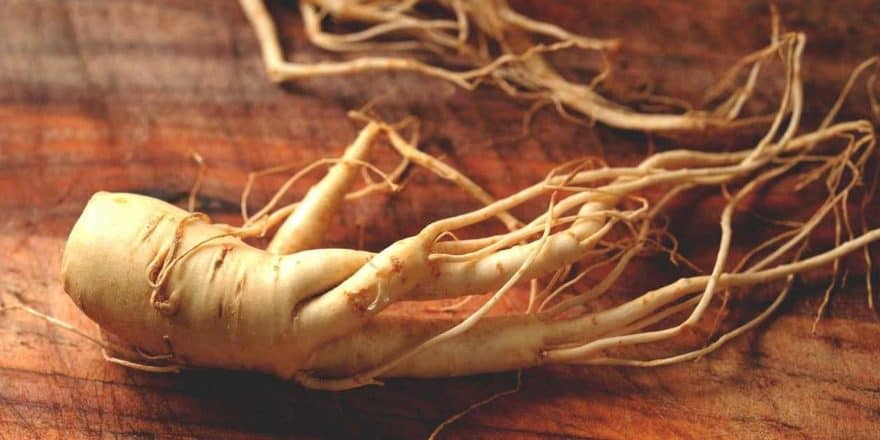
Red ginseng or Korean ginseng
The true ginseng
Red ginseng is also called “Korean ginseng”, since it originates from that country, but also from China. To some extent, we could speak of “true ginseng”, given that Western plants come from that region.
This is a more important clarification than it may seem: the “true” Korean ginseng is distinct from false ginsengs, which come from other parts of the world.
For example, contrary to what its name suggests, the Siberian ginseng is not ginseng: only Korean red ginseng shows a high content of ginsenosides, which are the main active compounds sought.
White ginseng and red ginseng: what are the differences?
Although this red ginseng has benefits different from the white ginseng well known in the West, it also has points in common.
In fact, white and red ginseng are one and the same plant. Their difference in color comes from the treatment it has undergone:
- After harvesting, white ginseng is dried directly in the sun
- Red ginseng, on the other hand, is also dried. But before that, it is steamed for several hours at 100°C. That’s what gives it its reddish color.
However, as with white ginseng, we still consume the root of red ginseng.

How to choose an effective ginseng?
The age of the plant matters. Indeed, unlike white ginseng, which can be consumed from 4 years old, let’s avoid red ginsengs less than 6 years old: it is only then that the active ingredients will truly be present in the plant.
Moreover, there are red ginsengs that are 12 years old, or even older.
The quality of a ginseng is measured by its saponin and ginsenoside content: respectively 80 mg to 120 mg/g and 10 mg to 12 mg/g.
Read also | Our tips for buying the best ginseng
The benefits of red ginseng
This is the other major difference between the two ginsengs: their benefits. If we had to sum it up in a few words, we would say that white ginseng is intended for people seeking a soothing effect, while red ginseng, on the other hand, has an energizing effect.
To go into detail, red ginseng acts in four areas.
A natural detoxifier
Red ginseng is indeed one of the detoxifiers, on the same level as cucumber or lemon. In other words, it helps our body, notably our kidneys and liver, to get rid of toxins brought by pollution and other harmful elements.
Moreover, organic red ginsengs are particularly powerful when it comes to this detoxifying and anti-inflammatory capacity. It is saponin, which is abundant in the roots and is part of the well-known ginsenosides.
Moreover, we also find it in plants like quinoa or sarsaparilla.
A valuable ally against stress
Red ginseng is intended to be energizing. However, it is indeed recommended for stress, whether physical, psychological, or biological.
In fact, Korean ginseng tea is renowned for its benefits in terms of life balance. It boosts concentration and calms the nerves at the same time. It relieves tension while also having very interesting properties for stimulating memory. In other words, it channels our energy positively.
According to a 2011 Korean study, the plant is also recommended for symptoms of depression. Better yet: it could reduce the risk of relapse.
Red ginseng and cardiovascular disease
Among the benefits of red ginseng is its role in fighting cardiovascular diseases. It reduces bad cholesterol, helps fight hypertension and prevents arterial blockages. Under these conditions, it may be recommended for men suffering from erectile problems, or for people who have difficulty recovering lung function.
However, at the same time, and although they are fairly rare, cases of overconsumption or contraindications do exist.
In that case, ginseng in general (red or white) can have the opposite effects: heart palpitations, nervousness, even addiction. It is therefore not recommended for people with heart problems or sleep disorders.
Red ginseng for menopausal symptoms
According to a 2012 study conducted on 72 women, it helps control the unpleasant effects of menopause, notably sudden fatigue or hot flashes.
For this purpose, ginseng stimulates estrogens, which boosts libido. In line with what we have said so far, red ginseng helps manage chronic stress and restores physical energy, which tends to be lacking during this period.

Dosage
Red ginseng can be easily found in pharmacies. It can be taken:
- As an infusion
- In capsules
- As a mother tincture (pre-maceration of the plant in an alcoholic liquid)
If taken in capsule form, it should be taken in the morning on an empty stomach.
Reports of adverse effects remain rare, so it’s possible to consume ginseng year-round. That said, for an initial course, it’s recommended not to continue it for more than three months.
