


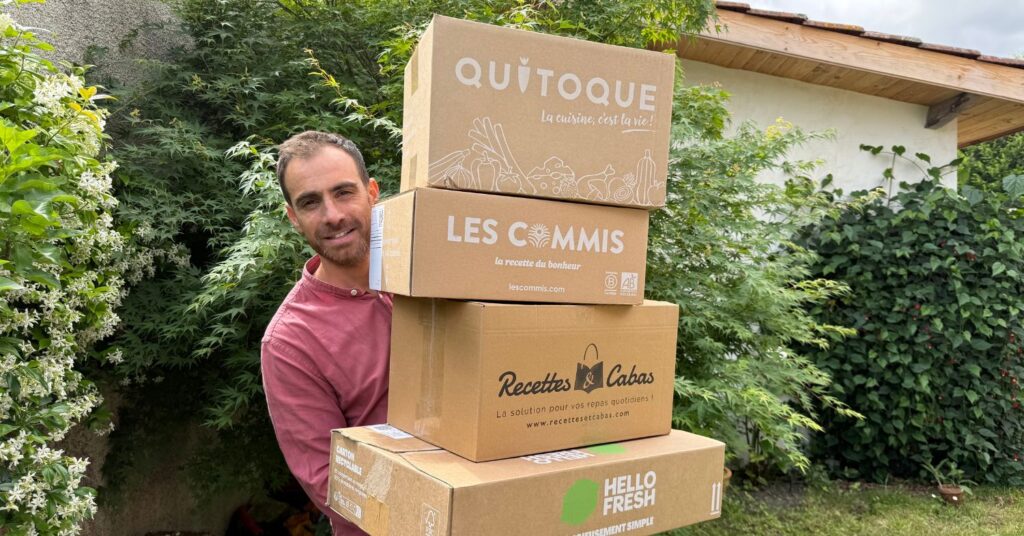
Our selection
Best value for money 🥇
> Quitoque (4.28/5)
If you are looking for the best quality / variety / price compromise.
The most premium box
> Les Commis (3.93/5)
If you want to know exactly where what you eat comes from.
The cheapest box
> HelloFresh (3.81/5)
If you are new to cooking or watching your budget.
The most family-friendly box
> Recettes & Cabas (3.75/5)
If you like home cooking and freedom without a subscription.
You have definitely already seen an ad for a meal kit. The concept is simple: we deliver to your home all the ingredients needed to prepare your meals for the week, with the right quantities and the recipe cards that go with them.
On paper, it sounds dreamy: no more grocery shopping, less mental load, less food waste, and above all no more having to ask the eternal question: “What’s for dinner tonight?”
But between marketing promises and what actually ends up on the plate, there can sometimes be a huge gap. Product quality, nutritional balance, price, ease of preparation, origin of ingredients… Not all meal kits are equal, or at least they don’t suit everyone.
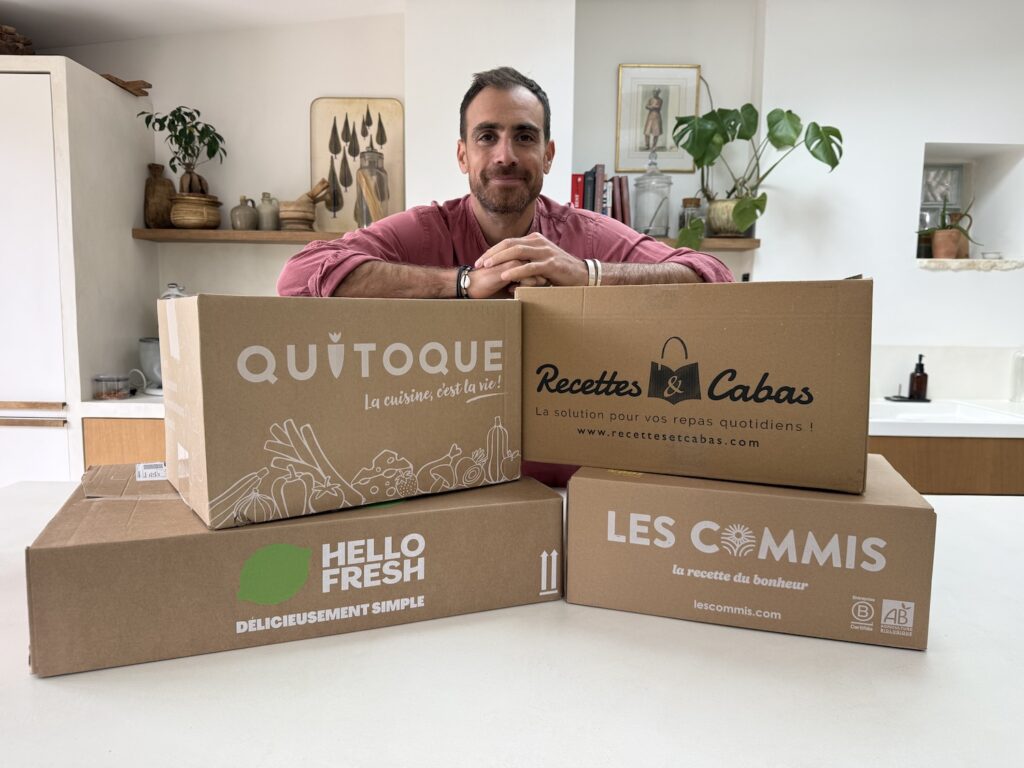
To get a clearer picture, I tested each meal kit for cooking over one week: HelloFresh, Quitoque, Les Commis, and Recettes & Cabas.
I looked at what was really on the plates, the quality of the products received, the balance of the recipes, the time spent cooking, the price, and of course the pleasure of eating the dishes offered.
Here’s my feedback after 1 month in the kitchen!
Best value for money 🥇
Quitoque: 4.28/5
Nutrition: ★★★★☆ 4,25
Ingredients: ★★★★☆ 3,75
Price: ★★★★☆ 4,25
Experience: ★★★★★ 4,75
Environment: ★★★★☆ 4
Customer service: ★★★★★ 5
Pros
- Balanced recipes that are rich in vegetables most of the time
- Original and tasty flavors
- Fresh, high-quality products
- Recipes that are accessible even to beginners
- Preparation times are well respected
- Very good customer service
- Wide variety of recipes every week
- Many quality labels on the products
Cons
- Relatively high price
- A lot of plastic packaging
- Supplier information is sometimes limited
- Recipes sometimes a little too light
- Paid delivery
- Few organic fruits and vegetables offered
Created in 2014, Quitoque is now a key player in meal kit boxes in France.
Every week, the brand offers 44 varied recipes that put vegetables front and center and generally provide a good amount of protein. Overall, the meals are fairly balanced, even if some dishes may seem a little light for very active people.
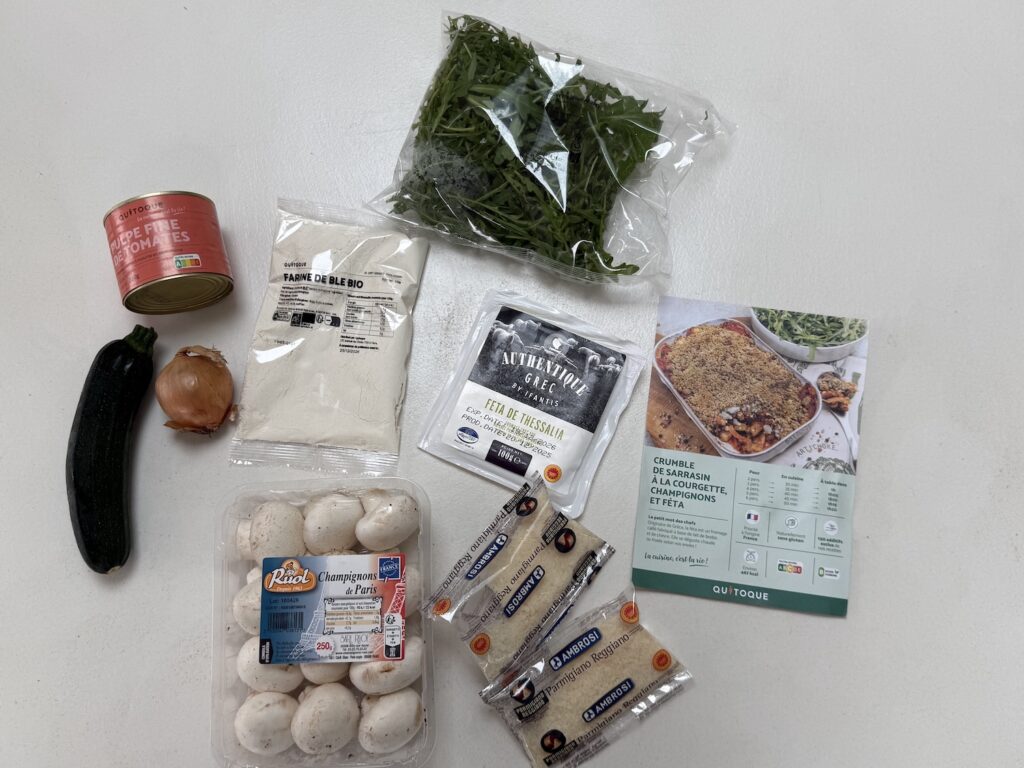
The quality of the products is there. The ingredients are fresh and Quitoque communicates well about their origin. Many products are of French origin, and some are organic. I also appreciate the presence of labeled meats as well as PDO products, which are true guarantees of quality.
If there is one area I would like to see improve, it is the share of organic fruits and vegetables. In my view, making them more widely available would make it possible to reach an even higher level of quality.
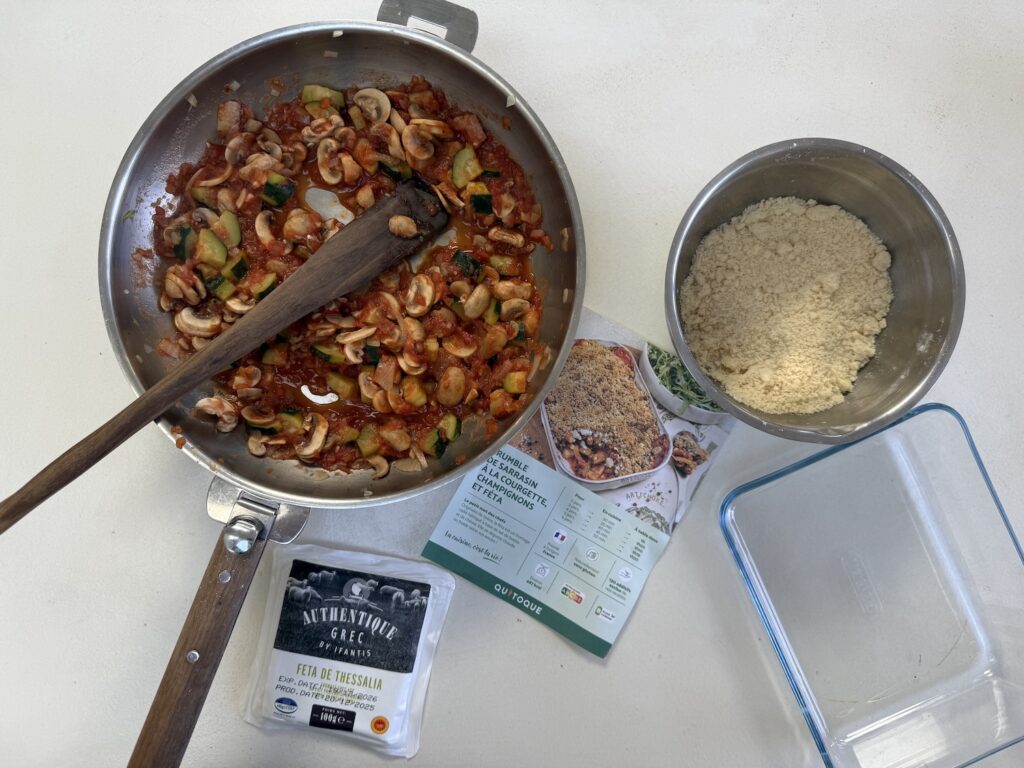
I found the recipes easy to make and the flavors often original and delicious. The recipe sheets are clear and easy to follow, and the stated preparation times generally match reality.
Quitoque also highlights several initiatives in favor of the environment. The brand notably displays the carbon score of its recipes, promotes seasonal fruits and vegetables, and seeks to reduce food waste. Despite these efforts, the amount of plastic packaging remains fairly significant.
User experience is one of the brand’s strong points. The app is pleasant to use, order management is simple and intuitive, and customer service was particularly responsive during my interactions.
In terms of price, Quitoque is positioned around the market average with a price of €7.74 per person per meal, excluding delivery. It is not the cheapest box, but the quality of the products, the recipe selection, and the convenience of the service make this price entirely reasonable.
Quitoque is one of my favorites. In my opinion, it is one of the most balanced meal kits on the market and probably the one that offers the best combination of product quality, nutritional value, recipe variety, and price.

The most premium

Les Commis : 3.93/5
Nutrition: ★★★★☆ 3,75
Ingredients: ★★★★★ 4,5
Price: ★★★★☆ 3,75
Experience: ★★★★☆ 3,5
Environment: ★★★★☆ 4,75
Customer service: ★★★★☆ 4,25
Pros
- Good quality ingredients
- Mostly French and seasonal products
- Good transparency about the origin of the products
- Original and tasty recipes
- Few ultra-processed products
- Clear recipe cards that are easy to follow
- Responsive customer service
- Simple pause and cancellation management
- Interesting environmental approach
Cons
- Higher prices, especially for Premium recipes
- Delivery fees extra
- Some recipes not very filling
- Sometimes uneven nutritional balance
- Limited amount of vegetables at times
- Preparation times often longer than advertised
- Lots of individual packaging
- A few vegetables were slightly damaged during the test
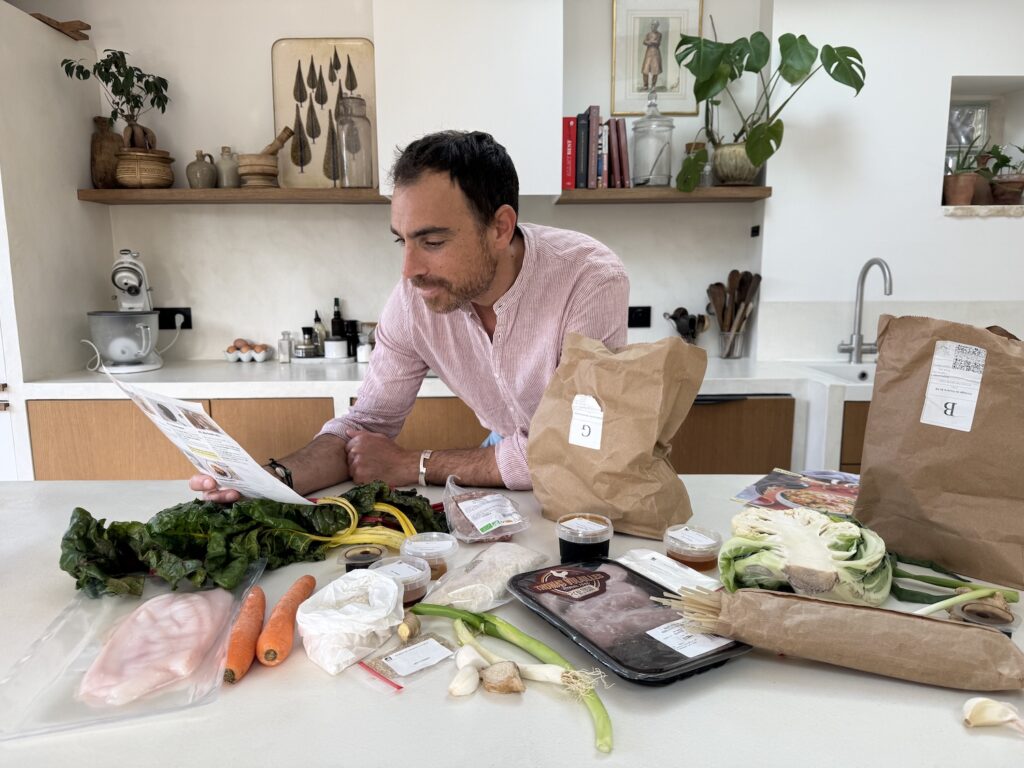
Founded in 2012, Les Commis offers premium meal kits, with a strong focus on product quality and traceability.
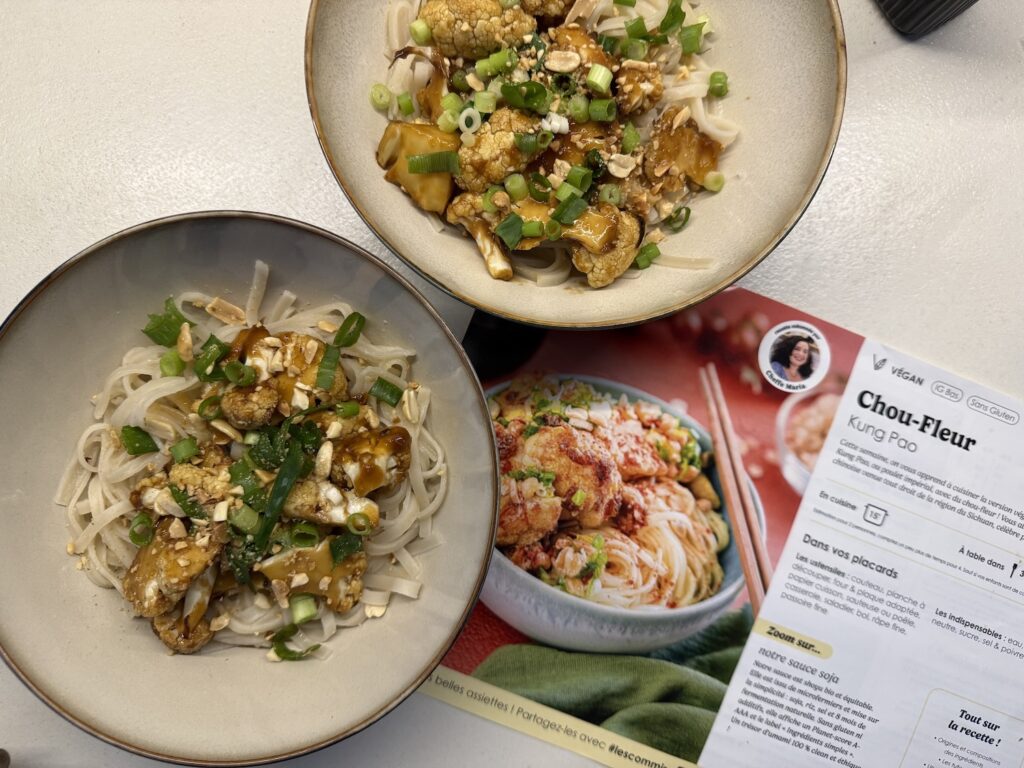
Each week, the brand offers 24 recipes inspired by different cuisines. There is a little less choice than with some competitors, but the dishes are often more original and give more of the feeling of cooking a real, well-crafted meal.
On the nutrition side, I feel a bit more mixed. While the recipes are original, some sometimes lack vegetables or protein. As a result, they are a little less filling and can leave a sense of being “not quite enough” at the end of the meal.
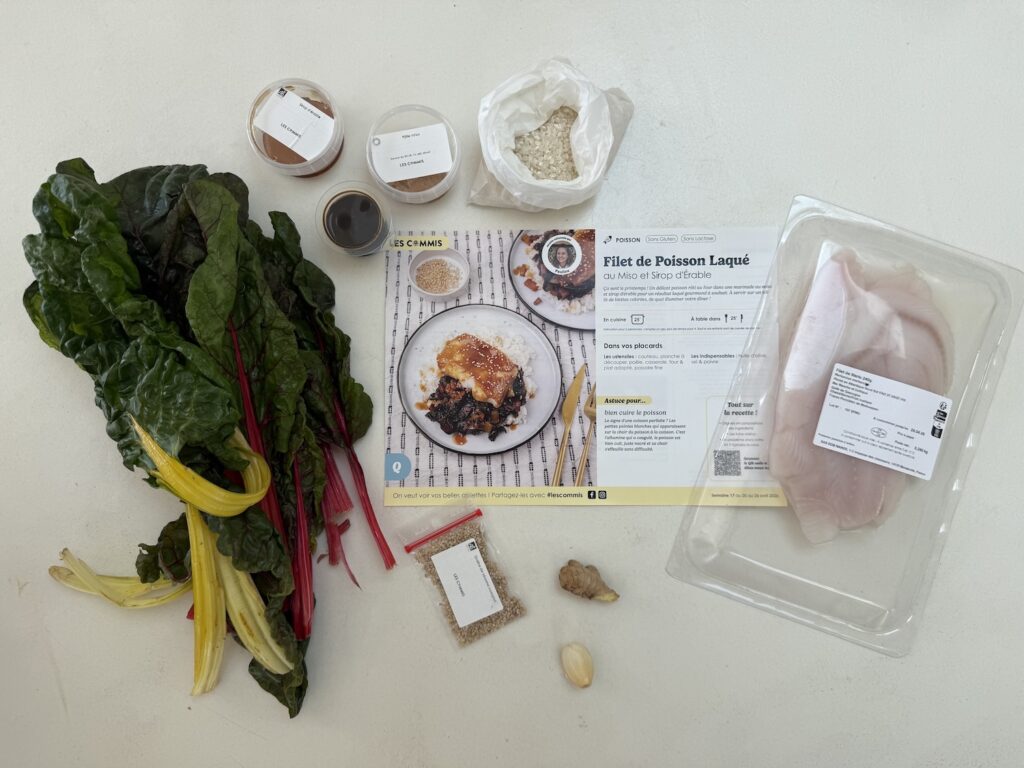
On the other hand, the quality of the ingredients is clearly one of the brand’s major strengths. The products are often organic, largely sourced from France, and Les Commis communicates very transparently about where they come from. Whether the ingredients come from France or abroad, we know exactly where they come from.
Unfortunately, during my test, I did not find the freshness of the vegetables to be optimal. That is a bit disappointing for a box positioned in the premium segment.
I also really liked the recipes. The flavors are original, out of the ordinary, and make it possible to discover new combinations. The cooking time is sometimes a little longer than with other meal kits, but the final result is really interesting. The recipe cards are easy to use. They are clear, well detailed, and make it possible to get a very good result even when you do not cook very much.
On the environmental side, Les Commis makes an effort with seasonal products and direct work with French producers. As with all meal kits, packaging remains the main weak point, even if real efforts are being made to reduce it.
The user experience is a success. The website is clear and everything is well explained. There is no mobile app, but choosing recipes, selecting delivery, or pausing the subscription is easy. Customer service is also very responsive.
In terms of price, Les Commis clearly belongs among premium meal kits. The price ranged between €8.13 and €10.13 per person per meal, excluding delivery fees, depending on the recipes chosen. It is more expensive than most competitors, but the quality of the products helps explain the difference.
In the end, Les Commis is probably the meal kit I tested with the best level of traceability and transparency about where the products come from. That is really its biggest strength. If you like cooking, discovering new flavors, and knowing exactly what is on your plate and where the products you eat come from, this meal kit is for you.
The cheapest

HelloFresh: 3.81/5
Nutrition: ★★★★☆ 3,75
Ingredients: ★★★☆☆ 2,5
Price: ★★★★★ 4,5
Experience: ★★★★☆ 4,25
Environment: ★★★★☆ 3,75
Customer service: ★★★★☆ 4,25
Pros
- Simple and accessible recipes
- Very good support for cooking
- Presence of a significant amount of vegetables
- Generally filling portions
- Good protein content in many recipes
- Great variety of dishes
- Very convenient app and order management
- Reduced food waste thanks to pre-portioned ingredients
Cons
- Some recipes are quite high in calories
- Lots of individual packaging
- No organic or truly certified products
- Preparation time sometimes longer than advertised
- Lack of precision regarding ingredient sourcing
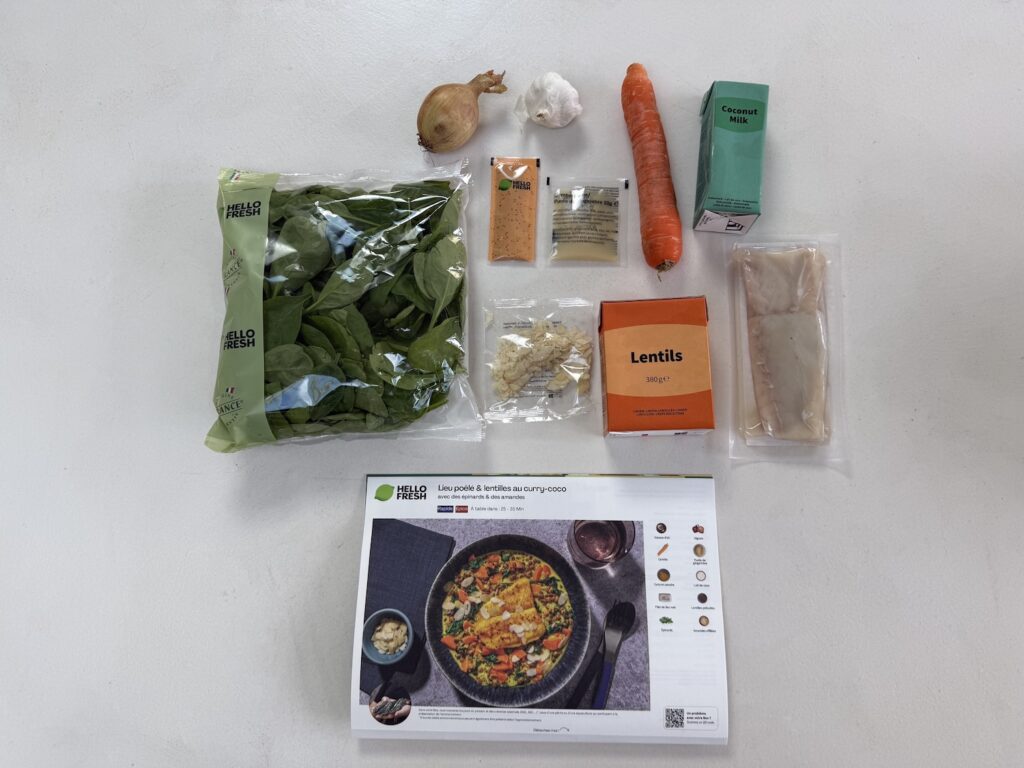
HelloFresh is a German brand created in 2011. Today, it is the world leader in meal kit boxes.
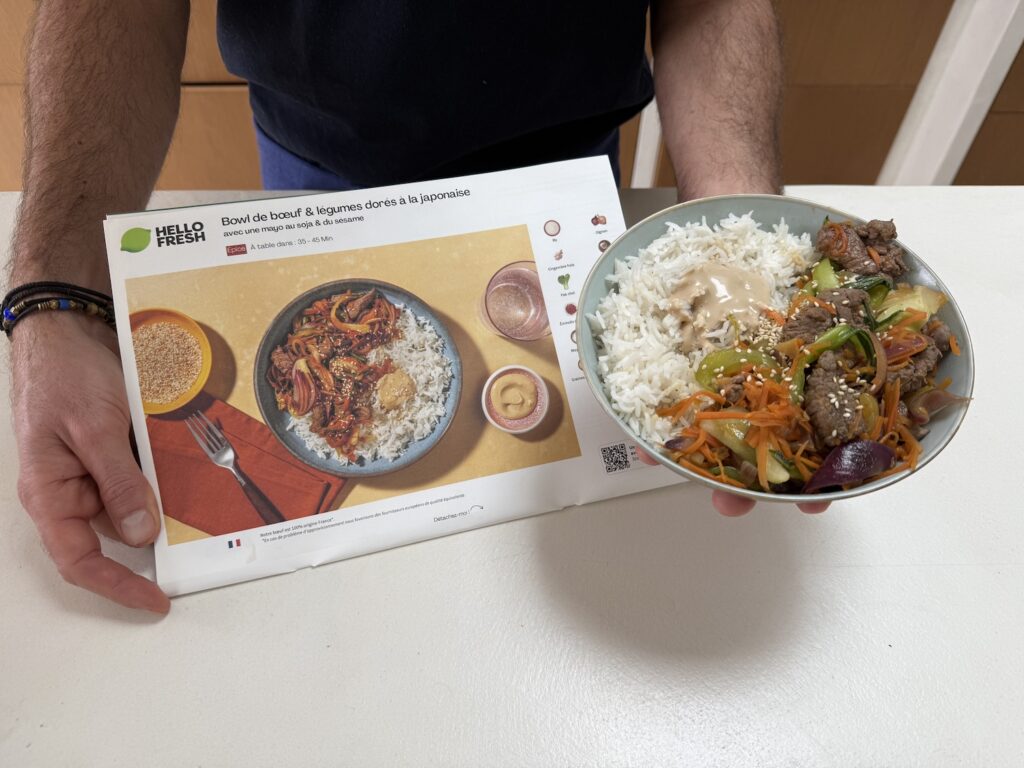
Each week, HelloFresh offers up to 54 different recipes. There is really plenty to vary meals and find dishes suited to your tastes, whether you prefer meat, fish, vegetarian options, or more indulgent recipes.
From a nutritional standpoint, the recipes are generally well structured with a good amount of vegetables and satisfactory protein intake. However, be careful, as some recipes are richer. If you watch your diet, I recommend checking the nutritional values before making your selection.
On the ingredients side, HelloFresh mainly works with conventional products. The fruits and vegetables are fresh and appealing, but there are no organic or certified products.
I find that transparency is not the brand’s strong point. A large share of the vegetables and meats are French and that is clearly indicated. However, for some grocery items or processed ingredients, the origin is not always specified.
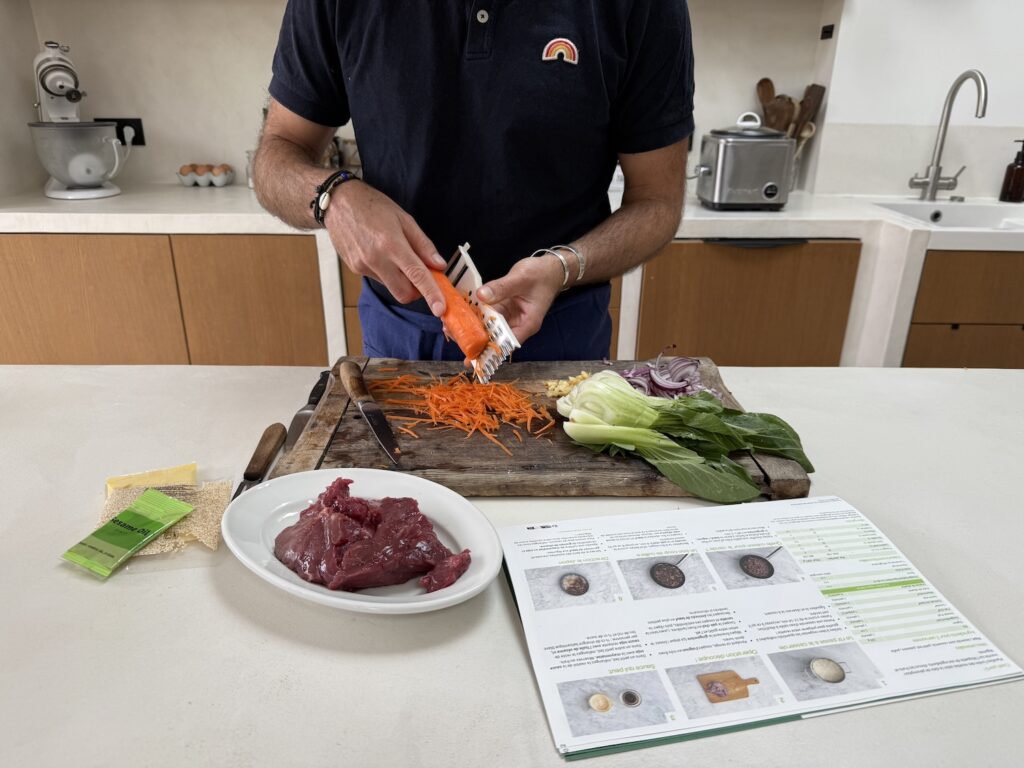
The recipes are easy to make, and the recipe cards are particularly well done. The instructions are clear, the steps are easy to follow, and even people who do not cook much can manage without difficulty.
From an environmental standpoint, the pre-portioned system helps limit food waste, which is a real positive. On the other hand, the amount of packaging remains significant. Efforts are being made to reduce plastic use, but there is still room for improvement.
I also found customer service to be effective. Responses are quick, issues are handled well, and the app makes it easy to change orders or track deliveries.
With a price starting at €6.88 per person per meal excluding delivery, HelloFresh is the cheapest box in our comparison.
In the end, HelloFresh is a simple, convenient, and effective meal kit. It is not the most demanding in terms of traceability or environmental impact, but it fully delivers on its mission: making it easy to cook at home with varied recipes that are accessible to as many people as possible.
The most family-friendly
Recipes & Grocery Bags: 3.75/5
Nutrition: ★★★★★ 4.5
Ingredients: ★★★★☆ 3.5
Price: ★★★☆☆ 3.25
Experience: ★★★★☆ 3.5
Environment: ★★★★☆ 4.25
Customer service: ★★★★☆ 4
Pros
- Fresh, high-quality products
- Strong emphasis on local producers
- Recipes made from seasonal produce
- Very low level of ultra-processing
- Interesting vegetable portions
- Simple, home-style, and tasty cooking
- Good taste quality of the recipes
- Great order flexibility without a restrictive subscription
- Good customer service
- Carbon footprint indicated for the recipes
Cons
- Limited recipe selection each week
- High delivery fees
- Few official labels (Organic, Label Rouge, MSC, etc.)
- Some recipe cards lack precision
- No mobile app
- Recipe visuals sometimes differ from the finished result
- Packaging management could be improved
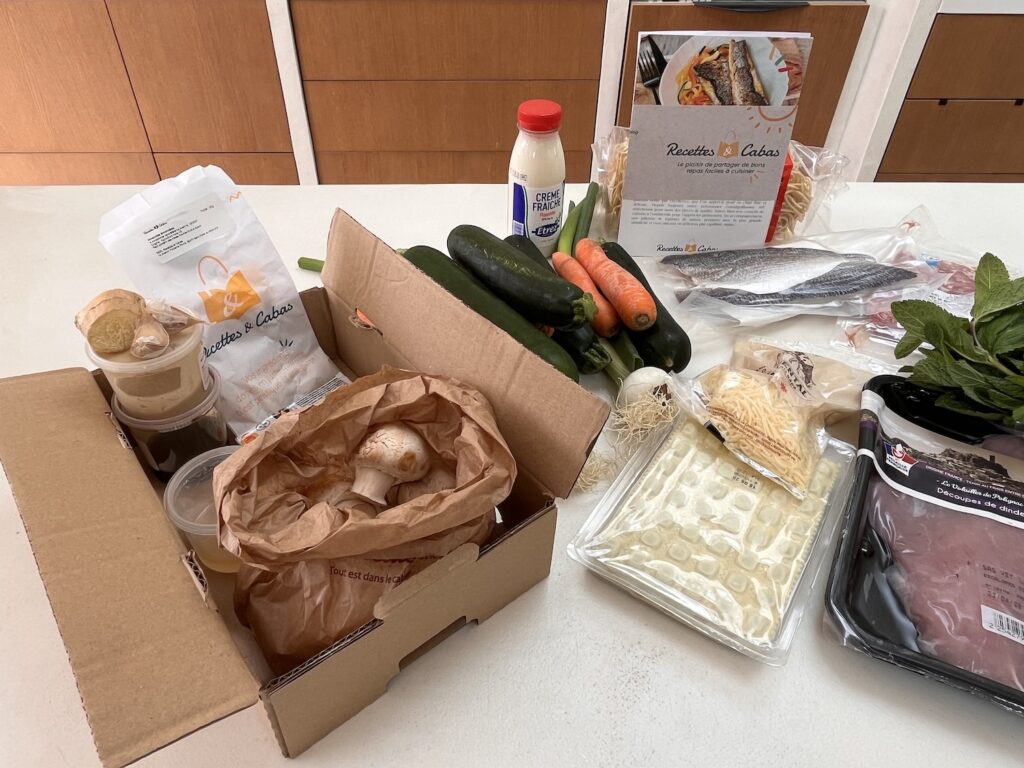
Founded in Lyon in 2011, Recettes & Cabas is one of the pioneers of meal kit boxes in France.
Every week, Recettes & Cabas offers around a dozen different recipes. That’s not a huge number compared with some competitors, but that’s not really what the brand is looking for. Here, the focus is above all on the ingredients.
The recipes are simple and evoke home-style, family cooking without any fuss. This is not complicated cooking or unlikely flavor pairings. The idea is mainly to cook seasonal ingredients.
From a nutritional standpoint, the recipes are balanced. Vegetables are well represented and the protein content is adequate. I found the overall result perfect for everyday meals.
When you open the box, the vegetables are fresh, the products are beautiful, and it really feels like coming back from the market. That’s probably what I liked most during my test. The recipe cards sometimes lack a bit of precision, but the recipes remain easy to make.
I also appreciated the work done with local and seasonal products. The vegetables and meats often come from the Rhône-Alpes region when possible. However, the traceability of some grocery products could be better, especially for ingredients that come from abroad.
On the environmental side, Recettes & Cabas makes an effort by prioritizing local and seasonal ingredients whenever possible. The brand also displays the carbon footprint of each of its recipes, which makes it easier to understand their environmental impact. People living in the Lyon area can pick up their order in a reusable bag, which is a real plus. There are still quite a few packaging materials that could be avoided.
The website is clear, easy to use, and customer service was responsive during my test. I also appreciate that there is no subscription. You order whenever you want, for the number of people you want, without having to think about pausing an order.
The main drawback remains the price. Expect €8.35 per person per meal, plus delivery fees ranging from €11 to €16. The products are good, but these delivery fees quickly drive up the total.
You can tell there is a real desire to work with fresh, seasonal, and most often local products. If you like simple cooking, good ingredients, and everyday recipes, there is a good chance this box will appeal to you. Residents of the Lyon area will also benefit from certain advantages such as reusable bags and reduced delivery fees.
Methodology
To obtain a final score that is as representative as possible, each box was tested for one week under real-life usage conditions.
To form a concrete opinion, for each box I tested a plan for 2 people featuring 4 different recipes. I deliberately chose a variety of dishes: a vegetarian recipe, a fish-based recipe, a chicken-based recipe, and a recipe based on another type of meat.
I used these meal kits in my usual day-to-day life, sometimes with busy days and little time to cook.
For each box, I defined 6 dimensions and rated them out of 10, evaluating a total of 30 different criteria.
Since each dimension does not carry the same weight in my eyes, I then used a weighted average to calculate the final score. This makes it possible to give more weight to the elements that seem most important to me as a consumer.
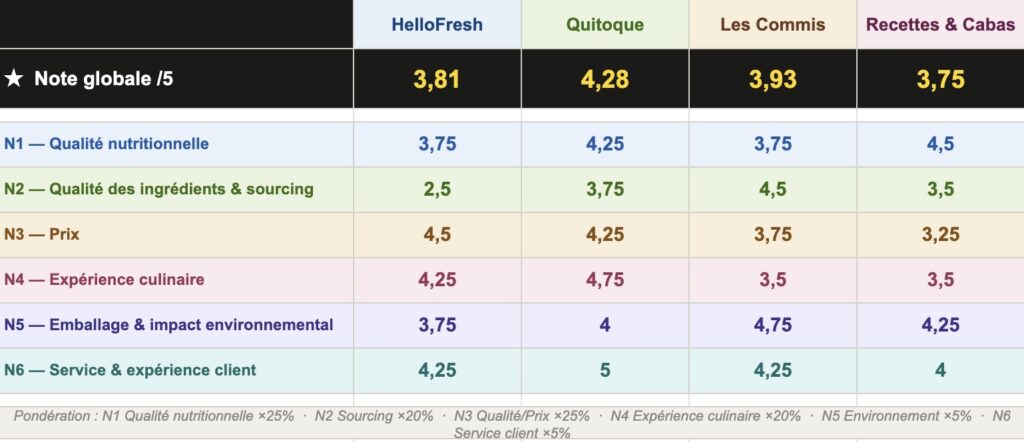
→ Access my full comparison table here (Google Sheet)
1. Nutritional quality (25%)
Nutritional quality is one of the most important criteria in this comparison. A meal kit should be convenient, but it should also make it possible to eat a balanced diet every day.
I first assessed the balance between protein, carbohydrates, and fats. To get the best score, a recipe had to provide at least 20 g of protein per serving, include a source of starchy foods, and contain a reasonable amount of fat. When the information was available, a Nutri-Score of A or B was also a plus.
I then looked at the amount of vegetables in the recipes. Vegetables provide fiber, vitamins, and essential minerals. The maximum score was awarded to recipes containing at least 300 g of vegetables per serving.
The level of ingredient processing was also taken into account. The more the recipes relied on raw or minimally processed products, the better the score. The presence of additives or ultra-processed ingredients resulted in a penalty.
I also evaluated the energy content of the recipes. Even though needs vary from one person to another, I based my assessment on a range between 450 and 700 kcal per meal to assign the highest score.
Finally, I took the diversity of the offering into account. A box had to offer at least three different recipe categories to receive the maximum score. Vegetarian, gluten-free, lactose-free, low-glycemic-index, or low-calorie options counted as additional points, because they help meet the needs of a larger number of consumers.
2. Ingredient quality and sourcing (20%)
The presence of labels and quality marks was taken into account. Products benefiting from a recognized designation or label (Label Rouge, AOP, IGP, Organic Farming, etc.) were given extra weight in the scoring.
I then analyzed the level of transparency offered by the brand. The more precise and easily accessible the information about the origin of the ingredients was, the better the score.
The freshness of the products was also assessed upon receipt of the boxes. When the fruits and vegetables were fresh, visually appealing, and kept well for several days after delivery, the maximum score was awarded.
Finally, I took into account the highlighting of partner producers and suppliers. Brands that clearly communicate about farms, production channels, and the companies they work with receive a better rating.
3. Price (25%)
To assess value for money, I compared the average price per serving, delivery fees, as well as the convenience of managing orders and subscriptions.
I based my comparison on the price of a box containing 4 recipes for 2 people in order to compare the different offers on the same basis. The lower the cost per serving was for equivalent quality, the better the rating.
I also took into account the flexibility of the offer. Boxes that made it easy to change the number of recipes, the number of servings, or the delivery frequency received a better rating.
The management of the subscription was also evaluated. When it was possible to pause, modify, or cancel the subscription in just a few clicks, without having to contact customer service or go through burdensome steps, the highest rating was awarded.
The presence of a welcome offer made it possible to earn an extra point, regardless of the amount of the discount offered.
Finally, delivery fees were included in the evaluation. The higher they were, the more the rating was penalized, because they can represent a significant part of the service’s actual cost.
4. Culinary experience (20%)
This category assesses the pleasure of cooking, the originality of the recipes, the clarity of the instruction sheets, the actual preparation time, as well as taste satisfaction.
I first evaluated the number of recipes offered each week. The greater the choice, the better the rating. A varied selection helps reduce monotony and regularly discover new dishes.
I then compared the stated preparation time with the actual time needed to make the recipes. Since most meal kits offer quick recipes, I mainly focused on the reliability of the information provided. The greater the gap between the stated time and the actual time, the lower the rating. This criterion is essential for consumers looking for a convenient solution and who want to be able to organize their meals with confidence.
The recipe cards were also evaluated. I took into account their clarity, the level of detail in the explanations, the presence of step-by-step illustrations, as well as the quality of the paper support. Well-designed recipe cards make recipes easier to prepare and improve the overall experience.
The difficulty of the recipes was also analyzed. A meal kit should remain accessible to both experienced cooks and people with little cooking experience. The presence of complex techniques, numerous steps, or difficult technical skills resulted in a lower rating.
Finally, I evaluated the taste quality of the recipes in a more subjective way. I specifically took into account the enjoyment felt during tasting, the balance of flavors, the originality of the ingredient pairings, the use of spices, and the ability of the recipes to surprise me. Enjoyment remains an essential element of food, and the taste success of the dishes is a key criterion in evaluating a meal kit.
5. Packaging and environmental impact (5%)
Environmental impact often represents the main weakness of meal kits. I therefore chose to assess the efforts made by brands to limit their ecological footprint.
I first analyzed the packaging used. The more plastic there was, the lower the score. Conversely, packaging made of paper, cardboard, or kraft paper was given more value.
I also evaluated efforts to combat food waste. Meal kits providing only the quantities needed to make the recipes received a better score. Conversely, the presence of excess ingredients or oversized portions was penalized.
The environmental commitments of the brands were also taken into account. The presence of quantified goals, a clearly presented CSR approach, or information on the carbon footprint of recipes helped improve the score.
Regarding delivery, most meal kits use similar carriers. However, I gave more credit to brands offering more responsible alternatives, such as bike delivery or pickup points that reduce individual trips.
Finally, I analyzed the emphasis placed on seasonal produce. The more a brand highlighted seasonal fruits and vegetables and limited the presence of out-of-season ingredients in its recipes, the better the score.
6. Customer service and user experience (5%)
This criterion evaluates the responsiveness of customer service, the ease of managing the subscription, the quality of the support provided, as well as the convenience of delivery.
I first evaluated the speed and quality of the responses provided by customer service. I did not test all of the available communication channels, but I contacted the brands at random, mainly by phone and email. I also consulted the FAQs to check whether they made it easy to answer the most common questions.
Problem handling was also taken into account. Since I did not always encounter difficulties during my tests, I asked the brands about the solutions offered in the event of a delivery error, a missing product, or a quality issue.
I also evaluated the contact methods provided. The more communication channels a brand offered (phone, email, chat, contact form, or social media), the better the score.
The convenience of the customer account was also analyzed. I took into account how easy it was to navigate, how simple it was to modify or manage orders, as well as the overall user experience. When a mobile app was available, an additional point was awarded.
Final score calculation
The final score out of 5 is obtained from a weighted average:
- Nutritional quality: 25%
- Ingredient quality and sourcing: 20%
- Value for money: 25%
- Culinary experience: 20%
- Packaging and environmental impact: 5%
- Service and customer experience: 5%
FAQ
What is the cheapest meal kit in France?
Prices change regularly depending on promotions and the number of meals ordered. Among the meal kits tested, HelloFresh is the cheapest.
Are meal kits non-binding?
Yes. Most meal kits operate on a flexible subscription basis that you can pause, modify, or cancel at any time.
How long does it take to prepare the recipes?
Most recipes require between 20 and 40 minutes of preparation, to which you often need to add cooking time.
In practice, some recipes took me a little longer than advertised. It’s also worth keeping in mind that dishwashing, putting things away, and cleaning the kitchen are not included in their estimates.
That may seem like a minor detail, but for some recipes with multiple steps, it can easily add 10 to 15 extra minutes to the actual time spent in the kitchen.
Do meal kits make it possible to eat a balanced diet?
Generally yes, provided you choose your recipes carefully.
Contrary to what one might think, not all recipes offered by meal kits are necessarily balanced. Some are very rich in vegetables and protein, while others may be more generous with cheese, sauces, or fats.
The good news is that brands display the nutritional values of their recipes and offer categories to help you make your choice. You’ll find labels such as “Balanced,” “Nutri+,” “Low in calories,” or “High in protein.”
Overall, I found that meal kits made it easier to eat a balanced diet than prepared meals or spur-of-the-moment everyday meals. They encourage you to cook more, eat more vegetables, and vary your diet a little more.
As always, it’s not the meal kit that makes the diet balanced, but the recipes you choose. it’s up to you to make the right choice
Are the ingredients in meal kits really fresh?
During this test, the ingredients received were generally fresh across all brands. However, there are differences regarding product origin and sourcing transparency. when there is fish, it is recommended to eat it quickly and start with these recipes to keep the freshness at its best
Do meal kits save money compared with grocery shopping?
Not really. If your goal is to spend less, grocery shopping and cooking for yourself will almost always remain the most economical solution.
According to the 2026 study by the Radin Malin website, a couple spends an average of €72.23 per week on groceries. This corresponds to a typical basket of 24 products and includes all meals for the week, breakfast, lunch, and dinner.
By contrast, a cook-at-home box usually covers only a few meals. For example, at HelloFresh, the most economical plan costs about €60.99 for 4 meals for 2 people, or just 8 portions.
So you don’t choose a meal kit to save money. Its value lies elsewhere: saving time, avoiding grocery shopping, reducing the mental load of the famous “what are we eating tonight?”, cutting down on food waste, and discovering new recipes.
It is also a good way to cook more and avoid certain prepared dishes or improvised meals that are often less appealing from a nutritional standpoint. In the end, you are mainly paying for comfort, convenience, and the time saved.
