

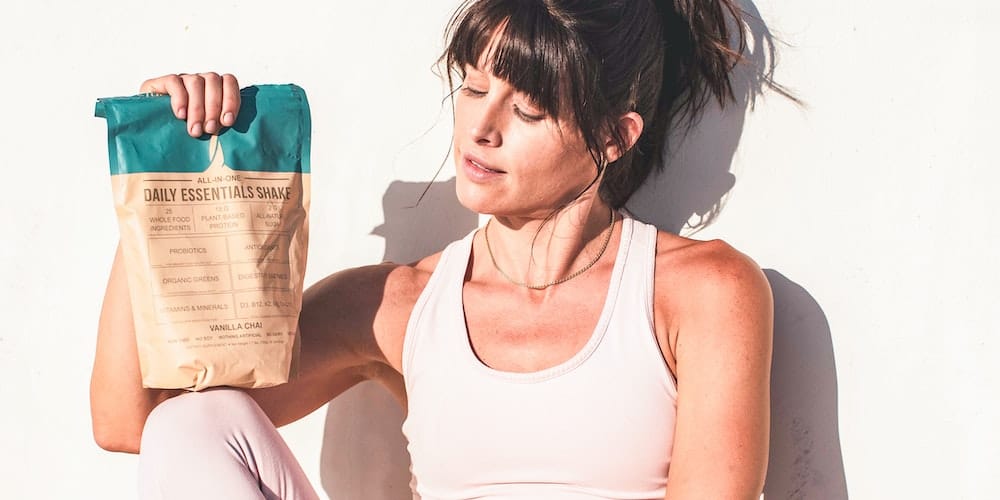
For this comparison, we analyzed and sorted 12 vegan protein brands among the best-selling ones on the Internet. We selected only plant-based protein powders meeting the following criteria:
- 100% vegan
- At least 60% protein
- Low in sugar
Best vegan protein 🥇
#1
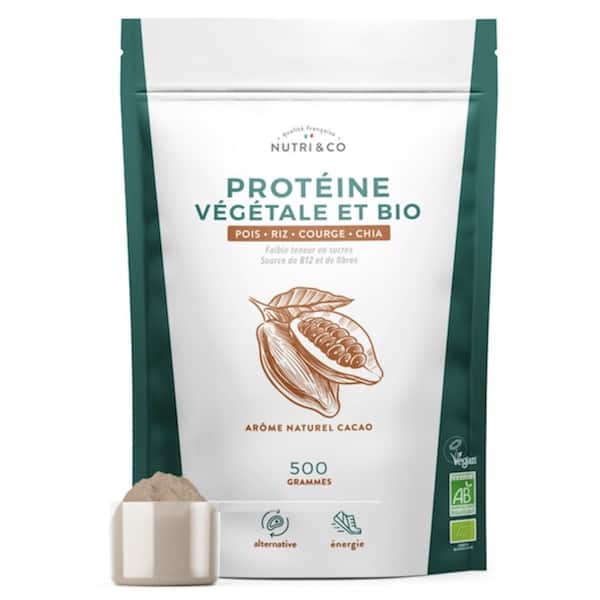
Brand: Nutri&Co
Number of protein sources: 4
Organic: yes
Price / 100 g: €4.98
Customer reviews : 4.8/5 (Ekomi)
After analyzing about ten products, we selected Nutri&Co’s plant protein. This one is certified organic and made in France, which is not the case for most products on the market.
This protein powder has an excellent nutritional profile because it combines pea, rice, chia seed, and pumpkin seed proteins. Its amino acid profile is complete, meaning it contains the 9 essential amino acids.
It is also enriched with naturally sourced vitamin B12 (shiitake) and free of any sweeteners or additives.
We like this brand because it is reliable and transparent (see our detailed review here). We also note that customer reviews are good.
Use promo code DARWINGIFT to receive a free surprise product (minimum purchase of €70).
What are the benefits of plant-based proteins?
A source of amino acids
Plant-based proteins are made up of amino acids. We distinguish non-essential amino acids, produced by the body itself, and essential amino acids obtained through the diet.
They are involved in a large number of metabolic processes: production of hormones and neurotransmitters, immune system…
The quantity and type of amino acids provided vary depending on the plant-based proteins consumed. Some have lower levels than animal proteins.
But good combinations make it possible to have a balanced diet and benefit from a broad spectrum of amino acids.
Finally, plant-based proteins play a role in disease prevention. As this study shows, they help reduce the risk of chronic diseases such as diabetes and heart disease.
Rich in unsaturated fatty acids, they also contain antioxidants (vitamin C, carotenoids and polyphenols) and contain no cholesterol.
Ideal for athletes and bodybuilding

As part of a sports practice, plant proteins contribute to muscle building, tissue maintenance, and repair.
A true “fuel” for the body, they provide energy and improve endurance during exercise.
They can also help with gaining mass and weight control. Their consumption is beneficial, regardless of the sports context: bodybuilding, fitness, weightlifting…
Where can you buy plant proteins ?
Organic stores
Legumes, grains, dried fruits, and tofu are excellent sources of plant protein and are often available in organic stores.
You can also find plant protein powders or superfoods like spirulina or moringa.
Pharmacies and drugstores
Pharmacies and drugstores may offer protein blends in powder form. They are mainly intended for vegetarians, vegans, and athletes.
Specialized brick-and-mortar stores
Turn to retailers of dietary supplements and health food stores.
Specialized online shops and e-commerce
Choose shops and websites that offer organic products such as Naturalia, Kazidomi, or La Fourche. Some laboratories, such as Nutripure, offer organic, vegan, and gluten-free plant proteins.
In what form ?
In powder form

The powder is generally very concentrated and allows good protein absorption by the body. Practical and easy to use, it can be sprinkled on dishes or used to make protein drinks (smoothies, shakers…).
It can have a neutral or flavored taste. It is consumed at breakfast, before and/or after a workout.
We use different sources of plant-based proteins to make it. The most common ones are :
- pea protein: it contains a good amount of amino acids and helps with weight control. It is well digested and highly bioavailable ;
- soy protein: it is a complete protein that contains all essential amino acids. Very good digestibility ;
- rice protein : it contains 80 to 90% protein and has high digestibility ;
- hemp protein : rich in tyrosine and arginine, it is ideal for maintaining and building muscle mass. Excellent digestibility.
In bars
There are protein bars made from plant-based proteins (rice, peas, soy…) and dried fruit (nuts, dates…). They make an excellent snack for athletes.
They can also be raw, gluten-free for people with celiac disease, and/or with no added sugar.
In various preparations
There are many products to supplement plant-based protein intake. For example, you can opt for protein-enriched bread or spread.
Some brands also offer ready-to-eat protein recipes: pancakes, brownies…
Plant-based proteins and whey: what’s the difference?
Whey delights athletes because of its rapid absorption, digestibility, and richness in essential amino acids. It is a whey protein and is derived from cow’s milk.
It is therefore not vegan. In this sense, plant protein powder is an interesting alternative because it contains no animal-derived products.
READ ALSO the Advice from a dietitian for buying the best whey
What criteria should be taken into account ?

1. Nutritional value
The powder must be made up of at least 60 % plant proteins. It must contain all essential amino acids in balanced proportions. Check the total BCAA, which corresponds to the amount of leucine/isoleucine/valine per 100 g. The total EAA, meanwhile, indicates the amount of essential amino acids per 100 g.
Ideally, choose a powder rich in fiber and low in sugar. Some are enriched with vitamins and minerals : B6, B12, calcium, zinc…
2. Growing method
Choose plant proteins from organic farming. That way, you can be sure you are buying a product with no pesticide residues and no GMOs.
3. Composition
The composition must be natural, with no additives, no preservatives, no sweeteners, and no colorants. Choose a vegan powder, lactose-free and/or gluten-free. For flavored powders, opt for natural flavorings.
4. Bioavailability
The more bioavailable a plant protein is, the better it will be absorbed and used by the body. The product must therefore guarantee excellent bioavailability.
5. Digestive absorption
It corresponds to the amount absorbed by the intestine relative to the total amount ingested. PDCAAS (Protein Digestibility Corrected Amino Acid Score) is an index that assesses protein digestibility.
It ranges from 0 (the lowest quality) to 1 (the highest quality).
6. Origin
Plant proteins must come from France or the European Union. This generally ensures good growing conditions. Avoid products whose origin is not specified or that come from China.
7. Price
Expect between €15 and €30 for 500 g of plant protein powder.
An organic protein bar costs around €2.
In summary
To buy quality plant proteins, check:
- Nutritional value: the product must contain at least 60 % plant protein. It should offer an ideal profile of amino acids, vitamins, and minerals ;
- Growing method: choose an organic product, free from pesticides and GMOs ;
- Composition: choose a product without additives, sweeteners, colorants, or preservatives. The powder should be natural, ideally lactose-free, gluten-free, and vegan ;
- Bioavailability : it must be excellent for good absorption of proteins by the body ;
- Digestive assimilation : the PDCAAS must be 1 ;
- Origin: they must come from France or the European Union ;
- Price : it must be between €15 and €30 for 500 g of plant protein powder. Expect around €2 for an organic protein bar.
Best vegan protein
#1
Brand: Nutri&Co
Number of protein sources: 4
Organic: yes
Price / 100 g: €4.98
Customer reviews : 4.8/5 (Ekomi)
When you purchase the selected products, we may receive a commission that helps support the site, pay our writers, and ensure you receive quality information. This does not affect the prices.
