

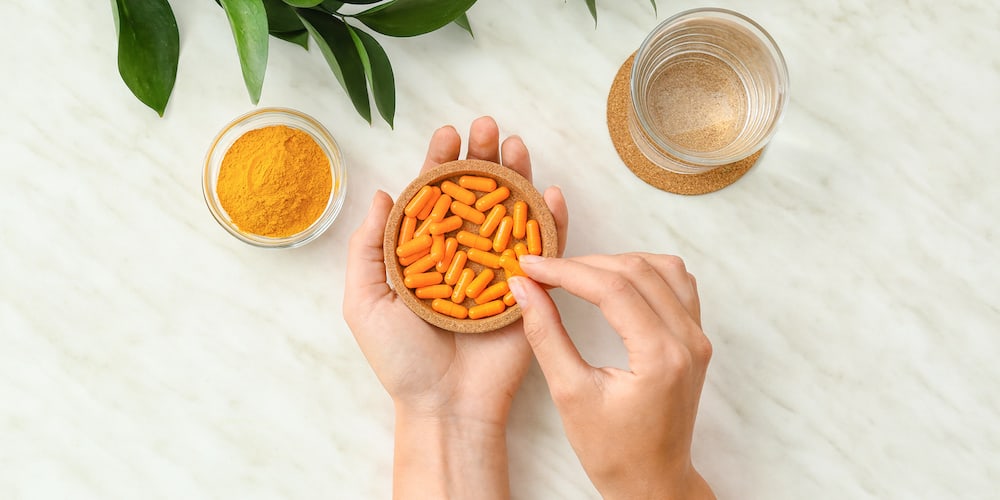
Cette épice couleur jaune vif, originaire d’Asie, est un incontournable en cuisine et donne une saveur poivrée à nos plats.
But beyond its culinary use, turmeric has a long history in traditional Ayurvedic and Chinese medicine.
It is indeed credited with anti-inflammatory, antioxidant, antimicrobial and digestive properties. These positive effects have earned it growing popularity in recent years in the field of dietary supplements.
On sait que ses bienfaits proviennent essentiellement de la curcumine, un polyphénol. Des études scientifiques mettent en avant ses propriétés, mais cet actif ne possède pour l’instant pas d’allégation reconnue par l’ANSES.
Also read | Criteria for buying the best curcumin according to a pharmacist
What the ANSES alert says
Hepatitis linked to turmeric consumption
Scientific studies have repeatedly shown curcumin’s hepatoprotective effects on the liver. This is notably shown by this publication.
The nutrivigilance system of the French Agency for Food, Environmental and Occupational Health & Safety (ANSES) recorded around fifteen cases of hepatitis in France that occurred after consumption of dietary supplements containing turmeric.
The same is true in Italy, with more than 20 hepatitis cases reported.
Overdosing implicated
La raison de cette apparition de cas hépatiques ? Il s’agissait majoritairement d’un surdosage.
La quantité journalière admissible (DJA) est de 180 mg pour un adulte de 60 kg. Si ce chiffre ne vous parle pas réellement, sachez que la consommation moyenne de cette épice est environ de 27 mg par jour en France. On est bien loin de la limite.
It is therefore difficult to reach that limit with your spice jar, but that is not the case with dietary supplements.
Caution regarding dietary supplements
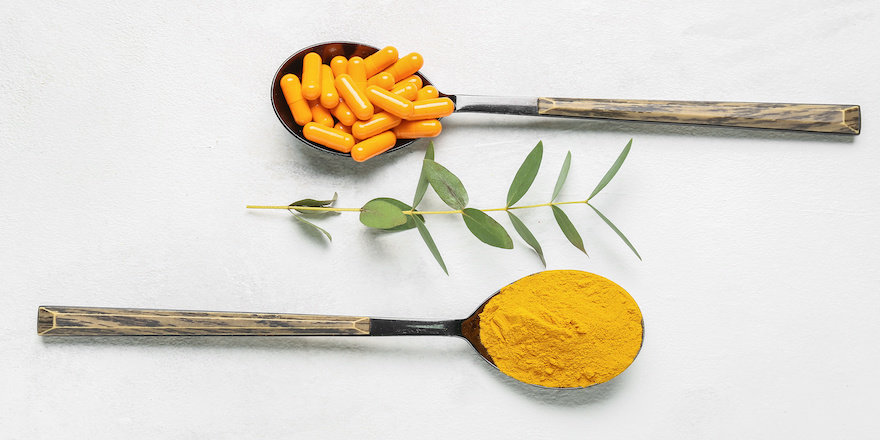
La curcumine est un actif qui est peu biodisponible, cela signifie qu’elle n’est que très peu absorbée par le corps. Certains compléments alimentaires gardent cette forme “classique” du curcuma, sans ajout. Ils posent généralement peu de problèmes.
However, new forms have started to establish themselves on the market. They combine turmeric with other active ingredients that increase the bioavailability of this curcumin, for greater efficacy.
Résultat ? Un risque de surdosage, même si la DJA semble respectée.
Among the active ingredients used to optimize turmeric’s bioavailability is piperine, found in pepper. Laboratories also formulate micelle-based complexes or colloidal nanoparticles to increase absorption.
My tips for using turmeric dietary supplements
Other side effects
Among the roughly one hundred reports submitted to ANSES, other adverse effects were reported in addition to those related to the liver.
Il s’agit essentiellement de signes généraux, comme des maux de tête et vertiges, ainsi que digestifs (diarrhées, nausées). Si vous utilisez des compléments alimentaires de curcuma et que vous ressentez ces effets, cessez votre cure et contactez un professionnel de santé.
Who should avoid taking turmeric
According to ANSES reports, starting a supplement regimen is not recommended in certain cases, notably if you:
- suffer from liver or biliary tract disorders
- are taking anticoagulants, anticancer drugs, or immunosuppressants. Turmeric could interact with medications.
In any case, I recommend that you consult a healthcare professional before starting a turmeric regimen, and prefer French brands that are sold through well-controlled channels. Regulations regarding supplements are not the same everywhere.
