
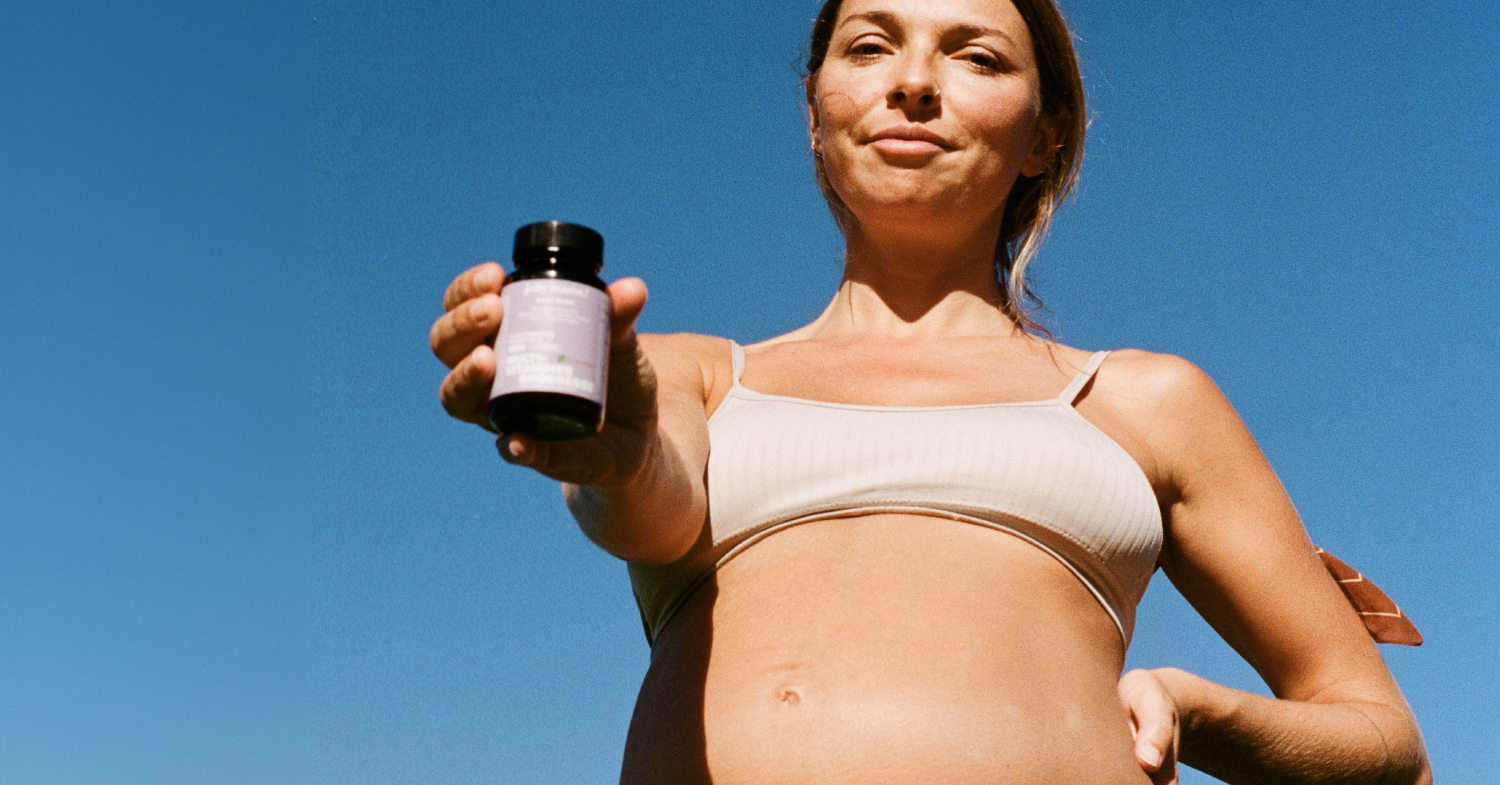
Article created in partnership with Jolly Mama
In pregnant women, the recommended intakes of certain nutrients can double, or even more, to support fetal development and the maternal body.
However, meeting these increased needs through food alone is not always easy, even with a varied and balanced diet. The nutrients involved are sometimes found in limited amounts in everyday foods, or require intakes that far exceed what a typical meal can provide. Deficiencies in certain key nutrients may occur.
Fortunately, there are special dietary supplements for pregnancy.
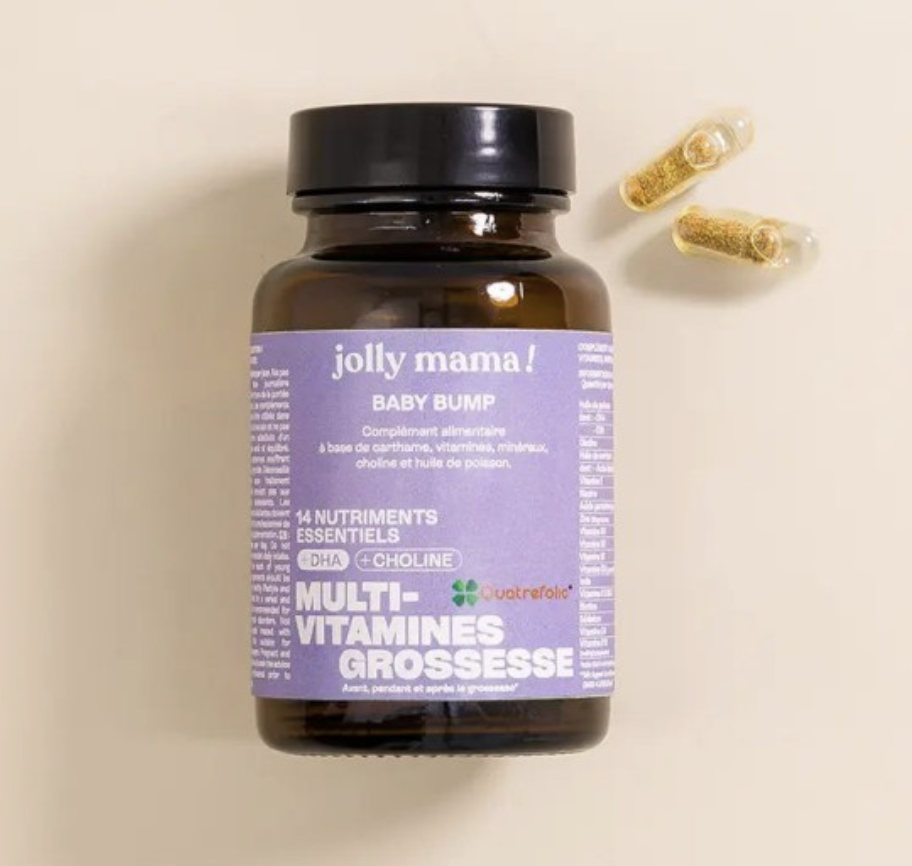
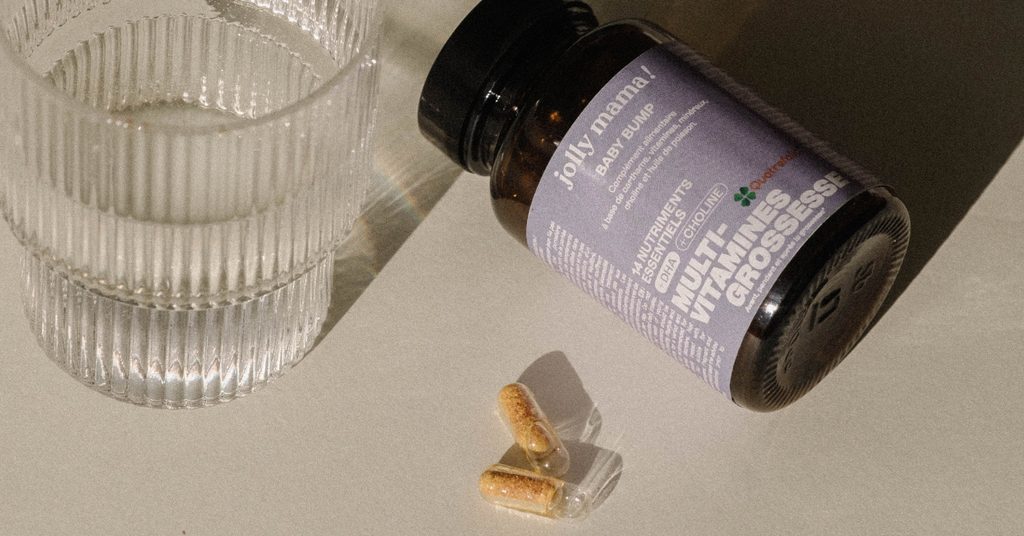
Here are the 6 ingredients to keep a close eye on, and how Baby Bump from the French brand Jolly Mama brings them together in a single formula (which contains 15 nutrients and DHA in total).
✪✪✪✪✪
Darwin Nutrition®
Ultra-complete for pregnancy & fertility : multivitamins, DHA, choline
Folic Acid directly absorbable: patented methylated vitamin B9 Quatrefolic®
15 nutrients : only 2 capsules a day
Pure formula: no nanoparticles, vegan, tested by an independent laboratory
1. Choline
In France, women consume on average 40% less choline than is recommended during pregnancy. An observational study found an association between higher intakes during the periconceptional period and a lower frequency of neural tube defects.
It is nevertheless absent from most standard pregnancy supplements, or present in very low doses. Baby Bump includes it in the form of Vitacholine® (choline bitartrate), a form whose bioavailability has been studied in adults.
2. DHA
Maternal DHA stores decrease by about 52% at the time of birth, reflecting a significant transfer to the fetus. This type of omega-3 accounts for about 15% of the fatty acids in the human frontal cortex. One study also showed that a low maternal blood DHA level multiplied the risk of early preterm birth by ten.
In Baby Bump, the DHA comes from a Friend of the Sea® certified fish oil, with a Totox index of 13 after production (an oxidation indicator whose value must remain below 26), packaged in an amber glass jar to protect it from light.
3. Vitamin B9 (folates)
A review confirms the value of periconceptional folate supplementation to reduce the risk of neural tube defects in the fetus. The active form, 5-MTHF, has the advantage of being directly usable, unlike standard folic acid, whose conversion may be limited, which is particularly relevant for women carrying an MTHFR gene mutation, which is very common in the population.
It is this form, patented under the name Quatrefolic®, that is found in Baby Bump.
4. Iodine
This study, conducted among more than 14,000 French pregnant women and cited in an ANSES opinion, found that up to 75% of them had insufficient iodine intake, even though it is necessary for the production of thyroid hormones involved in the baby’s brain development.
Baby Bump uses potassium iodide, a mineral form of iodine.
5. Selenium
A study of women with anti-thyroid antibodies showed that supplementation with selenomethionine could reduce the incidence of postpartum hypothyroidism. Baby Bump provides selenium in the form of L-selenomethionine.
6. Zinc
It is estimated that 82% of pregnant women worldwide have insufficient zinc intake, a mineral involved in cell division and immune defense. Baby Bump supplies it as zinc bisglycinate, a chelated form known for being well tolerated by the digestive system.
A healthcare professional’s advice is recommended before starting supplementation, especially in cases of thyroid disease (iodine presence) or ongoing treatment. A supplement does not replace a varied and balanced diet.
Sources and scientific studies
Wiedeman, Alejandra M., Sheila M. Barr, Timothy J. Green, Zhaoming Xu, Angela M. Innis, and David D. Kitts. “Dietary Choline Intake: Current State of Knowledge Across the Life Cycle.” Nutrients 10, no. 10 (October 16, 2018): 1513. https://doi.org/10.3390/nu10101513.
Shaw, Gary M., Suzan L. Carmichael, Chen Yang, Sonja Selvin, and Donald K. Schaffer. “Periconceptional Dietary Intake of Choline and Betaine and Neural Tube Defects in Offspring.” American Journal of Epidemiology 160, no. 2 (July 15, 2004): 102‑9. https://doi.org/10.1093/aje/kwh187.
Böckmann, Katrin A., Axel R. Franz, Michaela Minarski, Anna Shunova, Christian A. Maiwald, Julian Schwarz, Maximilian Gross, Christian F. Poets, and Wolfgang Bernhard. “Differential Metabolism of Choline Supplements in Adult Volunteers.” European Journal of Nutrition 61, no. 1 (2022): 219‑30. https://doi.org/10.1007/s00394-021-02637-6.
Al, M. D., A. C. van Houwelingen, A. D. Kester, T. H. Hasaart, A. E. de Jong, and G. Hornstra. “Maternal Essential Fatty Acid Patterns during Normal Pregnancy and Their Relationship to the Neonatal Essential Fatty Acid Status.” The British Journal of Nutrition 74, no. 1 (July 1995): 55‑68. https://doi.org/10.1079/bjn19950106.
Kuratko, Connye N., Erin Cernkovich Barrett, Edward B. Nelson, and Norman Salem. “The Relationship of Docosahexaenoic Acid (DHA) with Learning and Behavior in Healthy Children: A Review.” Nutrients 5, no. 7 (July 19, 2013): 2777-2810. https://doi.org/10.3390/nu5072777.
Olsen, S. F., J. R. Halldorsson, D. Thorne-Lyman, et al. “Plasma Concentrations of Long Chain N-3 Fatty Acids in Early and Mid-Pregnancy and Risk of Early Preterm Birth.” EBioMedicine 35 (August 3, 2018): 325-33. https://doi.org/10.1016/j.ebiom.2018.07.009.
De-Regil, Luz Maria, Ana C. Peña-Rosas, Ali M. Fernández-Gaxiola, and Pura Rayco-Solon. “Effects and Safety of Periconceptional Oral Folate Supplementation for Preventing Birth Defects.” The Cochrane Database of Systematic Reviews 2015, no. 12 (December 14, 2015): CD007950. https://doi.org/10.1002/14651858.CD007950.pub3.
Bailey, Steven W., and June E. Ayling. “The Pharmacokinetic Advantage of 5-Methyltetrahydrofolate for Minimization of the Risk for Birth Defects.” Scientific Reports 8 (March 2018): 4096. https://doi.org/10.1038/s41598-018-22191-2.
ANSES. “Opinion of the French National Agency for Food, Environmental and Occupational Health Safety on updating the PNNS dietary guidelines for pregnant or breastfeeding women.” December 23, 2019. https://www.anses.fr/fr/system/files/NUT2017SA0141.pdf.
Negro, Roberto, Gabriele Greco, Tiziana Mangieri, Antonio Pezzarossa, Davide Dazzi, and Haslinda Hassan. “The Influence of Selenium Supplementation on Postpartum Thyroid Status in Pregnant Women with Thyroid Peroxidase Autoantibodies.” The Journal of Clinical Endocrinology and Metabolism 92, no. 4 (April 2007): 1263-68. https://doi.org/10.1210/jc.2006-1821.
Caulfield, L. E., N. Zavaleta, A. H. Shankar, and M. Merialdi. “Potential Contribution of Maternal Zinc Supplementation during Pregnancy to Maternal and Child Survival.” The American Journal of Clinical Nutrition 68, no. 2 Suppl (August 1998): 499S-508S. https://doi.org/10.1093/ajcn/68.2.499S.
