
Best marine collagen: a doctor’s opinion (2026)

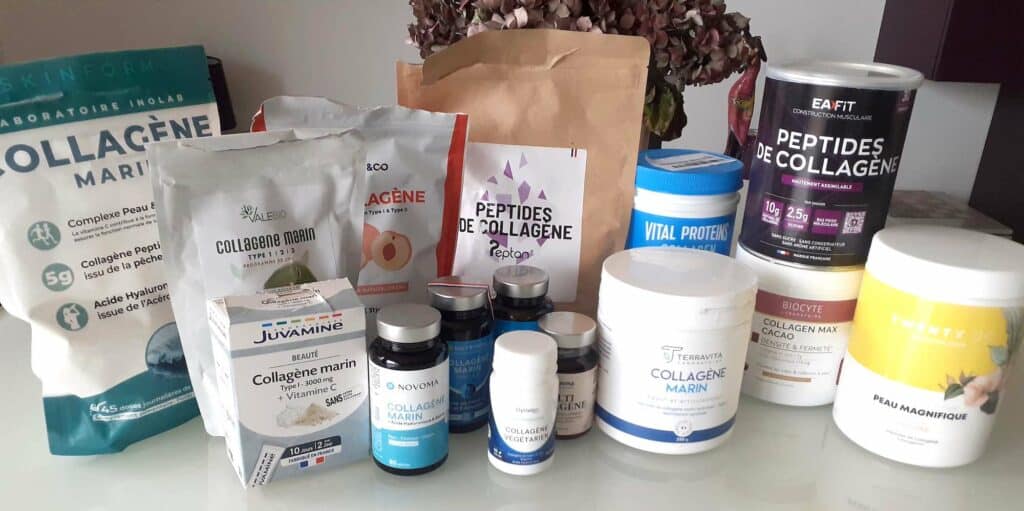
Marine collagen is attracting growing interest for its qualities and effectiveness. But it isn’t always easy to choose. Géraldine Dubois, MD, has tested, compared, and ranked 9 marine collagens.
An editorial team specialized in nutrition. Authors of the book Beneficial Foods (Mango Editions) and the podcast Food Revolutions.
My selection
#1: Best marine collagen 🥇
> Marine Collagen – Nutri&Co
#2: Best marine collagen in capsules
> Marine Collagen – Novoma
#3: Best marine collagen for joints
> Joint Marine Collagen – Valebio
#4: Best marine collagen for the skin
> Beautiful Skin Collagen – Twenty DC
Discoveries about marine collagen have been on the rise in recent decades1. Fish has emerged as an optimal source for collagen extraction, both safe and sustainable.
The composition of marine collagen varies depending on aquatic species, but it shows strong similarities to that of collagen from mammals. Many research teams are focusing on the benefits of collagen, and applications in the fields of health and cosmetics are multiplying.
Studies specifically using marine collagen taken orally have shown improved elasticity and reduced wrinkles2, as well as benefits in skin repair processes3.
Marine collagen products are multiplying on the market, so it’s easy to get lost in the labels, with prices varying by as much as a factor of three. The goal of this comparison is to help you see things more clearly thanks to an objective rating of each supplement.
We evaluate all supplements independently. If you click on one of the links provided, we may receive a commission, which does not affect the price or the ranking.
Methodology
I analyzed 9 of the best-selling marine collagen supplements on the internet.
I rated and compared them according to 5 criteria, then created a ranking. For each product, I wrote a description and highlighted the pros and cons.
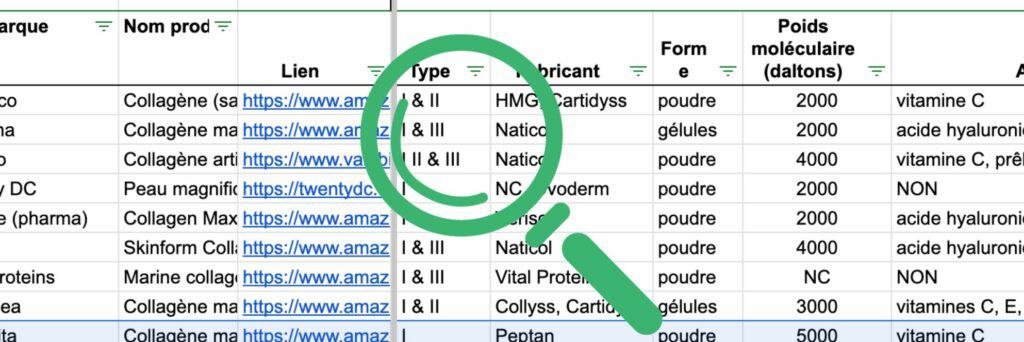
→ Access my complete comparison table here (Google Sheet)
Best marine collagen: my opinion
#1: Marine Collagen Nutri&Co: the best 🥇
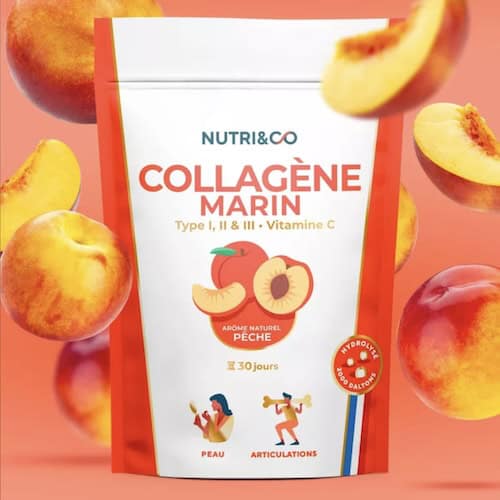
Rating: 4.4/5
Nutrition : ★★★★☆
Safety : ★★★★★
Pleasure : ★★★★☆
Brand : ★★★★★
Packaging : ★★★★☆
Advantages
- Two types of marine collagen
- Contains vitamin C
- Reliable patented manufacturing processes
- Subtle yet pleasant peach flavor, so you can take it with just water
- Brand recognition
Disadvantages
- Price slightly higher than average
Nutri&co is a French brand created in 2017 and based in Aix-en-Provence. The company, founded by Édouard Fornas, has gained a strong position in the nutraceutical market in recent years.
This powder format is made of marine collagen from regulated fisheries. Several flavors are offered : peach, cucumber-mint, and cocoa.
The daily dose recommended by the brand contains 5.5 g of patented collagen of 2 types : 5 g of type I (HMG®) and 500 mg of type II (Cartidyss®). These collagens are low molecular weight and considered high quality. It also contains 24 mg of vitamin C per serving.
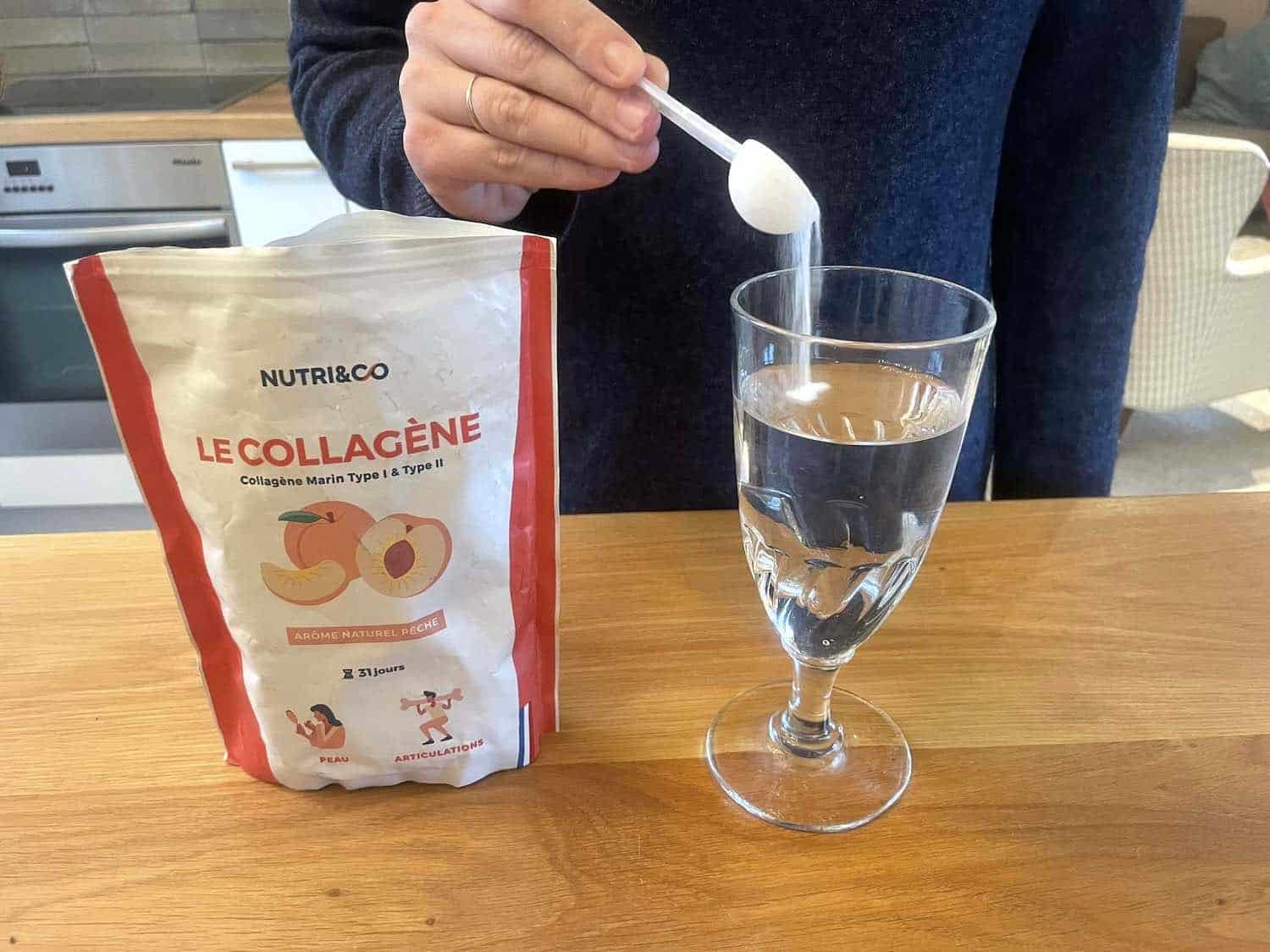
The powder dissolves easily, and the subtle peach flavor of the tested product is pleasant, with no fishy aftertaste.
The price of 24,9€ for a one-month regimen puts it in the middle of the selection.
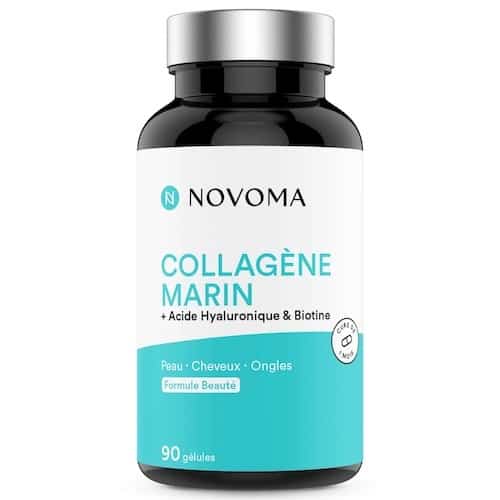
#2: Novoma marine collagen: the best in capsule form
Rating: 4.0/5
Nutrition: ★★★☆☆
Safety: ★★★★★
Pleasure: N/A (capsules)
Brand: ★★★★☆
Packaging: ★★★★☆
Advantages
- Multiple vitamins included and hyaluronic acid
- Reasonable cost
- Recycled and recyclable bottle
Disadvantages
- Low collagen dosage (specific to the capsule version)
Novoma is a French brand founded in 2012. It offers a wide range of dietary supplements.
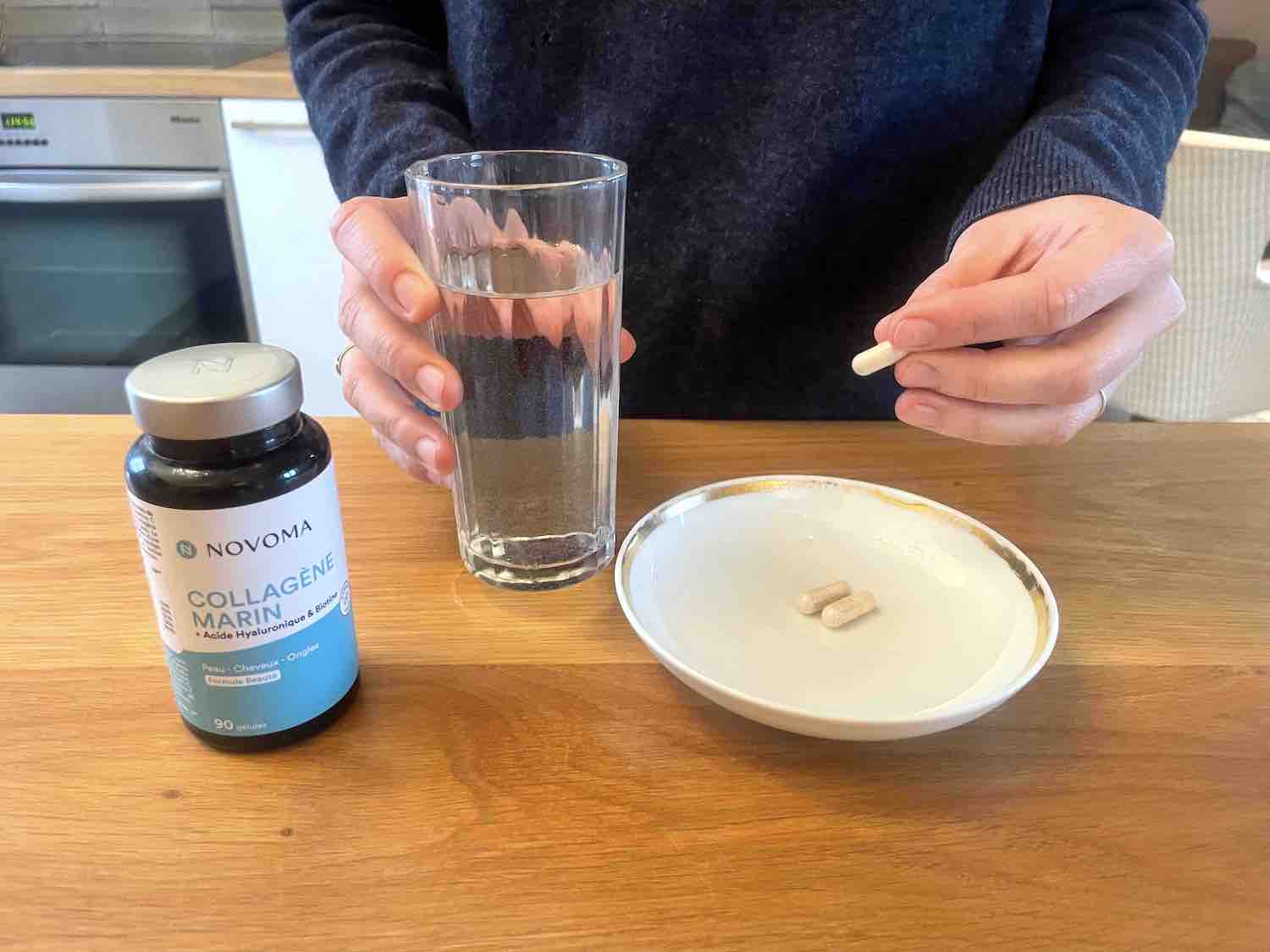
The marine collagen tested comes in capsule form with a recommended dose of 3 capsules per day, which equals 1 g of collagen. It is composed of two types of low molecular weight, Naticol®-patented collagen (I and III), extracted from wild-caught fish and certified for sustainable fishing.
Intended for beauty benefits, the capsules are enriched with a blend of vitamins, zinc, and hyaluronic acid (100 mg per 3 capsules).
A one-month course costs less than €20, a reasonable price compared to other brands. A small plus for the environment: the bottle is made from recycled and recyclable plastic.
For a more collagen-concentrated version (but paired only with vitamin C), Novoma offers a marine collagen powder recommended at 10 g per day.
#3: Valebio joint marine collagen: the best for joints
Rating: 4.0/5
Nutrition: ★★★★☆
Safety: ★★★★☆
Pleasure: ★★★★☆
Brand: ★★★★☆
Packaging: ★★★★☆
Advantages
- Very comprehensive for joint support
- 3 types of collagen
- Laboratory that emphasizes transparency
- Naticol® collagen of recognized quality
Disadvantages
- High cost (even though the presence of other ingredients may justify this price)
Founded in 2015, Valebio is a French nutraceutical brand. The brand emphasizes quality, expertise, and respect for the environment.
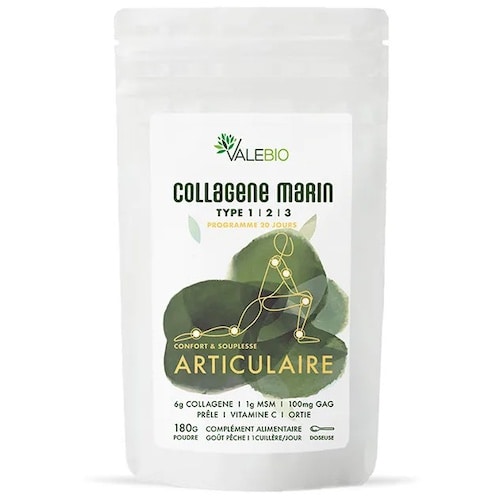
The tested marine collagen formula is intended for joint support and includes other active substances: vitamin C, MSM (methylsulfonylmethane), GAG (glycosaminoglycans), horsetail, and nettle. Their combined properties have a regenerative and anti-inflammatory effect on the joints.
It includes the three types of collagen most common in the human body: I, II, and III. The manufacturer is Naticol®, which has a good reputation. The marine collagen peptides are produced using a gentle hydrolysis process.
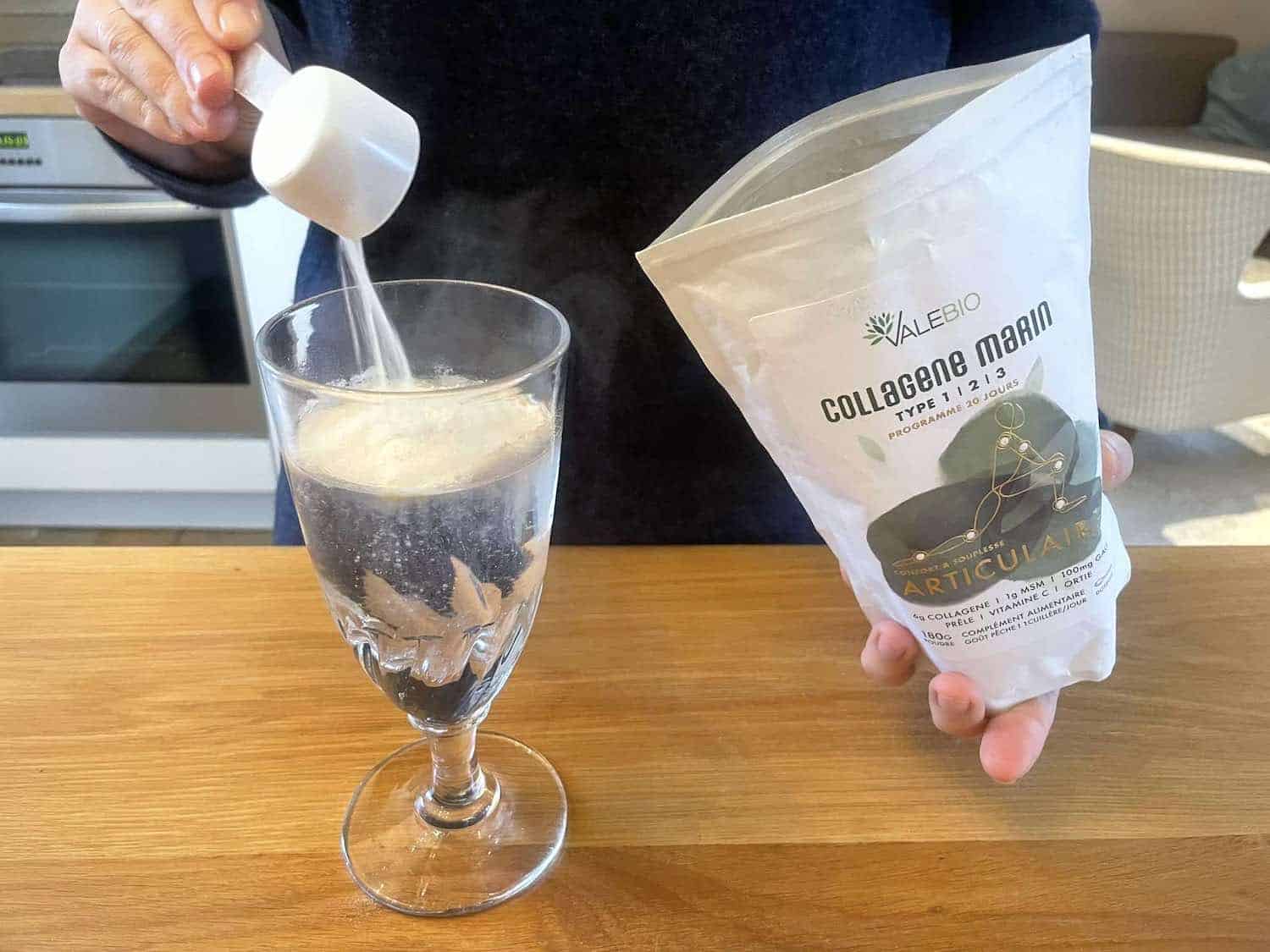
I note that the blend forms lumps and that you need to mix well for them to disappear. The tangy taste is fairly subtle and pleasant, but I still notice a slight fishy aftertaste in the mouth at the end.
A one-month supply costs €67.35, which is a significant expense.
Note that Valebio also offers other marine collagen formulas for different uses (anti-aging and absolute).
#4: Twenty DC Beautiful Skin Collagen: the best for skin

Rating: 3.8/5
Nutrition : ★★★★☆
Safety : ★★★★☆
Pleasure : ★★★★☆
Brand : ★★★☆☆
Pack : ★★★★☆
Advantages
- Well-dosed in collagen
- Use of 2 forms of collagen: marine and eggshell membrane
- Nice packaging
Disadvantages
- Flavored with additives: not recommended
- Missing information on the exact origin of the marine collagen. The collagen manufacturer is not mentioned
- A bit expensive
Twenty DC is a recent (2021) brand specifically focused on collagen. The tested version targets skin beauty.
This unflavored formula consists only of two active ingredients: marine collagen and a small amount of collagen extracted from eggshell membrane (Ovoderm®).
In the absence of clear information on the website and on the product label, I reached out to customer service. I was told that Twenty DC selects manufacturers that produce high-quality marine collagen subject to thorough testing.
There are also two flavored versions (peach tea and tropical), but I find that these formulas contain too many additives and sweeteners.
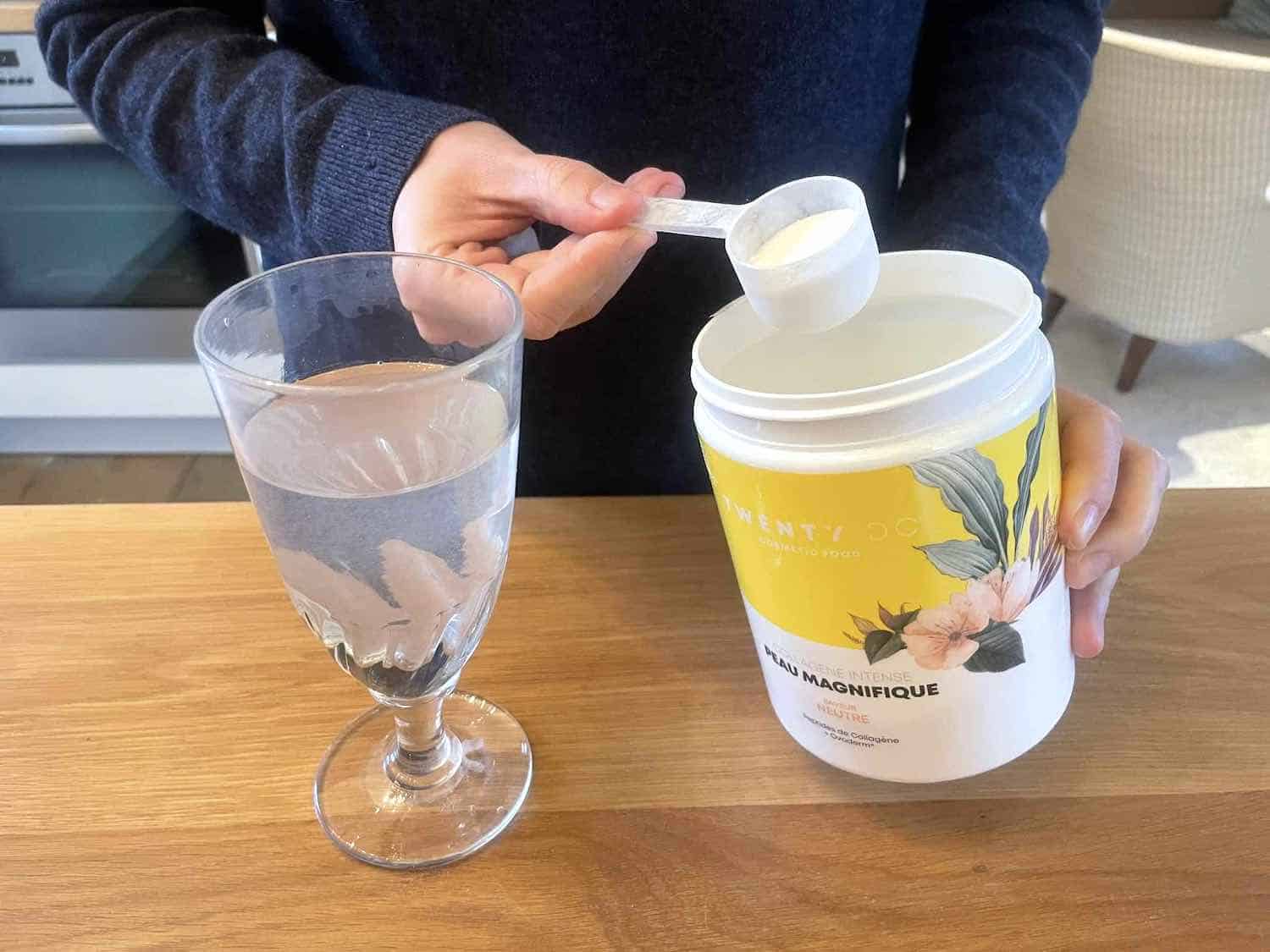
The brand recommends taking 10 g of collagen per day (98.5% of the dose is marine collagen). The smell in the tub is not very pleasant. However, the taste is truly neutral. The powder takes a little time to dissolve completely.
A one-month regimen costs 52.9€, which is quite expensive.
Full comparison
| Rang | Marque | NOTE | Nutrition | Sécurité | Plaisir | Marque | Packaging |
|---|---|---|---|---|---|---|---|
| #1 | Nutri&co | 4.4 | 4 | 5 | 4 | 5 | 4 |
| #2 | Novoma | 4.0 | 3 | 5 | x | 4 | 4 |
| #3 | Valebio | 4.0 | 4 | 4 | 4 | 4 | 4 |
| #4 | Twenty DC | 3.8 | 4 | 4 | 4 | 3 | 4 |
| #5 | Biocyte (pharma) | 3.6 | 3 | 3 | 4 | 4 | 4 |
| #6 | Vital Proteins | 3.6 | 4 | 3 | 4 | 3 | 4 |
| #7 | Nutrimea | 3.5 | 3 | 4 | x | 3 | 4 |
| #8 | Terravita | 3.4 | 4 | 4 | 3 | 3 | 3 |
| #9 | Juvamine (pharma) | 2.2 | 1 | 1 | 4 | 2 | 3 |
→ Access my full comparison table here (Google Sheet)
Selection criteria
1. Nutritional value
The type of collagen
Type I, II, and III collagen are the main forms found in the tissues of the human body.
Our entire selection contains at least type I collagen, which is abundant in fish skin6.
Some supplements also contain a portion of type II collagen, mostly sourced from cartilage and bones, or type III, which also comes from skin.
Molecular weight and bioavailability
For collagen to be properly used by the body, it must be ingested in a fragmented form. To do this, the process that breaks it down into small pieces is called hydrolysis. This results in a form called collagen peptides, characterized by their size in daltons (or molecular weight). In short, the lower the molecular weight, the better these peptides are absorbed.
Manufacturer’s patent
The hydrolysis method must be gentle enough and free of harmful solvents to preserve all the qualities of collagen peptides. Manufacturers specialized in marine collagen extraction must guarantee the process through a patent. Several quality labels are known, such as Naticol®, Collyss®, Cartidyss®, and Verisol®.
Other active ingredients
The formulation of the selected collagens is combined with other complementary substances. I have noted their presence and nature.
2. Safety
Regarding the safety of the various marine collagens tested, I considered:
Origin of the fish
It is important to verify the source of the raw material (the fish) from which the collagen is extracted.
Some brands don’t always disclose it. I contacted the customer service departments of some of them to obtain clarification, as the information was sometimes unclear.
The presence of additives and sweeteners
I analyzed the ingredient list of each product to identify the presence of additive substances that can compromise a product’s quality. This is the case, for example, with anti-caking agents (magnesium stearate, silicon dioxide), colorings, or certain artificial flavors. This is an important aspect to consider.
3. Enjoyment
Of the 10 marine collagens in the selection, 8 come in powder form and 2 in capsules. Only the powders were tested, as the capsule version doesn’t impart any particular flavor.
Solubility
To test the powdered collagens, I mixed the brand’s recommended dose into 200 ml of cold water. I observed the quality and speed of dissolution to obtain a homogeneous mixture and noted the presence or absence of lumps.
Flavor
I assessed the product’s texture upon tasting, the odor released, and the possible presence of a fishy taste.
4. Brand reputation
To evaluate the brand’s reputation, I took into account the company’s longevity as well as the size of its community on Instagram.
In addition, I looked at feedback on Amazon (when the products were available on that platform) and on review sites such as Trustpilot or Avis Vérifiés.
5. Packaging
I evaluated the practicality of handling powdered collagens, considering factors such as how the jar or pouch closes and whether a measuring scoop is included.
I also considered the container’s design and the display of information on the label.
Frequently asked questions (FAQ)
Which collagen is best: marine or bovine?
More recent studies on marine collagen tend to show that it has very favorable biological properties. In addition, extracting marine collagen makes it possible to utilize and add value to by-products from the fish processing industry that would otherwise be discarded. Moreover, marine collagen offers advantages over bovine collagen: a lower risk of disease transmission and no religious considerations. Nevertheless, research teams are not unanimous about the effectiveness of one compared with the other, especially since several factors can affect how the body absorbs collagen.
How long does a marine collagen course last?
There are relatively few studies that use marine collagen exclusively in humans. The effects are mostly demonstrated in animals. It is therefore difficult to provide a specific answer regarding this type of collagen. Reviews of the scientific literature generally compile studies on the intake of collagen peptides from multiple sources. In such cases, the average duration is 8 to 24 weeks, depending on the area studied (skin, joints, etc.). Given the gradual decline in collagen production with age, it seems reasonable to consider regular supplementation regimens starting at about 25 to 30 years of age. However, there are currently no official recommendations.
Where can you find marine collagen in your diet?
Marine organisms contain bioactive substances that are increasingly used in the health and cosmetics industries. The skin and bones of fish are richer in collagen than the flesh. Sardines, whose various parts are eaten, are an excellent source of collagen. It should be noted that squid, jellyfish, sponges, and other invertebrates are also abundant sources of collagen. Recent studies are focusing on both to determine the characteristics of their collagen.
Where can you buy marine collagen?
Many dietary supplement brands offer marine collagen. The vast majority of the selected brands are recognized for their quality. Ideally, order directly from the brand’s website. The more details it provides about its product, the more reliable it is: the origin of the raw material, the extraction conditions (manufacturer’s patent), the collagen concentration per dose. Some brands are also distributed in pharmacies and parapharmacies. Even though most online pharmacy websites are reputable and reliable, unfortunately there are a few exceptions.
Is marine collagen dangerous or does it have side effects?
Numerous studies involving the use of marine collagen have not shown any obvious danger. Collagen supplementation is, for the most part, safe and well tolerated. However, rare digestive side effects have been reported: bloating, nausea, or intestinal cramps. People allergic to fish should avoid taking marine collagen. Likewise, the risk of overdose is very low because excess collagen is easily eliminated. Nevertheless, it is always recommended to follow the indicated dosages.
What does marine collagen taste like?
The challenge for brands that produce this collagen is more about minimizing the fishy taste, which most consumers find unpleasant. Consumer reviews are a good indicator in this regard. Flavored versions of collagen powders can mask the taste, but in that case, be sure to check the nature of the additives present.
Bibliography
1. Salvatore L, Gallo N, Natali ML, et al. Marine collagen and its derivatives: Versatile and sustainable bio-resources for healthcare. Mater Sci Eng C. 2020;113:110963.
2. Lee M, Kim E, Ahn H, Son S, Lee H. Oral intake of collagen peptide NS improves hydration, elasticity, desquamation, and wrinkling in human skin: a randomized, double-blinded, placebo-controlled study. Food Funct. 2023;14(7):3196-3207.
3. Yang F, Zhao D, Zhang K, et al. Oral delivery of marine shellfish supramolecule peptides for skin wound healing. Colloids Surf B Biointerfaces. 2022;216:112592.
4. Khatri M, Naughton RJ, Clifford T, Harper LD, Corr L. The effects of collagen peptide supplementation on body composition, collagen synthesis, and recovery from joint injury and exercise: a systematic review. Amino Acids. 2021;53(10):1493-1506.
5. Lim YS, Ok YJ, Hwang SY, Kwak JY, Yoon S. Marine Collagen as A Promising Biomaterial for Biomedical Applications. Mar Drugs. 2019;17(8):467.
6. León-López A, Morales-Peñaloza A, Martínez-Juárez VM, Vargas-Torres A, Zeugolis DI, Aguirre-Álvarez G. Hydrolyzed Collagen—Sources and Applications. Molecules. 2019;24(22):4031.
7. Choi FD, Sung CT, Juhasz MLW, Mesinkovsk NA. Oral Collagen Supplementation: A Systematic Review of Dermatological Applications. J Drugs Dermatol JDD. 2019;18(1):9-16.
8. Bhagwat PK, Dandge PB. Isolation, characterization and valorizable applications of fish scale collagen in food and agriculture industries. Biocatal Agric Biotechnol. 2016;7:234-240.
9. Coppola D, Oliviero M, Vitale GA, et al. Marine Collagen from Alternative and Sustainable Sources: Extraction, Processing and Applications. Mar Drugs. 2020;18(4):214.
