Article produced in partnership with Nutrimea
1. A supplement supports your training, it does not replace it
When used properly, supplements help optimize the work done in training. If they are chosen poorly or dosed incorrectly, they are useless.
We explain how to build an effective sports supplementation plan, based on what science says.
No supplement can make up for inconsistent training, insufficient nutrition, or too little sleep.
This meta-analysis of 49 trials is a reminder: protein intake supports muscle mass gains, but training remains by far the main driver of progress. At Darwin Nutrition, we always recommend strengthening these foundations before turning to supplements.
2. Whey to meet your protein needs
Proteins help increase and maintain muscle mass. For athletes, the International Society of Sports Nutrition recommends 1.4 to 2 g per kilogram of body weight per day, a level that is difficult to reach through diet alone.
The meta-analysis cited above places the threshold around 1.6 g/kg, beyond which muscle mass gains level off.
Whey helps bridge the gap simply, after a workout or between meals. It is recommended to favor isolates, which are richer in protein and lower in lactose. Nutrimea Whey Isolate provides 26 g of protein per 30 g serving. It comes from cold membrane filtration and is enriched with lactase.
3. Creatine for short, intense efforts
It is one of the most studied sports supplements, and one of the few to benefit from an authorized claim in the European Union: creatine increases physical performance during short, high-intensity, repeated exercise, at 3 g per day.
It is intended for strength training, HIIT, sprinting, or team sports. It is taken every day, including rest days.
This benchmark study on creatine loading showed that at 3 g per day, muscle stores reach the same level in 28 days as with a high-dose loading phase.
It is better to favor the monohydrate form, the most well documented. Nutrimea Creapure® Creatine Monohydrate provides exactly 3 g per dose, with no excipients or additives.
4. Pre-workout for tackling demanding sessions
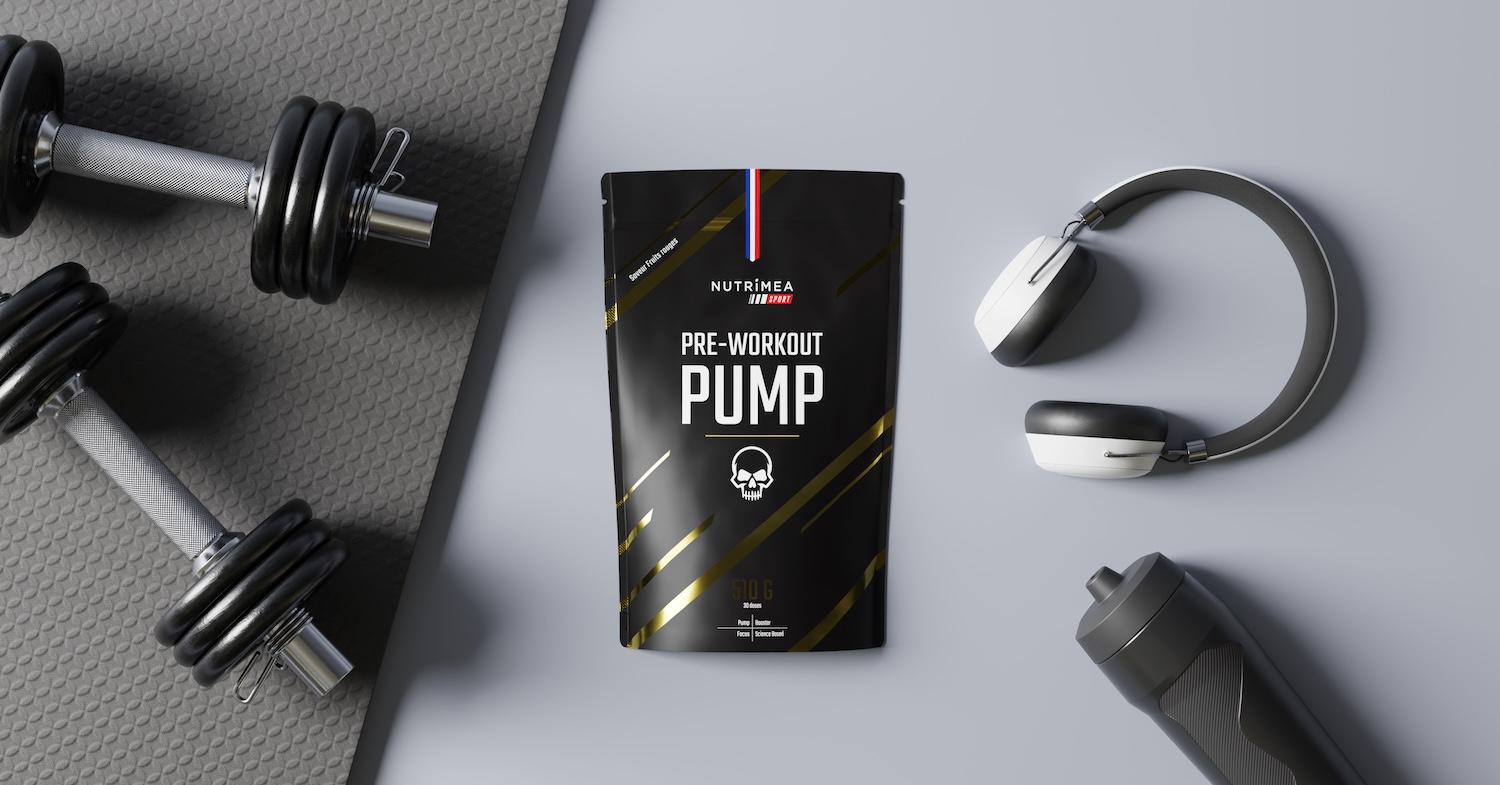
Taken about 30 minutes before training, pre-workout is designed to get the session off to a good start. Nutrimea Pre Workout combines citrulline (5 g), beta-alanine (3 g), beetroot extract, taurine, tyrosine, 100 mg of caffeine, and vitamins B3, B6, and B12, which help reduce fatigue and support normal energy metabolism.
Save it for the most intense workouts rather than making it a daily habit.
5. Adjusting your routine to your goal
To build muscle mass and improve performance during intense efforts, the creatine and whey duo provides the foundation: creatine every day, whey according to protein needs.
For intense workouts, pre-workout can complement this foundation. The three work well together, as long as you respect the dosage of each.
6. Read the label before buying
A good supplement can be recognized by its product sheet: clearly displayed serving size, specified form of the active ingredient (monohydrate, isolate), reference ingredients such as Creapure®, available analyses.
Regarding caffeine, the EFSA considers intakes of up to 200 mg at a time and 400 mg per day for adults, including coffee, to be safe. Do the math before stacking! The tingling sometimes felt with beta-alanine is temporary and harmless.
Why choose Nutrimea dietary supplements alongside your training?
- Controlled quality: products developed in France in ISO 22000-certified laboratories, with microbiological analyses published on the product sheets.
- Transparency: compositions, serving amounts, and cited studies on each product page.
- Affordable prices: about €0.28 per creatine dose, €1.80 per serving of whey, €1.10 per pre-workout dose.
- A complete range for all goals: protein, creatine, amino acids, endurance.
N.B.: Creatine, whey, and pre-workout are reserved for adults and are not recommended for pregnant or breastfeeding women. Any supplementation should be discussed with a healthcare professional, especially in the event of an existing medical condition or ongoing treatment.
Sources and scientific studies
Jäger R, et al. “International Society of Sports Nutrition Position Stand: protein and exercise.” Journal of the International Society of Sports Nutrition, 2017.
Morton RW, et al. “A systematic review, meta-analysis and meta-regression of the effect of protein supplementation on resistance training-induced gains in muscle mass and strength in healthy adults.” British Journal of Sports Medicine, 2018.
Hultman E, et al. “Muscle creatine loading in men.” Journal of Applied Physiology, 1996.
EFSA Panel on Dietetic Products, Nutrition and Allergies. “Scientific Opinion on the safety of caffeine.” EFSA Journal, 2015.
Commission Regulation (EU) No 432/2012 establishing a list of permitted health claims made on foods.