
François Kraus’s analysis, from Ifop
In mid-April 2026, the Socialist mayor of Saint-Ouen, Karim Bouamrane, tries by every means possible—concrete blocks, flower boxes, legal battles—to prevent a Master Poulet outlet from opening in his town, in the name of fighting junk food and protecting local residents’ quality of life.
Yet this local standoff raises two fundamental questions of national scope: a mayor’s legitimacy in regulating the commercial offering in their town, and the fault line within a divided left between republican universalism on one side and the defense of neighborhood cultural codes on the other.
To gauge this beyond the noise of social media, Ifop conducted a study for Darwin Nutrition among a nationally representative sample of 1,000 French people, producing results that challenge several dominant narratives.
Key figures
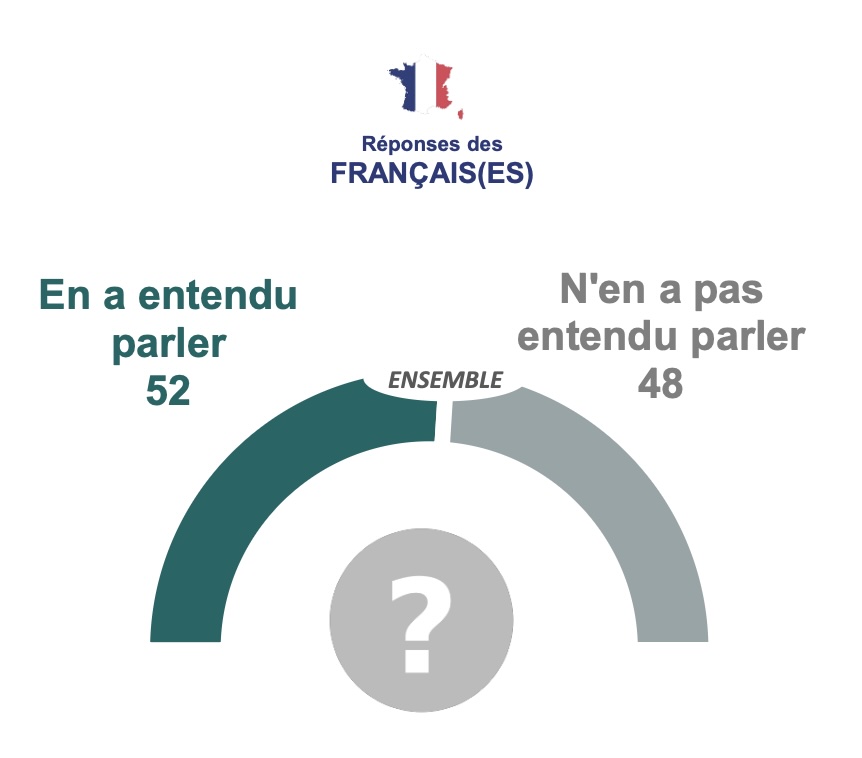
- 52% of French people have heard about the conflict – including 68% of people in the Paris region, remarkable awareness for a municipal affair.
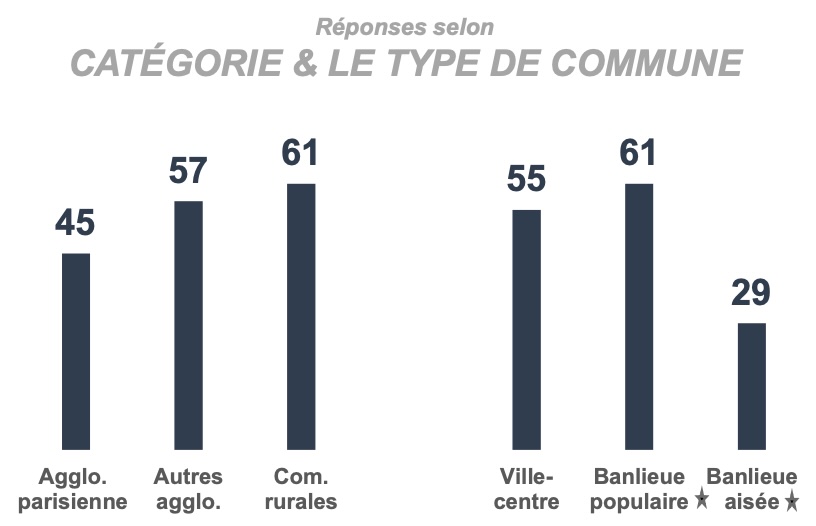
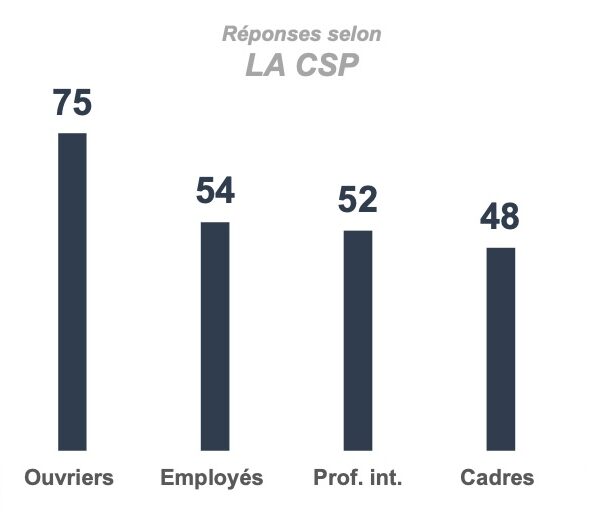
- 55% of French people approve of the mayor’s fight, especially among working-class groups : 75% of manual workers and 61% of residents of working-class suburbs.
- 67% of French people would oppose a Master Poulet opening on their street, but only 47% would oppose it in another neighborhood of their town.
- 50% of French people want to limit the development of low-cost fast-food chains, compared with only 18% who defend freedom of establishment, a three-to-one ratio.
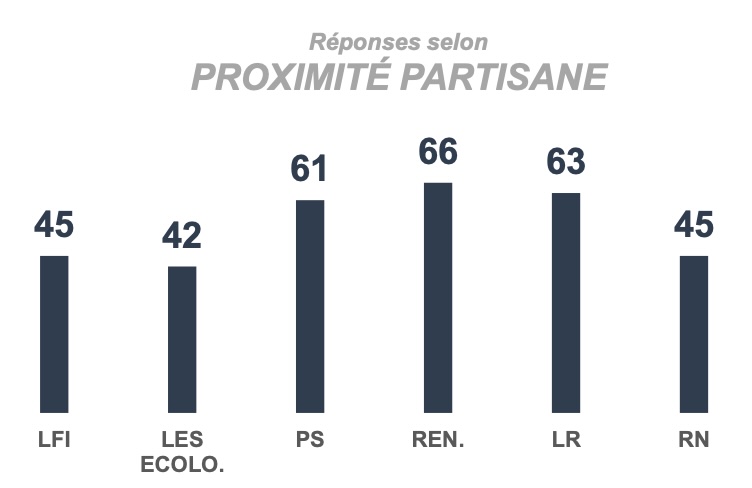
- In his fight against the fast-food chain, Mayor Karim Bouamrane is more strongly supported by the right and the center (63% with LR, 66% with Renaissance) than within his own camp (PS: 61%, LFI: 45%, environmentalists: 42%).
Concrete, flower boxes, and public opinion: the mayor loses his lawsuits but wins public support
First takeaway, and no small one: the case has had an impact far beyond Seine-Saint-Denis. 52% of French people say they have heard about the conflict between Karim Bouamrane and Master Poulet, including 22% who “know exactly what it is about.”
For a municipal spat in the Paris suburbs, that is remarkable notoriety, a sign that the saga of concrete blocks, foul-smelling flower boxes, and successive court rulings has truly broken through the national media noise. Unsurprisingly, the resonance is first and foremost in the Île-de-France region: 68% of residents there know about the case, compared with 49% in the rest of the country.
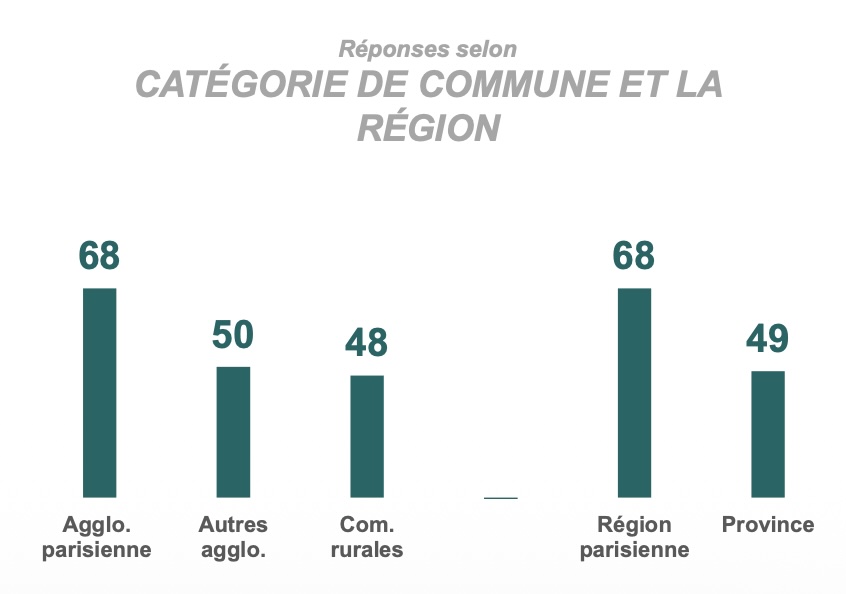
Among those following it, 55% approve of the mayor’s fight, including 23% who approve “completely.” Admittedly, the support is not overwhelming (45% disapprove, which shows an opinion far from unanimous), but it is a majority. And it suggests that Karim Bouamrane emerges politically less weakened than one might have thought from a standoff in which he has lost some legal battles.
Not in my street: the NIMBY syndrome, the great absentee in the debate
The most striking result of the survey is perhaps also the one that the media debate has overlooked the most. When asked about the opening of a Master Poulet- or Tasty Crousty-type chain at different distances from their home, the French vary considerably depending on proximity: 67% oppose it if the chain sets up on their street within 100 meters, compared with 56% opposed in their neighborhood and 47% in another neighborhood in the town. Twenty points difference depending on whether the fast-food is at your place or your neighbor’s.
Opening a fast-food restaurant like Master Poulet
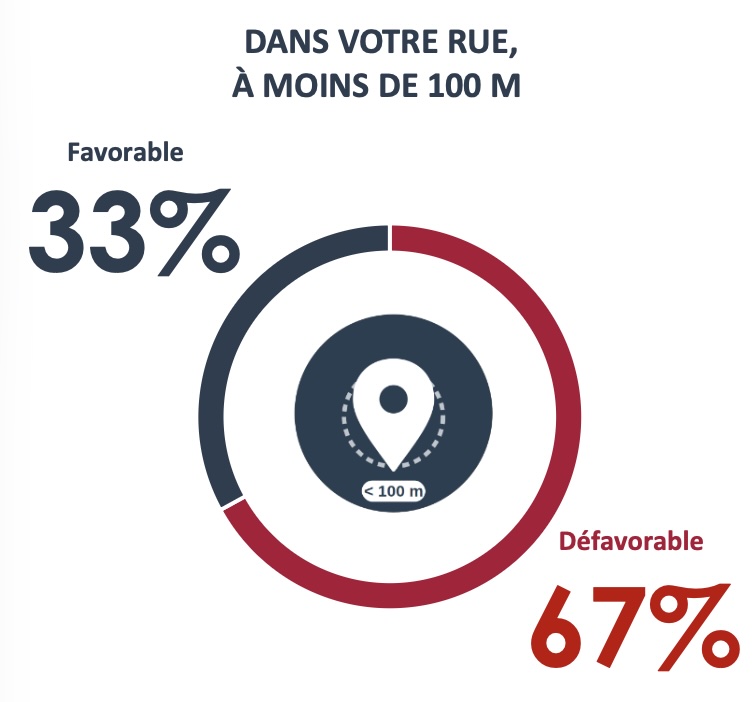
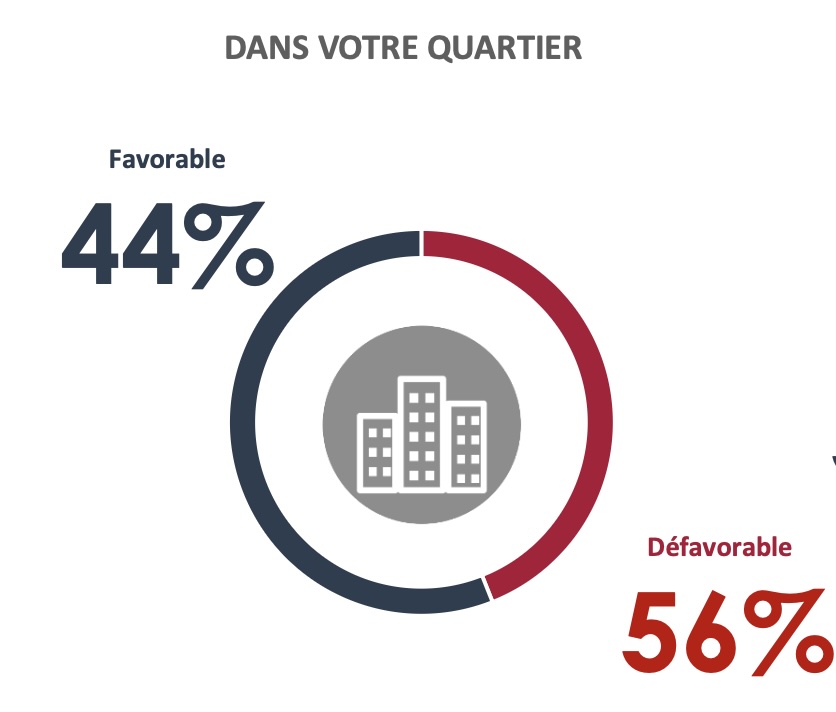
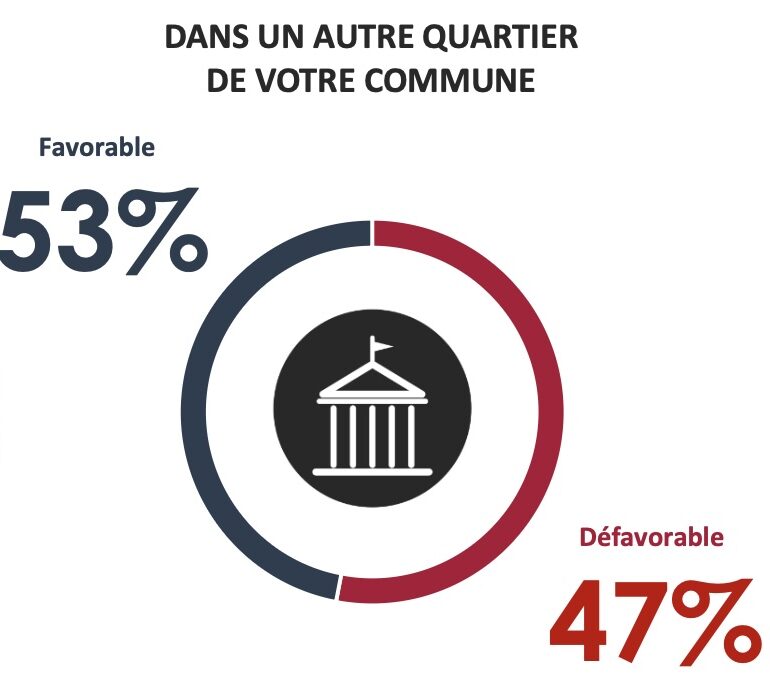
In short, the French are not hostile to fast-foods in general; they become so when they are the direct neighbors. And this reluctance to proximity cuts across divides: including at LFI, where 47% say they are opposed to an establishment on their own street, even though the party has made support for Master Poulet a strong marker. The “not in my backyard” stance spares neither the left-wing rebels, nor the environmentalists (62%), nor workers (52%).
What these figures suggest, cautiously, is that the political and media debate, by polarizing around the big positions of principle (e.g., universalism vs. purchasing power, junk food vs. freedom of trade), may have obscured a more ordinary and more cross-cutting feeling: that of the concrete nuisances Bouamrane invoked (e.g., nighttime deliveries, crowds, etc.) and which seem to resonate far beyond the municipal argument.¹
François Kraus’s viewpoint (Ifop)
The gradient of rejection by distance shows that the debate on commercial urban planning never really takes place where it is framed. The mayors who argue against the proliferation of fast-food restaurants are not mobilizing an ideology, but a neighbor’s lived experience that transcends partisan affiliations.
Chicken in France: increasingly imported, and from intensive farming
+15% between 2019 and 2024
1 in 2 chickens is imported (1 in 4 in 2000)
1% organic chicken in 2023
> 90% of “battery-farmed” chickens in food service
Sources: Anvol, INRAE, Itavi, Synalaf
Regulating fast food: a majority, but not a surge
On the key question « should public authorities limit the development of low-cost fast-food chains? », 50% of French people favor regulation, compared with only 18% who defend freedom of establishment. The ratio is nearly three to one in favor of the first option.
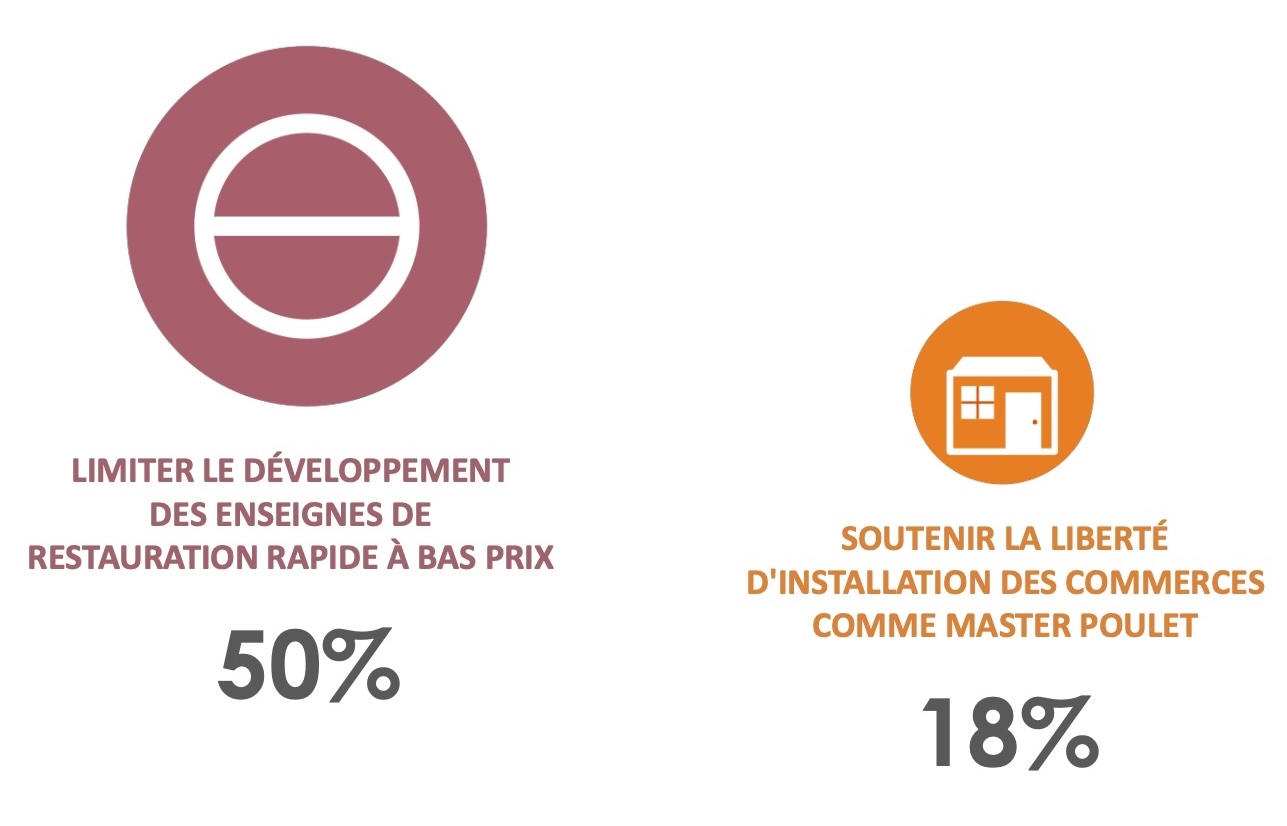
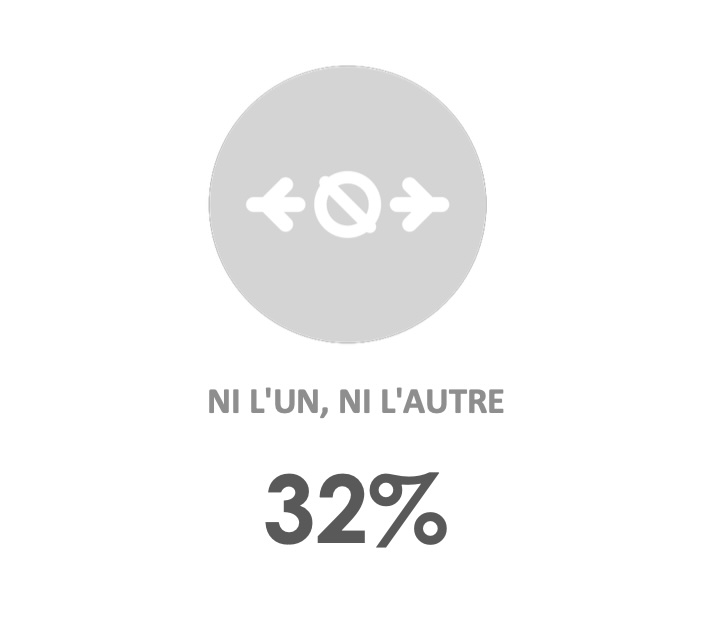
But perhaps the most revealing figure is the third: 32% choose neither of the two options. This third of hesitant opinions is a reminder that although regulation is the dominant option, it is by no means a massive or organized social demand. The Master Poulet case, however resounding it may have been, has not shifted public opinion on the substance of the issue.
Working-class people vs. class contempt: the rebellious narrative put to the test
That is the thesis LFI pushed most strongly in this conflict²: by opposing Master Poulet, the mayor of Saint-Ouen would be showing « class contempt », or even a « relentless campaign tinged with racism », condemning the modest residents of Saint-Ouen to a commercial gentrification that excludes them. Yet the survey data call for a serious qualification of this narrative, without claiming to definitively refute it, since the national survey does not measure the opinions of Saint-Ouen residents themselves.
Among all respondents, residents of working-class suburbs approve of the mayor’s campaign at 61%, compared with only 29% in affluent suburbs. Manual workers support him at 75%, executives at 48%. So, if we follow the data, the groups that LFI claims to defend seem to be the closest to the mayor’s position, whom it attacks.
If sociologist Philippe Cardon (Le Monde, May 8, 2026) had found that “the voices of the people directly concerned by this matter are not being heard,” this national survey does not fully fill that gap. But the size of the disparities — working-class suburbs at 61%, manual workers at 75% — at least makes it hard to sustain, without further explanation, the claim that the mayor is universally seen as the enemy of the working classes.
Approval of the mayor of Saint-Ouen’s campaign
François Kraus’s perspective (Ifop)
These results should give pause to those who have made the Master Poulet affair the symbol of a gentrification imposed from above on working people. Yet the working classes overwhelmingly support the mayor whom the radical left accuses of looking down on them. This does not settle the debate on the substance (Saint-Ouen is not France), but it does call for distinguishing the activist narrative from sociological reality.
Left-wing war: the PS/LFI duel exists, but the picture is more muddled than announced
A socialist mayor with more support from the right than from the left
This is the dominant narrative in the press³: on one side, an universalist left concerned with quality of life embodied by Bouamrane; on the other, a working-class and identity-focused left carried by LFI. The survey confirms that there is indeed a divide, while also revealing a more complex geography…
The PS/LFI divide is real. On support for the mayor: 61% among PS supporters, compared with 45% among LFI supporters. On the general limitation of fast-food outlets: 48% among PS supporters, compared with 19% among LFI supporters. On this second indicator, the left-wing rebels clearly appear isolated on the left.
But the most striking reversal is elsewhere. With 63% support among LR sympathizers and 66% among those in the presidential majority, Karim Bouamrane is more approved of on the right and in the center than in his own camp. A Socialist mayor more supported by Macronist voters than by a significant part of his own left: this is one of the most unusual lessons the survey reveals, even if it should be interpreted with caution: support for a specific municipal action says very little about broader political affinities.
Approval of the Saint-Ouen mayor’s fight
François Kraus’s view (Ifop)
This ideological reversal, a Socialist mayor more supported on the right than on the left, reveals the uniqueness of a case that cannot be reduced to the usual partisan divides. It reshapes alliances around lifestyle choices, commercial regulation, and urban policy.
The Greens: neither really with Bouamrane, nor really with LFI
The Greens case illustrates well the tensions this affair brings to the surface on the left. Depending on the question asked, they line up in opposing camps. On principle regulation, they are the most prohibitionist of the entire political spectrum: 57% want to limit the expansion of chains, even more than the Socialists (48%) and far ahead of LFI (19%).
But when it comes to personal support for the mayor, they split: only 42% approve of him, a score close to LFI (45%) and far below the PS (61%). The gap between approving the goal and supporting the man suggests a coherent ambivalence: environmentalists can back the fight against junk food without endorsing the mayor’s hard-line methods, while still remaining sensitive, like LFI, to the symbolic dimensions inevitably carried by a conflict involving a 100% halal chain, very popular with young people and in working-class neighborhoods. They thus carve out a third position — approve the end, reserve judgment on the means — which perhaps explains their relative discretion in public debate.
LFI and RN: an unexpected convergence on freedom of establishment
On support for the freedom of establishment of businesses, 28% of LFI supporters defend this option, exactly as many as RN supporters (28%). It would obviously be excessive to draw overly broad conclusions from this about a political convergence between these two electorates. But it says something about a shared sociology on this specific issue: that of young people from urban working-class backgrounds for whom Master Poulet is not a political symbol but a daily reality of purchasing power.
Grilled chicken: is it really “junk food”?
| Half grilled chicken | Big Mac-style sandwich | |
| Protein | 84 g | 26 g |
| Carbohydrates | 0 g | 46 g |
| Sugars | 0 g | 9 g |
| Fat | 24 g | 28 g |
| Calories | 525 kcal | 530 kcal |
| Processing | NOVA 1 (unprocessed) | NOVA 4 (ultra-processed) |
Young vs. old: an underestimated generational divide
If partisan division shaped the media debate, the generational divide may structure public opinion on the issue even more deeply. 70% of Boomers say they favor limiting low-cost fast food, compared with only 31% of Gen Z members. On support for the mayor: 68% among Boomers, 37% among Gen Z. Gaps of this magnitude invite us to look at the matter from a different angle than that of a simple left-wing civil war.
This divide gives LFI’s strategy a different hue. By defending Master Poulet, Jean-Luc Mélenchon’s party is perhaps speaking less to the working classes as a whole than to their younger segment, which is precisely the core of its electorate. Conversely, by endorsing Bouamrane, the Socialist Party is addressing a working-class electorate that is also an aging electorate.
The press⁴ rightly highlighted the profound transformation of French eating habits and the layering of foreign cuisines into everyday life, theorized by Jérôme Fourquet and Jean-Laurent Cassely in La France sous nos yeux. The survey suggests that this shift has a distinctly generational face: young people do not necessarily defend Master Poulet out of ideology; they may simply be defending their everyday cuisine.
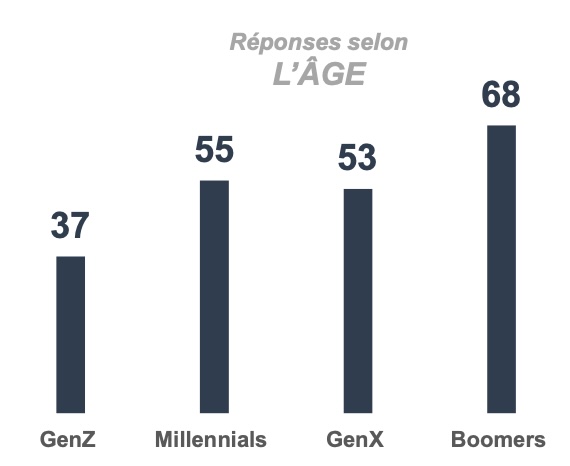
François Kraus’s perspective (Ifop)
The generational divide is undoubtedly the most underestimated aspect of this affair. LFI defends Master Poulet as it defends TikTok: it defends the cultural codes of its core electorate, which is young, urban, and working class. The Socialist Party supports Bouamrane as it supports traditional markets and neighborhood restaurants: it defends the cultural codes of its aging electorate. The “left-wing civil war” is also, implicitly, a war between generations.
In short: grilled chicken and fault lines
Under its swashbuckling veneer, the Master Poulet affair will at least have had the merit of revealing some of the fault lines running through contemporary France. Less a clear-cut left-wing war than an intertwining of divides (generational, spatial, sociological) that partisan postures struggle to fully cover. Karim Bouamrane may lose before the administrative court while still holding his ground in public opinion; Master Poulet may reopen its doors while remaining in the minority in the polls. The issue of local food offerings, and who gets to decide what they contain, is far from finished being political.
François Kraus, director of the “Politics/News” division at Ifop.
Ifop contact: 06.61.00.37.76 – francois.kraus@ifop.com
TO CITE THIS STUDY, YOU MUST USE AT A MINIMUM THE FOLLOWING WORDING:
“Ifop study for Darwin Nutrition conducted by online self-administered questionnaire from May 6 to 7, 2026, among a sample of 1,000 people, representative of the French population aged 18 and over.”
¹ On the issue of nuisances and the proliferation of fast-food restaurants, see Balla Fofana, Libération, April 26, 2026, and Éric de La
Chesnais, Le Figaro, May 1, 2026.
² See in particular the positions of Éric Coquerel and Nadège Abomangoli reported by the Huffington Post, April 26
2026, and Le Monde, May 8, 2026.
³ See in particular Le Point, April 28, 2026; Marianne, April 28, 2026; Le Figaro, April 30, 2026.
⁴ Kévin Badeau, Le Point, April 28, 2026.
