
Best whey protein 2026: 15 brands tested and compared – our verdict

Methodology & FAQ
An editorial and scientific team specialized in nutrition. Authors of the book Les aliments bénéfiques (Mango Editions) and the podcast Révolutions Alimentaires. Darwin Nutrition is and will remain free. By buying through our links you support our work, without paying more.
| Notes sur 5 | NOTE | |
|---|---|---|
| Best whey 2026 🥇 > Nutripure | 5.0 | SEE PRICE |
| Best alternative ⭐ > Nutri&co | 5.0 | SEE PRICE |
| Best value for money 💸 > Pure AM nutrition | 4.4 | SEE PRICE |
| Nutrimuscle | 4.4 | |
| Protein Works | 4.4 | |
| Foodspring | 4.2 | |
| Optimum Nutrition | 4.2 | |
| BiotechUSA | 4.0 | |
| Eiyolab | 4.0 | |
| My Protein | 4.0 | |
| Bulk | 3.8 | |
| NU3 | 3.8 | |
| EAfit | 3.6 | |
| Scitec Nutrition | 3.4 | |
| AMFIT | 3.2 |
Whey comes from the dairy industry, it is derived from milk whey, or whey. The whey is obtained at the time of milk coagulation during the cheese-making process.
This whey contains mainly lactose and small, soluble proteins rich in essential amino acids. Its biological value (the degree of assimilation and the quality of the amino acids) is from 104 to 114, which makes it one of the best proteins.
This makes it easier to understand why athletes have gotten into the habit of consuming it to meet their protein needs and to increase their muscle mass.
But there are many types of whey, and even more brands: it is becoming increasingly difficult to understand the labels and therefore to make the right choice.
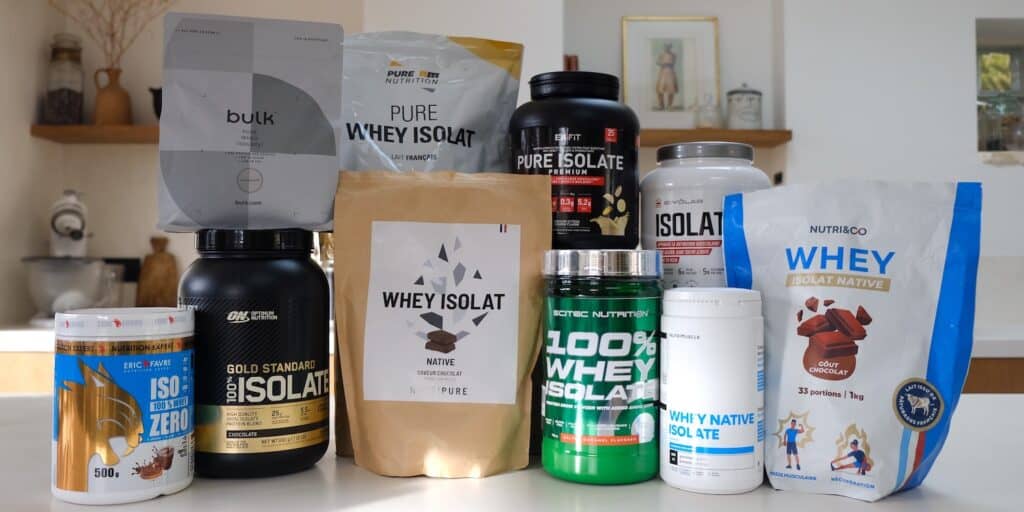
To make things clearer, we tested and compared 15 of the best‑selling whey products on the Internet, according to 5 quality criteria defined by Maxime Mességué, dietitian nutritionist. We then highlighted 3 products that stood out in our analysis.
Brands tested and compared : AMFIT, BiotechUSA, Bulk, EAfit, Eiyolab, Foodspring, My Protein, NU3, Nutri&Co, Nutrimuscle, Nutripure, Optimum Nutrition, Protein Works, Pure AM Nutrition, Scitec Nutrition.
The ranking of the products is established by our editorial team, based on objective criteria. The methodology and scientific content were produced by Maxime Mességué, who contributes as a scientific expert.
Best whey: our opinion
#1: BEST WHEY 2026 🥇
Nutripure: 5/5
Nutrition: ★★★★★
Safety: ★★★★★
Brand: ★★★★★
Solubility: ★★★★★
Taste: ★★★★★
Advantages 👍
- Highest protein and BCAA content
- Native, non-denatured protein
- French milk from pasture-fed cows
- Purest whey in the comparison
Disadvantages 👎
- Price a bit higher than average
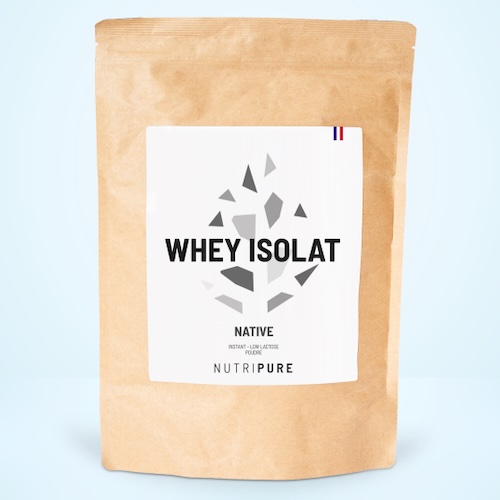
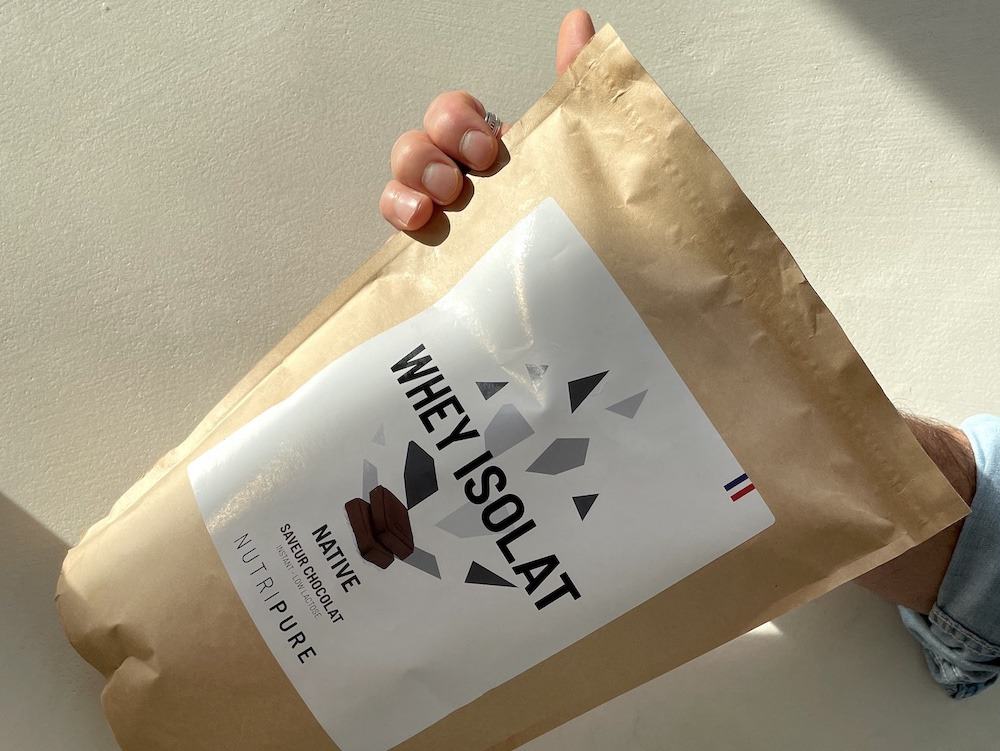
Nutripure is a French brand created in 2018 by two high-level athlete brothers. Their ambition is to create a brand of “perfect” dietary supplements, meaning without any controversial substances and with optimal quality.
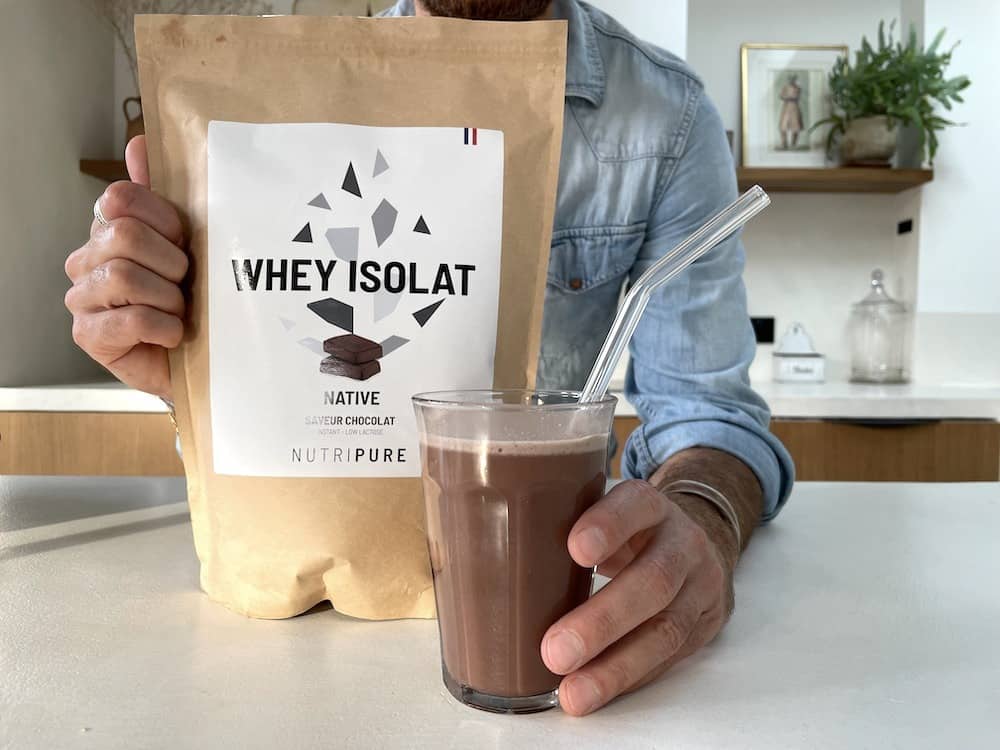
Nutripure Native Whey Isolate contains 94 g of protein per 100 g with 22.4 g of BCAAs per 100 g, which is particularly high. It contains very little fat (1.9 g) and carbohydrates (3 g).
This whey is native, made from fresh milk from French pasture-raised cows (unflavored version). The proteins are isolated by cold microfiltration. They therefore remain intact and are not denatured by heat treatment.
Nutripure does away with any controversial substances: this whey contains only milk isolate and sunflower lecithin, an emulsifier that is not problematic. The powder therefore mixes very well and does not form lumps.
There is also a cocoa version that adds an indulgent touch without any artificial aftertaste, although we would have liked a slightly sweeter flavor.
This whey is one of the most expensive in our comparison (46.5 euros per kg), but in our opinion the price is fully justified by the quality of the product.
BEST ALTERNATIVE ⭐
Nutri&Co: 5/5
Nutrition: ★★★★★
Safety: ★★★★★
Brand: ★★★★★
Solubility: ★★★★★
Taste: ★★★★★
Advantages 👍
- High content of protein and BCAAs
- Native protein
- French milk from pasture-fed cows
- No sweeteners or controversial additives
- Good cocoa taste, natural and balanced
Disadvantages 👎
- Price higher than average
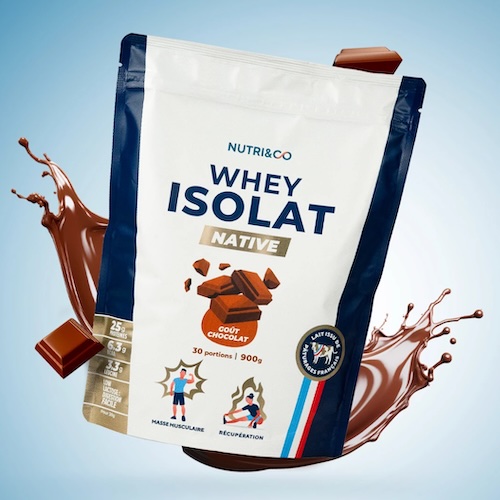
Nutri&Co is a French brand created in 2017. It specializes in selling dietary supplements designed to improve health, beauty, and athletic performance. Its goal is to provide the best possible quality with simple formulas and no controversial ingredients, at a fair price.
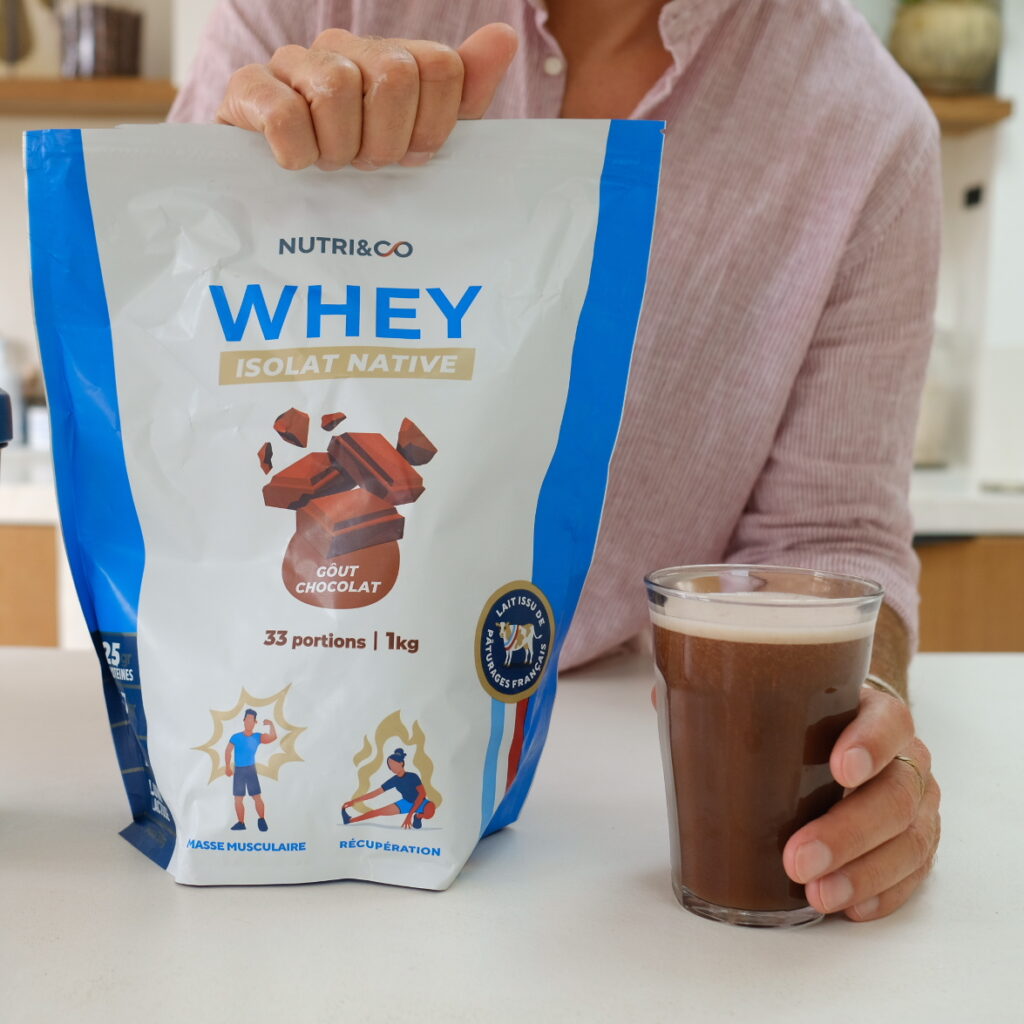
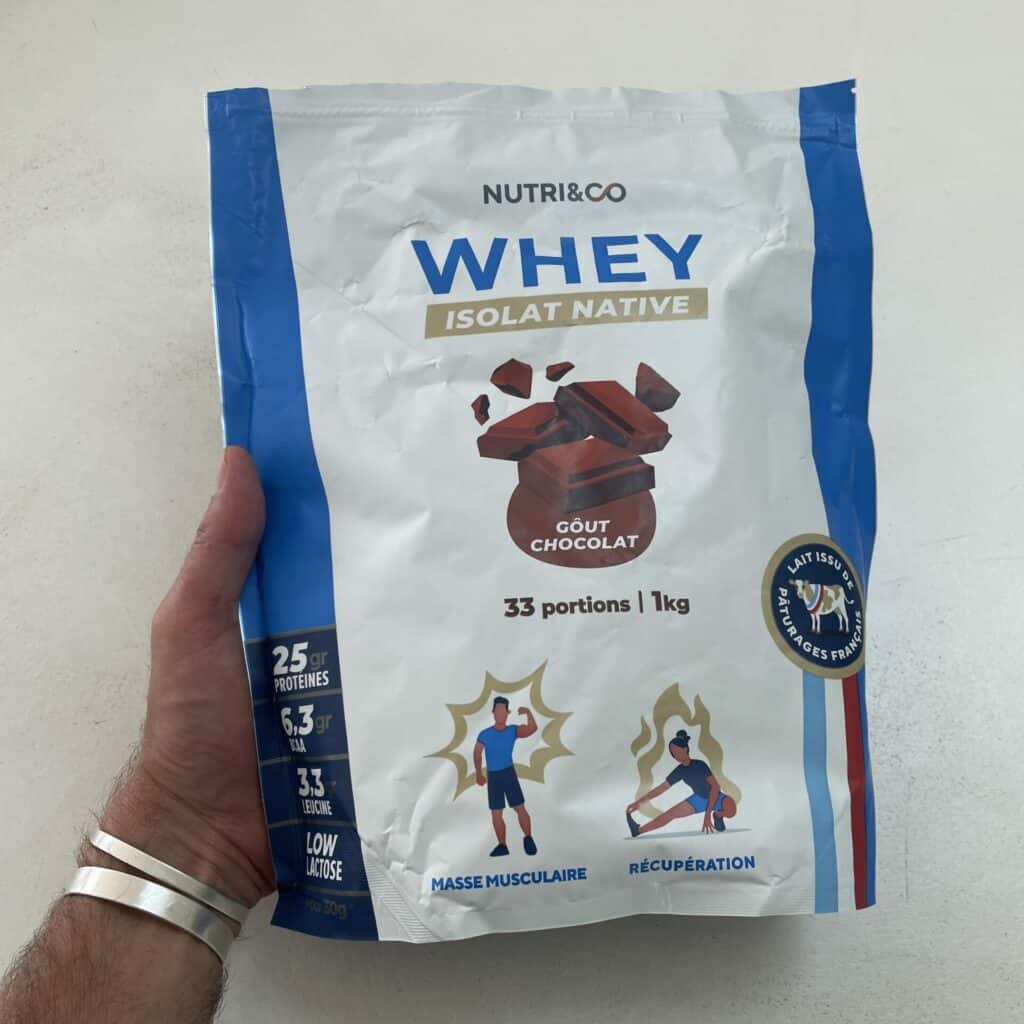
Nutri&Co’s chocolate-flavored isolate and native whey contains 83 g of protein per 100 g with 24.8 g of BCAAs. This composition is very rare for a whey, which reflects an exceptional milk quality. It contains 5.3 g of carbohydrates, which is in the lower range of the comparison.
Nutri&Co whey is native, so it does not come from the whey of the cheese industry but directly from milk. The proteins are cold-extracted by microfiltration, which preserves their quality.
The milk from which the whey is obtained comes from French pasture-raised cows, this is currently the best possible quality for a whey.
Nutri&Co whey contains only 2 additives: xanthan gum and sunflower lecithin. They are not controversial. The brand has chosen not to use artificial sweeteners: for the sweet taste, only steviol glycoside (from stevia) is used.
The powder mixes well and does not form lumps, its chocolate taste is pleasant, without any chemical aftertaste.
The Nutri&Co brand also has an excellent rating of 4.5/5 on the Trustpilot website, with many positive reviews highlighting the quality of the products, the brand’s transparency, and the responsiveness of customer service.
This whey is among the most expensive on the market at €49.90 per kg, but quality comes at a price!
BEST VALUE FOR MONEY 💸
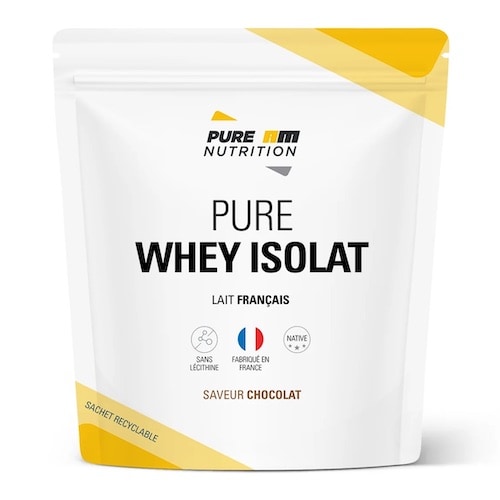
AM Nutrition: 4.4/5
Nutrition: ★★★★★
Safety: ★★★★☆
Brand: ★★★★★
Solubility: ★★★★☆
Taste: ★★★★☆
Advantages 👍
- High content of protein and BCAAs
- Native, non-denatured protein
- French milk
- Good, well-balanced vanilla taste
Disadvantages 👎
- Presence of sucralose
- High lactose content
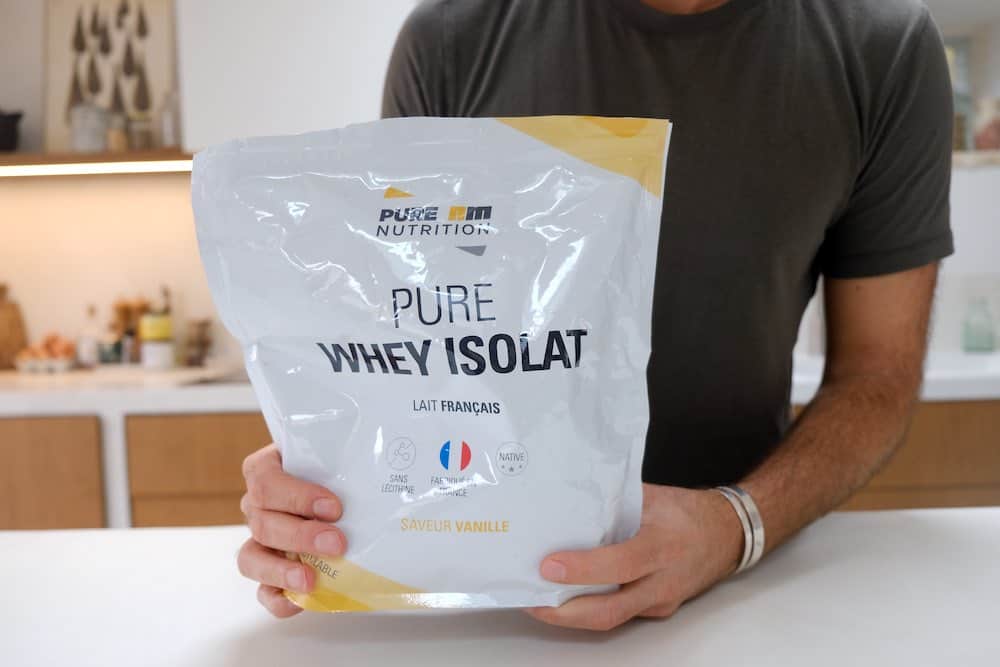
PURE AM Nutrition is a French brand founded in 2017, specializing in dietary supplements for athletes. It is part of the N4Brands group, which also owns FitnessBoutique, the leading brand in France for the distribution of fitness equipment and sports nutrition products.
AM Nutrition whey isolate contains 85 g of protein per 100 g, with 17.5 g of BCAAs: it has an excellent composition.
It contains very little fat (1.4 g per 100 g) but a rather high amount of carbohydrates (9 g). This is uncommon for an isolate. It indicates a larger amount of lactose than some isolates. This can be an issue for people who are sensitive or intolerant.
AM Nutrition whey is native; it does not come from a by-product of the cheese industry but directly from milk, so it is of higher quality because no heat treatment is used for protein extraction.
The milk used is French.
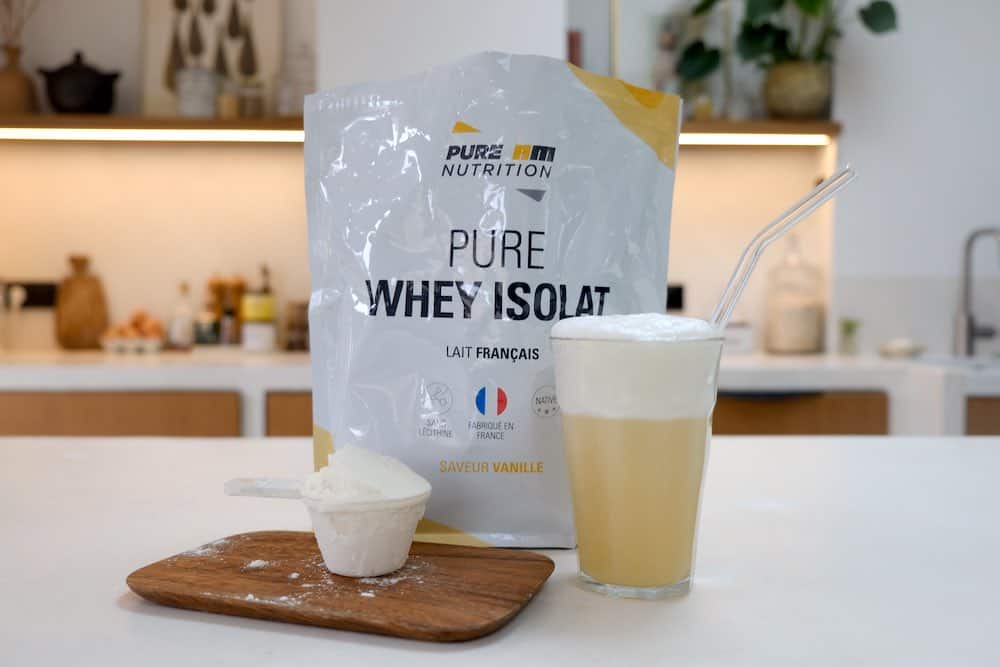
Its sweet taste is provided by a blend of sweeteners: steviol glycoside (natural) and sucralose (synthetic and sometimes considered controversial). We tested the vanilla-flavored AM Nutrition whey : we really liked its taste, sweet just enough.
We liked the texture a bit less; it is rather thin and foamy on the surface, with a few lumps. This texture most likely results from the absence of a texturizing agent in the formula.
This native whey isolate is sold at a very reasonable price given its premium quality and formulation. Its price is €34.20 per kg when using a -20% promo code that is always available on the site: it’s unbeatable.
For us, this is the whey with the best quality/price ratio.
The other wheys in the comparison
Protein Works – Whey Protein 80
A whey concentrate at an attractive price, with a well-balanced chocolate taste and a creamy texture. It mixes easily and remains very pleasant to drink. Its protein content is good for a whey concentrate.
Despite the presence of a few additives, the lack of information on its origin, and the lack of detail on the amino acid profile, it is a convincing option for small budgets.
Nutrimuscle – Native whey isolate
Nutrimuscle is a French brand known for its transparency and the quality of its products, especially its native whey isolate, which is rich in protein (81.2 g/100 g) and BCAAs. Despite a relatively high carbohydrate content for an isolate (7.2 g), the presence of lactase allows for good digestive tolerance.
The formula stands out due to the absence of glycomacropeptides, the presence of prebiotics and probiotics, and a fluid texture with a pleasant cocoa taste. Offered at €42.90/kg, it provides excellent value for money, despite the use of sucralose, a controversial sweetener.
Foodspring – Whey Protein
A blend of whey concentrate and isolate, with a multitude of original flavors and an overall creamy texture, despite a few possible lumps.
Made from the milk of grass-fed cows raised on pasture in New Zealand, it is striking because of the low amount of protein it offers, the lowest in our comparison. We also question the relevance of such distant sourcing for a quality that still has room for improvement.
Optimum Nutrition – Gold Standard 100% Whey
A historic brand, this whey combines isolate, concentrate, and hydrolysate for rapid absorption. We liked the chocolate flavor for its balance, with a smooth texture and no lumps. The protein content is decent for a blend, but the BCAA levels could be better.
This whey also contains controversial sweeteners. It’s also a shame that there’s no information about the origin of the ingredients: a bit more transparency would be welcome.
BiotechUSA – Iso Whey Zero
Very high in protein with added BCAAs and glutamine, this whey stands out for its native quality. The chocolate flavor is not very sweet, the texture is creamy, and the solubility is impeccable. It clearly positions itself in the high-end segment, with a price to match.
However, the presence of 7 additives is excessive for a whey of this level, and the lack of information about the origin remains regrettable.
Eiyolab – Isolate HT
Highly concentrated whey isolate (86%), with an exemplary BCAA amount of 20 g. Its texture is fairly liquid, dissolves well, and has no lumps.
The milk used comes from Europe, which is a good point, but it’s still a bit vague: we wish we had more information about traceability. Sensitive palates should also be careful: the sweet taste is particularly strong.
My Protein – Impact Whey Protein
Ultra-popular whey concentrate, with a wide range of flavors (36!). The chocolate flavor is very sweet but indulgent. The texture is smooth, the solubility good, making it an ideal low-cost option for regular use.
The protein content is average, but the amount of BCAAs remains interesting. However, there is a real lack of traceability, which is unfortunate.
Bulk – Pure Whey Protein
This whey concentrate has a decent, though not optimal, protein content, and a fairly low amount of BCAAs compared to other wheys on the market. We found it overall well-balanced, with a creamy texture, even though it can sometimes form lumps. The vanilla flavor is classic and well-balanced. It comes from pasture-raised cows’ milk, which is appreciable, especially at this price.
We know it comes from Europe, but we would have liked more details for full traceability.
NU3 – Performance Whey
This whey has one of the lowest protein and BCAA contents in our comparison, which limits its nutritional interest. However, it remains pleasant to consume: sweet, creamy, with very good solubility.
The vanilla flavor is intense, even too much for me. It contains 3 non-controversial additives, which is rather reassuring, even though we regret the lack of traceability.
EAfit – Pure Whey
This whey is a blend of concentrate, isolate, and hydrolysate, enriched with vitamins and enzymes. It has an average protein content (76%) and a BCAA amount that is also lower than other products in the comparison. The double chocolate flavor is light and pleasant, the texture is smooth, and it dissolves very well.
We regret the presence of several controversial sweeteners, as well as an overall number of additives that is too high, some of which raise concerns. Another weak point: the complete lack of information on the origin of the milk.
Scitec Nutrition – 100% Whey Protein Professional
This whey concentrate is enriched with enzymes, glutamine, and BCAAs, but despite this, it contains little protein and a low amount of BCAAs compared to the other wheys in the comparison. It contains two controversial sweeteners, which gives it a very sweet and strongly flavored taste.
The texture is smooth, but we found the aftertaste a bit too persistent. As for solubility, nothing to complain about, it’s perfect. However, there is a real lack of transparency about the origin of the milk, and its price is clearly high given the quality offered.
AMFIT – Whey Protein
This simple and very economical whey is a blend of concentrate and isolate. The amount of protein is not particularly high, and the absence of an amino acid profile does not allow you to know the actual BCAA content, which is a shame. Its texture is a bit rough, the strawberry flavor remains subtle, and a few lumps may appear.
It’s still fine for getting started or as a backup option, but we regret the lack of transparency about the origin of the milk and the formulation. This clearly shows in its low overall rating.
Complete ranking
| Notes sur 5 | Note globale | Nutrition | Sécurité | Gout | Solubilité | Marque |
|---|---|---|---|---|---|---|
| # Best whey 2026 🥇 > Nutripure – Native Whey Isolate | 5.0 | 5 | 5 | 5 | 5 | 5 |
| # Best alternative ⭐ > Nutri&co – Native Whey Isolate | 5.0 | 5 | 5 | 5 | 5 | 5 |
| # Best value for money 💸 > Pure AM nutrition – Pure Whey Isolate | 4.4 | 5 | 4 | 5 | 4 | 4 |
| Nutrimuscle | 4.4 | 5 | 4 | 4 | 5 | 4 |
| Protein Works | 4.4 | 4 | 3 | 5 | 5 | 5 |
| Foodspring | 4.2 | 4 | 4 | 5 | 4 | 4 |
| Optimum Nutrition | 4.2 | 4 | 3 | 5 | 5 | 4 |
| BiotechUSA | 4.0 | 4 | 3 | 5 | 5 | 3 |
| Eiyolab | 4.0 | 5 | 4 | 3 | 5 | 3 |
| My Protein | 4.0 | 4 | 4 | 4 | 5 | 3 |
| Bulk | 3.8 | 3 | 4 | 5 | 3 | 4 |
| NU3 | 3.8 | 3 | 3 | 4 | 5 | 4 |
| EAfit | 3.6 | 4 | 3 | 2 | 5 | 4 |
| Scitec Nutrition | 3.4 | 3 | 3 | 3 | 5 | 3 |
| AMFIT | 3.2 | 3 | 3 | 4 | 4 | 2 |
→ Access my full comparison table here (Google Sheet)
Methodology
To create this comparison, I defined 5 qualitative criteria based on the characteristics of the products and on real-world testing of each of the 15 whey proteins.
Each criterion is rated out of 5, and the average of the 5 criteria determines the ranking.
For each whey, it’s also about looking at the price per kg, in order to highlight the best options in terms of value for money.
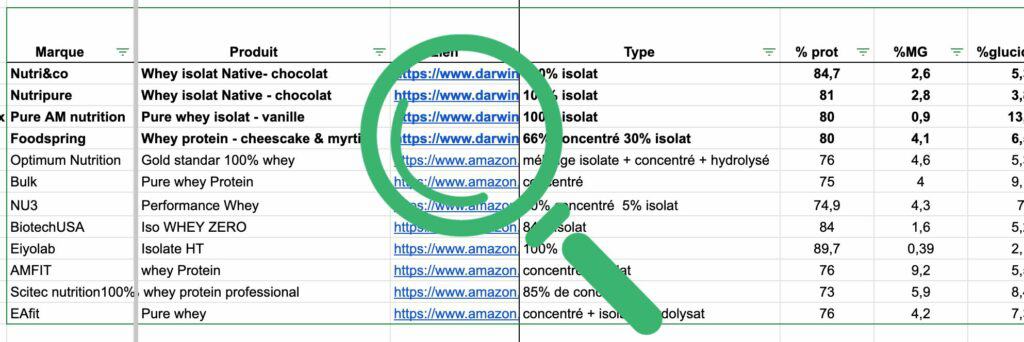
→ Access my full comparison table here (Google Sheet)
1. Nutritional value
To compare the nutritional value of the different wheys, I defined two main criteria: their protein content and their richness in BCAAs.
To make the comparison as fair as possible, I recommended checking the ingredients and nutritional values of the chocolate-flavored versions, which are generally the most consumed.
In general, the richer a whey is in protein, the fewer carbohydrates and fats it contains — which is a good indicator of quality.
Conversely, when the protein content is lower, you often find more so‑called “filler” ingredients.
The BCAA (branched-chain amino acids) content is also an essential criterion. The more BCAAs a whey contains, the more effective it will be in supporting muscle building. It is also a reflection of the quality of the milk used and of a gentle extraction process, which helps preserve the integrity of the proteins without denaturing them.
2. Safety
To rate the safety of the different wheys, I defined 4 sub‑criteria:
- The origin of the milk used and how the cows are fed
Thus, pasture-raised or grass-fed cows produce higher-quality milk than cows from intensive farming.
- Whether or not the whey is native
When whey is native, filtration is done cold, which helps maintain the full integrity of the proteins.
- The number of additives and texturizing agents
Most texturizing agents used are not controversial, but their presence in large quantities is not ideal for the body. On a daily basis, the goal is to consume products with the shortest possible ingredient list.
- The sweeteners used
There are 3 of them: sucralose, acesulfame K, and steviol glycoside. The first two are controversial, whereas steviol glycoside currently appears to be harmless.
3. Brand reputation
To assess the reputation of the different whey brands, I used the following criteria:
- The age of the brand
A brand that has been around for several years (or decades) has often proven itself. It has managed to retain its customers and maintain a certain level of quality. For me, this is a real guarantee of reliability.
- Presence on Instagram
The comparison takes into account the size of the communities on Instagram. This is not the most decisive criterion, but it gives an idea of the engagement around the brand and the relationship it maintains with its customers.
- Customer reviews
The comparison is based on the feedback available on platforms such as Amazon, Trustpilot or Avis Vérifiés (depending on which is most used for each brand). The ratings of brands with fewer than 100 reviews were not taken into account, as that seems too unrepresentative to me. On the other hand, a large number of positive reviews is a real sign of customer satisfaction and therefore a good indicator of trust.
4. Solubility
A whey that mixes well and doesn’t form lumps is, in my opinion, a whey that is pleasant to consume.
Darwin Nutrition therefore tested the solubility of the 15 brands by mixing 30 g of whey with 250 ml of water in a shaker. Each whey was shaken for 10 seconds to ensure a fair comparison.
5. Taste
This part is more subjective, so the tests are based on personal tastes.
What was evaluated:
- Texture, giving priority to creamy textures
- The intensity of the sweet taste, giving priority to whey that is not too sweet.
- The naturalness of the taste, giving priority to natural flavors and penalizing flavors that are too artificial
6. Price per kg
Darwin Nutrition compared the prices of the “small” sizes, the packets ranging from 750 g to 1 kg. Indeed, prices vary greatly depending on the quantity: the more you buy in bulk, the lower the price per kilo.
When a discount is applied permanently, it was included in the final price for the comparison.
The price per kg is not included in the calculation of the final score, but it allows you to have a clear view of the value for money offered by each brand.
The different types of whey
Concentrate whey
This is the best-selling whey on the market. Concentrated whey mainly comes from the cheese industry.
When making cheese, casein (a solid protein) is separated from the whey by a high-temperature heat treatment. This treatment denatures part of the proteins. The whey is then dehydrated, which produces concentrated whey.
It contains around 80% protein, but also fats and lactose. Its cost is relatively low, which makes it an attractive option for smaller budgets. However, people who are sensitive to lactose should be careful because it is less easily digested.
Native whey
Native whey does not come from the cheese industry. The whey is separated from the casein by cold filtration directly from the milk. There is no denaturation of the proteins.
This whey is purer and therefore better absorbed and more easily digested. It is considered a high-quality whey. However, its more demanding manufacturing process makes it more expensive.
Isolate whey
Whey isolate is a concentrated whey that has undergone additional filtration. A large part of its fats and lactose has been removed.
It is particularly interesting for people who are lactose intolerant, or for people who want to add as few calories as possible to their diet.
Its nutritional richness is exceptional because it contains around 90% protein, but its production is more expensive.
Good to know: a whey protein can be both native and isolate. This is the best quality on the market.
📚 Read also | Best whey isolate: a dietitian’s selection
Hydrolyzed whey
Hydrolyzed whey is a whey isolate that has undergone an additional enzymatic treatment. This process leads to a kind of pre-digestion of the proteins, which makes them more rapidly absorbed by the body.
It is the most processed form of whey, but also the easiest to digest. It is ideal for people with digestive issues or for athletes doing sports that require an immediate protein intake: very intense training sessions or competitions.
It is generally more expensive and its taste is more bitter, because hydrolysis releases peptides with a stronger flavor. Even when flavored, hydrolyzed whey is still less pleasant to consume than other types. This is a factor to consider before choosing it.
Vegan whey
Vegan whey does not exist: by definition, whey comes from milk and therefore contains animal proteins.
However, there are many 100% plant-based alternatives in the form of protein powders.
These substitutes, suitable for vegan diets, are often made from a blend of pea, rice, hemp, and soy proteins, in order to provide a complete amino acid profile.
📚 Read also | Comparison of the best plant-based protein powders
Frequently asked questions (FAQ)
What is whey used for?
Whey is a fast and easily absorbed source of protein, used to meet increased protein needs, especially in the case of regular or intensive sports practice.
It contains all essential amino acids, with a high BCAA content, which makes it an excellent support for recovery and muscle growth. Thanks to its composition, whey is digested quickly, allowing the muscles to receive immediately what they need after exertion.
In short, whey is not a meal replacement, but a convenient supplement to optimize your protein intake, promote recovery, and support muscle building, especially after training.
How much whey should you consume per day?
The amount of whey to consume depends on your overall protein needs, which vary according to your weight, your level of physical activity, your goals (muscle gain, maintenance, weight loss), and what you eat.
If your diet covers a good part of your needs, whey can simply be used as a supplement.
In general, I recommend about 20 to 30 g of whey after a workout to promote muscle recovery. This corresponds to a standard serving, easy to fit into your day.
There is no need to consume it in excess: what matters is the balance of your total protein intake over the day, not the amount of whey itself.
How many times a day can you take whey?
Again, there is no universal rule. It all depends on your protein needs and what you are already getting through your diet.
For example, a person who eats a lot of meat, fish, eggs, or dairy products will probably not need more than one serving (or even none). Conversely, someone who follows a diet low in animal products or who has very high needs (intense sports, bulking) can take it twice a day.
What matters is not the number of servings, but the total amount of protein over the day. Whey simply complements your regular diet, it doesn’t replace it.
Where to buy whey?
You can easily find whey online or in stores.
You can find it in stores specializing in sports nutrition, in some large sporting goods stores, and even in pharmacies. And of course, online, either on platforms like Amazon, or directly on brand websites, which sometimes allows you to benefit from advice or exclusive promotions.
As part of our test, we ordered the whey on Amazon or directly from the brands via their online store.
The most important thing is to choose a brand that is transparent about its composition, with good ingredient traceability.
When to take whey?
There is no single time that works for everyone, but certain times are more beneficial depending on your goals.
The most common time would be right after your workout: the muscles are more receptive to protein, and whey, which is absorbed quickly, helps optimize recovery and muscle rebuilding.
You can also have it as a snack, especially if meals are far apart or low in protein, or add it to a meal (in porridge, a smoothie, etc.) to make your plate more protein-rich.
What you really need to remember is that spreading your protein intake throughout the day is more effective than concentrating it all in a single meal or only after working out. The body uses protein better when it is distributed regularly, in line with your needs at each moment of the day.
Whey or casein?
Whey, or whey protein, comes from whey, meaning the liquid part of milk after coagulation. It contains soluble proteins that are small, very easy to digest, and quickly absorbed. That’s what makes it an excellent choice right after training, to quickly provide muscles with the amino acids they need.
Casein, on the other hand, comes from the solid part of milk, which is found in particular in yogurts, cottage cheese, skyr, fromage blanc… These are proteins that are larger and slower to digest, and sometimes less well tolerated depending on the person.
Their use is therefore different: casein is often taken in the evening, to release protein slowly throughout the night, which helps limit muscle catabolism (the breakdown of muscle).
That said, casein is mainly for people who have very high protein needs, such as those who do a lot of intense training like bodybuilding. For most people who work out, whey is more than enough.
Whey or BCAAs?
BCAAs (valine, leucine, isoleucine) are three essential amino acids: the body cannot produce them, they must come from food. They play a key role in muscle building and recovery. Without them, there is no effective protein synthesis.
That said, if you consume a quality whey, you are already getting a good dose of BCAAs. It is therefore not necessary to add more, except in very specific cases.
Taking BCAAs can be useful right before training, especially to limit muscle catabolism during long or intense sessions. But if your overall protein intake is sufficient, it’s not essential.
To sum up:
- BCAAs are already present in good quantities in a good whey
- Taking additional BCAAs is only useful in certain very specific situations
- The priority remains having adequate protein intake throughout the day
📚 Read also | Comparison of the best BCAAs
Whey or creatine?
This is a question I’m often asked, and in reality… they are two very different things.
Creatine is an amino-acid derivative that is naturally present in the body, mainly in the muscles and the brain. It is produced by the kidneys, liver, and pancreas from three amino acids: arginine, glycine, and methionine. Its role is to provide energy quickly during short, intense efforts. It is therefore particularly useful for strength, power, or bodybuilding sports.
Whey, on the other hand, is a source of protein. Its purpose is to promote muscle recovery and the development of lean mass after exercise. So it has nothing to do with creatine.
To sum up:
- Creatine boosts performance during training.
- Whey helps with recovery and muscle building.
The two can complement each other, depending on your goals.
📚 Read also | What is the best creatine on the market?
Does whey make you lose weight?
No, whey is not a weight-loss product. Its main role is to support the growth or maintenance of muscle mass, especially in active people.
On the other hand, developing muscle mass helps increase the basal metabolic rate, that is, the amount of energy the body burns at rest. In this context, if the diet is low-calorie (caloric intake lower than needs), whey can indirectly help promote fat mass loss by limiting muscle loss and making recovery easier.
Are there any dangers and contraindications to consuming whey?
Whey itself is not dangerous. If it is used to supplement protein intake within a balanced diet, it can even be very useful: for athletes, vegetarians, or simply people who struggle to meet their daily protein needs.
But as with everything, it’s excess that causes problems. When you consume too much protein over the long term, especially as part of a diet that is already too high in calories, there can be side effects: digestive issues, added strain on the kidneys or liver, and even unwanted weight gain.
In some young people, there is also a possible worsening of acne, particularly with regular whey consumption in an unbalanced context.
People who have kidney failure, even mild, must be very careful. In this case, it is strongly discouraged to consume whey without medical advice.
Is whey essential for gaining muscle?
No, absolutely not. I’m often asked this question, and I’ll say it again: you can absolutely build muscle without ever touching a shaker. What matters is getting enough protein throughout the day, and that can work perfectly well with a regular diet: meat, fish, eggs, legumes, tofu, dairy products…
Whey is just a tool. It can be handy when you have a busy schedule, a small appetite, or slightly higher needs. But it’s neither essential nor magical. If your plate is well put together, you can absolutely do without it.
Bibliography
1. Castro LH, de Araújo FH, Olimpio MYM, de B Primo R, Pereira T, Lopes LA, de M Trindade BS, Fernandes R, Oesterreich SA. Comparative meta-analysis of the effect of concentrated, hydrolyzed, and isolated whey protein supplementation on athletes’ body composition. Nutrients. September 2, 2019; 11(9): 2047. https://pubmed.ncbi.nlm.nih.gov/31480653
2. Smith GI, Commean PK, Reeds DN, Klein S, Mittendorfer B. Effect of protein supplementation on muscle mass and strength during diet-induced weight loss: randomized controlled trial. Obesity (Silver Spring). May 2018; 26(5): 854–861. https://pubmed.ncbi.nlm.nih.gov/29687650
3. Vandenplas Y. Lactose intolerance. Asia Pac J Clin Nutr. 2015;24 Suppl 1: S9–13. https://pubmed.ncbi.nlm.nih.gov/26715083
4. Vasconcelos QDJS, Bachur TPR, Aragão GF. Whey protein supplementation and its potentially adverse effects on health: systematic review. Appl. Physiol. Nutr. Metab. 2021; 46(1): 27–33. https://pubmed.ncbi.nlm.nih.gov/32702243
5. Ju Q, Tao T, Hu T, Karadağ AS, Al-Khuzaei S, Chen W. Sex hormones and acne. Clin Dermatol. March–April 2017; 35(2): 130–137. https://pubmed.ncbi.nlm.nih.gov/28274349
6. Volek JS, Volk BM, Gómez AL, et al. Whey protein supplementation during resistance training increases lean body mass. Journal of the American College of Nutrition. 2013;32(2):122-135. doi:10.1080/07315724.2013.793580. https://www.tandfonline.com/doi/full/10.1080/07315724.2013.793580
7. Li M, Liu F. Effect of whey protein supplementation during resistance training sessions on body mass and muscle strength: a meta-analysis. Food Funct.2019;10(5):2766-2773. https://pubmed.ncbi.nlm.nih.gov/31041966
8. DeDevries MC, Phillips SM. Protein supplements for muscle mass and health: Advantage whey. J Food Sci. 2015;80 Suppl. 1:A8-A15. https://pubmed.ncbi.nlm.nih.gov/25757896
9. Naclerio, F. and Seijo, M. (2019). Whey protein supplementation and muscle mass: current perspectives. Nutrition and Dietary Supplements, 11, 37–48. https://doi.org/10.2147/NDS.S166195
10. Sharp, M., Shields, K., Lowery, R., Lane, J., Partl, J., Holmer, C., … Wilson, J. (2015). Effects of beef protein isolate and whey protein isolate supplementation on lean mass and strength in resistance-trained individuals: a double-blind, placebo-controlled study. Journal of the International Society of Sports Nutrition, 12 (sup1) https://doi.org/10.1186/1550-2783-12-S1-P11
