

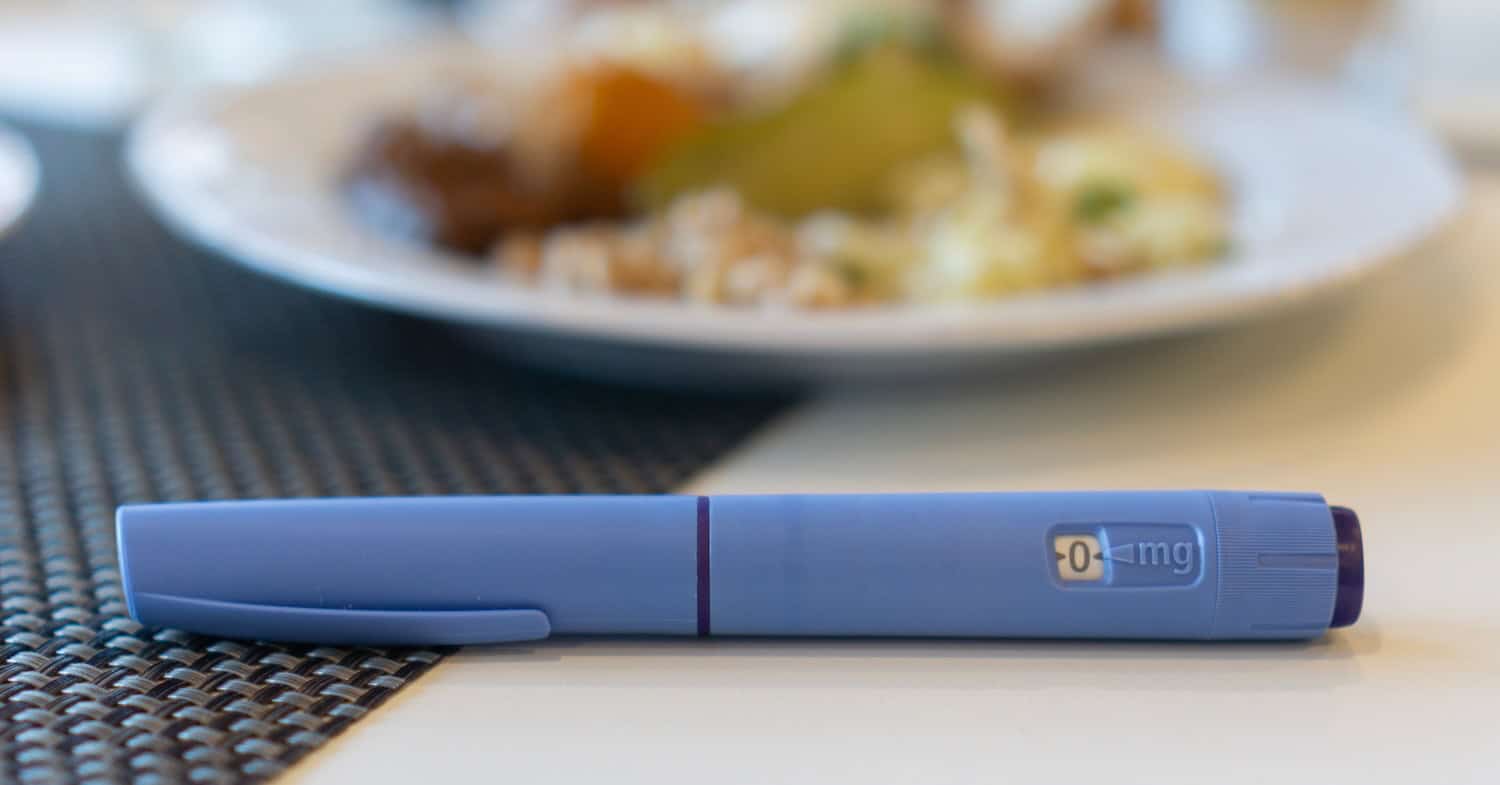
Recently authorized in France, Wegovy, Ozempic and Mounjaro are three incretin-mimetic treatments. That is to say, they mimic digestive hormones in order to increase insulin after meals and reduce blood sugar levels.
They are prescribed for the management of diabetes and obesity.
These three treatments are based on the imitation of an intestinal hormone, called glucagon like peptide one (GLP-1).
There are many similarities between these new medications that promote weight loss, and patients are questioning their effectiveness. Which one should you take and in which case? Here are the available scientific data and my analysis as a dietitian, to help you understand them better.
📚 Read also | Our ranking of the best weight loss programs on the market
Ozempic and Wegovy: a similar molecule
Semaglutide, pioneer of GLP-1
In order, Ozempic was the first to obtain marketing authorization in France (market authorization). Closely followed by Wegovy. They are often confused because of their many similarities.
Wegovy and Ozempic indeed contain the same active molecule: semaglutide.
Both are available as prefilled injectable pens with 4 doses of semaglutide. Their goal is to support and prolong the effects of the intestinal hormone naturally produced by the body, GLP-1.
Semaglutide may help to:
- slow gastric emptying
- improve insulin secretion
- reduce blood sugar
- regulate appetite and increase the feeling of fullness
- reduce cardiovascular risk.
Two distinct medical indications
What sets them apart: Ozempic and Wegovy have different dosages, medical recommendations, and clinical results.
Only Wegovy is indicated for the treatment of obesity or overweight. Its dosage is higher: 2.4 mg per week as a maintenance dose.
Ozempic is specifically recommended for treating type 2 diabetes, although it is often used off-label for weight-loss purposes. Its dosage is lower: 1 mg per week as a maintenance dose.
Yes, it appears that both can lead to weight loss, but this is not the main purpose of Ozempic.
For the drug Wegovy, this clinical study estimates 15% to 17% loss of body weight in a little over 1 year.
Mounjaro, the dual-action anti-obesity treatment
Tirzepatide, second generation of GLP-1
After semaglutide, a new generation of treatments emerged: tirzepatide, marketed under the name Mounjaro.
This one stands out from the other two. Mounjaro is authorized both as a medication for weight loss and as a treatment for type 2 diabetes.
Indeed, its molecule acts on two hormones:
- GLP-1, like Ozempic and Wegovy
- GIP (glucose-dependent insulinotropic polypeptide), another gut hormone (incretin) involved in glucose metabolism, appetite, and energy regulation
This double action offers a synergistic effect. By strengthening both blood sugar regulation and fat storage, the feeling of fullness and the reduction of compulsive eating behaviors.
Its maximum weekly dosage is 15 mg per week.
Better clinical results
Available data show that tirzepatide could allow for even greater weight loss than with semaglutide.
Up to 22.5% body weight loss in 72 weeks, Mounjaro may be the most effective GLP-1 for weight loss.
Another interesting aspect when treating severe obesity with tirzepatide is that an improvement in metabolic markers is also observed: fasting blood sugar, glycated hemoglobin, cholesterol, inflammation.
This treatment can therefore be considered promising for patients, especially for those who have already tried other alternatives without results.
My opinion on Wegovy, Ozempic and Mounjaro for weight loss
In reality, I think that the most effective of the three for losing weight is above all the one that meets the patient’s needs, depending on their physiological condition. And only the doctor can prescribe the best molecule.
And despite their effectiveness, I think it is essential not to ignore their possible side effects and constraints.
Nausea, bloating, reflux, constipation or diarrhea, and other sometimes more serious complications can lead to the premature discontinuation of weekly injections.
More recently, many healthcare professionals report that the weight loss is not always as significant as that obtained in previous clinical studies. Every body is different and cannot react in the same way.
I also warn about the very frequent weight regain after treatment, as with any other slimming solution.
These treatments, given as a second-line option, should therefore be approached with caution. And followed by personalized medical support.
Finally, physical activity and improved eating habits must remain at the heart of any weight loss and type 2 diabetes protocol.
📚 Read also | A natural Ozempic®? 8 alternatives validated by a dietitian
Sources and scientific studies
Wilding J. P. H., Batterham R. L., Calanna S., et al. — Once-Weekly Semaglutide in Adults with Overweight or Obesity (STEP-1), New England Journal of Medicine, 2021
Jastreboff A. M., Birkenfeld A. L., Jimenez-Moreno C., et al. — Tirzepatide Once Weekly for the Treatment of Obesity (SURMOUNT-1), New England Journal of Medicine, 2022
Rodriguez P. J., et al. — Discontinuation and Reinitiation of GLP-1 Receptor Agonists (observational study), JAMA Network Open, 2025
Wilding J. P. H., (extension / post-trial analyses) — Weight regain and cardiometabolic effects after withdrawal of semaglutide, extension analyses reporting weight regain after treatment withdrawal, 2022
