
BENEFITS OF LION’S MANE
✓ Relieves depressive disorders
✓ Improves cognitive functions
✓ Relieves digestive and intestinal disorders
✓ Stimulates the immune system
✓ Potentially anti-cancer
What is the hedgehog mushroom?
The lion’s mane, which belongs to the Hericiaceae family, has many nicknames. It is also called “Lion’s mane” (in English), “satyr’s beard”, “bearded hedgehog”, or “monkey head”. It is also known as “Yamabushitake” in Japan and “Hou Tou Gu” in China. Each of these names refers to the same mushroom: the Hericium erinaceus.
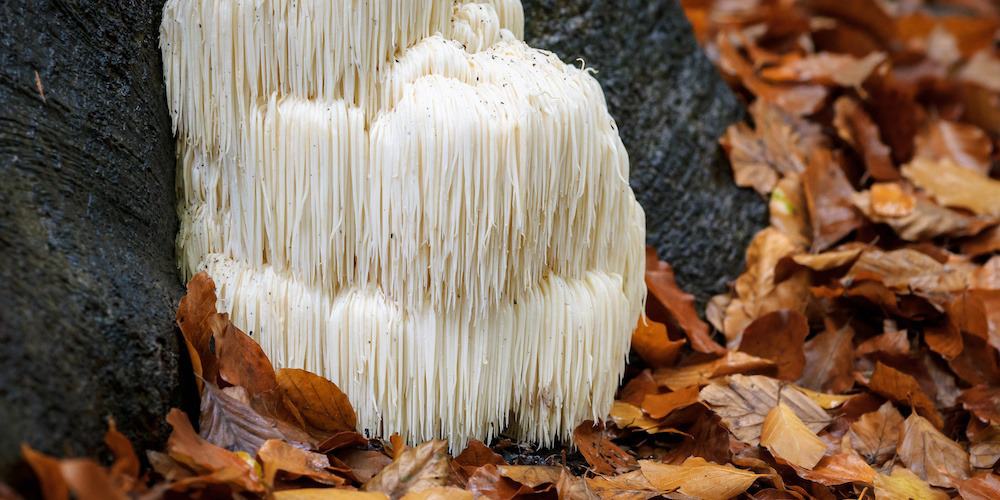
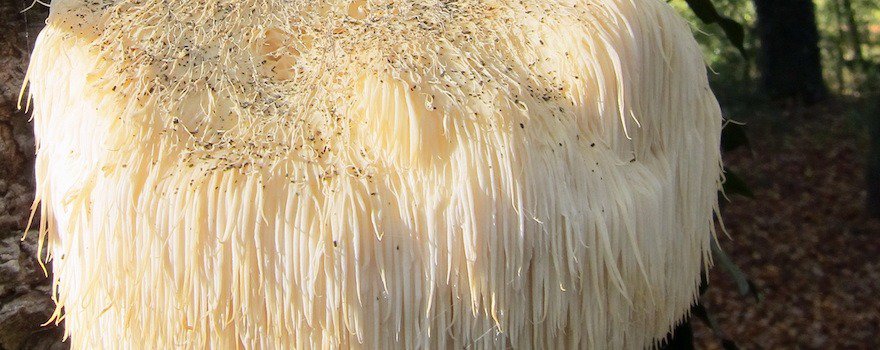
All of these refer to its appearance. Indeed, the lion’s mane has long white/cream spines of 4 to 6 cm that fall in cascades. The whole can measure up to 25 cm across and can easily be mistaken for a lion’s mane. This unique appearance makes it easily recognizable. In the forest, it can also be identified by its strong smell of curdled milk.
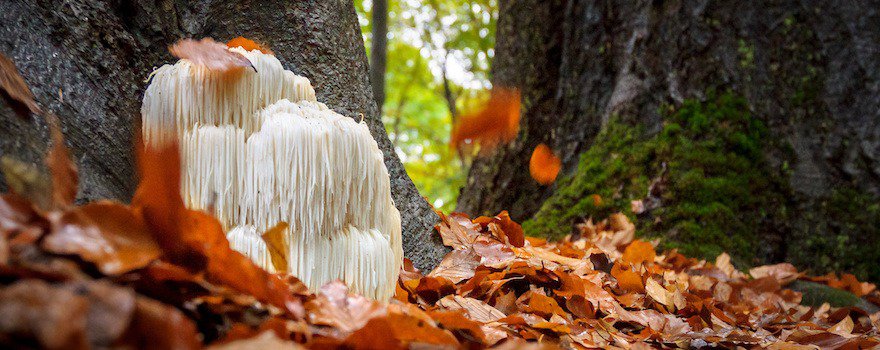
The hedgehog mushroom naturally grows throughout Asia (China, Japan, Korea…) but also in North America (Carolina, California…) and even in Europe (Portugal, France…). It is usually found in deciduous woods and prefers hardwoods: oaks, beeches, maples, walnut trees… In late summer and in the fall, the fungus grows on dead or dying trees, less often on living wood. It then feeds on their nutrients to grow. But in the wild, it remains a relatively rare mushroom.
Although consumption of the hedgehog mushroom is fairly recent in the West, the mushroom has been known in Asia for millennia. Like ginseng and reishi, the hedgehog mushroom is mentioned in very ancient traditional Chinese medicine texts.
It appears notably in the “Shennong bencao jing” (372–288 BC), in which it is indicated to relieve digestive disorders and improve cognitive function.
Scientific research then contributed to the hedgehog mushroom’s popularity around the world. Gradually, people discovered this mushroom’s incredible composition and its beneficial effects on the body. Today, studies are mostly focusing on its antidepressant effects.
Also read: This startup will make you love functional mushrooms
But this mushroom is also interesting for improving cognitive function, relieving digestive and intestinal disorders, and stimulating the immune system. It also shows promising results in the fight against cancer. For this reason, it is considered a functional mushroom, meaning that beyond its nutritional properties it has real effects on the body.
Nutritional composition
- Acides aminés dont les 8 essentiels
- Vitamines : B2
- Minéraux et oligo-éléments : zinc, phosphore, sélénium, fer, potassium, germanium
- Protéines
- Polysaccharides : bêta-glucanes
- Autres actifs : D-arabinitol, D-Thréitol
- Dérivés phénoliques : érinacines, héricénones
- Acides gras : acide palmitique
- Stérols : ergostérol, bêta-sitostérol
- Fibres
- Lectines
Benefits of the hedgehog mushroom
🧘🏻♀️ Relieves depressive symptoms
The lion’s mane mushroom is a valuable ally for the nervous system. It has proven particularly useful for relieving depressive disorders and associated symptoms : loss of interest, difficulty concentrating, fatigue, sleep disturbances, pessimism…
These effects are due to certain compounds found in the lion’s mane, such as erinacines and hericenones. Indeed, these phenolic derivatives can stimulate the synthesis of NGF (Nerve Growth Factor). NGF, responsible for the development of new neurons, is also involved in depression.
Furthermore, these compounds have a beneficial effect on BDNF (Brain-Derived Neurotrophic Factor), low levels of which are associated with depression. Researchers now want to verify whether the erinacines and the hericenones from the mushroom are capable of restoring BDNF levels in people with depression.
This mushroom can also alleviate depression by exerting anti-inflammatory effects. Indeed, depression can be directly associated with inflammation. The inflammatory process disrupts brain function and alters the release of neurotransmitters essential to mood regulation, such as dopamine and serotonin.
Its compounds can also reduce depressive behaviors by promoting neurogenesis, that is the formation of new neurons in the hippocampus. It is known that hippocampal volume loss is greater in cases of depression. By limiting the deficit in neurogenesis, the hedgehog mushroom helps reduce the frequency and severity of depressive episodes.
Finally, the hedgehog mushroom can exert an anxiolytic effect by relieving anxiety and distress.
This study from the University of Hong Kong, conducted on mice, shows the therapeutic potential of the hedgehog mushroom for alleviating depressive disorders.
This other study from the University of Pisa (Italy), conducted on rodents, examined the antidepressant effects of the hedgehog mushroom and rhodiola (Rhodiola rosea).
👩🏻🏫 Improves cognitive function
The hedgehog mushroom is a fungus particularly effective at improving cognitive functions: concentration and memory, attention, learning… Therefore, its consumption could be indicated in the treatment of neurodegenerative diseases such as Alzheimer’s disease.
By stimulating the production of new neurons, hericenones and erinacine contribute to nerve regeneration and limit the progressive loss of neurons. But the polysaccharides present in the mushroom also play an important role in improving cognitive functions.
On the one hand, they reduce the abnormal accumulation of beta-amyloid (Aβ) plaques that occurs in Alzheimer’s disease and that cause cognitive decline. On the other hand, the polysaccharides exert neuroprotective effects against free radicals, which are responsible for neuronal damage.
This study from Jilin University (China), conducted on mice, shows the neuroprotective properties of the lion’s mane mushroom.
This other study from National Yang-Ming University (Taiwan), conducted on mice, shows the potential of the mushroom in the treatment of Alzheimer’s disease.
♻️ Relieves digestive and intestinal issues
The lion’s mane mushroom is not only an ally for the brain: it is also a friend of the stomach and of the intestinal tract.
It is primarily useful for protecting the stomach mucosa against certain bacteria, including Helicobacter pylori, which is responsible for gastritis and ulcers. To eradicate it, the mushroom can rely on its antibacterial activity. This is, moreover, one of its main indications in traditional Chinese medicine. The lion’s mane mushroom significantly inhibits bacterial growth, reduces stomach inflammation, and helps rebuild the gastric mucosa.
Its consumption can also help relieve inflammatory bowel diseases: ulcerative colitis, Crohn’s disease…
This study from the Shanghai Academy of Agricultural Sciences (China), conducted on a human cell line, shows the anti-Helicobacter pylori activity of the lion’s mane mushroom.
This other study from the University of Georgia (United States), conducted on mice, shows how the mushroom inhibited the growth of the bacterium Helicobacter pylori.
🛡Boosts the immune system
The hedgehog mushroom is an excellent immune stimulant. It activates the body’s natural defenses against pathogens and prevents the damage they cause.
The mushroom notably stimulates the activity of T cells and NK cells, the Natural Killer Cells. To do this, it acts directly on the gut microbiota, which plays an essential role in supporting immunity. The polysaccharides and HEP3, one of the hedgehog mushroom’s beta-glucans, are believed to be responsible for this immunostimulatory activity.
In addition, D-threitol, D-arabitol and palmitic acid contained in the mushroom have antioxidant properties.
This study from the Guangdong Institute of Microbiology (China), conducted on mice, shows how the hedgehog mushroom stimulates immunity via the gut microbiota.
This other study from Northeast Normal University in China, conducted on mice, demonstrated the beneficial effects of the mushroom on intestinal mucosal immunity.
🔬 Potentially anti-cancer
Some studies on the hedgehog mushroom have highlighted its anti-cancer potential, notably against liver, colon, stomach and blood cancers.
On the one hand, the mushroom’s beta-glucans directly attack cancer cells and induce apoptosis, that is programmed cell death. On the other hand, they significantly slow their growth and therefore the spread of cancer.
This study from the Changchun University of Chinese Medicine (China), conducted on precancerous cells, shows how lion’s mane induced their apoptosis.
This other study from Shanxi Agricultural University (China), carried out on cells, shows that the mushroom’s polysaccharides inhibit the growth of colon cancer cells.

How to take lion’s mane?
Lion’s mane tablets
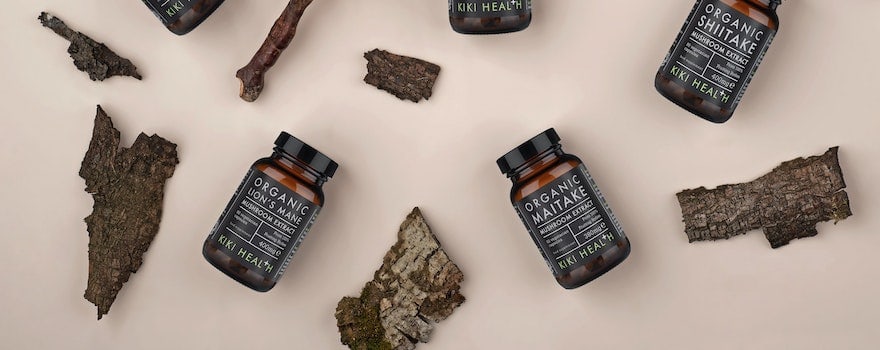
After harvest, lion’s mane is dried and then ground into a powder. The powder is then used to make tablets and capsules, easily found in stores or online. If you are put off by its strong flavor (somewhere between lobster and eggplant), choose this form, which is tasteless.
To maximize the mushroom’s benefits, choose tablets and capsules that are sufficiently standardized for polysaccharides (minimum 30 %).
Lion’s mane powder
It is also possible to find lion’s mane in powder form. The mushroom is then simply dried, ground and marketed. If its taste doesn’t put you off, it’s an interesting form because it’s convenient to consume.
Lion’s mane powder mixes easily into hot water, milk, fruit juice, soups, and broths.
Lion’s mane tincture
The mother tincture of lion’s mane is obtained by double extraction. It mixes easily into water or any other beverage.
But it’s a format that’s harder to find and has the drawback of containing a lot of alcohol. It is therefore not recommended for pregnant women, children, or people suffering from certain medical conditions.
Dried lion’s mane
Some online shops offer dried hedgehog mushroom cut into slices. It’s a very good edible mushroom that can be added to broths or soups. It is also a common ingredient in Chinese and Japanese cuisine.
Lion’s mane and medicinal plants
The hedgehog mushroom pairs very well with medicinal plants that are good for the brain. Among them are ginkgo biloba, rhodiola and bacopa (Bacopa monnieri).
It can also be consumed in combination with cordyceps (Ophiocordyceps sinensis), another mushroom that helps support nervous system balance.
Also complement your intake of Lion’s mane with B vitamins (B1, B2, B3, B5, B6 and B9) that support the proper functioning of the nervous system.
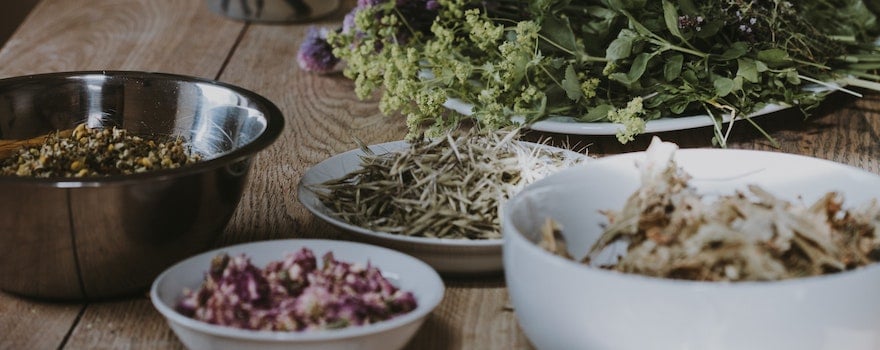
Sustainable consumption: favor organic, fair-trade, and local lion’s mane
✓ Like all mushrooms, the hedgehog mushroom tends to absorb pollutants present in the air and soil. That’s why we recommend choosing a certified organic mushroom, grown without chemicals and far from sources of pollution. It should also be guaranteed GMO-free and non-irradiated.
✓ Today, the majority of production comes from Asia. But France also has a few mushroom farms that have started cultivating the hedgehog mushroom. It is then grown on sorghum, rye, or wheat substrates. If possible, choose a mushroom of French origin.
✓ Finally, to avoid encouraging intensive wild harvesting, favor fair-trade supply chains or small businesses.
Dosage
⚖️The recommended dosage ranges between 500 mg and 1.5 g of hedgehog mushroom per day. Because it is a powerful mushroom, we recommend starting with small doses. Then gradually increase your intake depending on the effects experienced.
⏳Ideally, take it as a 1- to 4-month course. The first results appear after a few weeks.
Take the mushroom before or after meals.
💊In tablet form: up to 3 per day for 250 mg capsules.
🥄Powder: 1 to 2 teaspoons per day.
🧪Mother tincture: 1 teaspoon, twice a day.
Contraindications and side effects
Consumption of the hedgehog mushroom has certain contraindications:
- Par mesure de précaution, les jeunes enfants, les femmes enceintes ou allaitantes doivent éviter d’en prendre.
- Les personnes souffrant de fibromyalgie, de cystites interstitielles, d’ovaires polykystiques ou ayant un taux NGF élevé doivent également éviter d’en consommer.
- Parce qu’il peut agir sur la coagulation sanguine, on le déconseille aux personnes devant subir une intervention chirurgicale.
- On déconseille sa consommation chez les personnes allergiques ou sensibles aux champignons.
Excessive consumption of hedgehog mushroom can cause the following side effects:
- Démangeaisons
- Allergies (difficultés respiratoires, éruptions cutanées)
If you experience side effects, stop taking it and consult a doctor.
History, cultivation, and market of lion’s mane
According to the IUCN Red List (International Union for Conservation of Nature), the global population of the hedgehog mushroom is declining sharply. The species is even protected in some countries and is subject to conservation measures.
Several threats weigh on this mushroom today. Among them : the destruction of its natural habitat through the felling of old oaks and beeches, the removal of dead wood, logging, the expansion of agriculture and intensive harvesting. It is therefore more than ever a rare mushroom to protect. One solution to consume it sustainably is to obtain extracts from mushroom farms.
Report produced by Julia Perez and Charlotte Jean
Sources and scientific studies
Pit Shan Chong, Man-Lung Fung, Kah Hui Wong, and Lee Wei Lim, 2019. Therapeutic Potential of Hericium erinaceus for Depressive Disorder.
Fiona Limanaqi, Francesca Biagioni, Carla Letizia Busceti, Maico Polzella, Cinzia Fabrizi, Francesco Fornai, 2020. Potential Antidepressant Effects of Scutellaria baicalensis, Hericium erinaceus and Rhodiola rosea.
Junrong Zhang, Shengshu An, Wenji Hu, Meiyu Teng, Xue Wang, Yidi Qu, Yang Liu, Ye Yuan, Di Wang, 2016. The Neuroprotective Properties of Hericium Erinaceus in Glutamate-Damaged Differentiated PC12 Cells and an Alzheimer’s Disease Mouse Model.
Tzeng Tsai-Teng, Chen Chin-Chu, Lee Li-Ya, Chen Wan-Ping, Lu Chung-Kuang, Shen Chien-Chang, Huang F Chi-Ying, Chen Chien-Chih, Young-Ji Shiao, 2016. Erinacine A-enriched Hericium Erinaceus Mycelium Ameliorates Alzheimer’s Disease-Related Pathologies in APPswe/PS1dE9 Transgenic Mice.
Jian-Hui Liu, Liang Li, Xiao-Dong Shang, Jun-Ling Zhang, Qi Tan, 2016. Anti-Helicobacter Pylori Activity of Bioactive Components Isolated From Hericium Erinaceus.
Ge Wang, Xiumin Zhang, Susan E Maier, Liping Zhang, Robert J Maier, 2019. In Vitro and In Vivo Inhibition of Helicobacter Pylori by Ethanolic Extracts of Lion’s Mane Medicinal Mushroom, Hericium Erinaceus (Agaricomycetes).
Chen Diling, Zheng Chaoqun, Yang Jian, Li Jian, Su Jiyan, Xie Yizhen, Lai Guoxiao, 2017. Immunomodulatory Activities of a Fungal Protein Extracted From Hericium erinaceus Through Regulating the Gut Microbiota.
Xiaotong Sheng, Jingmin Yan, Yue Meng, Yuying Kang, Zhen Han, Guihua Tai, Yifa Zhou, Hairong Cheng, 2017. Immunomodulatory Effects of Hericium Erinaceus Derived Polysaccharides Are Mediated by Intestinal Immunology.
Mingxing Wang, Yanqiu Zhang, Xulang Xiao, Duoduo Xu, Yang Gao, Qipin Gao, 2017. A Polysaccharide Isolated From Mycelia of the Lion’s Mane Medicinal Mushroom Hericium Erinaceus (Agaricomycetes) Induced Apoptosis in Precancerous Human Gastric Cells.
Jing-Yu Liu, Xiao-Xiao Hou, Zhuo-Yu Li, Shu-Hua Shan, Ming-Chang Chang, Cui-Ping Feng, Yin Wei, 2020. Isolation and Structural Characterization of a Novel Polysaccharide From Hericium Erinaceus Fruiting Bodies and Its Arrest of Cell Cycle at S-phage in Colon Cancer Cells.
Kałucka, I.L. & Olariaga Ibarguren, I. 2019. Hericium erinaceus. The IUCN Red List of Threatened Species 2019.