

Our selection
# Best vegan protein with vitamin B12
> Vegetal and organic whey – Nutri&Co
# Best value for money
> Vegan 3K protein – Nutri+
Plant-based protein sources are often less concentrated and of lower quality than animal-based proteins. Indeed, some essential amino acids are not present in sufficient quantities in plant proteins to meet all human needs. They are said to be “limiting.”
Fortunately, the limiting amino acids are not the same for all foods. That is why combining different types of plant proteins makes it possible to obtain a high-quality protein.
When you want to reduce or eliminate your consumption of animal products, turning to vegan protein substitutes is a simple, quick, and practical option to meet your daily protein needs.
You still need to choose carefully from the many options on the market.
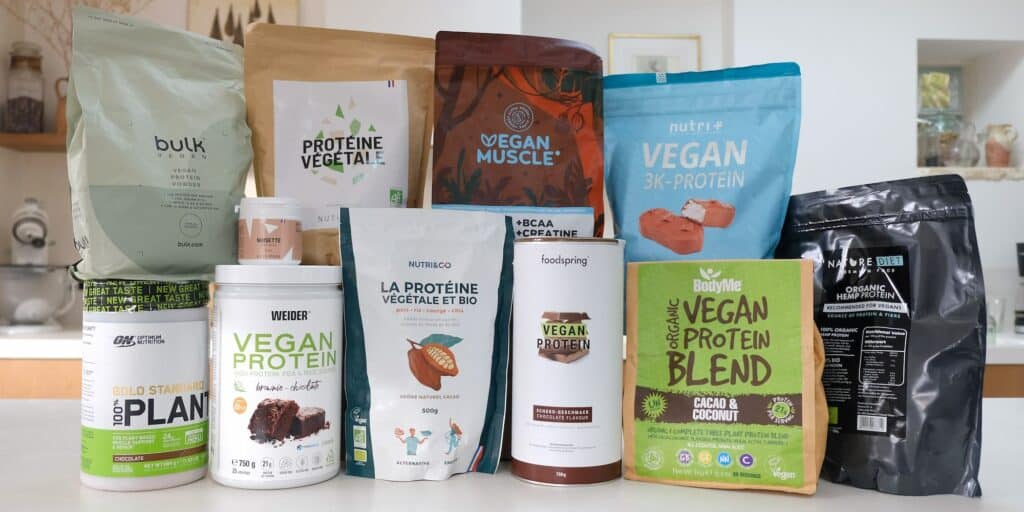
In this comparison, we tested and analyzed 10 plant protein brands among the best-selling online; we evaluated them according to 5 criteria and then selected 4.
Brands tested: Alpha Foods, Body Me, Bulk, Foodspring, Nature Diet, Nutri+, Nutri&Co, Optimum Nutrition, Weider.
📚 Read also | Our comparison of the best whey proteins
Best vegan protein powders: our opinion
# Best vegan protein powder
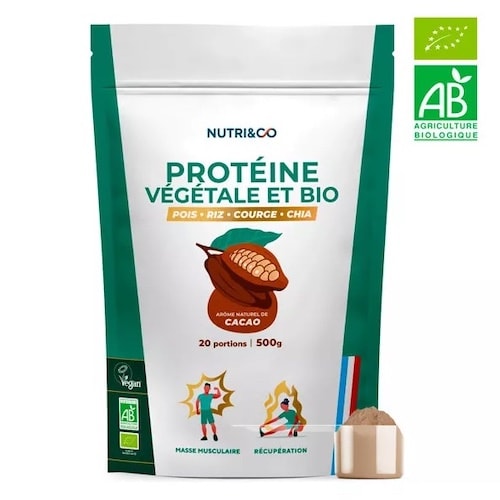
Nutri&Co: 4.4/5
Nutrition: ★★★★☆
Safety: ★★★★★
Brand: ★★★★★
Enjoyment: ★★★★☆
Pack: ★★★★☆
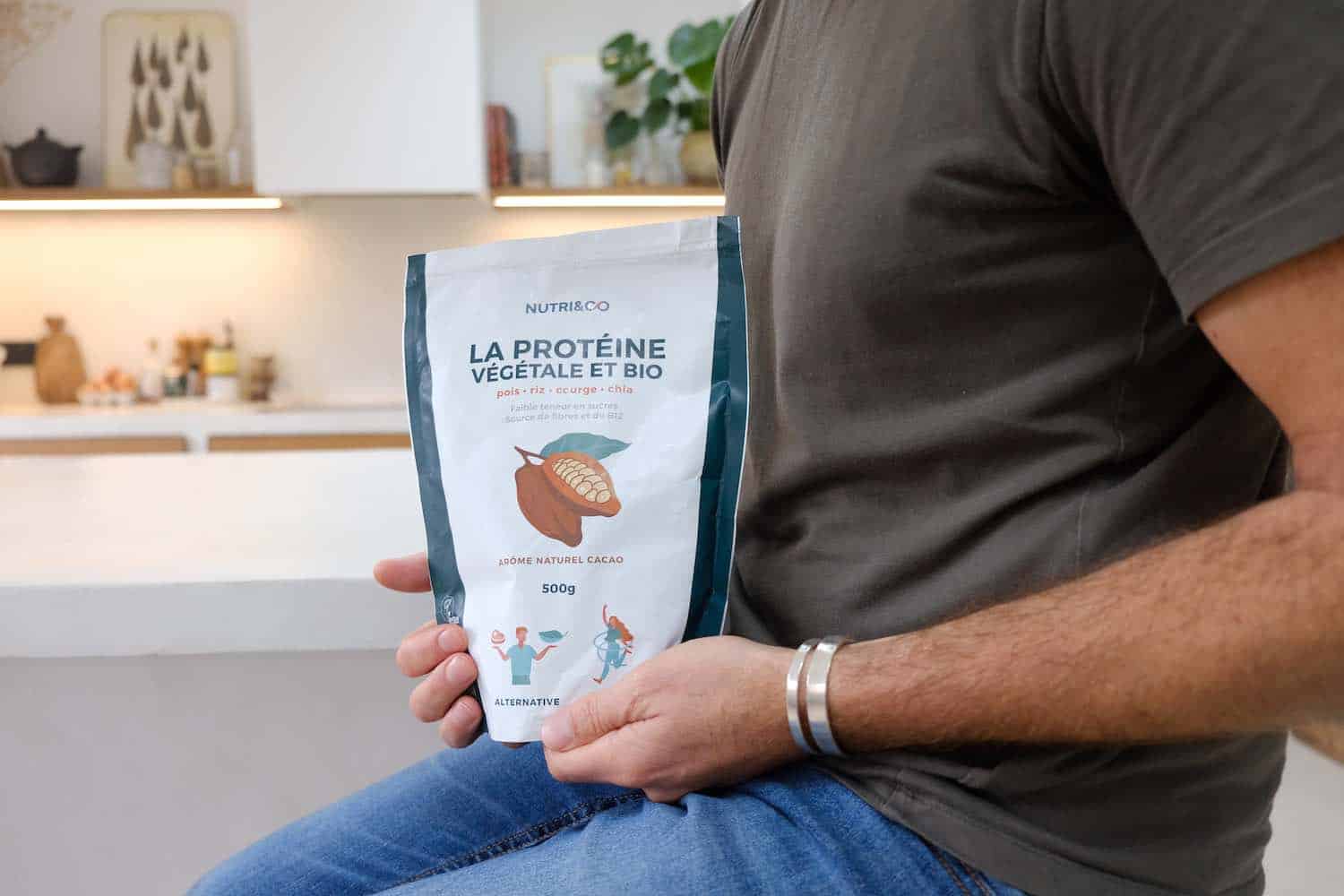
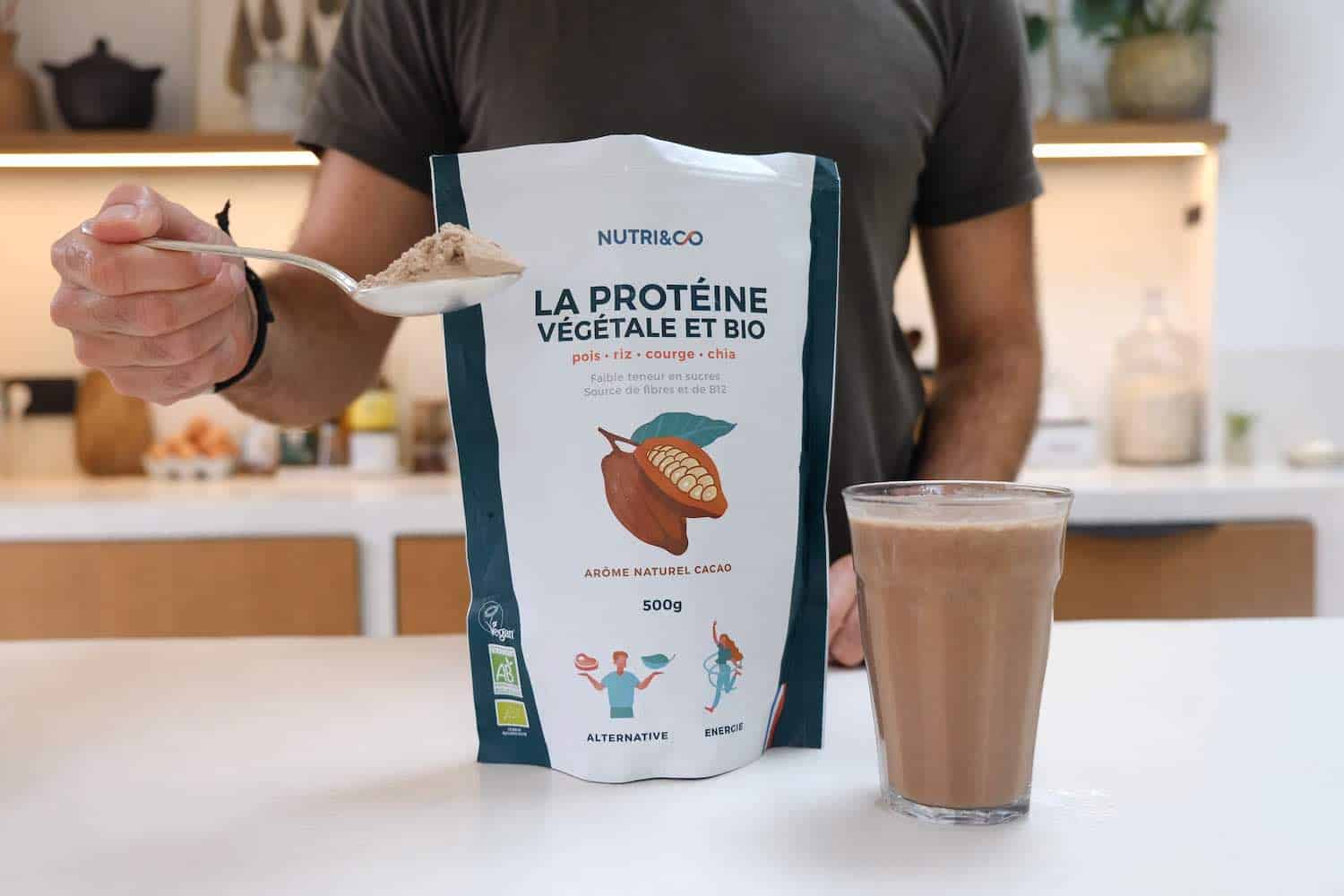
Nutri&Co is a French brand created in 2017. It specializes in the sale of dietary supplements intended to improve health, beauty, and sports performance.
Nutri&Co plant protein contains 60 g of protein per 100 g with 10.2 g of BCAAs. It also contains 25 g of carbohydrates, including 12 g of sugar and 8.2 g of fat.
The amount of protein is not very high compared with other brands, but the amount of BCAAs is good.
Nutri&Co plant protein is organic and made from a blend of 4 proteins : pea, rice, pumpkin seeds, and chia seeds. This blend makes it possible to obtain good-quality protein.
Nutri&Co protein has the particularity of being enriched with vitamin B12 from Shiitake extract. This mushroom is one of the few plant foods that contains this vitamin.
The amount is interesting because one 25 g serving of plant protein covers the daily need for vitamin B12, that is 2.5 µg.
The origin of the raw materials is diverse but very clear: all the information is presented via a QR code to scan. We greatly appreciate Nutri&Co’s transparency, everything is very clear. The origin of each ingredient is well detailed.
Nutri&Co whey contains only one non-controversial additive: guar gum fibers. Its cocoa flavor comes from cocoa powder and a natural flavor.
There is also a little organic cane sugar (about 10 g/100 g). This amount of sugar is negligible, it represents only 2.5 g per serving and makes it possible to avoid using sweeteners that are often controversial.
For taste and enjoyment, we liked the intense cocoa flavor but regretted that the sweet flavor was so faint. We did not notice any bitter aftertaste and we liked the creamy texture. Too bad there is only one flavor.
To limit plastic waste, we would have preferred a cardboard pouch or a compostable material.
This plant-based protein is the most expensive in our comparison, at a price of 55.80 euros per kg. In our view, this price is perfectly justified by the organic quality of the raw materials and the presence of naturally sourced vitamin B12.
Advantages
- Rich in protein and BCAAs
- Good cocoa flavor
- No controversial additives
- Vitamin B12
- Transparency
Disadvantages
- Plastic pouch
- Flavor not sweet enough
- High price
# Best value for money
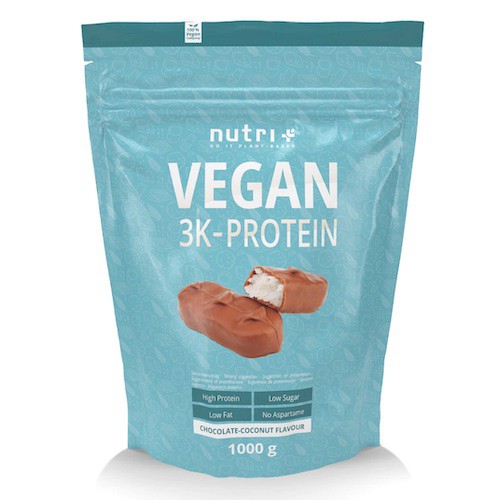
Nutri+ : 4.4/5
Nutrition: ★★★★★
Safety: ★★★★☆
Brand: ★★★★☆
Pleasure: ★★★★★
Pack: ★★★★☆
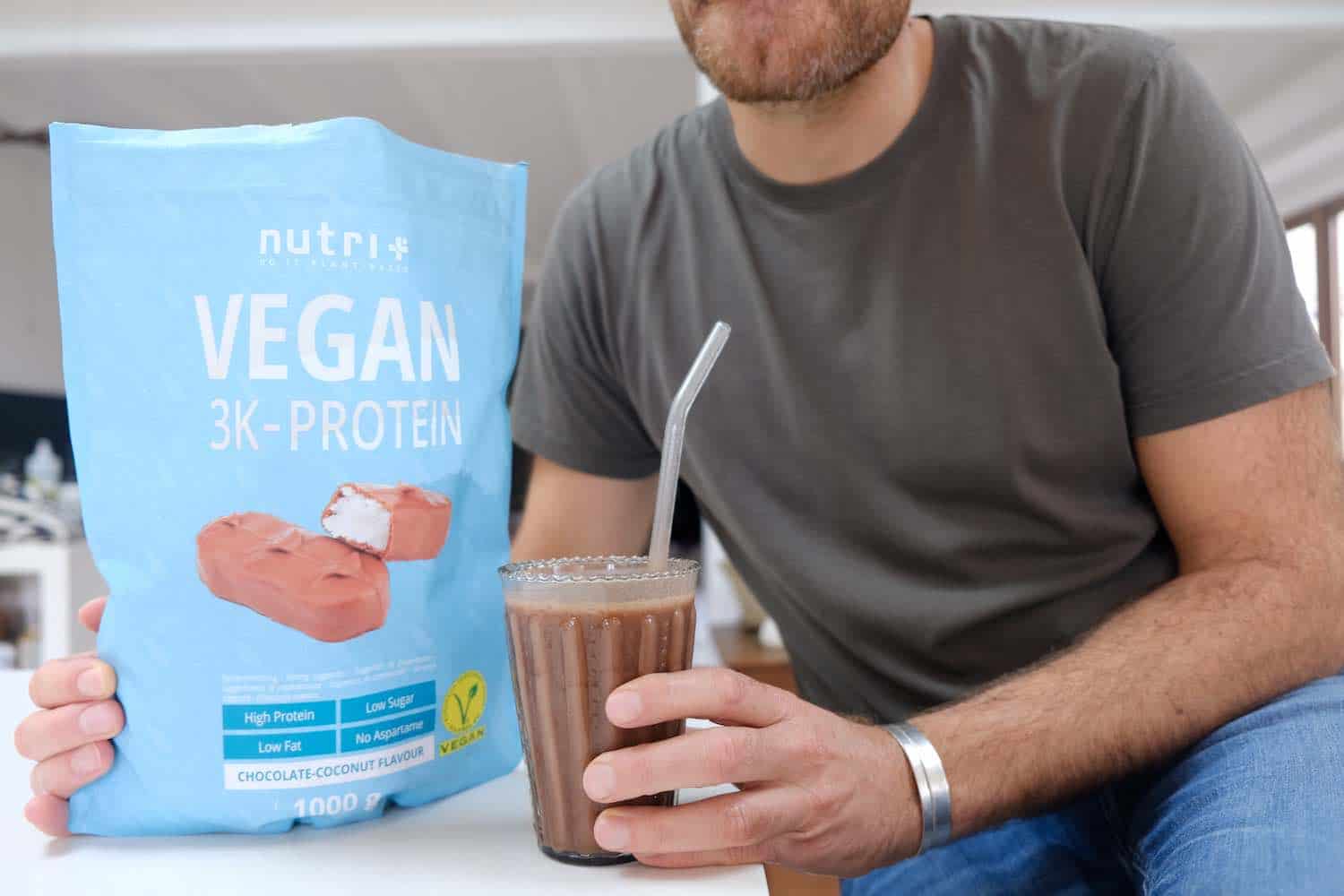
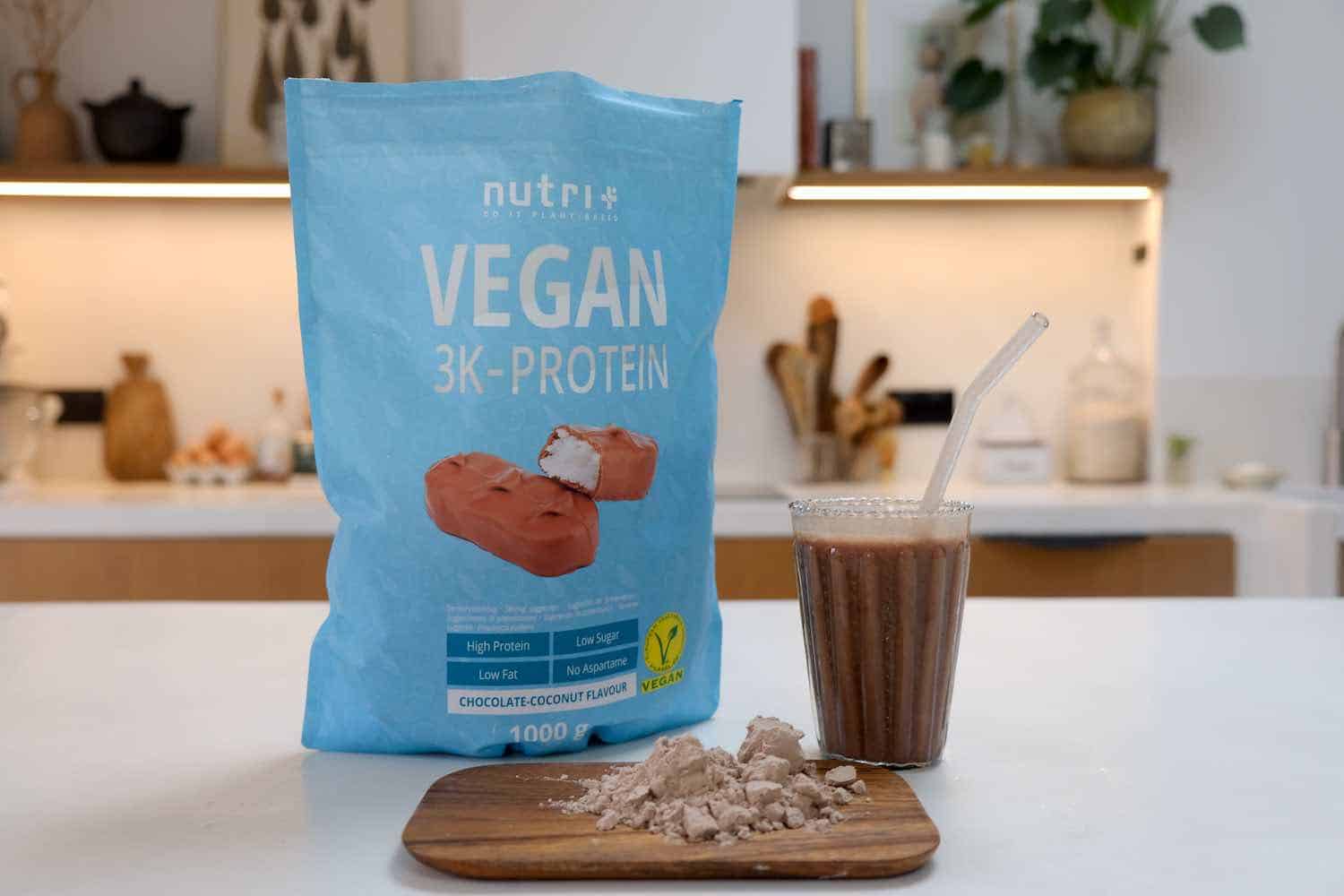
Nutri+ is a German brand created in 2013. It specializes in the sale of foods and dietary supplements for athletes and vegan people.
Nutri+ Vegan 3K protein contains 76 g of protein per 100 g with 13.8 g of BCAAs: it is one of the most protein-dense plant proteins in our comparison. It also contains 3.2 g of fat and 3.9 g of carbohydrates, including only 1 g of sugar.
We note that the amount of salt is 2.7 g per 100 g. That is a little high for a protein substitute.
Nutri+ protein comes from 3 different plant sources: soy, pea, and sunflower seeds.
This blend makes it possible to optimize the quality of the proteins and obtain good biological value.
Unfortunately, we do not know much about the origin of the raw materials.
Vegan 3K protein contains no additives other than a synthetic sweetener for a sweet flavor, sucralose. Unfortunately, this sweetener is ranked as not very advisable in the food additive ranking 2023 by the magazine “Que Choisir”.
For taste and enjoyment, we really liked the chocolate / coconut flavor. The flavor is well balanced, indulgent, and not too sweet. To vary tastes and pleasures, the brand offers 16 different flavors. It is rare to find such diversity in vegan protein.
The texture is creamy and very pleasant.
Too bad the packaging is in a plastic pouch even though it is resealable and very convenient. However, it seems that the brand intends to change its packaging sometime in 2024.
Nutri+ vegan protein is very competitively priced. In fact, it costs only 28.90 euros / kg.
It is among the least expensive in our comparison. It is without hesitation the plant-based protein with the best value for money.
Advantages
- Rich in protein and BCAAs
- Good taste
- Attractive price
- Many different flavors
Disadvantages
- Plastic pouch
- Sucralose
- Lack of transparency
Full comparison
| Note globale | Nutrition | Sécurité | Marque | Plaisir | Packaging | |
|---|---|---|---|---|---|---|
| Nutri&Co | 4,4 | 4 | 5 | 5 | 4 | 4 |
| NUTRI + | 4,4 | 5 | 4 | 4 | 5 | 4 |
| Foodspring | 4,2 | 4 | 3 | 4 | 5 | 5 |
| Bulk | 4,0 | 3 | 4 | 5 | 3 | 5 |
| Weider | 3,8 | 4 | 5 | 4 | 3 | 3 |
| Optimum Nutrition | 3,8 | 4 | 4 | 4 | 4 | 3 |
| Body Me | 3,8 | 3 | 5 | 3 | 3 | 5 |
| Alpha foods | 3,6 | 4 | 4 | 4 | 2 | 4 |
| Nature Diet | 3,2 | 2 | 5 | 2 | 3 | 4 |
→ Access our full comparison table here (Google Sheet)
Plant-based protein powder: our selection criteria
The product ranking is established by our editorial team, based on objective criteria (nutritional value, safety, and brand) and subjective criteria (taste and packaging). The methodology and the FAQ were carried out by Maxime Mességué, dietitian-nutritionist, who acts as a scientific expert. Product data was collected in January 2024 on the brands’ websites. Prices and features may change.
To carry out this comparison, I defined 5 qualitative criteria based on the characteristics of each of the 10 vegan proteins.
Each criterion is scored out of 5, and the average of the 5 criteria determined the final selection.
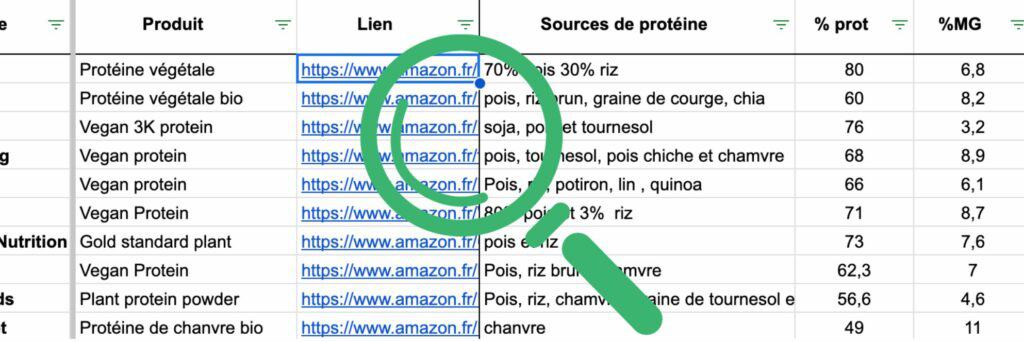
→ Access our full comparison table here (Google Sheet)
1. Nutritional value
By nature, plant proteins are generally incomplete in essential amino acids. That is why a good vegan protein is made from a blend of several plant proteins.
For a plant protein to be worthwhile, its BCAA content (branched-chain amino acids essential for muscle building) must be substantial, ideally above 10%.
A protein with a high amount of BCAAs indicates better quality raw materials used.
To assess the quality of plant proteins, I therefore suggest basing it on the amount of protein but also on the amount of BCAAs.
Plant-based diets are widely deficient in vitamin B12. It is therefore also necessary to pay attention to the presence or absence of vitamin B12.
2. Safety
- Source of the raw materials
It is not always known. I therefore suggest favoring brands whose origin is specified.
- Organic certification or not
When products are organic, we have the assurance of having few pesticide residues compared with a non-organic protein.
- The sweeteners used
I recommend favoring plant proteins that contain no chemical sweeteners such as sucralose. Indeed, this sweetener is controversial, given the consequences it could have on the microbiota. Steviol glycoside from stevia is not currently controversial.
- Other additives and texturizing agents
I recommended prioritizing products with the fewest texturizing agents, even if the ones used do not pose any particular problem. Simplicity in product formulation is a plus.
3. Brand reputation
To assess a brand’s reputation, we can rely on several criteria:
- The brand’s founding date, on the principle that a company that stands the test of time is often a sign of quality.
- The number of followers on Instagram
- Reviews on review sites like Trustpilot, as well as Amazon reviews
- We also prioritize French companies.
4. Taste pleasure and texture
When consuming a product daily, pleasure is paramount. I therefore recommend evaluating the product’s texture and taste .
I think we should favor creamy textures and the absence of aftertaste such as bitterness. I also recommend favoring a sweet taste that is present but balanced.
5. Packaging durability
To reduce waste, we favor products containing less plastic and using recyclable or sustainable materials.
The packaging’s aesthetics and practicality must also be taken into account.
Frequently asked questions
What do vegan protein powders contain?
Plant-based proteins often have insufficient biological value. The biological value of protein refers to their ability to provide the essential amino acids needed by the human body. These amino acids are considered essential because our body is not capable of producing them. It is therefore essential to obtain them through food. Plant-based proteins containing all essential amino acids are rare, except for soy, hemp, and quinoa proteins. That is why most vegan proteins are made from several plant proteins in order to optimize their nutritional quality. The most commonly used proteins are pea, rice, pumpkin seed, sunflower, soy, and hemp proteins. Thanks to blends, vegan proteins come closer to animal-based proteins such as whey, which is among the proteins with the highest biological value. Manufacturers of plant-based protein powders can sometimes enrich their products by adding vitamins, minerals, or even certain amino acids to improve their nutritional value.
What are the benefits of vegan protein powders?
Plant-based proteins have the advantage of having a better environmental impact than animal-based proteins. Indeed, their production requires less water and generates less CO2 than the production of animal proteins, as shown in this well-documented Science and Avenir article. Moreover, consuming plant-based proteins means not consuming proteins from intensive animal farming, which can raise questions of ethics and animal welfare. In addition, vegan proteins do not contain lactose, which can cause digestive issues, and contain few saturated fatty acids, which are implicated in cardiovascular health.
What is the difference between whey and vegan protein powder?
Plant proteins and whey are two types of protein commonly consumed to increase protein intake and help maintain and build muscle mass. Plant proteins are extracted from plant sources such as pea, rice, hemp, soy, wheat, etc. Whey, on the other hand, is a protein derived from milk, more specifically from the whey obtained by filtering and dehydrating it. Plant proteins are often incomplete; they may lack certain essential amino acids. Combining different plant proteins, such as a mix of rice and peas, helps provide a more complete amino acid profile. Whey contains all the essential amino acids the human body needs, making it a complete and highly valuable protein source. Plant proteins can sometimes be less digestible for some people because of the fiber and anti-nutrients naturally present in plants. They can cause digestive discomfort and limit how well they are absorbed. Whey is generally well digested and well absorbed, except in people who are lactose intolerant (when lactose is present) or allergic to cow’s milk proteins. In addition to protein, plant proteins may contain other beneficial nutrients such as fiber, antioxidants, and healthy fats. Whey is a protein concentrate; it contains little fat and no micronutrients.
What are the best natural sources of plant-based protein?
There are several natural sources of plant-based proteins, and here are some of the best: soy and all soy-based products such as tofu, tempeh, etc.: 15 to 20 g per 100 g; grains (rice, wheat, corn, buckwheat, quinoa, etc.): 5 to 15 g per 100 g; legumes (peas, beans, lentils, etc.): between 20 and 25 g per 100 g; seeds (sunflower, pumpkin, chia, hemp, etc.): 20 to 30 g per 100 g; nuts and oilseeds (almonds, walnuts, hazelnuts, peanuts, etc.): 20 to 30 g per 100 g. Soy is one of the best plant-based sources because it contains all essential amino acids, and its protein content is very high (36 g / 100 g). Hemp and quinoa proteins also contain all essential amino acids. However, their concentration is much lower. Spirulina is not a food as such, but this cyanobacterium contains 60 to 70% protein. It can be interesting to consume it as a supplement to your diet to increase your protein intake.
Sources and scientific studies
Food additive assessment, “Que choisir”, 2023 – https://www.quechoisir.org/comparatif-additifs-alimentaires-n56877/
Vegetarian, vegan: why would plant-based eating be less polluting?, “Science et avenir”, 2022 – https://www.sciencesetavenir.fr/nutrition/aliments/vegetarien-vegan-pourquoi-l-alimentation-vegetale-serait-elle-moins-polluante_161353
The anabolic properties of plant protein sources compared with animal sources in maintaining muscle mass. August 2019 – https://www.ncbi.nlm.nih.gov/pmc/articles/PMC6723444/?_ga=2.34122852.415060896.1700580742-995063299.1700580742
The synthetic muscle protein response to the ingestion of a plant-based protein blend does not differ from an equivalent amount of milk protein in healthy young men. January 2023 – https://pubmed.ncbi.nlm.nih.gov/36170964/
