

Located below the bladder, the prostate is part of the male urogenital system. Its role is essential since it stores seminal fluid.
After age 50, three prostate-related issues commonly occur: benign prostatic hyperplasia, inflammation, and prostate cancer.
This study highlighted the importance of a healthy diet for preventing complications of prostate aging.
Various foods are recommended for their protective effects, composition, and antioxidants. Tomato, nuts, carrot, turmeric, green tea, for example.
Conversely, you can also protect your prostate from inflammation by limiting certain foods. This can better prevent its aging and potential urogenital complications.
1. Refined cereals and ready-to-eat processed foods

The Western diet and its processed foods are often contraindicated for prostate health.
According to this meta-analysis conducted in Italy, refined foods may accelerate prostate aging. They would notably increase cancer risk by an average of 64%.
What is suspected to be responsible for these detrimental effects on prostate health: a high glycemic index, causing insulin spikes and an inflammatory state.
To take care of the prostate, it is preferable to prioritize a diet rich in fiber. I recommend whole or semi-whole grains, legumes, vegetables, and fruits.
2. Milk and dairy products
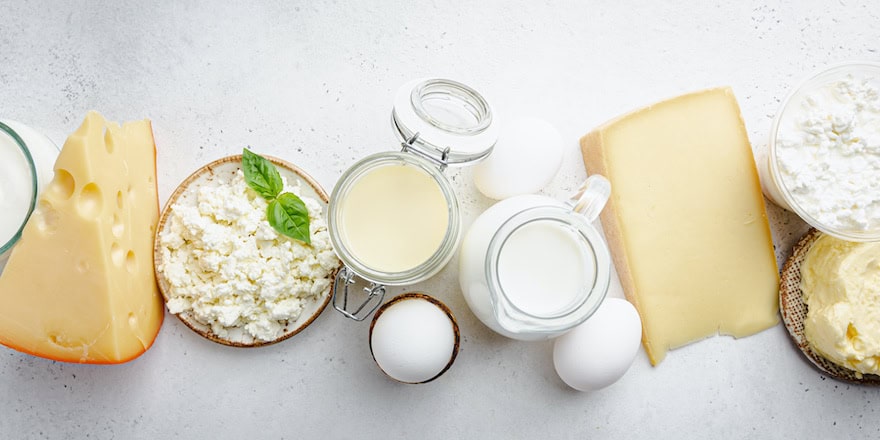
In recent years, several studies have established a link between milk consumption and increased risks of prostate cancer.
The main reasons cited and supposed are: the high calcium consumption, the presence of hormones in milk such as estrogens… as well as the growth factor known as IGF, similar to insulin.
Indeed, calcium seems to promote cancer cells and their growth by inhibiting the anti-proliferative effect of vitamin D.
As for the hormones and growth factor in milk, they are thought to be involved in many cancers. The consequences for the prostate of dairy consumption remain variable and still merit further investigation to better understand these mechanisms.
To avoid prostate dysfunction, prefer to consume dairy in moderation. I recommend milk, yogurt, and cheese no more than 1 to 2 times per day, even for boys.
3. Meats and processed/cured meats
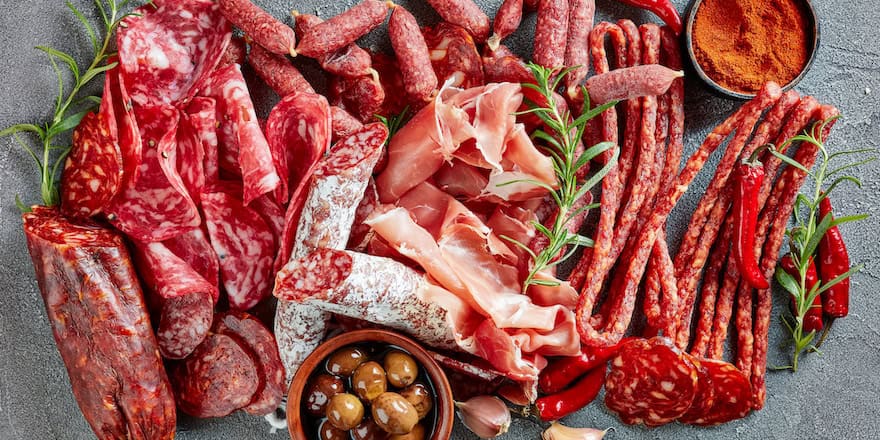
The World Health Organization (WHO) has classified processed meats such as ham, sausages, and deli meats as Group 1 carcinogens since 2015.
As with milk, the growth factor (IGF-1) would be present in meats more generally (chicken, red meat, and others).
A meta-analysis of 172 countries observed and warned of a possible link between total meat consumption and prostate disorders.
As a precaution, limit processed meat products. Choose lean, organic, or certified meats without additives, limiting consumption to 3 to 4 times per week.
To help maintain the healthy function of your prostate, you can vary your meals by replacing meat with plant-based proteins.
📚 Further reading | What are the best plant-based protein powders?
4. Grilled, fried, and smoked foods

Cooking methods affect cellular aging and can accelerate certain physiological manifestations. For the prostate and your health, gentle cooking methods are much better.
During high-temperature cooking such as barbecuing, frying, or smoking foods, potentially harmful substances are formed. PAHs (polycyclic aromatic hydrocarbons) such as benzo[a]pyrene, AGEs (advanced glycation end-products) and HAAs (heterocyclic aromatic amines).
If consumed in large amounts and regularly, they prove carcinogenic, increasing inflammation and oxidative stress.
For example, this American study demonstrated an increased risk of advanced-stage prostate cancer, by an average of 60%, for heavy consumers of grilled or well-done meats.
5. Sugar and sugary products

Sodas, cakes, pastries, viennoiseries, added sugars and excess candy are responsible for various chronic diseases. These include overweight, diabetes, and inflammation.
However, obesity and hyperinsulinemia could promote benign prostatic hyperplasia (BPH), according to the French Urology Congress.
For a healthy weight and balanced blood sugar that reduce the risk of diabetes, the quantity and quality of sugary products consumed daily play a crucial role.
A low-carb diet, low in carbohydrates and high in protein, would even cut prostate cancer risk in half.
Keep the occasional sweet treats by choosing fresh fruit and homemade recipes. If needed, you can work with a dietitian-nutritionist to balance your diet.
6. Alcoholic beverages

Both sweet and containing ethanol, alcohol should be consumed in moderation for a healthy prostate.
Researchers compared data from more than 10,000 men participating in the prostate cancer prevention study. Those who consumed large quantities of alcoholic beverages were twice as likely to be affected by the disease.
According to the recommendations of the PNNS, two drinks per day, and not every day, is a benchmark to assess your habits. More than 20 alcoholic drinks per week is considered risky.
My tips for a healthy prostate
All of these discoveries about the prostate are very encouraging for better guiding dietary habits and overall lifestyle.
Limiting sedentary behavior and reducing stress is just as important as avoiding the foods mentioned.
Finally, consult your doctor at the first signs of urinary problems, infections, or if in doubt.
Sources and scientific studies
Karine Trudeau, Marie-Claude Rousseau, Christine Barul, Ilona Csizmadi, Marie-Élise Parent – Dietary Patterns Are Associated with Risk of Prostate Cancer in a Population-Based Case-Control Study in Montreal, Canada, 2020
Roberto Fabiani, Liliana Minelli, Gaia Bertarelli and Silvia Bacci – A Western Dietary Pattern Increases Prostate Cancer Risk: A Systematic Review and Meta-Analysis, 2016
Halcyon G. Skinner, Gary G. Schwartz – A Prospective Study of Total and Ionized Serum Calcium and Fatal Prostate Cancer, 2009
Esther M. John, Mariana C. Stern, Rashmi Sinha and Jocelyn Koo – Meat consumption, Cooking Practices, Meat Mutagens and Risk of Prostate Cancer, 2012
Wenpeng You, Maciej Henneberg – Prostate Cancer Incidence is Correlated to Total Meat Intake– a Cross-National Ecologic Analysis of 172 Countries, 2013
Erika Ax, Hans Garmo, Birgitta Grundmark, Anna Bill-Axelson, Lars Holmberg, Wulf Becker, Björn Zethelius, Tommy Cederholm, Per Sjögren – Dietary patterns and prostate cancer risk: report from the population based ULSAM cohort study of Swedish men, 2014
Zhihong Gong, Dr. Alan R. Kristal, Jeannette M. Schenk, Dr. Catherine M. Tangen, Phyllis J. Goodman and Ian M. Thompson – Alcohol Consumption, Finasteride and Prostate Cancer Risk: Results from the Prostate Cancer Prevention Trial, 2009