


Why does whey promote mass gain ?
Muscles are made up of proteins
Proteins are the main component of muscle tissue. If your goal is to gain muscle mass, you must ensure a substantial and regular protein intake to reach your goal.
Numerous scientific studies prove the benefits of whey for increasing muscle mass.
This 2019 meta-analysis shows the effects of whey consumption on increasing muscle mass and strength. It shows its effects on body composition.
The athletes I coach consume between 1.4 g of protein per kg per day for endurance athletes and 1.8 g of protein per kg per day for athletes doing weight training, CrossFit®, or powerlifting.
Why is using whey beneficial ?
For an 80 kg man, protein intake can therefore reach 144 g/day. It is necessarily difficult to reach these protein intakes using a regular diet alone.
To reach the proper daily amount, whey is a valuable ally. This is where protein powders – of which whey is the best-known example – come into play !
What is the practical benefit of whey ?
Whey is made up of milk proteins whose absorption percentage is close to 100%. It’s a convenient solution to increase your protein intake and reach your muscle-building goals.
Its use is very simple, just mix the powder with water or milk. You can therefore easily take it with you to the gym for quick post-workout use.
Are there risks to consuming whey ?
There are no risks associated with daily whey consumption. Only an overconsumption of whey can cause problems (more than 2.4 g of protein per kg per day).
I have already encountered young athletes who consumed far too much whey : it offers no benefit for increasing mass and the risks to kidney function exist at high doses.
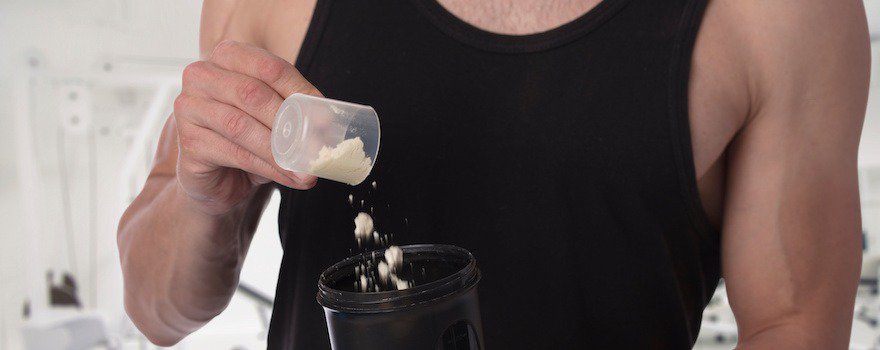
What type of whey for mass gain ?
What you should avoid
I first advise against gainers which are a mix of whey and sugar. The goal of mass gain is above all to develop muscle and not body fat.
Moreover, a muscular and lean person will always appear larger than a muscular and overweight person.
But to gain mass, do you need carbohydrates ?
Yes, but good-quality carbohydrates. Avoid gainers and the simple sugars they contain.
For a clean mass gain or rather a « muscle gain », you can combine whey with fresh fruit, honey or whole grains such as oats, rye, buckwheat.
The best whey you should buy
The « native whey isolate » is the benchmark you should remember. It’s the one I recommend to all my athletes, because it represents the best quality on the market, contains few carbohydrates and fats and is 100% derived from fresh milk and not from cheese industry waste.
Removing carbohydrates therefore eliminates a large portion of lactose, the main carbohydrate found in whey. For people intolerant to lactose, this is very beneficial because whey digestion will be improved.
Read also | Best whey: 10 brands tested by a dietitian-nutritionist
What is the benefit of buying a whey isolate ?
A superior-quality whey like the native isolate will therefore have undergone less processing and will retain better absorption properties.
Its molecular structure will be less degraded and its effects will therefore be closer to the original food, which is milk. Finally, the aminogram (the set of amino acids that make up the whey) remains complete and your body will properly assimilate the supplement.
Read also | Best whey isolate: our comparison

How should you take whey to promote mass gain ?
What is the ideal dosage of whey ?
As shown in the study on the dosing of absorbable protein, you should consume about 20 g of protein every 2 hours to absorb them properly.
Native isolate whey contains about 95% protein. 21 g of whey will therefore provide you with the 20 g of protein you need.
At what time of day should you consume whey?
I always recommend consuming a shake immediately after training to best promote muscle recovery.
For people with very high protein needs, it is also possible to have a shake mid-morning and a shake just before going to bed.
Can whey be consumed during meals ?
Yes, if you consume a low-protein meal, then whey can be consumed as a dessert, for example with a piece of fruit.
I’m thinking in particular of the famous « jambon-beurre », the most commonly eaten sandwich in France, whose protein content is low and which certainly won’t cover your needs when trying to gain muscle mass.
Should you consume whey on rest days ?
Yes, and it’s the most common mistake. Your muscle grows at rest, so it is essential, when training regularly, to keep the same protein intake on training days as on rest days.
Only carbohydrates can be reduced on rest days.
My final advice
💡 Balance before whey protein
Dietary supplements should always be used as part of a varied and balanced diet. Although using whey can be an asset for gaining muscle mass, start by properly balancing your diet before adding it to your daily routine.
💡 Muscle mass is gained during rest
Keep in mind that your training is just as important as your recovery for optimal muscle growth. Indeed, muscles regenerate and grow during rest, so allow at least 2 days of rest per week when trying to gain mass.
