

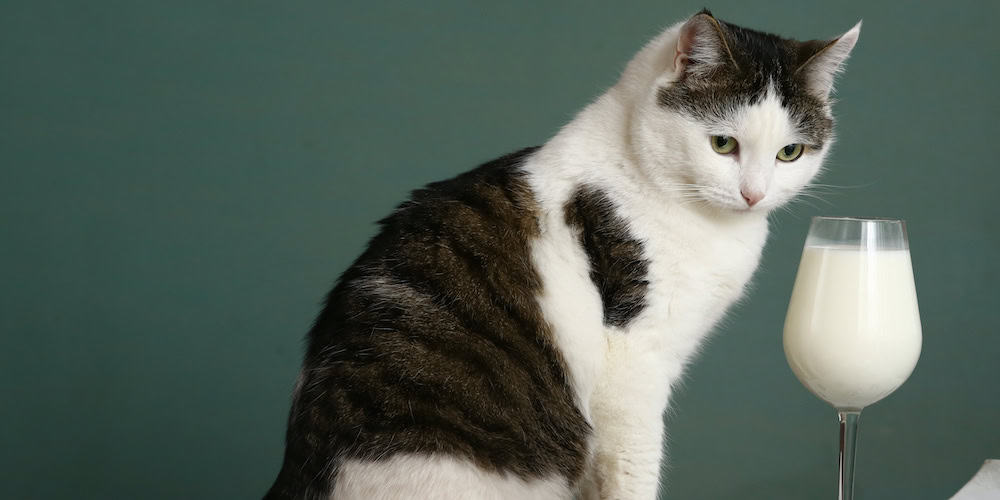
Whether you own a cat or not, you’ve most likely already seen cats drinking large bowls of milk, in cartoons for example. But is that good for them?
That’s quite a complicated question! The answer is yes and no because it depends on several factors (age, quantity, tolerance, etc.). Also, when we talk about “giving milk to a cat”, it is implied that the milk in question is cow’s milk.
On one hand, kittens have very specific needs that cow’s milk cannot properly meet for their healthy growth. On the other hand, some adult cats tolerate cow’s milk well and others do not. Just like us humans!
I’ll break down this topic for you. If in doubt, don’t hesitate to ask your veterinarian for advice, who knows your animal well.
📚 Read also | A veterinarian helps you choose the best cat kibble
Can I give milk to my kitten?
Yes, if it’s kitten milk replacer
From birth until weaning, kittens and puppies drink their mother’s milk. It contains all the nutrients and fluids necessary for their growth.
However, it is sometimes necessary to give milk substitutes to kittens, for example if their mother is not able to nurse them properly.
Kittens should therefore be bottle-fed. The milk to use is kitten milk replacer, whose composition is similar to that of maternal milk. This nutrition is optimal for the healthy growth of kittens.
No, if it’s cow’s milk
Cow’s milk does not have the same composition as the milk of nursing mother cats. Thus, it does not adequately meet kittens’ dietary needs (proteins, minerals, etc.).
For example, all cats need an amino acid called taurine. This amino acid is provided by a balanced diet. However, cow’s milk is low in taurine.
When kittens do not have enough taurine, they can suffer from growth disorders. For more information, I invite you to consult your veterinarian.
📚 Read also | A veterinarian helps you choose the best kitten kibble
Can cats digest cow’s milk?
When your feline drinks cow’s milk, the sugar it contains, called lactose, is then digested by an intestinal enzyme called the β-galactosidase (also named lactase).
This enzyme is present in all kittens but its activity decreases with age, as shown by this study.
Although kittens can digest lactose, it is not recommended to give them cow’s milk. For adults, this depends on their tolerance to lactose and the amount of milk given.
Can I give milk to an adult cat?
Yes, in moderation, for cats that tolerate lactose
Keep in mind that cats that tolerate cow’s milk can consume up to 20 mL per kg of body weight per day. That represents about 100 mL (maximum) of milk per day for a 5 kg cat.
Nevertheless, cow’s milk should not be the main component of your cat’s diet and should be consumed in moderation.
I therefore recommend that you monitor the amount of milk you give your cat.
Moreover, cow’s milk is high in fat. The main risk with regular consumption is weight gain in your little feline.
Yes, by diluting the milk with water
If you want to ‘treat’ your cat, you can give it a little occasionally, but keep in mind that milk is not essential for a cat.
Tip: you can dilute the milk with water. This also makes the water more ‘appealing’ to cats that don’t drink much.
No, for lactose-intolerant cats
Cats that do not tolerate lactose cannot digest it. Undigested lactose can therefore cause digestive disorders in these cats (diarrhea, gas, etc.).
If you give your cat milk and notice it has diarrhea, it is probably not lactose tolerant and I advise you not to give it milk even to please it.
However, there are lactose-free milks (without lactose) on the market that can be given to lactose-intolerant cats.
Why does my cat like milk?
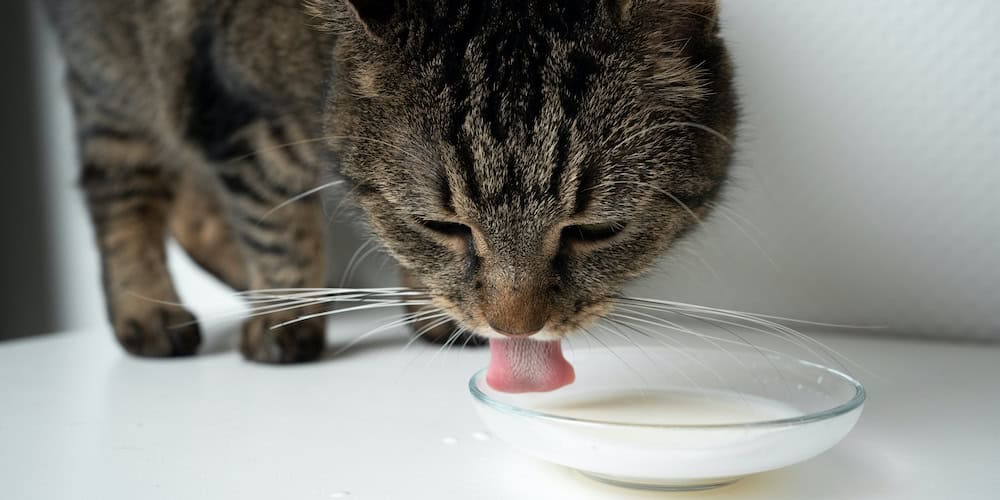
Many owners think that milk is good for their cat because it loves drinking from its little saucer.
Indeed, many cats do enjoy the taste of milk, even if it causes them digestive problems… Just like us, who sometimes enjoy certain foods that aren’t necessarily good for our health.
I recommend giving your cat a balanced diet, which is the best way to keep them healthy.
Milk should be occasional, in small quantities, and ideally diluted with water.
In any case, if your cat has consumed milk and is experiencing digestive problems, I recommend contacting your veterinarian for treatment.
Sources and scientific studies
SEGALINI Vincent. “Characteristics of milk in dogs and cats.” The Veterinary Point no. 291 of 12/01/2008, pp. 29-32
DEVAUX Charlotte. “Ten common misconceptions about cat nutrition.” The Veterinary Week no. 1696 of 11/15/2016, pp. 28-29
