

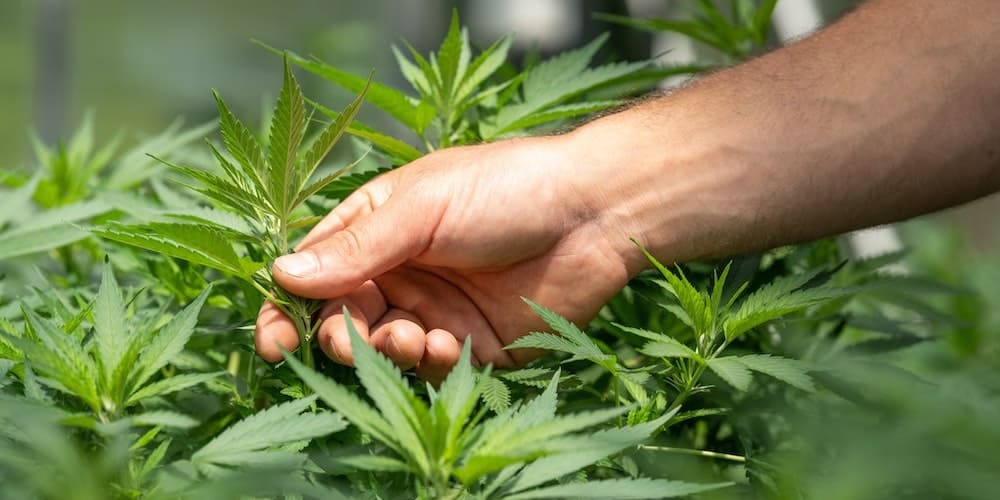
HEMP FACT SHEET
✓ Native to Central Asia, it is a plant of the Cannabaceae family, like hops and recreational cannabis.
✓ The hemp we’re talking about, also called textile or industrial hemp, has a very low tetrahydrocannabinol (THC) content, the psychoactive substance in cannabis; it contains less than 0.2 %.
✓ The female plants of Cannabis sativa produce a large amount of edible seeds called hempseeds. They are particularly rich in plant-based proteins and offer many health benefits.
✓ The rigid part of the stem, the hemp hurd (chènevotte), is used as a natural insulator and to make plasters and concretes. Essential oil is obtained from the flowers and leaves. Hemp fiber, meanwhile, has long been used in the textile industry to make clothing.
A plant used since prehistoric times
Before getting into hemp, Vincent Lartizien was a professional surfer in Hawaii for 18 years. It’s a sport that doesn’t fear the unknown, and from which he draws his entrepreneurial energy. Back in France, he first launched a Montessori school, convinced by this alternative educational approach.
But it was a trip to India that changed his fate for good (admittedly, he is not the first!). There he discovered hemp’s textile, food, and ecological uses. Back in France, he took agricultural training to understand this sector he was not yet familiar with.
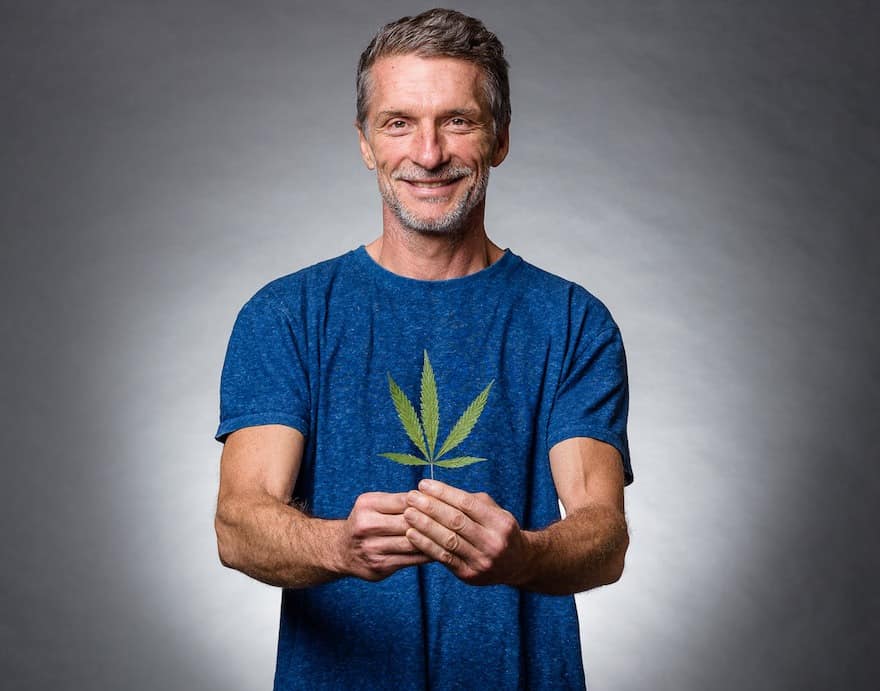
Before telling us about his business, Vincent gives a brief historical overview of this “all-purpose” plant. We discover that it is central to human history. Used for textiles, medicinal purposes, and food, hemp has been employed extensively since the Neolithic. What do the first Bible printed by Gutenberg, Napoleon’s soldiers’ uniforms, and old ship sails have in common? They were all made from hemp.
“Hemp meets humanity’s four needs: it provides food, medicine, building materials for housing, and clothing.”
However, the early 20th century saw the gradual disappearance of this plant. The United States heavily taxed it with the “Marijuana Tax Act” and then banned it. France did the same. Whether hemp contained THC, its psychoactive compound, or not—as is the case with industrial and textile hemp.
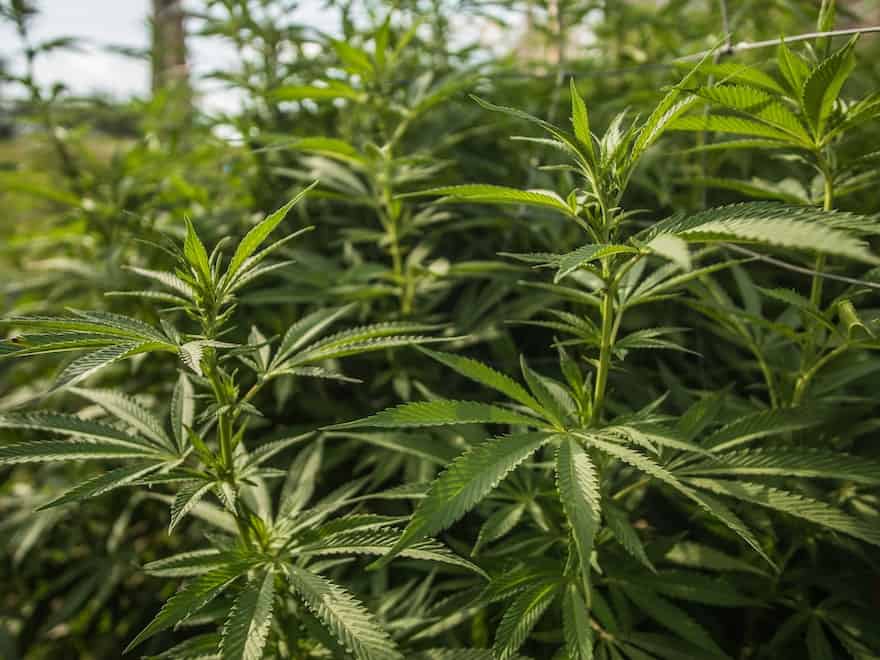
As a result, cultivated areas in France fell from 180,000 ha in the mid-19th century to 700 ha in 1960… And it was only in the 1990s that somewhat more flexible legislation allowed the French sector to recover.
A pioneer of French organic hemp
In 2016, Vincent launched his hemp processing company and established it in Saint-Geours-de-Maremne, a small village between Dax and Bayonne. His goal: to rebuild a French supply chain and redevelop its uses. And he does so while complying with organic farming standards, which account for only 3,000 ha of the 20,000 ha of hemp cultivated in France today.
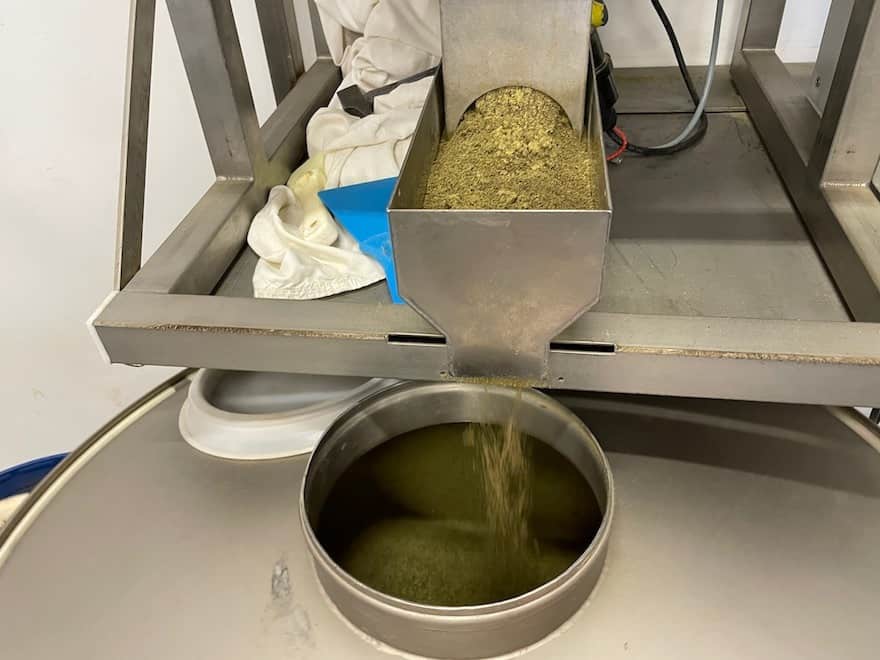
To do this, he begins by training organic farmers to grow this little-known plant, which requires high-quality soil. He also commits to buying their harvest, which he processes into finished products sold in health-food stores or to industrial buyers. The company now works with 20 farmers, and their numbers are steadily increasing. Requests for training and partnership are pouring in, because organic hemp is profitable, cleans the soil, and requires very little water — all traits that are attractive to a farmer.
Under the brand Nunti Sunya, Vincent sells hulled hemp seeds, those delicious sources of plant-based protein with a nutty flavor. To make them, the company runs the raw seeds through a machine almost unique in France (what they call… a “decorticator”!) that separates the kernel from the seed’s shell.
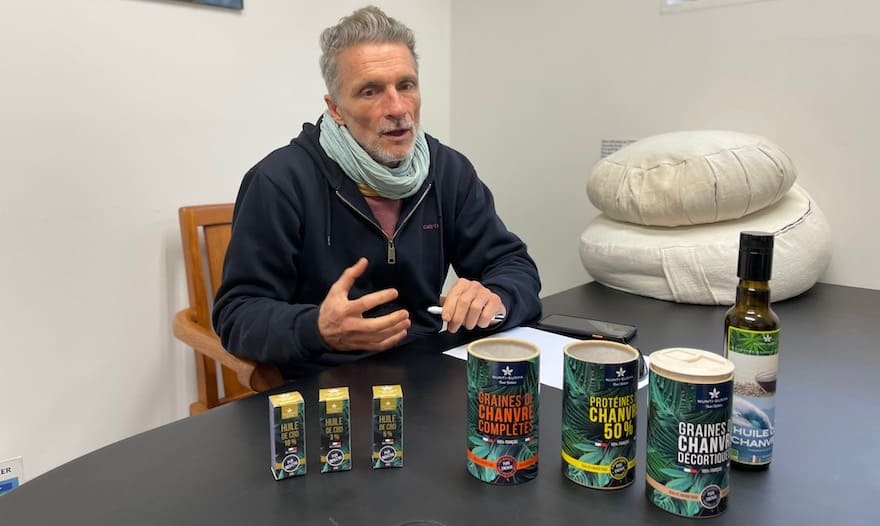
Vincent also produces T-shirts made from hemp stalks, which have properties far superior to those made from cotton; hemp oil obtained by cold-pressing hemp seeds; as well as CBD, concentrated proteins, and small pasta shells (coquillettes).
Nunti Sunya: in 2020 it processed 200 tons of hemp, operated a small workshop, and had a team of around ten people — a company that doubles its sales every year. And big plans.
Toward medical cannabis
As volumes kept increasing, the need for more space became apparent, and unsurprisingly a second 1400 m2 workshop is being built using hempcrete. Its construction was guided by principles based on “telluric” energies — waves thought to come from the earth and to be more or less beneficial to living beings. Vincent wants to send positive waves to his hemp, “so that it nourishes human health.”
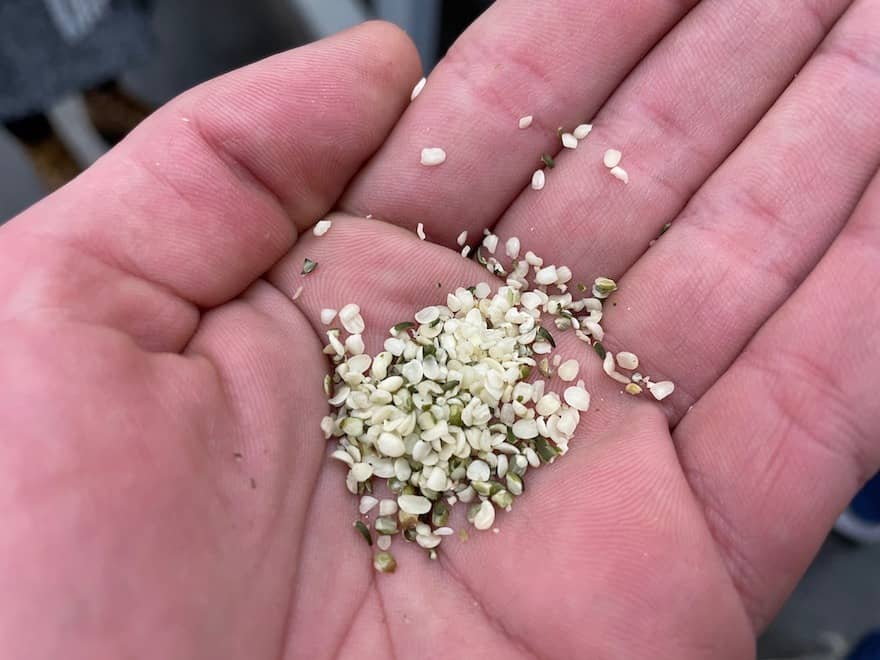
From 2023, he will complete mastering the entire production of his t-shirts by carrying out the hemp defibering in his workshop. This technical step is currently performed in Romania due to the loss of know-how in France.
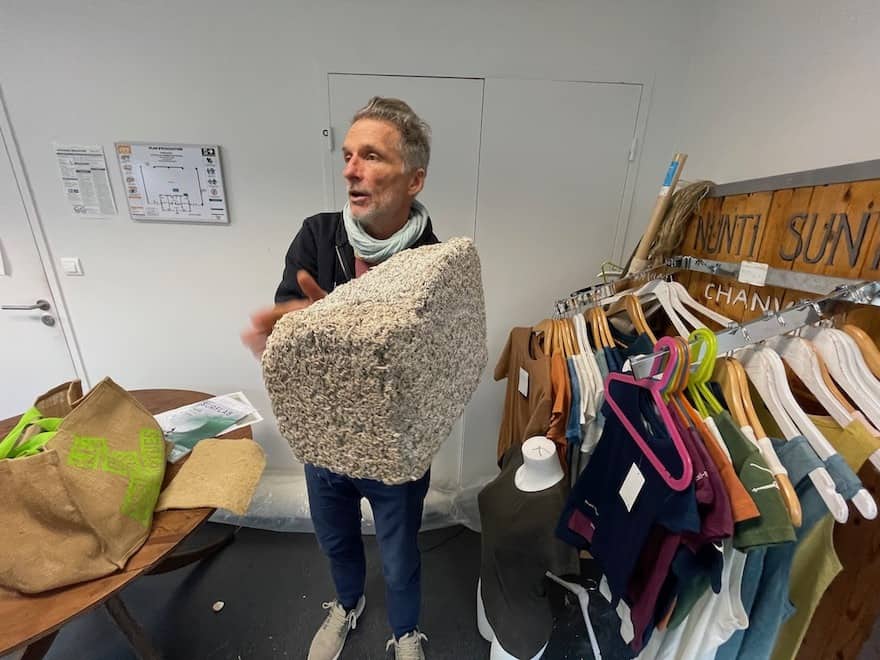
In the longer term, Vincent is looking toward therapeutic cannabis and dreams of building his own “hemp clinic.” Already widely available in the United States, therapeutic cannabis is still in its infancy in France, but it seems only a matter of time before we also benefit from its advantages. And when more relaxed legislation is adopted, Nunti Sunya will be ready!
