

Why special kitten kibble?
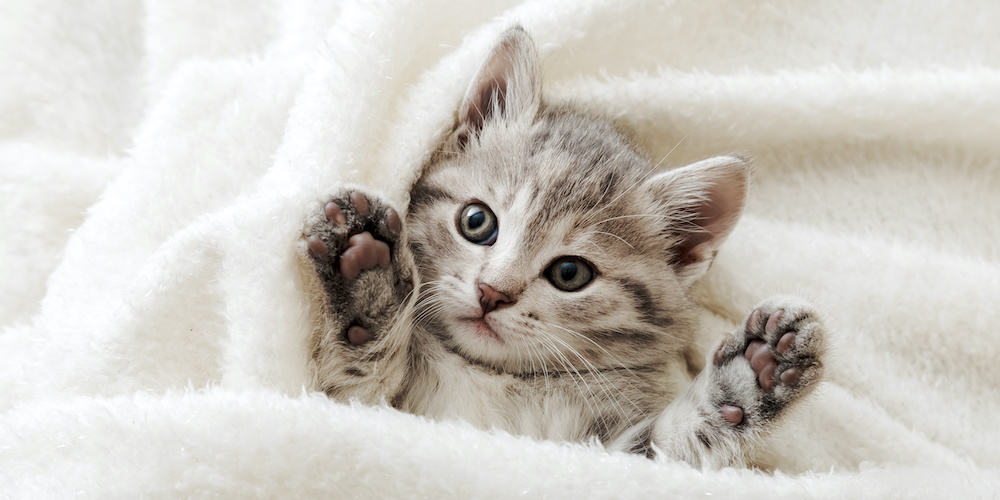
It will be obvious to everyone that a kitten is… very small. In a relatively short time, it will grow and become a vigorous cat.
To achieve this harmonious development, an appropriate diet is necessary. You don’t feed a kitten like an adult cat!
Kitten growth
Between 3 and 6 months, a kitten will triple its weight. That shows how intense this period is for its body. These needs for proteins and minerals, especially calcium, as well as for energy, are then at their maximum.
A rich and balanced diet will provide it with the essential nutrients for the development of the skeleton, muscles, brain and various organs.
The benefits of kitten kibble
Maternal nursing covers the kitten’s needs during the first 2 months of its life. At the end of the first month, you can begin the dietary diversification by introducing the first kitten kibbles.
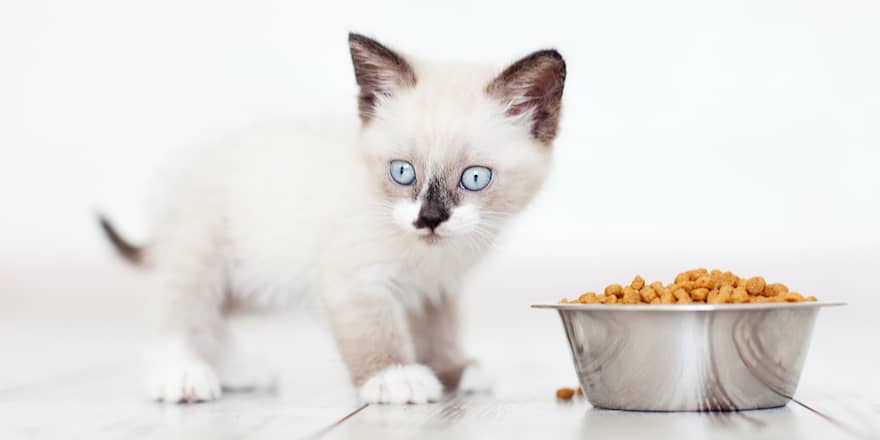
This complete food will provide the kitten with the proteins and minerals necessary for its growth. The size of the kibbles will also be adapted to its small jaw and tiny teeth.
Besides their complete composition, kibble has many advantages such as easy storage. They can therefore be left out for free access so that kittens can come and nibble at any time.
Kibble also ensures good oral and dental health. The mechanical action of crunching acts like brushing and strengthens the jaws and teeth.
Finally, kibble is an economical food. It is also environmentally friendly, by making use of certain meat products that are little used in human food, such as offal.
Don’t forget to leave clean water available to animals receiving kibble. Special kitten milk can also be used as a source of hydration during the first 3 months.
Good to know! Kitten-specific kibble is also suitable for feeding pregnant and nursing females.
The criteria to consider
The composition of kibble is a key element. But you should also take into account the development of the kitten. Around 6 months, castration or ovariectomy is a key step in feline nutrition.
The composition of the kibble
The cat is a strict carnivore. ‘In the wild’, it mainly consumes small prey (mice, birds…). Unlike the dog, which eats a bit of everything…
Felines should therefore be fed a diet with a high protein content. But not all proteins are equal in terms of nutritional quality. For the cat, proteins should be of animal origin: meat, fish, eggs, milk.
Kitten kibble differs from adult formulas by having higher protein and calcium levels. It is also more digestible because the kitten’s enzymatic system is not yet optimal.
Regarding kittens, the usual recommendations are as follows in % of dry matter:
- Protein: minimum 30% including 0.10% taurine, an essential amino acid for the cat
- Fat: minimum 9% including 0.5% linoleic acid, a fatty acid essential for the development of the brain and retina
- Calcium: 1%
- Phosphorus: 0.8%
- Vitamin D necessary for bone growth: 750 IU/kg of food
The kitten’s age and breed
A kitten’s growth is completed around 8-9 months. Energy needs decrease. You should then switch to adult cat food, otherwise your animal may gain too much weight.
However, some large-breed cats, such as the Maine Coon, have a much longer growth period. For them, kitten-specific kibble remains necessary until around 12 to 15 months of age. There are even growth kibbles specifically adapted to the Maine Coon.
Some manufacturers distinguish between first-stage foods (from 1 to 4 months) and second-stage foods (from 4 to 12 months). The first are designed for a very strong growth spurt and provide energy and highly digestible nutrients in large amounts.
The size of the kibble is designed for these very small kittens. Second-stage foods are better suited to a growth phase that is already slowing. The kibble size increases.
And after sterilization?
Spaying or neutering generally takes place at about 6 months of age. For males it involves removing the testicles and for females, the ovaries. In some animals, this can induce a change in metabolism.
The result is an increased appetite and a tendency to gain excess weight, even obesity. In the long term, this can have harmful consequences for the cat’s health, with an increased risk of diabetes, liver disease, and osteoarthritis.
After the operation, the kitten is not yet an adult, but its dietary needs change. To avoid harmful weight gain, it is generally recommended to switch to adult food formulated for spayed/neutered cats even if the animal has not yet reached the ‘official’ age.
Developed by some pet-fooders, kibble for neutered kittens aged 6 to 12 months is an interesting alternative. Thanks to a reduced fat content, it helps control weight after neutering while providing the nutrients needed at the end of growth.
Should kitten kibble be mixed with canned food?
Nowadays, the trend is to move away from an all-kibble diet for cats. Indeed, this very dry food (moisture content around 10%) is likely to contribute to urinary problems in cats that don’t drink enough water alongside it.
A mix of wet food (pâté, mousses, boulettes…)/dry food is therefore recommended. Canned food is given morning and evening, while kibble is left out during the day.
You can accustom your kitten to this mix from a very young age to avoid any neophobia, meaning the refusal of a new food such as canned food by a kitten fed exclusively on kibble.
Where to buy kitten kibble?
From veterinarians
At your veterinarian’s you will find premium brands adapted for kittens. Veterinary ranges let you follow the animal throughout its life, from kitten to senior, and can even be tailored to its health condition in case of illness.
At pet stores
The ranges are extensive and generally similar to those of veterinary clinics. It’s not always easy to navigate the varied ingredient lists on the bags.
In supermarkets
Quality is not always guaranteed. Avoid low-cost kibble that can cause urinary problems in cats.
Online
Warning! You can find anything on the web, including misleading advertisements! There are now online shops offering exclusively veterinary ranges where you can order with confidence. Check with your veterinarian.
To summarize
High-quality kitten kibble:
1. Contain at least 30% animal-derived protein
2. Have a calcium level around 1%
3. Preferably first-stage if the kitten is under 4 months
4. Are suited to its reproductive status (neutered or intact)
5. Can be mixed with wet food
6. S’achètent de préférence en circuit spécialisé
