

BENEFITS OF YERBA MATÉ
✓ Improves alertness and fights fatigue
✓ A powerful antioxidant
✓ Promotes weight loss
✓ Protects the body from infections
✓ Helps fight high cholesterol
What is Yerba Maté?
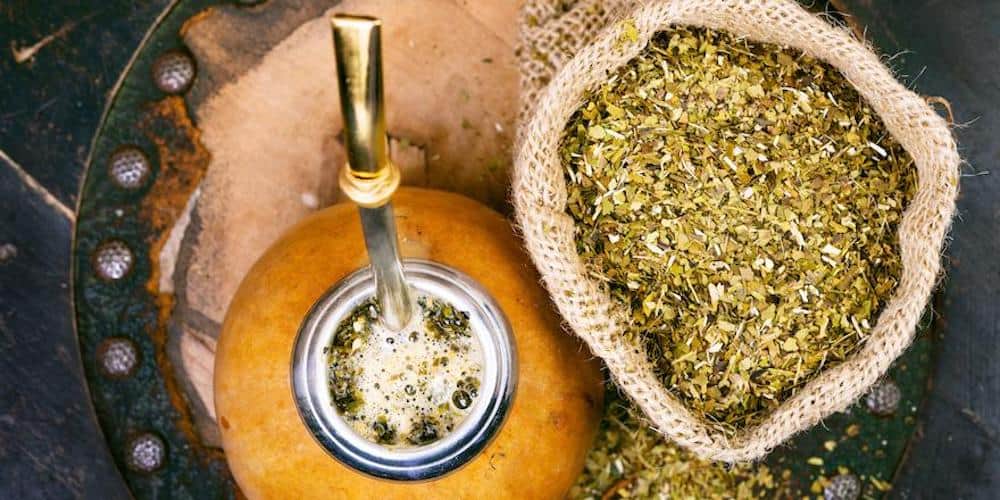
The yerba mate is also called ‘Paraguay tea’ or ‘Jesuit tea’. However, the plant is not from the same family as the tea bush. Yerba mate (Latin: Ilex Paraguariensis) comes from a species typically native to South America in the holly family. It is a shrub in the Aquifoliaceae family whose dried leaves are used to produce yerba mate.
It is primarily cultivated in Argentina and in Paraguay, and it is also where it is most consumed: it is the favorite drink of the southern part of South America, from Brazil to Chile. People there drink it throughout the day from a thermos or, more traditionally, from a gourd with a perforated straw.

We speak of maté when referring to the drink and of yerba maté when referring to the dried herb itself. Maté is traditionally consumed by the Guarani Indians (also heavy consumers of guarana) who inhabited the lands of South America before the arrival of settlers. Explorers, who heard about a “drink that makes people happy“, introduced it in Spain where it became all the rage. The Jesuits, established in Paraguay, then began cultivating the plant from the 16th century.
It is true that maté has an uplifting effect thanks to the caffeine it contains – about 1%: less than coffee, but more than green tea. It also contains theobromine, a substance also found in cocoa that provides a sense of well-being.
Yerba maté is interesting from a nutritional standpoint: it provides many nutrients and vitamins without adding calories, and it hydrates the body when consumed as an infusion.
Saponins are what give maté its bitter taste, but also what provide its cholesterol-lowering properties.
Nutritional composition
- Substances actives stimulantes : xanthines, caféine, théobromine
- Composés anti-inflammatoires et antioxydants : des flavonoïdes, des saponosides et des polyphénols
- Vitamines A, B et C, magnésium et calcium
- 7 des 9 acides aminés dont le corps a besoin
The benefits of Yerba Maté
⚡️ Improves alertness and fights fatigue
Yerba maté is a powerful anti-fatigue agent. It is, of course, the caffeine it contains that gives it this property.
Caffeine consumption helps fight fatigue and drowsiness and improves alertness during physical or mental exertion.
The Guarani people traditionally consume maté for this purpose, and scientific studies have come to corroborate this benefit.
This meta-analysis of 41 scientific studies conducted on humans and published by the British Nutrition Foundation shows that even a moderate dose of caffeine has positive effects on mood, cognitive and physical performance, and the perception of fatigue.
🥝 A powerful antioxidant
Maté has slightly higher antioxidant properties than green tea, already renowned for its antioxidant power. It thus helps the body fight cellular aging: a powerful ally both for health and cosmetic purposes.
This study published by the University of Illinois compared the antioxidant capacities of green tea, mate, and an African plant, Ardisia Compressa. The researchers showed that the dried leaves of yerba mate contained polyphenolic compounds and a high antioxidant capacity.
🏃🏻♂️ Promotes weight loss
Caffeine is an ingredient in many fat-burning products, used to combat cellulite or to achieve a flat stomach.
Indeed, it both suppresses appetite and encourages the body to burn more calories during physical exertion.
You won’t achieve a slim figure solely by consuming yerba mate, but it can help promote weight loss when combined with regular physical activity and a balanced diet.
This study conducted by the University of Lausanne among men and women showed that, among several plant extracts, mate was the one with the greatest impact on obesity treatment.
🛡 Protects the body from infections
Yerba mate’s high content of polyphenols helps the body better fight inflammation and infections.
This American study conducted by the University of Tennessee-Knoxville showed that a high amount of yerba mate could fight the E. coli bacteria, responsible for food poisoning and diarrhea. This other study conducted in 2007 by researchers at the University of Illinois shows it may have an impact in fighting intestinal parasites.
However, these are only laboratory studies and further research should be carried out to corroborate these effects.
🍳 Helps fight high cholesterol
Its antioxidant compounds help protect the body from cardiovascular diseases and fight hypercholesterolemia.
This study conducted with 100 people in 2009 by researchers at the University of Santa Catarina in Brazil showed that consuming 4 cups of yerba mate for 40 days reduced patients’ levels of “bad” cholesterol (LDL) by between 8.6% and 13%.
How to consume yerba mate?
Mate consumption in South America

Yerba mate, also called erva mate or chimarre3o in Brazil, is consumed hot or cold depending on the region of the continent. It is traditionally drunk in a gourd (the mate) with a pierced straw. It can be consumed plain or mixed with other herbs, as in Paraguay where it is drunk with chamomile and anise.
Some people also add milk or lemon juice to it. It can also be found in tea bags like herbal tea. In South America, mate is drunk at any time of the day, alone or in groups as a ritual beverage.
Consuming yerba mate as a superfood
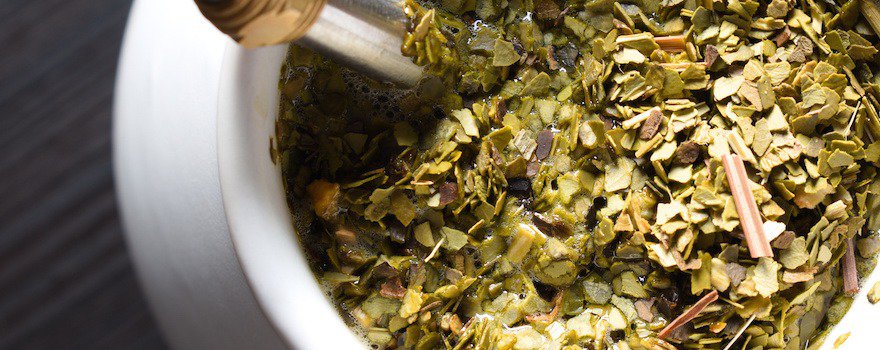
In France, you can adopt the traditional way of consumption or adapt it to your lifestyle. You can consume yerba mate as an infusion, with boiling water.
Be careful, though: drinking mate that is too hot through the traditional straw can cause burns to the mouth or esophagus.
Mate has a slightly bitter flavor that people like or dislike depending on taste. You can add sugar to it, but in that case you lose yerba mate’s slimming effect.
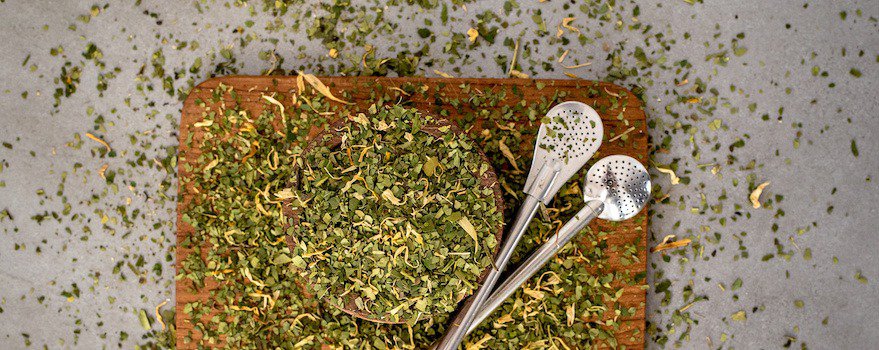
Yerba mate is sold pure as dried, cut leaves. It is also available as a dietary supplement in capsules.
Consume sustainably: choose organic, fair-trade yerba mate
✓ It is preferable to buy organic yerba mate to avoid pesticide residues, especially since the leaves will be steeped for a long time.
Also read the Jérémie and Antoine want to replace coffee with their mate from the Paraná forests
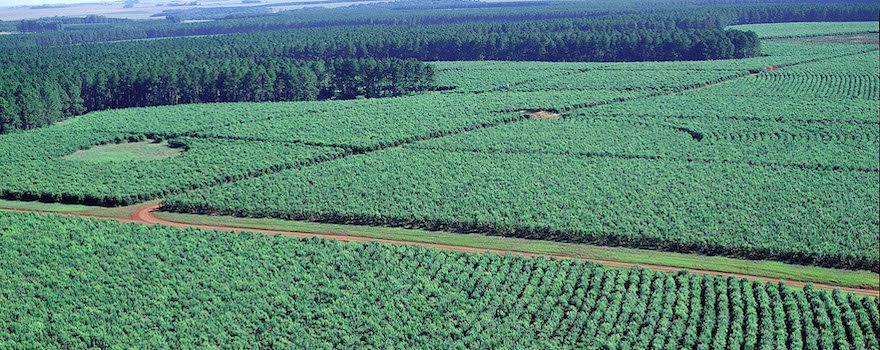
✓ Intensive cultivation of mate can lead to deforestation in fragile areas of Paraguay, Brazil, and Argentina where it is most widely grown. Therefore, prefer a product from agroforestry systems to contribute to the sustainable development of production regions in South America. And, if possible, from a fair-trade supply chain to help ensure a fair income for producers.
Yerba mate dosage
It’s best to drink yerba mate in the morning and at midday to avoid causing sleep problems due to its caffeine content. Specialists recommend consuming 4 cups per day to see a health effect, that is 4 g of dried leaves per 1 liter of water.
In capsule form, do not exceed 6 capsules per day. However, it is recommended to follow a naturopath’s advice if you wish to undertake a course of yerba mate capsules.
South Americans consume mate throughout their lives without it causing health problems. However, if you are not accustomed to it, it is preferable at first not to exceed a 6-week course to avoid creating an dependence on caffeine.
Contraindications and side effects of yerba mate
Yerba mate should be consumed as a medicinal herb: you should not overuse it, as it may cause harmful side effects.
- La consommation excessive de maté peut provoquer des troubles du sommeil ou du stress. Dans tous les cas, on évite de consommer du maté le soir avant d’aller dormir. Il est déconseillé aux personnes souffrant de troubles cardiaques ou sous traitement pour des problèmes cardio-vasculaires.
- De même, le yerba maté, s’il possède un effet laxatif et aide à la digestion, peut provoquer des diarrhées s’il est consommé en quantités excessives. Dans tous les cas, respecter la posologie indiquée.
- Il est fortement déconseillé de consommer du maté en mélange avec de l’éphédra, une autre plante stimulante, sous peine de provoquer des troubles cardiaques pouvant être sévères.
History, culture, and market of yerba mate
Yerba mate is an herb that is part of the pharmacopoeia and ritual ingredients of the Guarani people. In the earliest times, it was consumed chewed. Its consumption in infusion form came later. Legend has it that an old Guarani chief, who could no longer keep up with his tribe’s wanderings because of his advanced age, found himself lagging behind with his daughter. So that he could follow his tribe, his daughter prepared for him a yerba mate-based remedy.
When the Spanish colonists arrived around 1500 in the Rio de la Plata region, they noticed that the Guarani people were truly addicted to this plant. They soon tried it and incorporated it into their daily lives. The Spaniards’ first documented contact with yerba mate dates to 1554.
The Jesuits then began cultivating and exporting the plant to Paraguay and northern Argentina: some missions grew wealthy from trading this plant.
Today, this plant hardly exists anymore in the wild because of the intensive deforestation taking place in the southern part of the continent. The primary forest, the Mata Atlântica, exists there now only as traces.
The intensive cultivation of yerba mate is also a cause of this deforestation: conventional mate (non-organic) is indeed grown in monoculture with heavy use of pesticides. A yerba mate cultivation that is more respectful of the environment and of the forest is being developed: it should be preferred.
Report produced by Pauline Petit and Charlotte Jean
Sources and scientific studies
Sonia Chandra, Elvira De Mejia Gonzalez, 2004, Polyphenolic compounds, antioxidant capacity, and quinone reductase activity of an aqueous extract of Ardisia compressa in comparison to mate (Ilex paraguariensis) and green (Camellia sinensis) teas.
A Martinet, K Hostettmann, Y Schutz, 1999. Thermogenic effects of commercially available plant preparations aimed at treating human obesity.
Kellie P Burris, P M Davidson, C Neal Stewart Jr, S Zivanovic, F M Harte, 2012. Aqueous extracts of yerba mate (Ilex paraguariensis) as a natural antimicrobial against Escherichia coli O157:H7 in a microbiological medium and pH 6.0 apple juice.
C I Heck , E G de Mejia, 2007. Yerba Mate Tea (Ilex paraguariensis): a comprehensive review on chemistry, health implications, and technological considerations.
Elayne C de Morais, Aliny Stefanuto, Graziela A Klein, Brunna C B Boaventura, Fernanda de Andrade, Elisabeth Wazlawik, Patrícia F Di Pietro, Marcelo Maraschin, Edson L da Silva, 2009. Consumption of yerba mate ( Ilex paraguariensis ) improves serum lipid parameters in healthy dyslipidemic subjects and provides an additional LDL-cholesterol reduction in individuals on statin therapy.
