

Is your immune system weakened or are you taking antibiotic treatment? You may be prone to yeast infections.
According to this study conducted in 2019 on the activity of Candida albicans, yeast infection is often associated with a dysbiotic state. That is, an alteration in the composition or abundance of the host microbiota at the infected site.
This environment becomes permissive to the survival of the pathogenic fungus, which contributes to its proliferation.
Probiotics are defined by the WHO as “living microorganisms that, when consumed in adequate amounts in foods, confer a health benefit to the host”.
Their use helps the host microbiota to regain a balanced state. They can act both orally and locally.
Research has provided evidence confirming their positive role in intestinal, oral, and vaginal health. But studies remain mixed. What does that mean?
📚 Also read | A physician specializing in nutrition analyzed 15 probiotics — here is her opinion
If you have a vaginal yeast infection
Prefer the strain Lactobacillus rhamnosus
Lactobacilli make up more than 90% of the vaginal flora. Therefore, some lactobacilli are used as probiotics to restore the vaginal microbiota and prevent recurrent infections.
The main studies on probiotics have generally focused on bacterial vaginosis and have considered them a supportive treatment.
If you are undergoing antibiotic treatment
This prospective study from 2016, carried out on 250 women in Rome, showed that the vaginal flora of women treated with antibiotics and probiotics significantly improved compared to those treated with antibiotics alone.
The probiotic supplementation with vaginal Lactobacillus rhamnosus was therefore useful in inhibiting bacterial growth, particularly after antibiotic treatment.
A reduction in symptoms
However, only a few studies have examined the role of probiotics in the treatment of vaginal yeast infection. This recent trial was double-blind, randomized, and placebo-controlled and was conducted among 76 women with vulvovaginal candidiasis.
Results after 35 days of treatment indicated that administering probiotics in addition to fluconazole was more effective than the control group receiving placebo. A significant reduction in candidiasis symptoms of 68% was observed in the first group compared to 47% in the second.
The role of lactic acid
This probiotic effect of Lactobacillus strains is probably due, according to this study, to the accumulation of lactic acid. Higher local concentrations of lactic acid may prevent their proliferation in the immediate vicinity of Lactobacillus.
Furthermore, the organic acids produced by Lactobacillus positively influence the effectiveness of antifungal agents. They increase the permeability of the fungal plasma membrane structure, which facilitates azole uptake.
📚 Also read | Natural probiotics: their benefits and which to choose
If you have a digestive yeast infection
Rebalance the microbiota
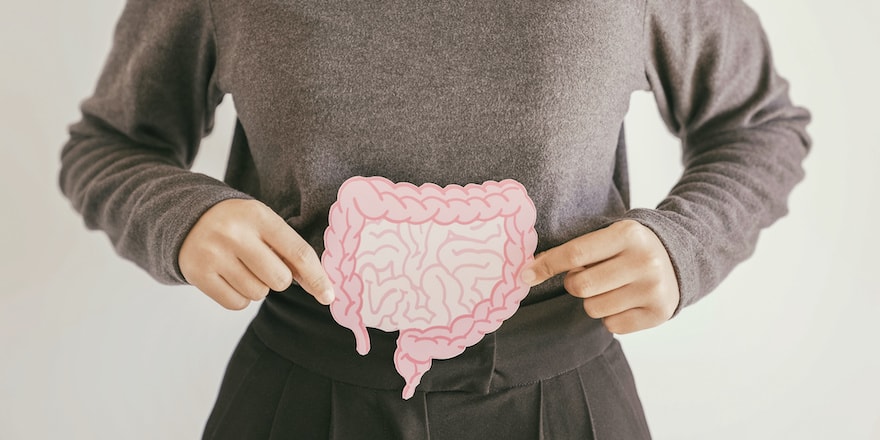
Digestive mycosis occurs when the intestinal and/or oral flora is disturbed. Candidiasis are the most common digestive fungal infections.
When the intestinal microbiota is imbalanced, Candida albicans can proliferate excessively in the digestive tract and release toxins.
Particularly painful, the lesions caused by this fungal infection can prevent you from eating or swallowing. It can even lead to dysphagia or malnutrition.
The treatment of oral fungal infections requires the eradication of risk factors and the administration of antifungals. But it is also essential to rebalance this flora to prevent the onset of the condition or its recurrence.
Probiotics effective for prevention
According to this 2019 meta-analysis pooling 5 studies with 435 patients, probiotics can reduce the incidence and lessen the severity of oral fungal infections induced by cancer treatment.
These probiotic treatments, however, seem to be more effective in preventing oropharyngeal candidiasis and reducing their recurrence than in treating it per se.
I think that, given the small number of clinical trials conducted, additional randomized trials, multicenter double-blind studies on a larger population could shed more light.
🎧 Listen to our podcast | Passion Microbiota
My advice for taking probiotics for a yeast infection
For oral intake, I advise taking the probiotic on an empty stomach. Allow 30 minutes before a meal, or 2 hours after, so that it reaches the digestive system intact.
For vaginal use, I recommend taking it twice a day, morning and evening, whether as capsules, tablets, gelcaps, or ovules to insert into the vagina. I recommend favoring the local route for vaginal yeast infections for a more targeted action.
Additionally, if you are taking antifungal treatments at the same time, I recommend taking the probiotics at a different time from them.
For a treatment course, favor the following lactobacillus strains: L. rhamnosus, L. reuteri, L. acidophilus, L. bulgaricus, L. crispatus
Finally, I encourage you to follow the precautions for use. While taking probiotics during a yeast infection can have many benefits, it does not replace conventional antifungals. So do not try to substitute the treatment your doctor prescribed with probiotics.
According to this study conducted in 2015, probiotics are generally considered safe. However, your doctor’s opinion remains essential in cases of immunosuppression or a compromised intestinal lining, as well as for pregnant or breastfeeding women.
Sources and scientific studies
Bertolini M, Ranjan A, Thompson A, Diaz PI, Sobue T, Maas K, 2019. Candida albicans induces mucosal bacterial dysbiosis that promotes invasive infection. PLOS Pathog.
Food Argricultural Organization/World Health Organization, Cordoba, Argentina: 2001. Joint FAO/WHO Expert Consultation on Evaluation of Health and Nutritional Properties of Probiotics in Food Including Powder Milk with Live Lactic Acid Bacteria.
Zekai Shu, Peijing Li, Bingqi Yu, Shuang Huang, Yuanyuan Chen, 2019. The effectiveness of probiotics in prevention and treatment of cancer therapy-induced oral mucositis: A systematic review and meta-analysis.
Nadia Recine, Ettore Palma, Lavinia Domenici, Margherita Giorgini, Ludovica Imperiale, Carolina Sassu, Angela Musella, Claudia Marchetti, Ludovico Muzii, Pierluigi Benedetti Panici, 2015. Restoring vaginal microbiota: biological control of bacterial vaginosis. A prospective case–control study using Lactobacillus rhamnosus BMX 54 as adjuvant treatment against bacterial vaginosis.
De Gregorio P. R., Parolin C., Abruzzo A., Luppi B., Protti M., Mercolini L., 2020. Biosurfactant from vaginal Lactobacillus crispatus BC1 as a promising agent to interfere with Candida adhesion. Microb. Cell Fact.
Zahra Vahedpoor, Mahdi Abastabar, Mojtaba Sehat, Parisa Talebian, Tayebeh Felfelian Fini, Zahra Dastanpour, Iman Haghani, Ramtin Chelongarian, Mehdi Nazeri, 2021. Vaginal and oral use of probiotics as adjunctive therapy to fluconazole in patients with vulvovaginal candidiasis: A clinical trial on Iranian women.
Isabella Zangl, Ildiko-Julia Pap, Christoph Aspöck, Christoph Schüller, 2019. The role of Lactobacillus species in the control of Candida via biotrophic interactions.
Shira Doron, David R Snydman, 2015. Risk and safety of probiotics.
