

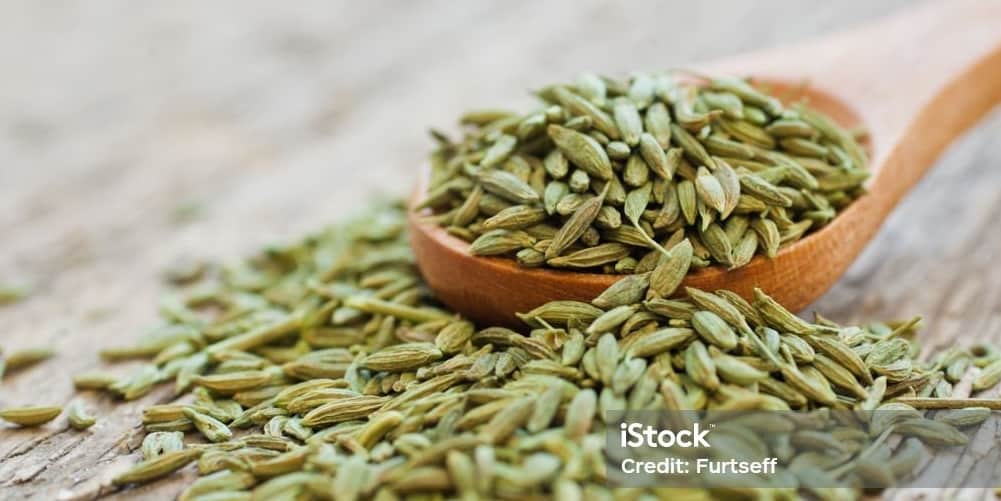
Anise, belonging to the Apiaceae family, originates from the eastern Mediterranean. It is an annual herbaceous plant, measuring 50 to 80 cm in height, with yellowish-white flowers in umbels, and upright, hollow green stems.
It is one of the oldest spice plants used for culinary and medicinal purposes. The parts of anise that are used are the seed, which can be ground into powder or from which oil can be extracted.
The active constituents of anise are: sesquiterpenes, phenolic acids, furocoumarins, an anethole-based essential oil, sugars, starch, flavonoids, resin, and malic acid.
Green anise is traditionally used for its carminative properties (intestinal gas), antispasmodic effects, and as a galactagogue (women use anise to increase lactation during breastfeeding). It is also used as an expectorant to promote coughing, as a diuretic to increase urine output, and as an appetite stimulant.
Active ingredients
- Flavonoids
- Sesquiterpenes
- Phenolic acids
- Furocoumarins
Properties
Effet digestif


In animals, anise has significant cytoprotective and anti-ulcer activities against experimentally induced gastric lesions. The anti-ulcer effect of anise may be mediated by prostaglandins and/or by its antisecretory and antioxidant properties. Furthermore, some in vivo studies have shown that anise has a spasmolytic effect.
Finally, anise has long been used as a carminative: it promotes the expulsion of intestinal gas.
Associated uses:
- Digestive disorders
- Irritable bowel syndrome
Effet respiratoire
In vitro, anise essential oil and its aqueous and ethanolic extracts appear to have bronchodilatory effects via anticholinergic activity.
Associated uses:
- Bronchitis
Antibactérien
Studies have shown that anise essential oils and various anise constituents had in vitro antibacterial effects against Escherichia coli, Staphylococcus aureus, Bacillus cereus, Salmonella enterica, Proteus vulgaris, while others have shown that anise has no antibacterial effects against Pseudomonas aeruginosa, Escherichia coli O157:H7, and other bacteria. Trans-anethole, a constituent of anise, has demonstrated antibacterial effects against Salmonella.
Anti-inflammatoire
In animals, anise oil has shown anti-inflammatory effects. Indeed, anethole, a constituent of anise, appears to inhibit the production and activity of inflammatory cytokines. In addition, it inhibits NF-kB (nuclear factor-kappa B: a protein involved in the immune response and the response to cellular stress) activity induced by tumor necrosis factor (TNF).
Action oestrogenique
Some constituents of anise oil, including anethole, may have estrogenic effects. However, other in vitro studies have shown that aqueous anise extracts have anti-estrogenic effects.
Associated uses:
- Menopause
Galactogène
Green anise is considered a galactagogue. It may therefore help stimulate milk secretion in breastfeeding women.
Associated uses:
- Lactation
Clinical studies
Digestive disorders
✪✪✪✪✪
A clinical study in adults with postprandial distress syndrome showed that taking anise powder 3 grams three times a day for 4 weeks improved symptoms of functional dyspepsia compared with placebo. In addition, the quality of life of patients treated with anise improved compared with placebo. According to the EMA, anise is traditionally used to relieve digestive disorders, notably abdominal bloating. The recommended dose is 50-200 microliters of anise oil, three times a day.
Dosage
 150 microliters – 600 microliters per day
 2 weeks
 Oil – Seed
Calsamiglia, S., Busquet, M., Cardozo, P. W., Castillejos, L., and Ferret, A. Invited review: Essential oils as modifiers of rumen microbial fermentation. J Dairy Sci. 2007;90(6):2580-2595.
Cardozo, P. W., Calsamiglia, S., Ferret, A., and Kamel, C. Effects of natural plant extracts on ruminal protein degradation and fermentation profiles in continuous culture. J Anim Sci. 2004;82(11):3230-3236.
Cardozo, P. W., Calsamiglia, S., Ferret, A., and Kamel, C. Effects of alfalfa extract, anise, capsicum, and a mixture of cinnamaldehyde and eugenol on ruminal fermentation and protein degradation in beef heifers fed a high-concentrate diet. J Anim Sci 2006;84(10):2801-2808.
Community herbal monograph on Pimpinella anisum L., aetheroleum
Busquet, M., Calsamiglia, S., Ferret, A., and Kamel, C. Plant extracts affect in vitro rumen microbial fermentation. J Dairy Sci. 2006;89(2):761-771.
Irritable bowel syndrome
✪✪✪✪✪
Clinical studies conducted in adults with irritable bowel syndrome (IBS) showed that taking 200 mg of anise oil three times daily for 4 weeks eliminated IBS symptoms in 75% of patients, compared with 52.5% of patients taking peppermint oil and 35% of patients taking placebo. The greatest improvements were in abdominal pain, bloating, and reflux, and these were maintained for 2 additional weeks after the end of treatment.
Dosage
600 mg per day
4 weeks
Oil – Seed
Efficacy and safety of enteric-coated capsules of anise oil to treat irritable bowel syndrome.
Menopause
✪✪✪✪✪
Preliminary clinical research conducted in postmenopausal women shows that taking an extract of anise seed at a dose of 330 mg three times a day for four weeks reduces the frequency and severity of hot flashes by about 75% compared with placebo.
Dosage
990 mg – 9000 mg per day
4 weeks
Dry extract – Seed
The Study on the Effects of Pimpinella anisum on Relief and Recurrence of Menopausal Hot Flashes.
Lactation
✪✪✪✪✪
Traditional use. Green anise is considered a galactagogue. It may therefore stimulate milk secretion in breastfeeding women.
Dosage
990 mg – 9000 mg per day
4 weeks
Tisane/tea/infusion – Seed
Bronchitis
✪✪✪✪✪
According to the EMA, anise-based preparations are traditionally used as expectorants (they help expel phlegm) for productive coughs during bronchitis.
Dosage
150 microliter – 600 microliter per day
2 weeks
Oil – Seed
Community herbal monograph on Pimpinella anisum L., aetheroleum
Safe dosage
 Adult — 18 years and older
150 μL – 600 μL per day – Oil
Anise powder has been used safely at doses of up to 9 grams per day for 4 weeks. Anise oil has been used orally without harm at doses of up to 600 mg per day for 4 weeks. The EMA recommends a dose of 150 to 600 µL of anise oil per day, divided into three doses, for 2 weeks, for individuals aged 18 years and older.
Interactions
Medications
Oral contraceptives: moderate interaction
Preliminary research suggests that anise may have anti-estrogenic effects. Theoretically, concurrent use of large amounts of anise may interfere with contraceptive medications by competing for estrogen receptors.
Estrogens: moderate interaction
Theoretically, concurrent use of large amounts of anise may interfere with hormone replacement therapy by competing for estrogen receptors.
Tamoxifen: moderate interaction
Theoretically, high doses of anise may interfere with tamoxifen due to its potential estrogenic effects.
Contraindications
Pregnant women: use with caution
When used orally in amounts commonly found in food, anise and anise oil are not considered harmful. There is insufficient reliable information on the safety of anise when taken orally in medicinal amounts during pregnancy or breastfeeding.
Breastfeeding women: use with caution
When taken orally in amounts commonly found in foods, anise and anise oil are not considered harmful. There is not enough reliable information on the safety of anise when taken orally in medicinal amounts during pregnancy or breastfeeding.
Child: use with caution
When taken orally in amounts commonly found in foods, anise and anise oil are not considered harmful. There is not enough reliable information on the safety of anise when taken orally in medicinal amounts by children.
